

A brave and proud woman struggles for her land, finding help and something more in unexpected way.A brave and proud woman struggles for her land, finding help and something more in unexpected way.A brave and proud woman struggles for her land, finding help and something more in unexpected way.
- Nominated for 1 Oscar
- 5 wins & 4 nominations total



Allan Baker
- Pall Bearer
- (uncredited)
Antonino B. Garcia
- School Kid
- (uncredited)

Cary Huff
- Army Bugler
- (uncredited)
- Director
- Writer
- All cast & crew
- Production, box office & more at IMDbPro
6.33.9K
1
2
3
4
5
6
7
8
9
10
Featured reviews
Some of you people
Really shouldn't be allowed to review film.
Contrary to popular belief, Lorem Ipsum is not simply random text. It has roots in a piece of classical Latin literature from 45 BC, making it over 2000 years old. Richard McClintock, a Latin professor at Hampden-Sydney College in Virginia, looked up one of the more obscure Latin words, consectetur, from a Lorem Ipsum passage, and going through the cites of the word in classical literature, discovered the undoubtable source. Lorem Ipsum comes from sections 1.10.32 and 1.10.33 of "de Finibus Bonorum et Malorum" (The Extremes of Good and Evil) by Cicero, written in 45 BC. This book is a treatise on the theory of ethics, very popular during the Renaissance. The first line of Lorem Ipsum, "Lorem ipsum dolor sit amet..", comes from a line in section 1.10.32.
Contrary to popular belief, Lorem Ipsum is not simply random text. It has roots in a piece of classical Latin literature from 45 BC, making it over 2000 years old. Richard McClintock, a Latin professor at Hampden-Sydney College in Virginia, looked up one of the more obscure Latin words, consectetur, from a Lorem Ipsum passage, and going through the cites of the word in classical literature, discovered the undoubtable source. Lorem Ipsum comes from sections 1.10.32 and 1.10.33 of "de Finibus Bonorum et Malorum" (The Extremes of Good and Evil) by Cicero, written in 45 BC. This book is a treatise on the theory of ethics, very popular during the Renaissance. The first line of Lorem Ipsum, "Lorem ipsum dolor sit amet..", comes from a line in section 1.10.32.
8wcb
Who said they don't make real villains any more?
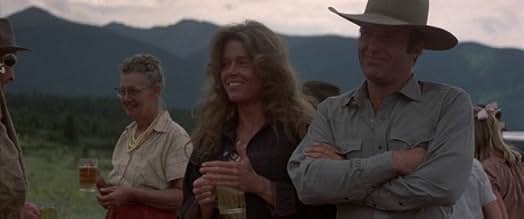
Jason Robards plays such a slimeball character in this that you know the ending from about the fourth minute. Nevertheless, it's a good story, with lots of hidden secrets to reveal. Caan plays a believable laid-back love interest for tough, gutsy Jane Fonda. The best thing is the photography, however-- in particular the dance scene, in which the camera follows Fonda and Caan as they move through a crowded outdoor dance floor without every losing either focus or the stars. Breathtaking. Some great mountains somewhere in Wyoming come close to stealing the show.
Reason for Title
It may be my chick flick-oriented mind, but I believe there is a reason for the title, "Comes a Horseman." Ella Connor is the proverbial damsel in distress and in need of rescue. Frank arrives as the rescuer on a horse, but his role in this respect is not obvious because he is more dead than alive after being shot in an ambush. Instead of arriving as the conquering hero on horseback, he is slung across the saddle of Dodger, Ella's elderly ranch hand, who has found him gravely wounded. Dodger at once deposits Frank in the bunk house of Ella's ranch, where Dodger and Ella nurse him back to health.
I remember the touching, wistful scene in which Ella gazes at the doll house her late father had made for her when she was a little girl. The house is a perfect miniature of Ella's childhood home, which she has inherited from her parents. Her expression shows her longing for the unfulfilled dreams of finding Mr. Right and continuing her family's ranching tradition. There also is the scene in which Ella tries to bottle feed an orphaned foal, only to have the creature not survive. Ella shows her maternal instinct in caring for the animal, and this shows her unfulfilled dream of motherhood. Stoically, she carries the dead foal outside and buries it.
I especially noticed the respect Frank has for Ella and the companionship and partnership they share while working on the ranch, with these aspects of their association turning into true love and plans for marriage. Just before the tragic loss of the house, Frank comes home from town and sets a little black velvet box -- presumably holding an engagement ring -- at Ella's place at the kitchen table. Their relationship, along with the beautiful scenery of Colorado, really "make" this movie meaningful to me.
I remember the touching, wistful scene in which Ella gazes at the doll house her late father had made for her when she was a little girl. The house is a perfect miniature of Ella's childhood home, which she has inherited from her parents. Her expression shows her longing for the unfulfilled dreams of finding Mr. Right and continuing her family's ranching tradition. There also is the scene in which Ella tries to bottle feed an orphaned foal, only to have the creature not survive. Ella shows her maternal instinct in caring for the animal, and this shows her unfulfilled dream of motherhood. Stoically, she carries the dead foal outside and buries it.
I especially noticed the respect Frank has for Ella and the companionship and partnership they share while working on the ranch, with these aspects of their association turning into true love and plans for marriage. Just before the tragic loss of the house, Frank comes home from town and sets a little black velvet box -- presumably holding an engagement ring -- at Ella's place at the kitchen table. Their relationship, along with the beautiful scenery of Colorado, really "make" this movie meaningful to me.
One of the most real western movies ever!
I only downrated this movie from 10 out of 10 for the predictable script. I was amused by the comment that Richard Farnsworth seemed out of breath. I am not even Farnsworth's age at filming yet, live in the sticks and I am similarly out of breath when doing heavy work. I have had to quit roping at age 60 due to back pain from previous ski racing injuries and occasional horse falls. In any case this is a very accurate description of cattle ranching anywhere. I have visited places in our Big Smoky Valley where real cattle ranches lived, raised kids and worked in mud, snow, very little for conveniences and without the power grid. We will go to a real cattle roundup near McDermitt, NV next fall of 4000 cattle. This is done by a pioneer family with four brothers, and offspring and is a prized invitation.
Watching home movies from real ranchers might convince some city people who don't notice things like such rudimentary sparse conditions. One example of a goof in the movie was Fonda putting on a watch which would have been an extreme extravagance in 1945. Had this movie had writing as realistic as the filming, it would have been much better. Robards was just to vicious to be real. This was 1945, not 1875, and he couldn't have gotten away with all the murders. The automobiles used, Fonda's 1928 or 29 Model A pickup, and Robard's 41 convertible, the Sheriff's 37 Dodge, and the Banker's 42 Plymouth were all very typical. In 1945, people didn't have the kind of money that they do now, and drove a lot older cars and there were no new cars between 1943 and 1946, and very few 1942 models due to the war.
The simple conversations are typical of cowboys and rural people who work hard and don't play boom boxes and don't say much. They are not driven like city people and work much more quietly. The courting buildup between Caan and Fonda had to do with each adapting to the other gradually and trust forming. It wasn't that Caan was laid back as much as he distrusted Fonda's impetuous reactions at first. The writers really got dialog and realistic conditions right.
I am from a rural background, went to college, drafted into the Army, then finished college and lived and worked in bigger and bigger places and did travel to a lot of places including Europe and Asia. I finally got tired of it, knowing I could create my own job in a small place. This is why a lot of people live in simple places and why so many retire in simple places. They don't care that there are no cable systems, malls, stores, or hospitals. That last long ride to a hospital hopefully will finish you off in the time it takes to get there. Simple places with low housing prices, and a simpler more outdoor life allow retirement poor couples to survive with a decent lifestyle which is far divorced from city/suburban pressured lifestyles. When people wonder why anyone would choose such a life, particularly after "seeing the world" some of it is the above. Handshake business, people who care about each other but still fight and argue, and leaving your doors unlocked is real rural culture, particularly in the west, but you always distrust government and you keep your guns ready.
I highly recommend this movie, I would have given it 8.5 out of 10, but the software is whole numbers, so it is rounded upward.
Watching home movies from real ranchers might convince some city people who don't notice things like such rudimentary sparse conditions. One example of a goof in the movie was Fonda putting on a watch which would have been an extreme extravagance in 1945. Had this movie had writing as realistic as the filming, it would have been much better. Robards was just to vicious to be real. This was 1945, not 1875, and he couldn't have gotten away with all the murders. The automobiles used, Fonda's 1928 or 29 Model A pickup, and Robard's 41 convertible, the Sheriff's 37 Dodge, and the Banker's 42 Plymouth were all very typical. In 1945, people didn't have the kind of money that they do now, and drove a lot older cars and there were no new cars between 1943 and 1946, and very few 1942 models due to the war.
The simple conversations are typical of cowboys and rural people who work hard and don't play boom boxes and don't say much. They are not driven like city people and work much more quietly. The courting buildup between Caan and Fonda had to do with each adapting to the other gradually and trust forming. It wasn't that Caan was laid back as much as he distrusted Fonda's impetuous reactions at first. The writers really got dialog and realistic conditions right.
I am from a rural background, went to college, drafted into the Army, then finished college and lived and worked in bigger and bigger places and did travel to a lot of places including Europe and Asia. I finally got tired of it, knowing I could create my own job in a small place. This is why a lot of people live in simple places and why so many retire in simple places. They don't care that there are no cable systems, malls, stores, or hospitals. That last long ride to a hospital hopefully will finish you off in the time it takes to get there. Simple places with low housing prices, and a simpler more outdoor life allow retirement poor couples to survive with a decent lifestyle which is far divorced from city/suburban pressured lifestyles. When people wonder why anyone would choose such a life, particularly after "seeing the world" some of it is the above. Handshake business, people who care about each other but still fight and argue, and leaving your doors unlocked is real rural culture, particularly in the west, but you always distrust government and you keep your guns ready.
I highly recommend this movie, I would have given it 8.5 out of 10, but the software is whole numbers, so it is rounded upward.
Horsewoman. Surely?
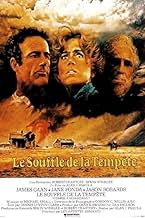
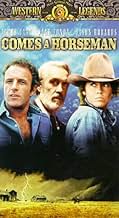
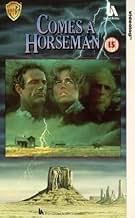
Comes a Horseman is directed by Alan J. Pakula and written by Dennis Lynton Clark. It stars Jane Fonda, James Caan, Jason Robards and Richard Farnsworth. Music is by Michael Small and cinematography by Gordon Willis.
It seems the ideas and willing behind Comes a Horseman are made of sturdy stuff, you sense that the makers wanted to make a reflective post-modern Western set in post World War II times. Tonally they get it mostly right, it is very sombre, both in characterisations and the changing of the times thematic beat. Plot is hardly thrilling as Robards' land baron plots to oust Fonda and Caan out of their respective homesteads in readiness for the oil company to come destroy the magnificent landscape.
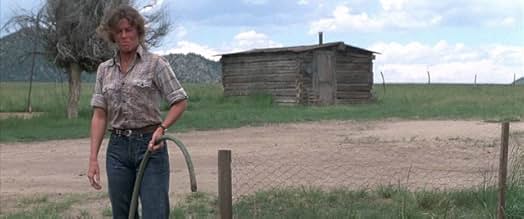
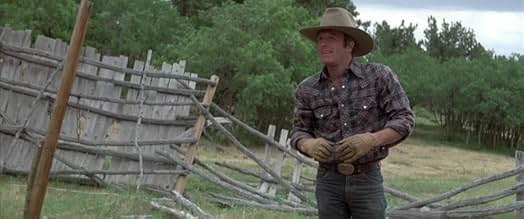
Ella Connors (Fonda) is a feisty but vulnerable woman, Frank Athearn (Caan) is fresh out of service in the war and carries the emotional scars of said battles. They form an unsteady alliance to ward off Jacob Ewing (Robards), but as past turmoil's come to the surface it's touch and go as to who, if anyone, will win out.
With the Colorado landscape beautifully captured by Willis, and the performances (including an Academy Award Nomination for Farnsworth as Ella's sage old ranch hand) solid as a rock, the pic retains interest if you can tolerate the laborious pace favoured by Pakula. There's a couple of action sequences within, but they feel like afterthoughts, so we are left to buy into the rueful characterisations and their respective attempts at post war living out there on the ranges. 6.5/10
It seems the ideas and willing behind Comes a Horseman are made of sturdy stuff, you sense that the makers wanted to make a reflective post-modern Western set in post World War II times. Tonally they get it mostly right, it is very sombre, both in characterisations and the changing of the times thematic beat. Plot is hardly thrilling as Robards' land baron plots to oust Fonda and Caan out of their respective homesteads in readiness for the oil company to come destroy the magnificent landscape.
Ella Connors (Fonda) is a feisty but vulnerable woman, Frank Athearn (Caan) is fresh out of service in the war and carries the emotional scars of said battles. They form an unsteady alliance to ward off Jacob Ewing (Robards), but as past turmoil's come to the surface it's touch and go as to who, if anyone, will win out.
With the Colorado landscape beautifully captured by Willis, and the performances (including an Academy Award Nomination for Farnsworth as Ella's sage old ranch hand) solid as a rock, the pic retains interest if you can tolerate the laborious pace favoured by Pakula. There's a couple of action sequences within, but they feel like afterthoughts, so we are left to buy into the rueful characterisations and their respective attempts at post war living out there on the ranges. 6.5/10


Did you know
- TriviaStuntman Jim Sheppard was killed when a horse that was dragging him veered from its course and caused him to hit his head on a fence post. The scene appears in the movie, although it was cut right before Sheppard's fatal accident.
- GoofsWhen Ewing is shot and falls off of his horse, his foot slips THROUGH the stirrup. When the horse gallops away, the foot of the stuntman doubling for Jason Robards is TIED to the stirrup by a long strap that can be safely released.
- Quotes
Frank 'Buck' Athearn: You know lady, you got balls the size of grapefruits.
- Crazy creditsOur thanks to the Forest Service for allowing us to film in the Coconino National Forest
- SoundtracksGet Along Little Dogies
Cowboy cattle song
- How long is Comes a Horseman?Powered by Alexa
Details
- Release date
- Country of origin
- Language
- Also known as
- Comes a Horseman Wild and Free
- Filming locations
- Production company
- See more company credits at IMDbPro
Box office
- Budget
- $10,000,000 (estimated)
- Gross US & Canada
- $9,585,769
- Gross worldwide
- $9,585,769
- Runtime
- 1h 58m(118 min)
- Color
- Aspect ratio
- 2.39 : 1
Contribute to this page
Suggest an edit or add missing content