IMDb RATING
7.1/10
4.4K
YOUR RATING


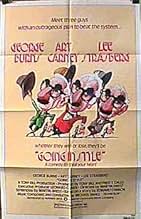
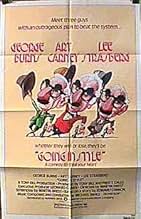
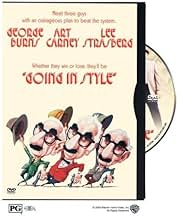
Three friends living on the dole decide to rob a bank.Three friends living on the dole decide to rob a bank.Three friends living on the dole decide to rob a bank.
- Awards
- 1 win & 1 nomination total


Pamela Payton-Wright
- Kathy
- (as Pamela Payton Wright)


- Director
- Writers
- All cast & crew
- Production, box office & more at IMDbPro
7.14.4K
1
2
3
4
5
6
7
8
9
10
Featured reviews
First-half is great, but it loses its impetus and steam...
Three elderly friends concoct a scheme to rob a bank...but what will they do with all that money? Although bank robbery is hardly endearing, director Martin Brest (doing very nimble work) glosses over the extremities and gives us George Burns, Art Carney and Lee Strasberg at their most amiable. Brest isn't afraid to be tender, but he's not maudlin and has a good sense of humor and pacing. Unfortunately, the screenplay loses steam in its third act, which gets gummed up with much realer issues and plot-snags (an unconvincing jaunt to Las Vegas is also weak). Up to that point, however, surprisingly good, with the three leads impeccably interacting. *** from ****
'How would you guys like to go on a stick-up with me?'
Martin Brest is best known for his popular successes BEVERLY HILLS COP, MIDNIGHT RUN and SCENT OF A WOMAN, but more recently his career made a bit of a tumble with the disastrous GIGLI (2003), starring Ben Affleck and Jennifer Lopez and snoozefest (and trying so hard to be 'profound') MEET JOE BLACK (1998), but this little gem is how he got noticed (and might even be his best effort yet).
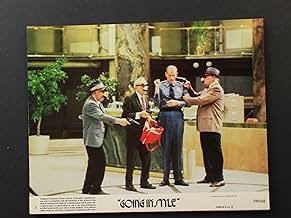
The story is simple: three kindly old men (George Burns, Art Carney and Lee Strasberg), indistinguishable from the half-forgotten ranks of senior citizens you might pass on any city park bench in warm weather, decide to light up their lives by sticking up a Manhattan bank in broad daylight.
Don't be put off by the idea of 'three old guys robbing a bank.' This film is a delight in a very New York and very low-key fashion with hardly any grand scenes or set-ups, but with great writing, sharp dialog and the three leads giving their very best. Although the film was marketed as a comedy, it's above all a heartfelt drama and a truly moving portrayal of old age.
One of the highlights: when the three seniors are on a little trip to Manhattan and Art Carney starts dancing to the rhythms some Caribbean Street musicians. It's such a marvel to see 80-year old George Burns clapping and smiling and genuinely having fun at this improvised street scene. It's a shame this film is practically forgotten. A heartfelt, funny, and ultimately a very moving picture. Don't miss this one.
Camera Obscura --- 9/10
The story is simple: three kindly old men (George Burns, Art Carney and Lee Strasberg), indistinguishable from the half-forgotten ranks of senior citizens you might pass on any city park bench in warm weather, decide to light up their lives by sticking up a Manhattan bank in broad daylight.
Don't be put off by the idea of 'three old guys robbing a bank.' This film is a delight in a very New York and very low-key fashion with hardly any grand scenes or set-ups, but with great writing, sharp dialog and the three leads giving their very best. Although the film was marketed as a comedy, it's above all a heartfelt drama and a truly moving portrayal of old age.
One of the highlights: when the three seniors are on a little trip to Manhattan and Art Carney starts dancing to the rhythms some Caribbean Street musicians. It's such a marvel to see 80-year old George Burns clapping and smiling and genuinely having fun at this improvised street scene. It's a shame this film is practically forgotten. A heartfelt, funny, and ultimately a very moving picture. Don't miss this one.
Camera Obscura --- 9/10
A masterpiece
This is #2 on my all time favorite movies list. It's a real hidden gem. It stars George Burns (in the performance of his career), the always brilliant Art Carney, and the excellent Lee Strasberg as three old senior citizens who decide to rob a bank out of boredom. Martin Brest who later went on to direct such fine films as MIDNIGHT RUN, SCENT OF A WOMAN, and BEVERLY HILLS COP has his debut film here and without a doubt it's still his best. The story is so original and the performances are so outstanding that this film is really a masterpiece in my eyes. It's funny, exciting, surprising, and extremely touching. The screen writer Tony Bill takes a unrealistic situation and makes it extremely realistic. The Queens backround is perfect. A great, hidden masterpiece of a movie.
A great movie with three great entertainers.
"Going In Style" is one of the more entertaining movies I've seen. The characters, Joe, Al and Willie exemplify the elderly male generation of our time. Three men who've partially lost their identities in no longer being able to carry on their vocations. As more and more of us will be moving into the retired or "seniors" group, this movie shows us both the problems of retirement and one very entertaining and interesting solution. All three characters are at an age which is too often ignored in motion pictures. Though basically this movie isn't exactly moral, it's a very good insight into the lives of its characters. Art Carney is an accomplished actor and George Burns was an accomplished entertainer. I'm not sure how many people know that Lee Strasberg was one of, if not the great teacher of dramatic acting during his lifetime. In "Going In Style," Strasberg, as the "not always up to speed" character Willie, is nevertheless often a bit of a surprise. All three men, portraying the various ways we age, give a beautiful performance, each in his own way. As a minor collector, I consider the motion picture the major art form of the past century. That's not to say that all the movies made during the last century are works or art, but quite often many were. It remains to be seen whether that tradition will be carried on into the new century before us. Whatever, I am very grateful for the gift of this movie and highly recommend it.
A masterful comedy that's also a touching portrait of old age
I've found it's almost impossible to predict what my opinion will be on a film that I haven't seen in many years. I recently rented both The Out of Towners (1970) and Going in Style. I hadn't seen either since at least the early 1980s, when I was still a teen. Before watching this time I would have predicted that they were both about equally good--that's what I remember from my earlier assessments. However, I ended up being slightly disappointed with The Out of Towners while I was blown out of the water by how excellent Going in Style is.
This is a film that's best to watch knowing as little as possible about the plot beforehand. For those who must know something of the story, however, it concerns three elderly men who are living together in Astoria, Queens (part of New York City)--Joe (George Burns), Al (Art Carney) and Willie (Lee Strasberg). They're on Social Security, which doesn't provide a lot of money--that's why they're living together. They spend most of their days in a park near their apartment, feeding pigeons, watching children play, and so on. Joe comes up with a very unusual idea to supplement their income and put some excitement in their lives. The first half of the film involves planning and carrying out the idea. The second half deals with the aftermath, and is kind of an extended character study.
The most remarkable characteristic of Going in Style is that writer and director Martin Brest, with co-writer Edward Cannon, managed to make a film that has elements of both almost absurdist comedy and deeply moving realist drama co-existing at the same time. Going in Style is a poignant portrait of old age, occasionally deeply sad and even pessimistic, but also very funny, and the three principal characters possess an almost Zen-like satiety, calmness and wisdom.
It's interesting to note that Brest later went on to direct films as diverse as Beverly Hills Cop (1984) and Meet Joe Black (1998). Going in Style has elements of both--Beverly Hills Cop's wacky crime-comedy and involved plot structure and Meet Joe Black's emotionally impactful minimalism and social/philosophical subtexts. Another way to describe the film might be in terms of another director, Woody Allen. Imagine Allen making Take the Money and Run (1969) or Bananas (1971), but in a mood much closer to Alice (1990) or even September (1987).
The performances are excellent, but Burns especially stands out. Joe is a very different character for him, much more serious and gruff--he's almost a bit of a "heavy". If Burns had been just a bit younger, Going in Style shows that he could have easily had a career make-over/turnaround via Quentin Tarantino, similar to John Travolta. Carney and Strasberg both easily paint complex characters, as well, and the chemistry of any two or more of them together is simply magical.
Brest, showing early inclinations towards minimalism, peppers the film with many extremely effective "pregnant pauses". These enable the cast to subtly stretch their mastery of comic timing and give more depth to the tragic or seriously emotional scenes. In both its comic and tragic modes, Going in Style tends to be a relatively "quiet" film--the tone/atmosphere reflects that Zen-like disposition that Brest and his cast create for the characters. We could easily see most of the film's "action" growing out of the pregnant pauses. Brest emphasizes this by loading early scenes with such pauses, such as when our protagonist trio are sitting on the park bench and hatching their plan.
The above might sound a bit ridiculous or overly abstract to some, but keep in mind that it's all part of Brest's touching portrait of old age (an incredible feat for a 27-year old writer-director, by the way). Joe, Al and Willie live day by day, because they figure that each might literally be their last day. They're not in a hurry to do anything. They prefer to soak up the fullness of each instant. They're mostly content with their lives and have accepted their mortal fates. Their scheme is relatively easy to pull off because with the slight exception of Willie, who interestingly has some issues from the past he is still trying to deal with and is thus a bit less comfortable with the present, they look at it as just another thing they can experience before they check out of the world, with the consequences of the scheme, no matter what they are, all having their advantages.
Brest works in a bit of sly social commentary more conspicuously into the script, as well. One example is the radio announcer who notes that the Gray Panthers are capitalizing on the events as a means to underscore the U.S.'s neglect of old folks. This is doubly clever because not only is the claim literally true, there are subtexts about opportunism, media influence, and so on. The above example is actually a very small detail in the film, but this is a film that has a wealth of such small details.
This is a film that's best to watch knowing as little as possible about the plot beforehand. For those who must know something of the story, however, it concerns three elderly men who are living together in Astoria, Queens (part of New York City)--Joe (George Burns), Al (Art Carney) and Willie (Lee Strasberg). They're on Social Security, which doesn't provide a lot of money--that's why they're living together. They spend most of their days in a park near their apartment, feeding pigeons, watching children play, and so on. Joe comes up with a very unusual idea to supplement their income and put some excitement in their lives. The first half of the film involves planning and carrying out the idea. The second half deals with the aftermath, and is kind of an extended character study.
The most remarkable characteristic of Going in Style is that writer and director Martin Brest, with co-writer Edward Cannon, managed to make a film that has elements of both almost absurdist comedy and deeply moving realist drama co-existing at the same time. Going in Style is a poignant portrait of old age, occasionally deeply sad and even pessimistic, but also very funny, and the three principal characters possess an almost Zen-like satiety, calmness and wisdom.
It's interesting to note that Brest later went on to direct films as diverse as Beverly Hills Cop (1984) and Meet Joe Black (1998). Going in Style has elements of both--Beverly Hills Cop's wacky crime-comedy and involved plot structure and Meet Joe Black's emotionally impactful minimalism and social/philosophical subtexts. Another way to describe the film might be in terms of another director, Woody Allen. Imagine Allen making Take the Money and Run (1969) or Bananas (1971), but in a mood much closer to Alice (1990) or even September (1987).
The performances are excellent, but Burns especially stands out. Joe is a very different character for him, much more serious and gruff--he's almost a bit of a "heavy". If Burns had been just a bit younger, Going in Style shows that he could have easily had a career make-over/turnaround via Quentin Tarantino, similar to John Travolta. Carney and Strasberg both easily paint complex characters, as well, and the chemistry of any two or more of them together is simply magical.
Brest, showing early inclinations towards minimalism, peppers the film with many extremely effective "pregnant pauses". These enable the cast to subtly stretch their mastery of comic timing and give more depth to the tragic or seriously emotional scenes. In both its comic and tragic modes, Going in Style tends to be a relatively "quiet" film--the tone/atmosphere reflects that Zen-like disposition that Brest and his cast create for the characters. We could easily see most of the film's "action" growing out of the pregnant pauses. Brest emphasizes this by loading early scenes with such pauses, such as when our protagonist trio are sitting on the park bench and hatching their plan.
The above might sound a bit ridiculous or overly abstract to some, but keep in mind that it's all part of Brest's touching portrait of old age (an incredible feat for a 27-year old writer-director, by the way). Joe, Al and Willie live day by day, because they figure that each might literally be their last day. They're not in a hurry to do anything. They prefer to soak up the fullness of each instant. They're mostly content with their lives and have accepted their mortal fates. Their scheme is relatively easy to pull off because with the slight exception of Willie, who interestingly has some issues from the past he is still trying to deal with and is thus a bit less comfortable with the present, they look at it as just another thing they can experience before they check out of the world, with the consequences of the scheme, no matter what they are, all having their advantages.
Brest works in a bit of sly social commentary more conspicuously into the script, as well. One example is the radio announcer who notes that the Gray Panthers are capitalizing on the events as a means to underscore the U.S.'s neglect of old folks. This is doubly clever because not only is the claim literally true, there are subtexts about opportunism, media influence, and so on. The above example is actually a very small detail in the film, but this is a film that has a wealth of such small details.


Did you know
- TriviaWhere Joe (George Burns) is looking through his old photos and other memorabilia, he looks at a photo of a young couple, presumably Joe and his wife, and it makes him start to cry. The photo is actually a picture of Burns and his real (late) wife and legendary stage partner Gracie Allen.
- GoofsAfter Joe and Al win over $60,000 at the craps table, the cashier cashes chips in for cash. In reality, a win of that magnitude would require that a more high-ranking casino employee step in and have them sign tax forms before payout was made.
- How long is Going in Style?Powered by Alexa
Details
- Release date
- Country of origin
- Official sites
- Language
- Also known as
- Stepping Out
- Filming locations
- Production company
- See more company credits at IMDbPro
Box office
- Budget
- $5,500,000 (estimated)
- Gross US & Canada
- $26,869,286
- Opening weekend US & Canada
- $1,781,164
- Dec 30, 1979
- Gross worldwide
- $26,869,286
Contribute to this page
Suggest an edit or add missing content