

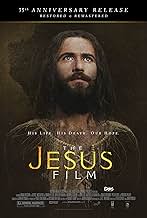
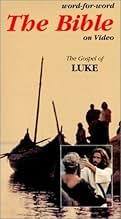
Filmed on location in Israel at authentic biblical sites, this inspirational drama and commercial success retells the life of Christ.Filmed on location in Israel at authentic biblical sites, this inspirational drama and commercial success retells the life of Christ.Filmed on location in Israel at authentic biblical sites, this inspirational drama and commercial success retells the life of Christ.





Alexander Scourby
- Luke
- (voice)


Yosef Shiloach
- Joseph
- (as Joseph Shiloach)


Zeev Berlinsky
- Blind Begger
- (as Ze'ev Berlinski)


Nissim Garamech
- Thomas
- (as Nisim Gerama)
- Directors
- Writer
- All cast & crew
- Production, box office & more at IMDbPro
7.12.9K
1
2
3
4
5
6
7
8
9
10
Featured reviews
Half-Way Between Love and Hate
From a motion picture perspective, the "Jesus" film is primitive and flawed for audiences who are familiar with cinematic convention. From a biblical story-telling perspective however, it is brilliant. I'm therefore rating it at just "5" - half-way between love and hate, as I shall explain in this review.
That the producers achieved what they set out to do is indisputable: it's the most watched movie of all time. That the film is clear and truthful to the Gospel account of Luke is indisputable. That we need to consider the intended audience is also indisputable. Released just two years after Zeffirelli's magnificent masterpiece, "Jesus of Nazareth", this film comes across as is a lifeless clone... IF you've seen the Zeffirelli film, that is.
But what if you haven't -- what if you couldn't; maybe because you live in the jungle some place away from TV sets and westernised living? Then some chaps come into your village, set up a sheet between trees, wait for dark and then display these "magic pictures". NOW which film is the most powerful? The tables are turned, and all of a sudden, the "Jesus" film comes out tops. The film is not sophisticated, but it's not meant to be. Its power is not due to the imagery, but due to the Word of God that it illustrates.
Now, what about all the narration? It makes it sound like one of those old 16 mm "Fact and Faith" films that my maths teacher showed in school way back. Like an old newsreel. For a start, narration makes the translators' tasks much easier- it is, after all, the most translated film in history. However, during the climax, we actually loose the narrator altogether - a very unusual device, and I'm still not sure if it works that way or not. If I was cynical, I'd say the narrator went off for a coffee break, but I think they did it that way to help draw the audience, sitting spellbound on the hard earth, more into the story. The idea of any cinematic style has long left the screen, so it probably really doesn't matter, and on the primitive level, it certainly works.
Again, desperately failing not to be cynical, I see this film as perhaps the Protestant answer to the Catholic "Jesus of Nazareth" that it desperately tries to copy in part, and which was released just two years earlier. It reflects the fundamentalist ethos that it's okay to "use" film for religious purposes, but it is not okay to be absorbed by it. Art can be tolerated so long as the message is loud and clear. I don't mean to be cruel or mean; I admire and respect the folks who made this. However, I guess I just fail to understand why the producers were not able to get a few more talented people to guide the project to completion. It is a prime example of blinkered movie vision. In the end, it doesn't really matter, however, because the purpose of the film is to help non-Christians encounter Christ himself in his resurrection power - not to have a great night out.
As a side note, I have figured out a way to really enjoy this movie. Get something useful to do like washing the dishes or painting a wall. Then, put the movie on in the same room, and listen to the soundtrack as you work, and forget it even has moving pictures. The film makes excellent audio, and it has a wonderful added bonus: whenever you get really curious, all you need to do is take a peek at the screen, and low and behold, as if by magic, there's a moving picture of what you've just been listening to! A quite awesome way of listening to the Bible on tape. Because the visuals are almost entirely incidental, you can "listen" to the movie and not miss a thing!
On this film, I'm really sitting on the fence. For achieving what it set out to do, which is basically tell the story of Jesus to primitive audiences, I'd rate it 10 out of 10. As a film, with any depth of artistic talent, I have to be honest and give it a 1 out of 10. So I have to settle for a 5 rating. Which is one higher that the 4 that I hated myself for originally giving it, before writing this review and finding a valid reason to mark it up at least one notch.
That the producers achieved what they set out to do is indisputable: it's the most watched movie of all time. That the film is clear and truthful to the Gospel account of Luke is indisputable. That we need to consider the intended audience is also indisputable. Released just two years after Zeffirelli's magnificent masterpiece, "Jesus of Nazareth", this film comes across as is a lifeless clone... IF you've seen the Zeffirelli film, that is.
But what if you haven't -- what if you couldn't; maybe because you live in the jungle some place away from TV sets and westernised living? Then some chaps come into your village, set up a sheet between trees, wait for dark and then display these "magic pictures". NOW which film is the most powerful? The tables are turned, and all of a sudden, the "Jesus" film comes out tops. The film is not sophisticated, but it's not meant to be. Its power is not due to the imagery, but due to the Word of God that it illustrates.
Now, what about all the narration? It makes it sound like one of those old 16 mm "Fact and Faith" films that my maths teacher showed in school way back. Like an old newsreel. For a start, narration makes the translators' tasks much easier- it is, after all, the most translated film in history. However, during the climax, we actually loose the narrator altogether - a very unusual device, and I'm still not sure if it works that way or not. If I was cynical, I'd say the narrator went off for a coffee break, but I think they did it that way to help draw the audience, sitting spellbound on the hard earth, more into the story. The idea of any cinematic style has long left the screen, so it probably really doesn't matter, and on the primitive level, it certainly works.
Again, desperately failing not to be cynical, I see this film as perhaps the Protestant answer to the Catholic "Jesus of Nazareth" that it desperately tries to copy in part, and which was released just two years earlier. It reflects the fundamentalist ethos that it's okay to "use" film for religious purposes, but it is not okay to be absorbed by it. Art can be tolerated so long as the message is loud and clear. I don't mean to be cruel or mean; I admire and respect the folks who made this. However, I guess I just fail to understand why the producers were not able to get a few more talented people to guide the project to completion. It is a prime example of blinkered movie vision. In the end, it doesn't really matter, however, because the purpose of the film is to help non-Christians encounter Christ himself in his resurrection power - not to have a great night out.
As a side note, I have figured out a way to really enjoy this movie. Get something useful to do like washing the dishes or painting a wall. Then, put the movie on in the same room, and listen to the soundtrack as you work, and forget it even has moving pictures. The film makes excellent audio, and it has a wonderful added bonus: whenever you get really curious, all you need to do is take a peek at the screen, and low and behold, as if by magic, there's a moving picture of what you've just been listening to! A quite awesome way of listening to the Bible on tape. Because the visuals are almost entirely incidental, you can "listen" to the movie and not miss a thing!
On this film, I'm really sitting on the fence. For achieving what it set out to do, which is basically tell the story of Jesus to primitive audiences, I'd rate it 10 out of 10. As a film, with any depth of artistic talent, I have to be honest and give it a 1 out of 10. So I have to settle for a 5 rating. Which is one higher that the 4 that I hated myself for originally giving it, before writing this review and finding a valid reason to mark it up at least one notch.
10denis888
Jesus came to all of us
To write about such a delicate film as about Christ Himself in this age of an extreme political correctness is a tough task. This work appeals immensely to all the believers and works out fine to convert all the newcomers. To the non-believers, this work will seem dull and boring, but then, let's be straight - this is the most accurate, the most precise and elegant retelling of the Gospel According to Luke. Since I am a Protestant Christian myself, I must say that this film really did help me to understand who Jesus is and what He was doing among us the people on Earth. The play of Mr. Deacon is very good, he does an extremely difficult work and he does it well. I remember my eyes were wet with tears during the Crucifix scene, and then my heart leaped violently with joy during the final scenes. The film is very well done, by seeing the sandy dusty plains and hills of Israel, you feel the smell of age, you do believe in the truth of the plot and you do follow the film scene by scene. A very serious and thoughtful work.
Great film, good for everyone
A somewhat expurgated version of the gospel of Luke, Brian deacons version of Jesus is appealing, if somewhat un-animated. I have a great love for this film ( mainly due to the fact that it was the first film about Jesus I can remember seeing from my childhood.) Not as epic as Zeffirelli's film, nor as graphic as Gibson's, a faithful representation with only a few omissions ( I'm sure either due to budget or time constraints). the acting is at times somewhat melodramatic, but that is part of the charm of this film. the cinematography is not ground breaking but certainly serves its purpose and doesn't overshadow the story, and really thats one of the best things about this film, nothing in it overshadows the story as a whole.
The Christ Jesus Filled with Truth and Peace
I bought this for myself several weeks ago among other DVDs. I watched all the others immediately. But I waited until I was in the right frame of mind. Oh, what I missed all those days!
There are those who will say this version is dry. But I say this version is full of truth and peace.
The mood which pervades this wonderful film is so close to the Gospel as I have read it, and it is told with such a lovely pace of calm and reflection that it calls one into the telling with gentleness and not commercial flash and color. That is, if one is ready.
We are all so "spoiled" by melodramatic presentations that we forget that the story of the life of Jesus was dramatic on its own merits without need for Hollywood's elaborations or expansions.
"Jesus" is a movie I recommend to everyone, yes, even those who have no faith or interest in the Christ, if not more so.
Many blessings to this film, its creators and participants and the message it imparts with such grace, truth and peace.
There are those who will say this version is dry. But I say this version is full of truth and peace.
The mood which pervades this wonderful film is so close to the Gospel as I have read it, and it is told with such a lovely pace of calm and reflection that it calls one into the telling with gentleness and not commercial flash and color. That is, if one is ready.
We are all so "spoiled" by melodramatic presentations that we forget that the story of the life of Jesus was dramatic on its own merits without need for Hollywood's elaborations or expansions.
"Jesus" is a movie I recommend to everyone, yes, even those who have no faith or interest in the Christ, if not more so.
Many blessings to this film, its creators and participants and the message it imparts with such grace, truth and peace.
The Life of Christ as recorded in the Gospel of Luke
This was, I thought, the best cinematic summary of the life of Christ I have yet seen. Brian Deacon, who portrays Jesus, looks the part and speaks with quiet authority. His interaction with children in the movie gives a moving picture of the tenderness of Christ. The words of Christ are given in modern translation making it easy for the viewer to understand the language. Simon Peter (Niko Nitai) looks the part and acts it well. The movie allows about the same amount for the last week of Christ's life as does the gospel (about 25%). While not a perfect movie (nothing on earth is perfect), this is a delightful one. If you are looking for an accurate picture of Christ which accords well with the Bible, this is it!


Did you know
- TriviaThe film has been translated into over 1000 languages to date (including 10 different sign language versions), and 235 more translations are in progress, making it the most translated film in history.
- GoofsAfter laying the body in the tomb, the actor under the burial shroud can clearly be seen breathing.
- Alternate versionsAn alternate version was filmed concurrently with the English one, with the actors speaking in the authentic languages (Aramic, Hebrew, Greek and Latin) appropriate for the events and people portrayed. This version is then used with a voice-over narration in any of several modern language.
- ConnectionsEdited from New Media Bible, The: The Gospel According to St. Luke (1979)
- SoundtracksConcerto brandeburghese No. 1, BWV 1046 : 2° movimento
by Johann Sebastian Bach
- How long is The Jesus Film?Powered by Alexa
Details
Box office
- Budget
- $6,000,000 (estimated)
Contribute to this page
Suggest an edit or add missing content