IMDb RATING
5.6/10
1.6K
YOUR RATING

Sculptor Paul is reunited with a former great love after a long time, but is much more impressed by his 15-year-old daughter, Laura, who looks like her mother when Paul was in love with her.Sculptor Paul is reunited with a former great love after a long time, but is much more impressed by his 15-year-old daughter, Laura, who looks like her mother when Paul was in love with her.Sculptor Paul is reunited with a former great love after a long time, but is much more impressed by his 15-year-old daughter, Laura, who looks like her mother when Paul was in love with her.
- Director
- Writers
- Stars


William Milié
- Le chorégraphe
- (as William Millie)
Gunilla Astrom
- Diane
- (uncredited)
Bernard Daillencourt
- Docteur Benoît
- (uncredited)
David Hamilton
- Un invité à la réception
- (uncredited)
Patrick Juvet
- Pianiste
- (uncredited)
Katia Kofet
- Claudie
- (uncredited)
Luciano
- Timothez Sega
- (uncredited)

Michael Pochna
- Gérard
- (uncredited)

Anja Schüte
- Dancer
- (uncredited)
- Director
- Writers
- All cast & crew
- Production, box office & more at IMDbPro
5.61.6K
1
2
3
4
5
6
7
8
9
10
Featured reviews
Pseudo-artistic and empty
Laura, Les Ombres De L'ete
David Hamilton does a great job expressing his seeming obsession with pre-pubescent ballet dancers in Laura, Les Ombres De L'ete. Possibly one of the worst (and most boring) "art house" pictures ever made, professional photographer/amateur filmmaker Hamilton drowns in his excessive use of soft focus, pseudo-artistic fadeouts, and nudity, devices employed to make up for the shallow plot.
After seeing teenaged Laura (Dawn Dunlap) at ballet class, sculptor Paul Thomas Wyler (James Mitchell) knows that he must sculpt this beautiful little girl, just as he had done with her mother Sarah (Maud Adams) 20 or so years prior. But Sarah can see through his superficial intentions and tries her best to keep her very curious daughter from posing for this oh-so-artistic womanizer.
Laura contains several sequences of excessive nudity (mostly of young Dunlap) and there is no doubt that Hamilton's subjects are quite attractive; in fact, the photo-shoot scenes, with Sarah taking endless pictures of her naked daugher prancing around (including a few gymnastic poses), are certainly provocative. But like Hamilton's other exploitative French productions, the story is built around these sequences and without them there is little else to interest the viewer. The film comes across as heavy-handed, pretentious, and, ultimately, empty. Some termed this soft-core when it was released but the film simply isn't graphic enough to qualify for the category. -- David Ross Smith
David Hamilton does a great job expressing his seeming obsession with pre-pubescent ballet dancers in Laura, Les Ombres De L'ete. Possibly one of the worst (and most boring) "art house" pictures ever made, professional photographer/amateur filmmaker Hamilton drowns in his excessive use of soft focus, pseudo-artistic fadeouts, and nudity, devices employed to make up for the shallow plot.
After seeing teenaged Laura (Dawn Dunlap) at ballet class, sculptor Paul Thomas Wyler (James Mitchell) knows that he must sculpt this beautiful little girl, just as he had done with her mother Sarah (Maud Adams) 20 or so years prior. But Sarah can see through his superficial intentions and tries her best to keep her very curious daughter from posing for this oh-so-artistic womanizer.
Laura contains several sequences of excessive nudity (mostly of young Dunlap) and there is no doubt that Hamilton's subjects are quite attractive; in fact, the photo-shoot scenes, with Sarah taking endless pictures of her naked daugher prancing around (including a few gymnastic poses), are certainly provocative. But like Hamilton's other exploitative French productions, the story is built around these sequences and without them there is little else to interest the viewer. The film comes across as heavy-handed, pretentious, and, ultimately, empty. Some termed this soft-core when it was released but the film simply isn't graphic enough to qualify for the category. -- David Ross Smith
A very questionable film
David Hamilton may have made his name as a photographer but Laura leaves his writing and directing abilities with a lot of question marks. The plot and characterisations have holes that you could drive an army through.
When Paul asks if Laura would pose for his new sculpture Sarah refuses so why does she then say that she will take photos of a naked Laura for Paul to use? It's as if she is saying, "No, Mr Wyler, Laura will not pose naked but I will take lots of photos of Laura in erotic poses so that you can ogle her young naked body at your leisure." This is surely not the action of a responsible parent, especially as she knows him well enough not to let Laura anywhere near him. This is evident at a party given by Paul. Sarah, her husband Richard and Laura are invited to the party but Laura is left at home. There are other unanswered questions such as what did the woman at the party want to talk to Paul about and why was Paul allowed access to the ballet school? There is more but it would take too long to go into it all here.
As this is an erotic film centred around art, there is obviously a certain amount of nudity. David Hamilton shows his photographic background by having the ballet students adopting various poses and so looking like living tableaux. There was too much use of fade-to-black and the permanent soft-focus was annoying. This film does not warrant more than 2 stars.
When Paul asks if Laura would pose for his new sculpture Sarah refuses so why does she then say that she will take photos of a naked Laura for Paul to use? It's as if she is saying, "No, Mr Wyler, Laura will not pose naked but I will take lots of photos of Laura in erotic poses so that you can ogle her young naked body at your leisure." This is surely not the action of a responsible parent, especially as she knows him well enough not to let Laura anywhere near him. This is evident at a party given by Paul. Sarah, her husband Richard and Laura are invited to the party but Laura is left at home. There are other unanswered questions such as what did the woman at the party want to talk to Paul about and why was Paul allowed access to the ballet school? There is more but it would take too long to go into it all here.
As this is an erotic film centred around art, there is obviously a certain amount of nudity. David Hamilton shows his photographic background by having the ballet students adopting various poses and so looking like living tableaux. There was too much use of fade-to-black and the permanent soft-focus was annoying. This film does not warrant more than 2 stars.
A simple film which creates some memorable images
David Hamilton established his name as a fashion photographer through the still, dreamy soft focus images of young girls, usually portrayed in muted colours, for which he has become famous. At some point he appears to have decided that this experience was all he needed to produce great movies, and he started to direct films that characteristically show all the same features as his fashion images. Unfortunately these were not generally well received and some critics have suggested that he has only a rudimentary appreciation of how to blend successive still images into an ongoing movie sequence. Personally I greatly enjoy his still fashion photography and this enjoyment is sufficient for me to also appreciate his films - overlooking any faults in their dynamics. His best known film is probably "Bilitis", a study of a young girl coming of age, but my preference is for "Laura", a film about a young girl modeling for a sculptor who is blinded in a fire. We can, I hope, ignore comments on the IMDb database which suggest that there is something sinister in Hamilton's preference for models and actresses who appear very young. In his films his objective is to create a story which has a strong emotional appeal but which is also visually beautiful to watch. My judgment is that Laura achieves this objective superbly. One sequence which haunts my memory as much as any other film sequence I have ever seen; comes towards the end of this film. It shows the sculptor, nearly blinded by the fire, returning to his almost finished sculpture whilst he explores the torso of his model with an extended finger trying to recreate in his mind the beauty that he can no longer see.
My recommendation would be to watch this film, which is not readily obtainable today, as soon as any opportunity arises.
POSTSCRIPT - added January 2005
This film has - to my surprise - now been released as a DVD. If these various very different assessments intrigue you in any way, why not buy a copy and add your comments to those already here?
My recommendation would be to watch this film, which is not readily obtainable today, as soon as any opportunity arises.
POSTSCRIPT - added January 2005
This film has - to my surprise - now been released as a DVD. If these various very different assessments intrigue you in any way, why not buy a copy and add your comments to those already here?
The Clever Touch
Sometimes a movie can be merely about its images, like this one. The story can be about the images too.
I was very impressed with the way vignettes were composed. Rather lovely, most of them except for the annoying fade to black at the end of each and every one. To appreciate this, or rather to not be offended, I suppose you have to accept that the female form is appealing, and accept that a young girl can initiate an affair with an older man.
Besides the appeal of the balletgirls and the way they are displayed, there's the story.
It isn't much of one, surely insufficient for most commentors, and the fact that it is so slight seems to rile them a bit, as indication that the nudity was all that mattered.
But the elements of the story that do exist are what I call "folding." Usually the purpose of folding is to place the viewer in the movie, and that's the case here.
We have an artist in the writer/director who represents young girls in the nude. He and we have a surrogate on-screen, in a character who is an artist (a sculptor) and represents young girls in the nude. The titular Laura is a dancer, inviting viewers.
So far, the fold is ordinary. By the thinnest of plot devices, our sculptor goes blind after starting a sculpture of Laura. So she offers to be the model, allowing him to caress her on every part, sufficiently to make a clay copy, which he similarly caresses. She, meanwhile has a crush on him and seduces him during this process.
See the fold? We not only get to look but touch, and that touch is returned.
No, ma'am that's not a slight story. No, not at all.
Ted's Evaluation -- 2 of 3: Has some interesting elements.
I was very impressed with the way vignettes were composed. Rather lovely, most of them except for the annoying fade to black at the end of each and every one. To appreciate this, or rather to not be offended, I suppose you have to accept that the female form is appealing, and accept that a young girl can initiate an affair with an older man.
Besides the appeal of the balletgirls and the way they are displayed, there's the story.
It isn't much of one, surely insufficient for most commentors, and the fact that it is so slight seems to rile them a bit, as indication that the nudity was all that mattered.
But the elements of the story that do exist are what I call "folding." Usually the purpose of folding is to place the viewer in the movie, and that's the case here.
We have an artist in the writer/director who represents young girls in the nude. He and we have a surrogate on-screen, in a character who is an artist (a sculptor) and represents young girls in the nude. The titular Laura is a dancer, inviting viewers.
So far, the fold is ordinary. By the thinnest of plot devices, our sculptor goes blind after starting a sculpture of Laura. So she offers to be the model, allowing him to caress her on every part, sufficiently to make a clay copy, which he similarly caresses. She, meanwhile has a crush on him and seduces him during this process.
See the fold? We not only get to look but touch, and that touch is returned.
No, ma'am that's not a slight story. No, not at all.
Ted's Evaluation -- 2 of 3: Has some interesting elements.
Good old time coming of age French style.
I was 12 when this came out, saw it later in the 80s and currently picked up the dvd at a charity shop and watched it again as an old man lol. It was nice to see something you saw as a young man and look back and realize how simple yet complex being young was in those days, we were kids but thought we were adults at 15, (Dawn was 17 in real life) most of us were experimenting or well past at that age, or at least my crowd was. I remember a few girls in grade 8 that looked 18 that were carrying on with our gym teacher on lunch breaks in his van doing the cheech and chong and get naked routine, (yes Julie L I'm referring to you ha ha)
As far as the movie goes it was all over the place and though it didn't seem to be put together well, it made sense. Some people have commented why the mother sent pics but wouldn't allow him to see Laura, well she wanted him to remember her and tempt him back using Laura's beauty since her marriage was dead. She wanted him for herself until she realized he only loves illusions of women. That's why she wasn't angry at her daughter or Paul when she allowed the daughter to say goodbye to her "ballet friends" but saw him instead before being sent away to school or wherever, mom knew it would be good for her to close that chapter and Paul was innocent enough. Another comment was how did Paul just walk in the ballet class and not get questioned? Well his helper was in the class and invited him along to see the girls, simple. As far as the age gap, looking at it with North American eyes it may seem a little too much, but in France you can drink wine at 12, date older men and it's nothing to look twice at, I think it was a nice slice of coming of age and reminding us we were all nubile and young at one point, we never change totally, just grow older.
As far as the movie goes it was all over the place and though it didn't seem to be put together well, it made sense. Some people have commented why the mother sent pics but wouldn't allow him to see Laura, well she wanted him to remember her and tempt him back using Laura's beauty since her marriage was dead. She wanted him for herself until she realized he only loves illusions of women. That's why she wasn't angry at her daughter or Paul when she allowed the daughter to say goodbye to her "ballet friends" but saw him instead before being sent away to school or wherever, mom knew it would be good for her to close that chapter and Paul was innocent enough. Another comment was how did Paul just walk in the ballet class and not get questioned? Well his helper was in the class and invited him along to see the girls, simple. As far as the age gap, looking at it with North American eyes it may seem a little too much, but in France you can drink wine at 12, date older men and it's nothing to look twice at, I think it was a nice slice of coming of age and reminding us we were all nubile and young at one point, we never change totally, just grow older.


Did you know
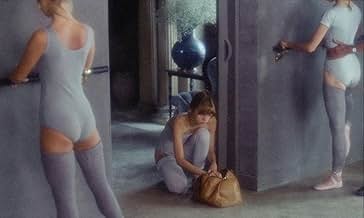
- TriviaWhen Laura is in the ballet shower, many of the poses duplicate paintings of Edgar Degas (an artist famed for his ballerina portraits).
- Alternate versionsThe German cut is ten minutes shorter than the regular version at 85 mins.
- How long is Laura?Powered by Alexa
Details
- Release date
- Country of origin
- Language
- Also known as
- Laura: Shadows of a Summer
- Filming locations
- Production companies
- See more company credits at IMDbPro
Contribute to this page
Suggest an edit or add missing content