

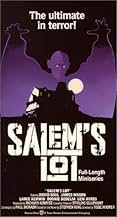
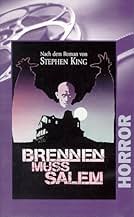
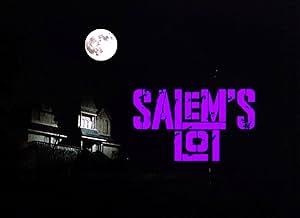
A novelist and a young horror fan attempt to save a small New England town which has been invaded by vampires.A novelist and a young horror fan attempt to save a small New England town which has been invaded by vampires.A novelist and a young horror fan attempt to save a small New England town which has been invaded by vampires.
- Nominated for 3 Primetime Emmys
- 4 nominations total
Browse episodes


6.831.4K
1
2
3
4
5
6
7
8
9
10
Featured reviews
Atmospheric adaptation
Excellent horror flick from Tobe Hooper who gave us Poltergeist (that's Poltergeist 1, the GOOD one)...Lifeforce, Nightmares, The Mangler, Dark Skies, The Others, and so many more!
Written for TV by Paul Monash, screenwriter who adapted the marvelous TV series, "V," and directed by one of the Masters of Horror, Tobe Hooper, this movie (in the extended version) closely follows Stephen King's original literary work much better than expected.
While there are campy moments, and the effects could have been much, MUCH better (it WAS post-Star Wars, after all), there are edgy, frightening moments; moments where you literally hold your breath, if you've allowed yourself to be drawn into the movie. Riddled with "scare you" and "edge of the seat" moments, this film, while a bit dated, is still scary.
I previously owned the "cut" version which aired on cable in 1979.
In writing this review, I purchased the full-length version and I must say that I was delightfully surprised. This version was so much better, followed the original work more closely, and added the depth of character development which the "short" version completely obliterated.
In the wake of the remake to be aired in 2004, I thought a fresh viewing of this movie was in order, and so it was. If you have never seen "Salem's Lot" in its 184 minute presentation, please do. It's a classic in the horror genre and will enrich your perspective of the plot by 100%.
Suspenseful and actually scares you from time to time.
It rates an 8.4/10 from...
the Fiend :.
Written for TV by Paul Monash, screenwriter who adapted the marvelous TV series, "V," and directed by one of the Masters of Horror, Tobe Hooper, this movie (in the extended version) closely follows Stephen King's original literary work much better than expected.
While there are campy moments, and the effects could have been much, MUCH better (it WAS post-Star Wars, after all), there are edgy, frightening moments; moments where you literally hold your breath, if you've allowed yourself to be drawn into the movie. Riddled with "scare you" and "edge of the seat" moments, this film, while a bit dated, is still scary.
I previously owned the "cut" version which aired on cable in 1979.
In writing this review, I purchased the full-length version and I must say that I was delightfully surprised. This version was so much better, followed the original work more closely, and added the depth of character development which the "short" version completely obliterated.
In the wake of the remake to be aired in 2004, I thought a fresh viewing of this movie was in order, and so it was. If you have never seen "Salem's Lot" in its 184 minute presentation, please do. It's a classic in the horror genre and will enrich your perspective of the plot by 100%.
Suspenseful and actually scares you from time to time.
It rates an 8.4/10 from...
the Fiend :.
Worth a Look
Without a doubt this television movie based on Stephen King's grand horror opus pales in comparison to its literary counterpart. But isn't that usually the case? Although missing some subplots, many characters, and having some major script changes here and there, Tobe Hooper's Salem's Lot is indeed enjoyable. I watched it right after having read the book, and although I spent a lot of time seeing what it did not have...I have to confess that there were many good points. For starters, let me list some of my major complaints. The whole framed narrative story in the movie is ridiculous and very clumsily made. I also have a big problem with the gaping holes in the script with regard to characters popping up here and there with little or no expository introduction. Some characters were used to help move the plot and then discarded. Names were needlessly changed from the novel. That being said there was a great sense of style to the picture which must be credited to Hooper. Overall the acting is quite good. David Soul is very credible in his leading role, as are Lance Kerwin, Bonnie Bedelia, Lew Ayres and Ed Flanders. James Mason makes a stunning villain. Mason uses charm as a weapon and eats up the scenery with subtlety and wit. The vampire is played by horror veteran Reggie Nalder, and although he says not one word...he is very effective. The make-up on him is very reminiscent of Nosferatu. The lead-ins to commercials show the film to be dated by today's standards, but it has enough in it to be an entertaining diversion. However, PLEASE read the book first as it is one of the best of its kind and will make the film all the more enjoyable if for no other reason than seeing its defects.
See the mini-series version if at all possible
First let me suggest to see the original miniseries version if at all possible. The "movie" version is horribly chopped. The remaining pieces don't fit together and leave gaping holes (such as, "what happened to Susan?")
Salem's Lot is an almost unknown milestone in horror films. This superb combination of the talents of Tobe Hooper and Stephen King bridges the gap between the Hammer-style films of the 60's and the modern vampire films. Two things to especially note:
(1) This takes place in Everytown, USA and the cinematography reflects the ordinary turned extraordinary (which is the same effect achieved by Bram Stoker's original writing for the audience of his time.) It begins looking almost like a Rockford Files episode and goes dark from there. But even the climax in the evil Marsten house looks *real*, just as you would imagine an old decrepit house to look. You can almost smell the dust. Hey, this was the seventies, the decade of naturalistic lighting. Everything coming out of Hollywood now looks just that - like Hollywood.
(2) It is a shame that anyone today viewing Salem's Lot already knows that is about vampires because when it first aired on TV, the unknown aspect is what made the first half so creepy. Now you just sit there waiting for the vampires to show up. (If I thought that even one person might read this without knowing it was about vampires, I wouldn't write this.) The advertising for the show made no mention of vampires and the effect worked well. I was ten years old when I first saw this. I had seen at least a dozen other vampire flicks - Noseratu, Lugasi, the Hammer films - and I had no clue that this was about vampires. All I knew was that something creepy was going in this town and it was getting creepier and creepier. Only in the second episode when you see someone get bit in the neck did it finally click, "Oh my god, they're vampires." You realize it right about the same time that the main characters do. Highly effective.
Also, superb performances by David Soul, Lew Ayres, James Mason.
Salem's Lot is an almost unknown milestone in horror films. This superb combination of the talents of Tobe Hooper and Stephen King bridges the gap between the Hammer-style films of the 60's and the modern vampire films. Two things to especially note:
(1) This takes place in Everytown, USA and the cinematography reflects the ordinary turned extraordinary (which is the same effect achieved by Bram Stoker's original writing for the audience of his time.) It begins looking almost like a Rockford Files episode and goes dark from there. But even the climax in the evil Marsten house looks *real*, just as you would imagine an old decrepit house to look. You can almost smell the dust. Hey, this was the seventies, the decade of naturalistic lighting. Everything coming out of Hollywood now looks just that - like Hollywood.
(2) It is a shame that anyone today viewing Salem's Lot already knows that is about vampires because when it first aired on TV, the unknown aspect is what made the first half so creepy. Now you just sit there waiting for the vampires to show up. (If I thought that even one person might read this without knowing it was about vampires, I wouldn't write this.) The advertising for the show made no mention of vampires and the effect worked well. I was ten years old when I first saw this. I had seen at least a dozen other vampire flicks - Noseratu, Lugasi, the Hammer films - and I had no clue that this was about vampires. All I knew was that something creepy was going in this town and it was getting creepier and creepier. Only in the second episode when you see someone get bit in the neck did it finally click, "Oh my god, they're vampires." You realize it right about the same time that the main characters do. Highly effective.
Also, superb performances by David Soul, Lew Ayres, James Mason.
Really Holds Up
So I saw this again recently to compare to the new Max movie version, which I liked a lot. This holds up a lot. To think this was a 1970's TV mini-series is pretty incredible because of the sanitized nature of the platform. The adaptation is somewhat close to the source material. The acting is actually very good. The special effects is good for the budget and platform. The script is weak in some areas, mostly, dialogue. There are not so many horror moments considering it is Tobe Hooper's project, but the horror atmosphere is worthy. The pacing is slow at times, but that is because of the mini-series format. Worth seeing.
Bathed in eerie portents
This is one of the most richly atmospheric films in horror, an article of pure latenight seduction and phosphorescent darkness.
Atmospheric not in the sense that a dry ice machine has pumped a catacomb full of haze and cobwebs are strategically placed in some dark corner, but as a place lived, with naturally dark corners and tangible portents: the old dark house on the hill breathing evil, the antique shop downtown, all velvety smell and musty colors, the small town lined with porticoes bathed in the quiet of a lazy night, yet harboring secrets and vice from inside. Prying eyes staring from behind a curtain.
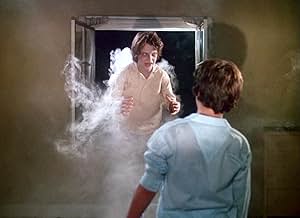
Oh, at some point vampires come flying through the window, and it's still fine by me, it's one of the better vampire films and at 3 hours it's better fleshed than most of them; but I am just not attuned to the whole vampire lore so I leave this part to be enjoyed best by the traditional horror fan. It is actually one of the more potent retellings of the most familiar story in this field, I was pleasantly surprised to see that it was not quite Dracula but that older film with longer shadows, so I will not spoil the discovery for you.
But the first part intrigues me in stranger ways, more suggestive, with menace that goes unspoken. The small-town facade that would later resurface in Twin Peaks.
There is a notion that matters in all this, but which is not pursued at all; the writer who feels from his perspective that it was his presence that awakened evil, it's fitting that it's coming from a writer because it's a self-centered, imaginative notion, but which from our end we know is bogus. Evil was already afoot, and was never centered around him. But he wistfully imagines himself at the center so he can write about it.
So I don't know what happened with Tobe Hooper. He was never very elegant with a camera, the way Argento was or occasionally Carpenter, but he was unmatched in his feel for the aural qualities of film. He could make a room hum with evil. My guess is that, being an intuitive maker, the feel came and went, or he forgot how to tap into it (you can see as early as Eaten Alive how he seems to be desperately trying to capture again the muse that gave him Texas Massacre). Or he plainly stopped actively chasing after the right material.
This was just right for him. Only Kubrick has better adapted Stephen King to my mind.
Atmospheric not in the sense that a dry ice machine has pumped a catacomb full of haze and cobwebs are strategically placed in some dark corner, but as a place lived, with naturally dark corners and tangible portents: the old dark house on the hill breathing evil, the antique shop downtown, all velvety smell and musty colors, the small town lined with porticoes bathed in the quiet of a lazy night, yet harboring secrets and vice from inside. Prying eyes staring from behind a curtain.
Oh, at some point vampires come flying through the window, and it's still fine by me, it's one of the better vampire films and at 3 hours it's better fleshed than most of them; but I am just not attuned to the whole vampire lore so I leave this part to be enjoyed best by the traditional horror fan. It is actually one of the more potent retellings of the most familiar story in this field, I was pleasantly surprised to see that it was not quite Dracula but that older film with longer shadows, so I will not spoil the discovery for you.
But the first part intrigues me in stranger ways, more suggestive, with menace that goes unspoken. The small-town facade that would later resurface in Twin Peaks.
There is a notion that matters in all this, but which is not pursued at all; the writer who feels from his perspective that it was his presence that awakened evil, it's fitting that it's coming from a writer because it's a self-centered, imaginative notion, but which from our end we know is bogus. Evil was already afoot, and was never centered around him. But he wistfully imagines himself at the center so he can write about it.
So I don't know what happened with Tobe Hooper. He was never very elegant with a camera, the way Argento was or occasionally Carpenter, but he was unmatched in his feel for the aural qualities of film. He could make a room hum with evil. My guess is that, being an intuitive maker, the feel came and went, or he forgot how to tap into it (you can see as early as Eaten Alive how he seems to be desperately trying to capture again the muse that gave him Texas Massacre). Or he plainly stopped actively chasing after the right material.
This was just right for him. Only Kubrick has better adapted Stephen King to my mind.


Did you know
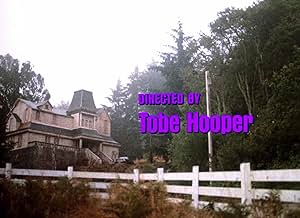
- TriviaThe exterior for the Marsten House was actually a full-scale facade built upon a smaller pre-existing hill-top house. In total, the facade cost the production an estimated $100,000 dollars to build. In 1979, an entire house (including the interiors) could have been made for that amount.
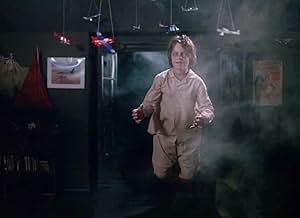
- GoofsWhen the younger Glick brother is abducted (and later presumably murdered by Barlow) he's wearing a jacket, t-shirt, dungarees and sneakers. After which, he appears to his brother wearing pajamas.
- Crazy creditsThe text of the opening credits appear and dissolve piece by piece into each other in a jigsaw puzzle fashion.
- Alternate versionsSalem's Lot originally aired as a two-night mini-series with the first episode airing on 17 November 1979 and the second episode airing the following week on 24 November 1979.
- ConnectionsFeatured in Stairs (1986)
Details
Contribute to this page
Suggest an edit or add missing content