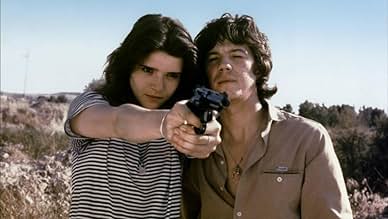
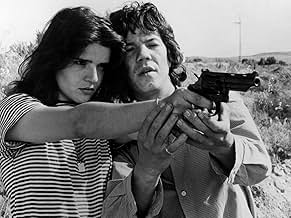
Angela begins to hang around with Pablo and his gang of young robbers.Angela begins to hang around with Pablo and his gang of young robbers.Angela begins to hang around with Pablo and his gang of young robbers.
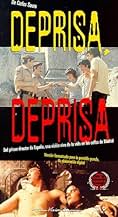
- Director
- Writer
- Stars
- Awards
- 1 win & 1 nomination total
Berta Socuéllamos
- Ángela
- (as Berta Socuellamos)
Jose Antonio Valdelomar González
- Pablo
- (as Jose Antonio Valdelomar)
Jesús Arias
- Meca
- (as Jesus Arias)
José María Hervás Roldán
- Sebas
- (as Jose Mª Hervas)
María del Mar Serrano
- María
- (as Maria del Mar Serrano)
André Falcon
- Cajero
- (as Andre Falcon)
Yves Barsacq
- Luis
- (as Ives Barsacq)
Joaquín Escola
- Doctor
- (as Joaquin Escola)
Matías Prats
- Locutor
- (as Matias Prats)
- Director
- Writer
- All cast & crew
- Production, box office & more at IMDbPro
7.02K
1
2
3
4
5
6
7
8
9
10
Featured reviews
Film Theory
Jose Antonio Valdelomar Gonzales asks Berta Socuellamos to be his girlfriend. She agrees. She integrates quickly into his gang of bank robbers. For a while, things go very nicely. They make large scores, leave no important clues, and she is saving money to buy an apartment for them. Then a job goes wrong.
The most notable thing about this movie by Carlos Saura is that the six top roles -- the men in the gang, Srta Socuellamos, and another member's girl friend -- were found in casting calls for non-professional actors. Only one of them appeared on the screen again. Gonzales died 11 years later of a drug overdose in prison, where he was arrested for bank robbery. Rumors abound about the production, most of them scurrilous. I won't take Saura too much to task for this sort of casting; from Academician "theory of types" to Robert Bresson, to Eastwood in THE 15:17 TO PARIS, directors have undertaken to cast non-professional in key roles, sometimes under elaborate theories, sometimes because you admire what they did, and sometimes because, well, why hire some one to play Audie Murphy, when he's on the payroll as an actor?
Saura does get good performances out of them, by directing them to maintain low affects and keeping their lines simple. He crafts believable situations, tense bank robberies, and so forth. So it's a very well made movie. If anything, it demonstrates another Academician theory, the Kuelshov Effect, which is that acting is largely irrelevant to acting; the audience infers the thoughts of the actors by how the shots are edited together.
The most notable thing about this movie by Carlos Saura is that the six top roles -- the men in the gang, Srta Socuellamos, and another member's girl friend -- were found in casting calls for non-professional actors. Only one of them appeared on the screen again. Gonzales died 11 years later of a drug overdose in prison, where he was arrested for bank robbery. Rumors abound about the production, most of them scurrilous. I won't take Saura too much to task for this sort of casting; from Academician "theory of types" to Robert Bresson, to Eastwood in THE 15:17 TO PARIS, directors have undertaken to cast non-professional in key roles, sometimes under elaborate theories, sometimes because you admire what they did, and sometimes because, well, why hire some one to play Audie Murphy, when he's on the payroll as an actor?
Saura does get good performances out of them, by directing them to maintain low affects and keeping their lines simple. He crafts believable situations, tense bank robberies, and so forth. So it's a very well made movie. If anything, it demonstrates another Academician theory, the Kuelshov Effect, which is that acting is largely irrelevant to acting; the audience infers the thoughts of the actors by how the shots are edited together.
The Madrid a tourist might not catch
A group of friends embark on a short and doomed life of crime in Madrid in the 1970's. Filmed in color in and around Madrid, with some great locations and a nice flamenco/rock soundtrack, the characters choose to live dangerously rather than work in deadend jobs. The film seems to be saying something about society and opportunity, but doesn't get lost in any sermons. It sticks with the characters up to the inevitable end, and goes into some out of the way locations, with one scene having them on horseback and crossing a busy highway. Saura has made a real portrait out of each of the characters while showing a dusty and not too pleasant side of Madrid somewhere out in its suburbs.
A beautiful soundtrack for a good realistic movie.
A good look at the delinquency in Spain of the 80's, good photography, great soundtrack.
Pablo, Angela, El Meca and Sebas, four marginalized teenagers from Madrid are forced to live a life of crime in order to survive and escape the poverty they live in. The movie is quite entertaining, the crime scenes are very realistic, the soundtrack fits just perfect and the message is clear and powerful.
Crime is created by poverty and poverty is created by luxury, something we are all responsible of.
A great political statement, then and now.
Pablo, Angela, El Meca and Sebas, four marginalized teenagers from Madrid are forced to live a life of crime in order to survive and escape the poverty they live in. The movie is quite entertaining, the crime scenes are very realistic, the soundtrack fits just perfect and the message is clear and powerful.
Crime is created by poverty and poverty is created by luxury, something we are all responsible of.
A great political statement, then and now.
Gorgeous and Sensuous.
This movie makes beautiful use of Flamenco music, and does it better than any I've seen. Carlos Saura obviously cares deeply about the medium, as he also made a movie called Flamenco (although it's just a concert piece).
The story is very basic; it deals with the adventures of young street-criminals in Madrid who graduate from car-theft to bank-robbery. What's interesting is the way Saura makes us care about these "hijos de nadie", who are kind and decent people 50% of the time, and feel they have no future in regular society. But the movie never sentimentalizes them - they do exactly what you'd expect such people to do.
Dialogue is kept to a minimum; a lot of the communication is via the graceful gestures the Spanish are so good at. This allows extra time for the soundtrack, and it really gets you into the spirit of the film, which is really more like dance than acting.
Flamenco originated among the dispossessed, among beggars and gypsies condemned to live in waste places and junkyards on the edge of town, and the scenes of the barren housing-projects on the fringes of Madrid really bring this feeling to life.
Deprisa, Deprisa conveys a better understanding of the spirit of Flamenco than more elegant movies dedicated to the subject. (And Carlos Saura is a genius).
The story is very basic; it deals with the adventures of young street-criminals in Madrid who graduate from car-theft to bank-robbery. What's interesting is the way Saura makes us care about these "hijos de nadie", who are kind and decent people 50% of the time, and feel they have no future in regular society. But the movie never sentimentalizes them - they do exactly what you'd expect such people to do.
Dialogue is kept to a minimum; a lot of the communication is via the graceful gestures the Spanish are so good at. This allows extra time for the soundtrack, and it really gets you into the spirit of the film, which is really more like dance than acting.
Flamenco originated among the dispossessed, among beggars and gypsies condemned to live in waste places and junkyards on the edge of town, and the scenes of the barren housing-projects on the fringes of Madrid really bring this feeling to life.
Deprisa, Deprisa conveys a better understanding of the spirit of Flamenco than more elegant movies dedicated to the subject. (And Carlos Saura is a genius).
young criminals
Robbers Pablo and Meca steal a car. Pablo is taken with waitress Ángela and pulls her into his life of crime. Along with Sebastian who dislikes having a girl in the crew, the quartet go on a crime spree.
The scene where Ángela is waiting for the getaway during the robbery is incredibly tense. I really want more of that. Mostly, they exist in a leisurely lifestyle until they plan another robbery. The action is not the most intense but it does have a good energy. This has a matter-of-fact feeling towards its characters and their lives. It's not that glorified but they are young and beautiful. It's an Euro feel with a softer Tarantino action.
Did you know
- TriviaJose Antonio Valdelomar González (Pablo) was recruited by Carlos Saura in a casting for non-professional actors. He was paid US$3,000. In 1992 he was found dead of a heroin overdose at Carabanchel prison (Madrid), where he was arrested for robbing a bank.
- ConnectionsFeatured in Caso cerrado (1985)
- How long is Deprisa, Deprisa?Powered by Alexa
Details
- Release date
- Countries of origin
- Official site
- Language
- Also known as
- Fast, Fast
- Filming locations
- Production companies
- See more company credits at IMDbPro
Box office
- Budget
- ESP 36,000,000 (estimated)
- Gross worldwide
- $632
Contribute to this page
Suggest an edit or add missing content