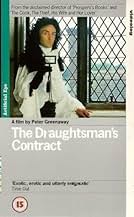
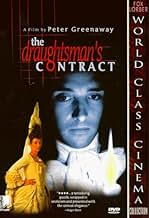
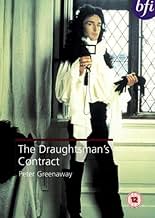
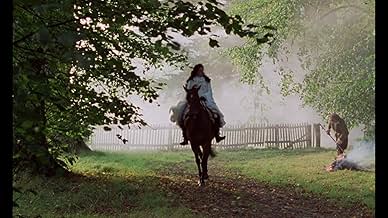
A young artist is commissioned by the wife of a wealthy landowner to make a series of drawings of the estate while her husband is away.A young artist is commissioned by the wife of a wealthy landowner to make a series of drawings of the estate while her husband is away.A young artist is commissioned by the wife of a wealthy landowner to make a series of drawings of the estate while her husband is away.
- Awards
- 1 win & 4 nominations total
Anne-Louise Lambert
- Mrs. Talmann
- (as Anne Louise Lambert)
Nicholas Amer
- Mr. Parkes
- (as Nicolas Amer)
Lynda La Plante
- Mrs. Clement
- (as Lynda Marchal)
Alastair G. Cumming
- Philip - Mr. Neville's assistant
- (as Alastair Cummings)
- Director
- Writer
- All cast & crew
- Production, box office & more at IMDbPro
7.211.8K
1
2
3
4
5
6
7
8
9
10
Featured reviews
unusual
Mr. Neville is a young arrogant artist full of himself. He is contracted to make landscape estate drawings by Mrs. Virginia Herbert. She has a bitter relationship with her wealthy landowning husband who leaves on a trip. She submits to Neville sexually as part of the contract. There is also her daughter Mrs. Talmann and her husband Mr. Talmann. The couple is childless taking care of his nephew. Mrs. Herbert tries to revoke the contract but Neville refuses. Mrs. Talmann blackmails Neville into entering a similar contract pointing out items in his drawings which indicate "misadventure". When Mr. Herbert is found dead in the moat, Neville is horrified to discover that he's the leading suspect.
This is an unusual film. It's a Shakespearian sex romp with a murder mystery. The style has long takes and mid to long distance visuals. The movie lost me the first time around. It can meander and the story can be mercurial. It would help a lot if the murder is shown even if the perpetrators are not. The individual clues need accompanying flashbacks to show that part of the crime. This has a certain amount of beauty and weird originality but it's not easy for everyone.
Can Mathematics Be Erotic?
Hugely enjoyable, if somewhat a tad too clever for its own good. A very good English director's attempt to be more continental, by being deliberately obscure, and throwing in large dollops of raunchy eroticism. Imagine if you will an episode of PBS's Mystery set during the Restoration, with a script by Einstein, and direction by Frederico Fellini.
Two excellent stage actors - Anthony Higgins and Janet Suzman - in combination with the very sultry and seldom seen Australian actress Anne Louise Lambert, act their sexy sox off in this delightful delicate pastry of a movie. In the year 1694 an artist is commissioned to create a series of precise drawings of an enormous country house. The twist is that his agreed form of payment is most unusual.
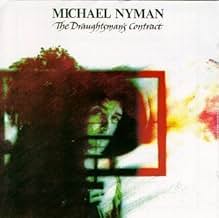
Michael Nyman's score is a careful, yet loud, modern arrangement with contemporary wind and string instruments. The photography by Curtis Clark is incredible, and these two creative artists convince you, you are in the 17th Century. The interior scenes are lit only by candlelight - as was also the case in Kubrick's superb historical masterpiece Barry Lyndon. This movie somehow combines elements of sophisticated themes of woman's self-empowerment, the inhumanity of the aristocracy, mathematics, and Benny Hill eroticism. Really rather wonderful and unique, but also in-retrospect, less than the sum of its parts. For a superior Peter Greenaway picture, try Drowning By Numbers, A Zed and Two Naughts, and The Cook, the Wife, etc..
Two excellent stage actors - Anthony Higgins and Janet Suzman - in combination with the very sultry and seldom seen Australian actress Anne Louise Lambert, act their sexy sox off in this delightful delicate pastry of a movie. In the year 1694 an artist is commissioned to create a series of precise drawings of an enormous country house. The twist is that his agreed form of payment is most unusual.
Michael Nyman's score is a careful, yet loud, modern arrangement with contemporary wind and string instruments. The photography by Curtis Clark is incredible, and these two creative artists convince you, you are in the 17th Century. The interior scenes are lit only by candlelight - as was also the case in Kubrick's superb historical masterpiece Barry Lyndon. This movie somehow combines elements of sophisticated themes of woman's self-empowerment, the inhumanity of the aristocracy, mathematics, and Benny Hill eroticism. Really rather wonderful and unique, but also in-retrospect, less than the sum of its parts. For a superior Peter Greenaway picture, try Drowning By Numbers, A Zed and Two Naughts, and The Cook, the Wife, etc..
Extraordinary, beautiful, puzzling and disturbing.
A most extraordinary film. A fascinating study of manipulation and murder, of sex, power and the abuse of sex and power. This is not always an easy film to like, it has a coldly clinical approach to its subject and protagonists which produces an intentionally distancing effect.
In one scene, the Draughtsman invites the Lady of the House to examine a painting, owned by her husband, in which a complex allegory appears to be being acted out. I see this as an analogy for the film as a whole - it is an arch, stylised, intelligent and beautiful puzzle (a murder-mystery) in which the audience is encouraged to consider the motives and objectives of the characters, but from which many important clues appear to have been deliberately removed.
This might all sound frustrating, but I find the film endlessly intriguing and entertaining. It's like a very clever and stunningly photographed Agatha Christie mystery, but without an annoying sleuth who comes along at the end and solves everything "oh-so-neatly".
The photography is exemplary (the cinematographer, Curtis Clark, seems to have done little else of note), with the camera hardly moving at all, except for an occasional tracking shot. The Kent countryside used to maximum effect, and the costumes are sumptuous (especially the wigs!). The music is also superb, with Michael Nyman producing probably his finest score.
An engaging, puzzling, visually stunning and, ultimately, rather disturbing film.
In one scene, the Draughtsman invites the Lady of the House to examine a painting, owned by her husband, in which a complex allegory appears to be being acted out. I see this as an analogy for the film as a whole - it is an arch, stylised, intelligent and beautiful puzzle (a murder-mystery) in which the audience is encouraged to consider the motives and objectives of the characters, but from which many important clues appear to have been deliberately removed.
This might all sound frustrating, but I find the film endlessly intriguing and entertaining. It's like a very clever and stunningly photographed Agatha Christie mystery, but without an annoying sleuth who comes along at the end and solves everything "oh-so-neatly".
The photography is exemplary (the cinematographer, Curtis Clark, seems to have done little else of note), with the camera hardly moving at all, except for an occasional tracking shot. The Kent countryside used to maximum effect, and the costumes are sumptuous (especially the wigs!). The music is also superb, with Michael Nyman producing probably his finest score.
An engaging, puzzling, visually stunning and, ultimately, rather disturbing film.
Conceit, Deception and Power
Being of English origin the film has a particular fascination. Certain things become apparent if you know England well, but also I suspect on repeated viewing.
A tale of conceit, deception and power. The conceit of the Draughtsman, all too apparent, is matched by the conceit of the upper classes as the film unfolds. The pictoral conceit referred to in the film repeatedly is matched by a pictoral conceit played on the viewer: the wigs were never that big, the house, garden and grounds stunning and the weather too perfect.
Deception exists at many levels. The viewer is deceived as to where the houses and events take place. The allusions are to Southampton and surrounding areas. Being from the Southampton area I realized this wasn't Southampton. Though it could possibly have been. The deception was convincing. The location is Kent. I believe this deception, which fits so nicely in the film anyway, was pulled so that the owner of the house where the film is centred around would not be invaded by tourists. A nice touch which I suspect follows the line in the film, something like this), "Do you think Mrs Talbot is a lady who likes her gravel being kicked around by a pack of dogs."
The arrogance and exploitation of the ladies of the house by the Draughtsman, readily apparent, is more sinisterly exceeded by the arrogance and exploitation of the Draughtsman by the ladies. The Draughtsman provides a cover for murder, solves the problem of transfer of the property by siring a child and finally ends up as the scapegoat for murder. While the Draughtsman may appear to be playing with the household for his own amusement, the Draughtsman himself is the focus of a much more brutal and more deadly game.
Like all the best films there is much going on in the film. The lines and language are wonderfully rich. The camera merely shows you the events. And it is not above deceiving you as a viewer. Trying to make sense of it all is great fun. Many things I didn't even see until the second or third viewing, let alone make sense of them!
A beautiful allegory which slowly unfolds and challenges the senses. Much like The Prisoner (1967) tv series, and hopefully The Prisoner (2000) movie.
A tale of conceit, deception and power. The conceit of the Draughtsman, all too apparent, is matched by the conceit of the upper classes as the film unfolds. The pictoral conceit referred to in the film repeatedly is matched by a pictoral conceit played on the viewer: the wigs were never that big, the house, garden and grounds stunning and the weather too perfect.
Deception exists at many levels. The viewer is deceived as to where the houses and events take place. The allusions are to Southampton and surrounding areas. Being from the Southampton area I realized this wasn't Southampton. Though it could possibly have been. The deception was convincing. The location is Kent. I believe this deception, which fits so nicely in the film anyway, was pulled so that the owner of the house where the film is centred around would not be invaded by tourists. A nice touch which I suspect follows the line in the film, something like this), "Do you think Mrs Talbot is a lady who likes her gravel being kicked around by a pack of dogs."
The arrogance and exploitation of the ladies of the house by the Draughtsman, readily apparent, is more sinisterly exceeded by the arrogance and exploitation of the Draughtsman by the ladies. The Draughtsman provides a cover for murder, solves the problem of transfer of the property by siring a child and finally ends up as the scapegoat for murder. While the Draughtsman may appear to be playing with the household for his own amusement, the Draughtsman himself is the focus of a much more brutal and more deadly game.
Like all the best films there is much going on in the film. The lines and language are wonderfully rich. The camera merely shows you the events. And it is not above deceiving you as a viewer. Trying to make sense of it all is great fun. Many things I didn't even see until the second or third viewing, let alone make sense of them!
A beautiful allegory which slowly unfolds and challenges the senses. Much like The Prisoner (1967) tv series, and hopefully The Prisoner (2000) movie.
So much misunderstanding
There is no need to hate this movie. It's quite enjoyable by itself. It doesn't require any heavy intellectual digging or background instruction manual to appreciate. Plus, it's quirky comedy is being taken as mysterious and dark. Please! Just enjoy it and laugh. The humor is irksome but funny. It's like a bit of Shakespeare. It has meaningful plot and fun dialogs. The guy who wrote the review centering on the Draughtsman's "arrogance and innocence "(a dangerous combo!) had it spot on, and this personality flaw is key to the plot. Thoroughly enjoyable and funny and clever. Architects everywhere, TAKE COVER! LOL.
Did you know
- TriviaDirector Peter Greenaway, a former art student, created the sketches that feature in the film. In fact the close-up shots of the draughtsman drawing are of his hands.
- GoofsThe cooing of a collared dove is not a sound that would have fallen on Jacobean ears, as the species was unknown in Britain until 1955.
- Quotes
Mr. Neville: You must forgive my curiosity, madam, and open your knees.
- Alternate versionsWhen Peter Greenaway screened the movie at festivals in 1982, it ran a full three hours. Included in this footage is a full and further explained rationale for the moving statue.
- How long is The Draughtsman's Contract?Powered by Alexa
Details
- Release date
- Country of origin
- Languages
- Also known as
- Der Kontrakt des Zeichners
- Filming locations
- Groombridge Place, Groombridge, Kent, England, UK(country house)
- Production companies
- See more company credits at IMDbPro
Box office
- Budget
- £320,000 (estimated)
- Gross US & Canada
- $2,256,246
- Gross worldwide
- $2,283,233
Contribute to this page
Suggest an edit or add missing content