

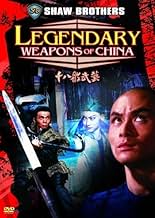
A band of killers from an ailing kung fu and magic society are sent on a manhunt for a former member of the society, whose bad mouthing threatens its existence.A band of killers from an ailing kung fu and magic society are sent on a manhunt for a former member of the society, whose bad mouthing threatens its existence.A band of killers from an ailing kung fu and magic society are sent on a manhunt for a former member of the society, whose bad mouthing threatens its existence.
- Director
- Writers
- Stars
- Awards
- 1 nomination total


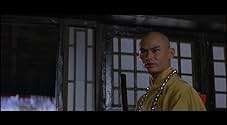


Liu Chia-Yung
- Lei Ying
- (as Chia-Yung Liu)

Kara Ying Hung Wai
- Fang Shao-Ching
- (as Kara Hui)


- Director
- Writers
- All cast & crew
- Production, box office & more at IMDbPro
6.82K
1
2
3
4
5
6
7
8
9
10
Featured reviews
Missed the point
The last reviewer of this film missed the point. This film is excellent and the last 30 minutes contains some of the best martial arts action committed to film. Yes, the plot is ridiculous and the dubbing makes everyone sound like a porn star but you don't watch kung fu films for the acting skill and production values. You watch them for escapism and entertainment.
The story itself is about the rise of the gun in china and the director, who also stars, attempting to show how pointless it was to fight the evil of the gun.
Lei Kung is a martial arts master whose speciality is 'pugilism'(i suppose it was easier to dub that word than what the real skill is called), which is basically invulnerability to conventional weapons (swords, knives, blades etc). He decided to dissolve his sect within the school he taught in to protect his students. He was forced to do this as his superiors were ordering other sect to practice 'pugilism' with the proviso of ultimately being able to withstand bullets.
So now it is several years later, Lei Kung is hiding out as a woodcutter, and the bad guys send some martial arts experts to seek him out and kill him. At first we know of three: Ti Hau, the best student of a master who teaches partial invulnerability and techniques to confuse the enemy. Chao Ching, who is a woman, but who dresses as a man to mingle with the populace. She can see how attempting to overcome the gun with 'pugilism' is pointless and wants to join Lei Kung. Finally there is Ti Tan, another master 'pugilist'.
While they are searching another man whose name is not revealed is searching for Lei Kung. His skill seems to be based on hypnotism, and dolls. He hypnotises a person, then uses a doll to control their movements, thus having someone fight for him.
Ti Hau ends up getting ill whilst searching, but is saved be Lei Kung who nurses him back to help with Chau Ching's help. She convinces Lei Kung that she wants to help, but doubts if they can convince Ti Hau when he gets better. It does not matter ultimately, because the other mysterious fighter tracks Lei Kung down. They fight, but Lei kung is well out of practice and is defeated easily. But the mysterious bad guy is Lei Kung's brother, Lei Yung who explains that he was also given the order to kill but can't kill his own brother. He suggests that Lei Kung begins to proactive again to recover his strength and power. That way he can defend himself against other killers who are after him.
Hi trains hard, and starts to get his power back. But Ti Tan turns up and starts to kick off. Ti Hau tries to explain that Lei Kung is a woodcutter who only knows basic kung fu taught to him by Chau Ching. Ti Tan is not convinced and begins his attack. Chau ching defends but is no match, neither is Ti Hau. So it is time for Lei Kung o flex hi muscles. He fights and in doing so speeds up his strength recovery. He defeats Ti Tan, but in doing so let's it slip that he really is Lei kung. Ti Hau runs off, not knowing what to do, he has witnessed Lei Kungs far superior martial skill and is unsure of how to proceed. Ti Hau returns that night, using his skills he tries to convince Lei Kung and Chau Ching that he has gathered many men, but they are dummies and Lei Kung sees through the deception. But it is not Ti Hau but his master who is attacking. Another great fight scene follows with Ti Hau turning up half way through and his own teacher turning on him when he realises he cannot kill Lei Kung. In trying to kill his student, he shows Ti Hau that there is more to life than killing and his own life is worth something. This is the reason Lei Kung disbanded his school, to protect his students who he knew would die if they tried to withstand the gun. Lei Kung defeats Ti Haus' master who then tries to kill himself. Ti Hau stops him, and his teacher also sees that perhaps his way of life is wrong, and his pupil's lives are not expendable. He leaves suggesting Ti Hau remain to carry on training and learning with Lei Kung and Chau Ching. Lei Kung walks off and dusts off his 'holy robes' explaining that he has to go to the city temple to see his brother. He explains that his brother is not really going to let him walk away, but wanted him to train up and face him in a duel to the death. He takes his 2 new students with him, and then fights his brother using weapons combat in some of the most amazing choreography i have seen in a kung fu film. He defeats his brother who he then tells to go back and report that he killed him. His brother is left broken, finally realising that personal glory is no substitute for having a rich and meaningful life.
The story itself is about the rise of the gun in china and the director, who also stars, attempting to show how pointless it was to fight the evil of the gun.
Lei Kung is a martial arts master whose speciality is 'pugilism'(i suppose it was easier to dub that word than what the real skill is called), which is basically invulnerability to conventional weapons (swords, knives, blades etc). He decided to dissolve his sect within the school he taught in to protect his students. He was forced to do this as his superiors were ordering other sect to practice 'pugilism' with the proviso of ultimately being able to withstand bullets.
So now it is several years later, Lei Kung is hiding out as a woodcutter, and the bad guys send some martial arts experts to seek him out and kill him. At first we know of three: Ti Hau, the best student of a master who teaches partial invulnerability and techniques to confuse the enemy. Chao Ching, who is a woman, but who dresses as a man to mingle with the populace. She can see how attempting to overcome the gun with 'pugilism' is pointless and wants to join Lei Kung. Finally there is Ti Tan, another master 'pugilist'.
While they are searching another man whose name is not revealed is searching for Lei Kung. His skill seems to be based on hypnotism, and dolls. He hypnotises a person, then uses a doll to control their movements, thus having someone fight for him.
Ti Hau ends up getting ill whilst searching, but is saved be Lei Kung who nurses him back to help with Chau Ching's help. She convinces Lei Kung that she wants to help, but doubts if they can convince Ti Hau when he gets better. It does not matter ultimately, because the other mysterious fighter tracks Lei Kung down. They fight, but Lei kung is well out of practice and is defeated easily. But the mysterious bad guy is Lei Kung's brother, Lei Yung who explains that he was also given the order to kill but can't kill his own brother. He suggests that Lei Kung begins to proactive again to recover his strength and power. That way he can defend himself against other killers who are after him.
Hi trains hard, and starts to get his power back. But Ti Tan turns up and starts to kick off. Ti Hau tries to explain that Lei Kung is a woodcutter who only knows basic kung fu taught to him by Chau Ching. Ti Tan is not convinced and begins his attack. Chau ching defends but is no match, neither is Ti Hau. So it is time for Lei Kung o flex hi muscles. He fights and in doing so speeds up his strength recovery. He defeats Ti Tan, but in doing so let's it slip that he really is Lei kung. Ti Hau runs off, not knowing what to do, he has witnessed Lei Kungs far superior martial skill and is unsure of how to proceed. Ti Hau returns that night, using his skills he tries to convince Lei Kung and Chau Ching that he has gathered many men, but they are dummies and Lei Kung sees through the deception. But it is not Ti Hau but his master who is attacking. Another great fight scene follows with Ti Hau turning up half way through and his own teacher turning on him when he realises he cannot kill Lei Kung. In trying to kill his student, he shows Ti Hau that there is more to life than killing and his own life is worth something. This is the reason Lei Kung disbanded his school, to protect his students who he knew would die if they tried to withstand the gun. Lei Kung defeats Ti Haus' master who then tries to kill himself. Ti Hau stops him, and his teacher also sees that perhaps his way of life is wrong, and his pupil's lives are not expendable. He leaves suggesting Ti Hau remain to carry on training and learning with Lei Kung and Chau Ching. Lei Kung walks off and dusts off his 'holy robes' explaining that he has to go to the city temple to see his brother. He explains that his brother is not really going to let him walk away, but wanted him to train up and face him in a duel to the death. He takes his 2 new students with him, and then fights his brother using weapons combat in some of the most amazing choreography i have seen in a kung fu film. He defeats his brother who he then tells to go back and report that he killed him. His brother is left broken, finally realising that personal glory is no substitute for having a rich and meaningful life.
10winner55
a real treat
This is a brilliantly constructed film. I suppose those who remark it having a 'poor plot' long for something more simple, more direct, more traditionally 'Shaw Bros.' To be sure, the plot is intended to provide support for the interlaced themes, but it is complex and meaty on its own terms.
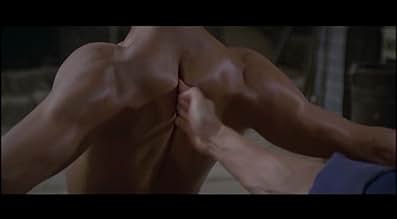
However the themes are indeed the heart of the film. The comic scene of the fake kung fu battle is clearly intended as a parody of the traditional swordplay film, down to the hand-squeezed blood-squib. The use of magic kung fu is, less clearly because more subtly, intended to debunk the myth of such magic, reducing it to a kind of martial-arts parlor trick - magnificently staged, but of course ineffective against anything other than itself. The real martial arts are at last presented with considerable credibility in the final third of the film, but is intended to remind us that, as powerful as it could be, the martial arts cannot compete with modern weaponry. Along the way, we also deal with problems of family loyalty, national loyalty (vs. phony 'patriotism'), and the nature of the spirituality necessary to master the martial arts, which requires an open mind and compassion rather than blind dedication.
What director Liu is reaching for is nothing less than a complete debunking of all the nonsense that had wrapped itself around the study of the martial arts in the 19th century and which was resurrected in the wake of the kung fu film phenomenon of the 1970s. Liu is asking us to respect, even admire, the martial arts, perhaps to learn them - but on their own terms, without all the myths that obscure their real essence.
This makes for a highly sophisticated script, which Liu carefully keeps popularized not only through the use of humor but, more importantly, by tight compression of story and editing. Blink and you will surely miss an important event.
As for the staging and camera-work some have remarked - technically, this film is pure classic Shaw Bros.
And as for the martial arts in the final battle - absolutely magnificent.
Unique in its genre and a real treat.
However the themes are indeed the heart of the film. The comic scene of the fake kung fu battle is clearly intended as a parody of the traditional swordplay film, down to the hand-squeezed blood-squib. The use of magic kung fu is, less clearly because more subtly, intended to debunk the myth of such magic, reducing it to a kind of martial-arts parlor trick - magnificently staged, but of course ineffective against anything other than itself. The real martial arts are at last presented with considerable credibility in the final third of the film, but is intended to remind us that, as powerful as it could be, the martial arts cannot compete with modern weaponry. Along the way, we also deal with problems of family loyalty, national loyalty (vs. phony 'patriotism'), and the nature of the spirituality necessary to master the martial arts, which requires an open mind and compassion rather than blind dedication.
What director Liu is reaching for is nothing less than a complete debunking of all the nonsense that had wrapped itself around the study of the martial arts in the 19th century and which was resurrected in the wake of the kung fu film phenomenon of the 1970s. Liu is asking us to respect, even admire, the martial arts, perhaps to learn them - but on their own terms, without all the myths that obscure their real essence.
This makes for a highly sophisticated script, which Liu carefully keeps popularized not only through the use of humor but, more importantly, by tight compression of story and editing. Blink and you will surely miss an important event.
As for the staging and camera-work some have remarked - technically, this film is pure classic Shaw Bros.
And as for the martial arts in the final battle - absolutely magnificent.
Unique in its genre and a real treat.
redressing the balance
The earlier comments give an unfair slating to what is an enjoyable film.The gaffes are obvious , (in such films as this the 1st class director Liu Chia Liang, was redefining the kung fu film , after the earlier swordplay flicks, and bruce lee's seminal movies, this film is set in late Ching dynasty China.) This is a film of rare quality , combining humour , a reasonable plot and some displays of great martial artistry, such as are no longer found in but a handful of films. The choreography is excellent, (only Sammo Hung at his best approaches Liu 's ability to film a fight with loving care for displaying technique)This film also benefits from the presence of the charismatic Fu Sheng and the Multi talented Hui Ying Hung. The special effects are cheap , but cheerful.(the previous reviewer seems to have missed that the purpose of all the bladed cloaks etc. was to show that tricks are no substitute for skill, skill no defence against bullets ... A classic of Kung Fu cinema
Smany weapons, so little time
As a kid I watched a lot of Shaw Brothers movies, I don't remember having seen this back in the day. Whatever the case it seems to epitomize what Shaw Brothers movies where doing. Action, comedy and a story that is all over the place. Alright the latter might not be a trademark in itself. But it is very apparent in this one. You could skip a lot of the movie story wise and not miss anything when you watch the last third.
Everything is still explained and makes sense. If you like Martial Arts, there is almost no way around it. While it may not have the name of other Shaw Brothers movies, this is still essential viewing for anyone who is into Eastern cinema/genre. It also has quite some blood in it and it aged quite well.
Everything is still explained and makes sense. If you like Martial Arts, there is almost no way around it. While it may not have the name of other Shaw Brothers movies, this is still essential viewing for anyone who is into Eastern cinema/genre. It also has quite some blood in it and it aged quite well.
More weapons than you can shake a staff at.
The Yi Ho Society wrongly think that their magic and pugilism skills will protect them from any weapon, including the guns used by the West. Lei Kung (Chia-Liang Liu) realises that this belief will only result in senseless bloodshed and attempts to dissolve the society to save lives. In doing so, he is branded a traitor and is hunted by several of Yi Ho's best fighters.
I love weapons work in kung fu films and Legendary Weapons of China naturally features lots of it, mostly in the second half; unfortunately, the movie also has rather a lot of comedy (in the first half), something that I always struggle with in kung fu films, making the film as a whole something of a mixed bag for me: desperately unfunny nonsense for the best part of an hour, but ending on a high with plenty of crazy fight action employing the eighteen main weapons of Chinese martial arts: rope dart, double tiger hook swords, double hammers, battle axe, snake halberd, kwan dao, twin broadswords, double-edged sword, Chinese spear, three-section chain whip, double daggers, double crutches, monk's spade, staff, tiger fork, rattan shield, single butterfly sword and three-section staff.
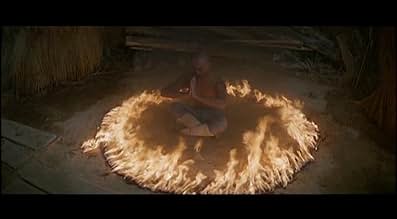
Also adding to the fun are the film's sillier weapons, including booby trapped capes and explosive darts, and some really daft moments, best bits being a bonkers fight in the rain and the unforgettable sight of two warriors mutilating themselves, the first poking his own eyes out and the other ripping his goolies off!
5.5 out of 10, rounded up to 6 for IMDb-not the classic of the genre that I had expected, but entertaining enough.
I love weapons work in kung fu films and Legendary Weapons of China naturally features lots of it, mostly in the second half; unfortunately, the movie also has rather a lot of comedy (in the first half), something that I always struggle with in kung fu films, making the film as a whole something of a mixed bag for me: desperately unfunny nonsense for the best part of an hour, but ending on a high with plenty of crazy fight action employing the eighteen main weapons of Chinese martial arts: rope dart, double tiger hook swords, double hammers, battle axe, snake halberd, kwan dao, twin broadswords, double-edged sword, Chinese spear, three-section chain whip, double daggers, double crutches, monk's spade, staff, tiger fork, rattan shield, single butterfly sword and three-section staff.
Also adding to the fun are the film's sillier weapons, including booby trapped capes and explosive darts, and some really daft moments, best bits being a bonkers fight in the rain and the unforgettable sight of two warriors mutilating themselves, the first poking his own eyes out and the other ripping his goolies off!
5.5 out of 10, rounded up to 6 for IMDb-not the classic of the genre that I had expected, but entertaining enough.


Did you know
- TriviaChia-Liang Liu: [martial arts demonstration] Opening credits show a demonstration of martial arts against an empty backdrop.
- Alternate versionsThe 1987 UK video suffered extensive cuts of over 5 minutes and lost all footage of Japanese throwing stars and nunchaku used in the fight scenes.
- ConnectionsFeatured in Knockaround Guys (2001)
- How long is Legendary Weapons of China?Powered by Alexa
Details
- Release date
- Country of origin
- Languages
- Also known as
- Shi ba ban wu yi
- Production company
- See more company credits at IMDbPro
- Runtime
- 1h 49m(109 min)
- Sound mix
- Aspect ratio
- 2.35 : 1
Contribute to this page
Suggest an edit or add missing content