
The effects of a devastating nuclear holocaust on small-town residents of eastern Kansas.The effects of a devastating nuclear holocaust on small-town residents of eastern Kansas.The effects of a devastating nuclear holocaust on small-town residents of eastern Kansas.
- Won 2 Primetime Emmys
- 6 wins & 11 nominations total




Steve Guttenberg
- Stephen Klein
- (as Steven Guttenberg)


- Director
- Writer
- All cast & crew
- Production, box office & more at IMDbPro
7.019.9K
1
2
3
4
5
6
7
8
9
10
Featured reviews
YIKES!!!
This movie can never be outdated. One of the two scariest non-horror movies I have seen (deliverance is the other), this movie portrays a realistic (if to a lesser degree) of what could happen if there ever were a nuclear attack. Gosh, did it ever scare me! It made me think, too. I still rank is as an excellent film, even though it has been so long since I saw it.
*** out of ****
*** out of ****
A voice from the other side of the ocean
Scrolling through the comments, I was impressed with the number of people from the USA, who said that this movie really scared them, when they first saw it. In fact it is not surprising. Well, I am Russian, yet it scared me too.
But first, a little preface. I was in the second grade (appr. 1982), when I first heard about the nuclear war. We had a number of lectures on it - of course the information was adapted so that 8-9 year old kids could understand it. We were impressed, but childhood has a wonderful gift that lets you quickly forget what was bad. So during the only false alarm that was held in our school the whole lot of students and tutors were brought out into the schoolyard, and we all stood in lines and through snowballs at each other imitating air bombing, and there was a feeling of excitement everywhere. The fact is, that many of us treated the threat as something so-far-away-that-it's-not-worth-worrying-about.
The movie was shown on out TV once only (with all the necessary precautions like "don't let nervous people see it"). Well, to say that I was terrified is to say nothing. For what it did, was that it made the threat so ordinary - and so real. Though for me it happened on the other side of the planet, you could easily imagine that the same thing would happen in my own country - and no fools - it would be absolutely THE SAME.
For some period thereafter I became slightly phobic ("Ma, what's that roar over our house, it's too low for a plane heading to the nearest airport"). But now I regard it as a good experience, because it made me think. I got a clear understanding that this COULD happen. I guess there was quite a big number of people in our country with the same understanding, and together with the threatened people from other countries they prevented the whole thing from happening right then. Hope the plain old common sense will help prevent the nuclear apocalypse in future.
P.S. Recently I saw the movie one more time, and it stirred the same emotions, as it did in my childhood. A great movie, that's all I can say...
But first, a little preface. I was in the second grade (appr. 1982), when I first heard about the nuclear war. We had a number of lectures on it - of course the information was adapted so that 8-9 year old kids could understand it. We were impressed, but childhood has a wonderful gift that lets you quickly forget what was bad. So during the only false alarm that was held in our school the whole lot of students and tutors were brought out into the schoolyard, and we all stood in lines and through snowballs at each other imitating air bombing, and there was a feeling of excitement everywhere. The fact is, that many of us treated the threat as something so-far-away-that-it's-not-worth-worrying-about.
The movie was shown on out TV once only (with all the necessary precautions like "don't let nervous people see it"). Well, to say that I was terrified is to say nothing. For what it did, was that it made the threat so ordinary - and so real. Though for me it happened on the other side of the planet, you could easily imagine that the same thing would happen in my own country - and no fools - it would be absolutely THE SAME.
For some period thereafter I became slightly phobic ("Ma, what's that roar over our house, it's too low for a plane heading to the nearest airport"). But now I regard it as a good experience, because it made me think. I got a clear understanding that this COULD happen. I guess there was quite a big number of people in our country with the same understanding, and together with the threatened people from other countries they prevented the whole thing from happening right then. Hope the plain old common sense will help prevent the nuclear apocalypse in future.
P.S. Recently I saw the movie one more time, and it stirred the same emotions, as it did in my childhood. A great movie, that's all I can say...
Appropriately Bleak
I, like many of my age, saw this when it originally aired as a class assignment. It had a great impact on me, as the cold war was still going strong and the threat of a nuclear war was something that people still thought about. The movie may not be the greatest ever made, but the acting is more than adequate, especially from Jason Robards, and the script was far better than any other movies made for television at that time. I recommend it to anyone, even those with a low tolerance for grossness (radiation sickness is shown in progressive stages, and it is not pretty). It's dark, depressing, and if you get into it you will definitely need to follow it up with a musical or cartoons just to lift your spirits again. Still, the subject matter is not something that can be portrayed positively even at a tv-movie level of realism.
My Nuclear War film is better than your Nuclear War film.
I only stopped by to comment on this film after discussing Threads on another board and seeing how much of a beating it The Day After was getting. Having seen this during its premiere and Threads almost a year later I will say this. No matter how poorly the effects or the acting, or how graphic and extravagant the visuals were all these films serve one purpose. To educate us on the value we have as creatures that not only have control over our individual destinies but the destiny of our world and the lesser species. To show us what the cost would be, no matter how graphic and obscene. The Day After, Threads, Testament, The War Game, Failsafe, Wargames, and all the other media programming that has shown us the horror of nuclear war. Each has its strengths and flaws, its highs and lows, but the message inherrently remains the same.
So why is there any discussion of the differences? To debate the flaws and merits of one horror in many variations is pointless, for they are all important, all special and all as relavant today as they were when they were first created. Perhaps we have learned nothing?
So why is there any discussion of the differences? To debate the flaws and merits of one horror in many variations is pointless, for they are all important, all special and all as relavant today as they were when they were first created. Perhaps we have learned nothing?
A very controversial, but excellent film
This film originally aired as a TV movie back in 1983 in the United States. It depicts the effects of nuclear war on the citizens of the Kansas City area. In the film, during the actual attacks, a lot of raw footage of nuclear blasts and explosions is used, but no computer enhanced special effects were needed in this film to get the point across. The point, being of course, that nuclear war is horrible. The movie was aired to show leaders of nations in the world what would happen if nuclear war was ever waged. When this film was first aired, Cold War tensions were high and the fear of nuclear war was very imminent. Though the events in the film are very powerful, a disclaimer at the end of the movie even tells the viewers that the events depicted in the film are far less worse then what would actually take place in a real nuclear war.
I feel that the plot was created well. The film shows what happens before the attacks, the actual attacks and then what happens after the attacks. The attacks were not shown too soon after the movie began but well into the movie and built up enough to show a lot of drama. The acting is very good, in my opinion. The late Jason Robards plays the lead role and a few other familiar faces take part as well (Steve Guttenburg, John Lithgow). The writing is fair, but not bad for a made-for-TV movie.
Overall, the movie is very excellent and places itself very positively in my book. It was a very controversial film for its time and it did scare the hell out of many people (truthfully, it did shake me up a little the first time I saw it). It's really not for the kids, even though it was a TV movie, because the scenes of the nuclear blasts and radiation sickness aren't very light.
I feel that the plot was created well. The film shows what happens before the attacks, the actual attacks and then what happens after the attacks. The attacks were not shown too soon after the movie began but well into the movie and built up enough to show a lot of drama. The acting is very good, in my opinion. The late Jason Robards plays the lead role and a few other familiar faces take part as well (Steve Guttenburg, John Lithgow). The writing is fair, but not bad for a made-for-TV movie.
Overall, the movie is very excellent and places itself very positively in my book. It was a very controversial film for its time and it did scare the hell out of many people (truthfully, it did shake me up a little the first time I saw it). It's really not for the kids, even though it was a TV movie, because the scenes of the nuclear blasts and radiation sickness aren't very light.


Did you know
- TriviaThe program originally aired on November 20, 1983. It remains the most-watched TV movie in U.S. history. Estimates put the viewership at over 100 million Americans, with a Nielsen share of 62 percent.
- GoofsWhen Dr. Austin (Lin McCarthy) is explaining the effects of the electromagnetic pulse (EMP) from the nuclear blast, he says. "It's all theoretical. It's never happened before." In actuality, the United States detonated a 3.8 megaton warhead at an altitude of 50 miles, 1 August 1958, in the Operation Hardtack Teak shot nuclear test. This event caused unexpected communications disruption and damage to electrical equipment in an area that ranged between Hawaii and New Zealand. It was the first observation of the EMP effect.
- Quotes
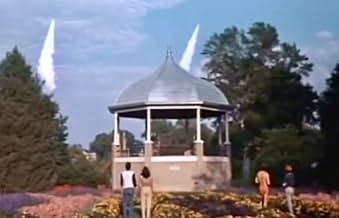
[intercontinental ballistic missiles are being fired]
Cynthia: What's going on?
Joe Huxley: Those are Minuteman missiles!
Cynthia: Like a test, sort of... like a warning?
Joe Huxley: [shakes his head, staring at the missiles in awe and disbelief] They're on their way to Russia. They take about 30 minutes to reach their target.
Aldo: So do theirs, right?
- Crazy credits[After movie has ended, before end credits.] The catastrophic events you have just witnessed are, in all likelihood, less severe than the destruction that would actually occur in the event of a full nuclear strike against the United States. It is hoped that the images of this film will inspire the nations of this earth, their peoples, and leaders to find the means to avert that fateful day.
- Alternate versionsThe rare laserdisc version (released by Image Entertainment in 1995) is advertised as being a director's cut. This version runs 127mins, is widescreen in its proper ratio of 1:75:1 and has a commentary track by director Nicholas Meyer. At the time of this release full versions of the film were not readily available. So it stands to chance this director's cut is actually the same as the current mgm dvd (US region 1) as far as content and running time goes, with the exception of the widescreen format and commentary track which so far has only be found on this laserdisc.
- ConnectionsEdited from Two-Minute Warning (1976)
Details
Contribute to this page
Suggest an edit or add missing content