IMDb RATING
6.7/10
1.4K
YOUR RATING
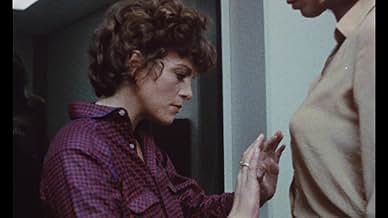
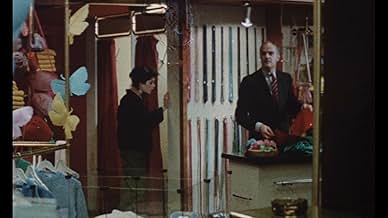
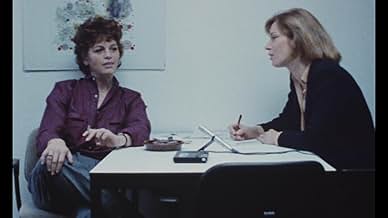
Three women of no previous acquaintance suddenly kill a male shopkeeper in the middle of the day. The female psychiatrist assigned to the case sets out to understand why.Three women of no previous acquaintance suddenly kill a male shopkeeper in the middle of the day. The female psychiatrist assigned to the case sets out to understand why.Three women of no previous acquaintance suddenly kill a male shopkeeper in the middle of the day. The female psychiatrist assigned to the case sets out to understand why.
- Awards
- 3 wins & 2 nominations total
Eddie Brugman
- Echtgenoot
- (as Eddy Brugman)
- Director
- Writer
- All cast & crew
- Production, box office & more at IMDbPro
6.71.3K
1
2
3
4
5
6
7
8
9
10
Featured reviews
A question of intent...
After watching this film, I was forced to come search for what others had taken from it. I was shocked and jarred, however, at the heteroglossia present. SM-4 from Alabama wrote that, "Everyone assumes they must be insane, because to admit otherwise is to admit that the world is a very bad place for women, indeed." While it may be possible to interpret the film in this way and it may even be the intended interpretation, it strikes me as disingenuous. Though the court and justice system's appearing inability to imagine these women as competent is a form of sexism, it does not point to a "world (that) is a very bad place for women." Indeed, three white men not too long ago in America might have met in a store with a black man and beat him to death. According to SM-4's logic, the world would be a very bad place for white men also.
Just because one racial group, religious group, or gender strikes out at those whom they feel oppressed, threatened, or harmed by, that does not prove that those feeling of oppression, injury, or injustice are valid. In some cases, mitigating evidence may exist. In A Question of Silence, however, I found none.
This is a brilliant feminist work.
This film is NOT anti-male. It is not suggesting that women go out and randomly kill men just for being of that gender. What is does do is use a wonderful technique called reversal. If three men had brutalized a woman, well, "society" might not find that so shocking (maybe more now than earlier years, but certainly not as shocking as the reverse). It doesn't want to start propaganda, it wants to make you THINK. By making the therapist think on it, it forces the viewer to think on it as well. What's the history of women being brutalized and then remaining quiet about it? Have women really achieved the social, political, and economic equality that is the feminist goal? Why not? This movie doesn't hate men; it simply loves women enough to give everyone something to think about.
A Study of Rage and Silence
The misunderstanding of this controversial film often comes from the misconception that feminism hates men. The plot of three women killing a man in a boutique is indeed based on an actual event (although the victim in the news was a young woman). In this film, Marleen Gorris studies the extreme behaviour, relating it to the male-dominant legal system that does not give much room for studying people's feelings. If one can see that Gorris' position is more with the pyschiatrist who is sympathetic with the case rather than promoting hatred, it is not hard to see why Los Angeles Times considered the film as a subversive movie in the best sense of the word.
Explores the theme that men and women don't perceive reality the same way
Reminiscent of the play/short story/film, A Jury of her Peers, written by Susan Gaskel-a contemporary of Eugene O'Neill's who was way more popular than O'Neill at the time, much to O'Neill's dismay.
thought provoking film
I just watched this film for a law class and wanted to briefly defend it, in light of the previously posted comment by another user.
I think the comparison of feminist reaction to male dominance in this movie, with anti-Semitism of the Nazi era, is inappropriate and not logically founded. Anti-Semitism and Jewish persecution in Nazi Germany was an example of social/religious bigotry, intolerance, and violence perpetrated by the political majority against a political and religious minority. It was based on a history of escalating persecution spanning centuries. By contrast, this movie concerns the emergent hostile sentiments of a social/political minority group, to their perceived oppression by the social/political majority.
The movie dates from the 1980's and perhaps both suffers and benefits from this fact -- it looks somewhat dated, but the social climate of that era is important to understanding the movie. Europe of the 1970s and 1980s, much like the US, was still very resistant to even the idea that sexism really existed or was a problem. The courts were actively fleshing out the parameters of sexual rights and protections -- legally carving out the nuances of sexual harassment, sex discrimination, and reproductive choice law.
The film is basically an extended commentary, arguably controversial, on the repression of women in a male dominated society. In this regard, the message is possibly too strongly stated -- three women, having finally had enough of silently accepting sexism and male domination, suddenly snap and brutally murder a male sales clerk in cold blood. They feel no remorse, and no men in the movie can even begin to comprehend the very idea of sexism or its effect on women. However, to compare the feminist sentiments of the film to Nazi-ism, is not only unfair, but is an offensive and reactionary over-statement of disagreement with these same feminist sentiments.
I think the comparison of feminist reaction to male dominance in this movie, with anti-Semitism of the Nazi era, is inappropriate and not logically founded. Anti-Semitism and Jewish persecution in Nazi Germany was an example of social/religious bigotry, intolerance, and violence perpetrated by the political majority against a political and religious minority. It was based on a history of escalating persecution spanning centuries. By contrast, this movie concerns the emergent hostile sentiments of a social/political minority group, to their perceived oppression by the social/political majority.
The movie dates from the 1980's and perhaps both suffers and benefits from this fact -- it looks somewhat dated, but the social climate of that era is important to understanding the movie. Europe of the 1970s and 1980s, much like the US, was still very resistant to even the idea that sexism really existed or was a problem. The courts were actively fleshing out the parameters of sexual rights and protections -- legally carving out the nuances of sexual harassment, sex discrimination, and reproductive choice law.
The film is basically an extended commentary, arguably controversial, on the repression of women in a male dominated society. In this regard, the message is possibly too strongly stated -- three women, having finally had enough of silently accepting sexism and male domination, suddenly snap and brutally murder a male sales clerk in cold blood. They feel no remorse, and no men in the movie can even begin to comprehend the very idea of sexism or its effect on women. However, to compare the feminist sentiments of the film to Nazi-ism, is not only unfair, but is an offensive and reactionary over-statement of disagreement with these same feminist sentiments.

Did you know
- TriviaIncluded among the "1001 Movies You Must See Before You Die", edited by Steven Schneider.
- How long is A Question of Silence?Powered by Alexa
Details
- Release date
- Country of origin
- Languages
- Also known as
- Die Stille um Christine M.
- Production company
- See more company credits at IMDbPro
Box office
- Budget
- NLG 300,000 (estimated)
Contribute to this page
Suggest an edit or add missing content