IMDb RATING
7.3/10
6.1K
YOUR RATING

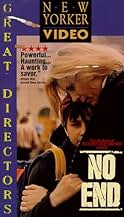
The wife of the recently deceased lawyer tries to cope with grief after his loss and to keep his last case going in court.The wife of the recently deceased lawyer tries to cope with grief after his loss and to keep his last case going in court.The wife of the recently deceased lawyer tries to cope with grief after his loss and to keep his last case going in court.
- Director
- Writers
- Stars




Danny Webb
- American
- (as Daniel Webb)


Jacek Domanski
- Dzialacz opozycji
- (uncredited)
- Director
- Writers
- All cast & crew
- Production, box office & more at IMDbPro
7.36.1K
1
2
3
4
5
6
7
8
9
10
Featured reviews
No 30
Grazyna Szapolowska's husband dies. He was a public defender, so she tries to arrange for his last client, Artur Barcis, to have a good defendant. She arranges for Aleksander Bardini, under whom her husband had apprenticed, to take the case. Barcis is accused of having led an illegal strike, and Bardini works to have him tread the middle ground of confessing and denial.
Krzysztof Kieslowski's movie is a murky one that tells us we can never tell what is going on at the moment. Only in retrospect can we figure out what was going on, and even that may not be true. It is a gloomy movie, with a lot of motivation left unclear. Did Miss Szapolowska really love her husband? Why has Bardini, who hasn't taken a case of this sort for more than 30 years, taken this one? What was the strike actually about? That remains uncertain, even after the movie's end.
Krzysztof Kieslowski's movie is a murky one that tells us we can never tell what is going on at the moment. Only in retrospect can we figure out what was going on, and even that may not be true. It is a gloomy movie, with a lot of motivation left unclear. Did Miss Szapolowska really love her husband? Why has Bardini, who hasn't taken a case of this sort for more than 30 years, taken this one? What was the strike actually about? That remains uncertain, even after the movie's end.
Poles Apart
This is an excellent film and a great discovery. It's from about ten years before The Double Life Of Veronica and the Three Colours trilogy and is, it its way, equally good. It almost certainly inspired Truly, Madly, Deeply because the main story is about a young lawyer, Antek Zyro (Jerzy Radziwilowicz) who tells us at the outset that he is dead and spends the remainder of the film watching over his widow and young son. Grazyna Szpapolowska is outstanding, not to say beautiful, as the widow who 'feels' her husband everywhere and tries a variety of remedies - hypnosis, casual sex - to dispel his presence all to no avail. It's a stunning film shot in muted blue tones throughout and well worth a visit. 9/10
There's more to Kieslowski than the Colours trilogy
Written by Kieslowski and Piesiewicz, NO END stars the beautiful and beguiling Grazyna Szapolowska as the widow of a lawyer who suddenly died of a heart attack. Her late husband, Antek (Jerzy Radziwilowicz) was in the middle of defending a man arrested for his part in a strike at a factory. His widow, Ursula, suggests that the arrested man be represented by Antek's teacher, an old lawyer named Labrador (Aleksander Bardini), and becomes peripherally involved in the case as she works through her grief. Antek's ghost makes his presence felt in surprising ways.
No End has been compared to the later French movie BLEU, starring Juliette Binoche, but it's a much more sober offering, more enigmatic. One has a feeling of lives interrupted, like being stuck in an elevator, fearful that the cable could break or the doors open upon something horrible. Not that the film is scary or suspenseful, but simply that the characters, people generally, are at the mercy of forces they cannot understand, beyond their control.
Fans of the Colours Trilogy and of the Double Life of Veronique will probably enjoy this. It has all Kieslowski's magic, his special way with light and shadow.
No End has been compared to the later French movie BLEU, starring Juliette Binoche, but it's a much more sober offering, more enigmatic. One has a feeling of lives interrupted, like being stuck in an elevator, fearful that the cable could break or the doors open upon something horrible. Not that the film is scary or suspenseful, but simply that the characters, people generally, are at the mercy of forces they cannot understand, beyond their control.
Fans of the Colours Trilogy and of the Double Life of Veronique will probably enjoy this. It has all Kieslowski's magic, his special way with light and shadow.
No equal
Krystoff Kieslowski is today best known for his last four films, made wholly or partly in France, which in some ways is a shame, as while these movies are not without merit, they are outshone by the massive brilliance of his earlier, Polish work. Kieslowski was, of course, the greatest visual poet of communist architecture; and there's also something magical about the way he communicates the most intense emotion behind the facade of Slavic stoicism (witness, for example, in this film, the scene where the car is taken by the police). And also there was the subtext of the political beneath the personal, never more apparent than in 'No End', set (and, courageously, made) in the aftermath of the impact of the Solidarity movement on Polish society. In the face of civil unrest, the government had declared martial law, hoping to stave off a "friendly" Russian invasion; but system had lost confidence in itself, and had already effectively negotiated its own demise by the time the collapse of the Berlin wall finally cast it into oblivion. It's in this intermediate period, where normality intermingled with fear, that 'No End' unfolds, a drama that combines moral complexity and human sympathy in equal measure.
The first words of dialgoue in this film are "I died". Billy Wilder had planned to start 'Sunset Boulevard' in a similar manner, but the suits didn't like it and that film makes less sense as a result of the changes they demanded. More recently, films like 'Truly, Madly, Deeply' and 'The Sixth Sense' have repeated one idea explored in 'No End', that of the ongoing relationship between the living and the dead. But whereas both of those films are weighted down by obvious sentimentality, the opening speech in 'No End' is simple, disturbing, painfully real and yet leads naturally into something far more than a ghost story, a tale in which there is no right and wrong, but in which the mixed motives of the characters only illuminate their humanity.
Kieslowski is famous for his collaboration with Zbigniew Priesner, who wrote wonderful scores for this film (and all it's successors); but watching it, one is also struck by how well he used silence. He also had a talent for finding the most wonderfully expressive faces: the lawyer (Aleksander Bardini), the wife (Grazyna Szapolowska) and the client (Artus Barcis) all went on to appear in his 'Dekalog'. It's impossible to imagine a better actor than Bardini for his role; while Szapolowska appears more beautiful than any Hollywood starlet precisely because of the complete lack of glamour with which she is shot; her portrayal of a woman holding things together in the face of an unconquerable grief is wonderful and immensely sad.
There are so many moments of brilliance in this film, almost of all them unflaunted; the moment where the woman's son interrupts her phone call; the tiny flinch induced when a door closes behind her, the way that light floods a previously darkened room; the speech of introduction uttered by the lawyer; Kieslowski constantly finds the subtlest of ways to shed light on his subjects. This is a ten star film, made by a master, grounded in its era but which speaks of so much more. Now released on DVD, it has to be seen.
The first words of dialgoue in this film are "I died". Billy Wilder had planned to start 'Sunset Boulevard' in a similar manner, but the suits didn't like it and that film makes less sense as a result of the changes they demanded. More recently, films like 'Truly, Madly, Deeply' and 'The Sixth Sense' have repeated one idea explored in 'No End', that of the ongoing relationship between the living and the dead. But whereas both of those films are weighted down by obvious sentimentality, the opening speech in 'No End' is simple, disturbing, painfully real and yet leads naturally into something far more than a ghost story, a tale in which there is no right and wrong, but in which the mixed motives of the characters only illuminate their humanity.
Kieslowski is famous for his collaboration with Zbigniew Priesner, who wrote wonderful scores for this film (and all it's successors); but watching it, one is also struck by how well he used silence. He also had a talent for finding the most wonderfully expressive faces: the lawyer (Aleksander Bardini), the wife (Grazyna Szapolowska) and the client (Artus Barcis) all went on to appear in his 'Dekalog'. It's impossible to imagine a better actor than Bardini for his role; while Szapolowska appears more beautiful than any Hollywood starlet precisely because of the complete lack of glamour with which she is shot; her portrayal of a woman holding things together in the face of an unconquerable grief is wonderful and immensely sad.
There are so many moments of brilliance in this film, almost of all them unflaunted; the moment where the woman's son interrupts her phone call; the tiny flinch induced when a door closes behind her, the way that light floods a previously darkened room; the speech of introduction uttered by the lawyer; Kieslowski constantly finds the subtlest of ways to shed light on his subjects. This is a ten star film, made by a master, grounded in its era but which speaks of so much more. Now released on DVD, it has to be seen.
Mezmerising
I state for the record that I did not understand this film fully. The second plot with Solidarnost protester imprisoned and released by the court is not completely clear to me. Yet it has little to do with politics and more with human condition (ideals, expectation, compromise). Prisoner's family doesn't react happily upon his immediate release in a court room. There is awkwardness and embarrassment in that scene, as if some unforgivable compromise has been made and it tainted all of their relationship. Accident scene with a death of motorist seems random but reoccurring theme in Kieslowskij movies. Randomness of death, randomness of existence. Movie is wonderfully shot , music (as always) is haunting. I just cannot put it all together in my mind like I could with Veronique.


Did you know
- TriviaThe film takes place in 1982.
- Quotes
[First lines]
Antek Zyro: [speaking directly to the camera] I died - four days ago.
- How long is No End?Powered by Alexa
Details
- Release date
- Country of origin
- Languages
- Also known as
- Ohne Ende
- Filming locations
- Bródno, Targówek, Warsaw, Mazowieckie, Poland(car accident scene)
- Production company
- See more company credits at IMDbPro
Contribute to this page
Suggest an edit or add missing content