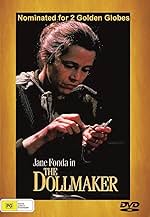
The Dollmaker
- TV Movie
- 1984
- 2h 22m
IMDb RATING
7.5/10
1.2K
YOUR RATING

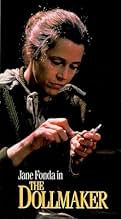
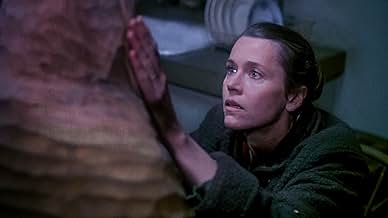
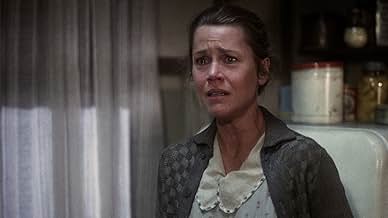
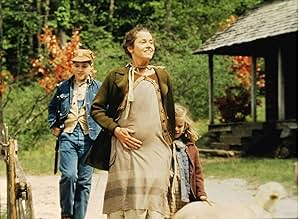
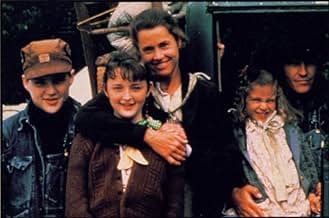
During WWII, a hard-luck farmer leaves rural home for a big city factory job. Gertie, his woodcarver wife reluctantly joins. City life and reckless spending leave them in dire straits, so Ge... Read allDuring WWII, a hard-luck farmer leaves rural home for a big city factory job. Gertie, his woodcarver wife reluctantly joins. City life and reckless spending leave them in dire straits, so Gertie carves handmade dolls to support her family.During WWII, a hard-luck farmer leaves rural home for a big city factory job. Gertie, his woodcarver wife reluctantly joins. City life and reckless spending leave them in dire straits, so Gertie carves handmade dolls to support her family.
- Director
- Writers
- Stars
- Won 2 Primetime Emmys
- 5 wins & 7 nominations total


Robert Swan
- Victor
- (as Bob Swan)


- Director
- Writers
- All cast & crew
- Production, box office & more at IMDbPro
7.51.1K
1
2
3
4
5
6
7
8
9
10
Featured reviews
10jrein39
Outstanding
This is an all time favorite of mine. A tear jerker, good story line. True to life drama, of the way things were, for the dirt poor. Not having enough money for medical and other expenses, moving to the city should make things better, but does it? Gertie puts her heart and soul into carving a piece of wood to try to get the peace she is seeking. And to get enough money to get her family back home. Out of the big city and back to the hills. This movie has the old time folk music which is great. You don't hear to many of them any more. Does anyone know if a sound track was made for this movie? I am looking for it with no success.
Very enjoyable, good balanced acting from all.
It's almost the end of 1999 and I've just seen this film for the first time - had never heard of it. I was pleasantly surprised that it was not a 'sappy, tear jerker'. Also pleasantly surprised at Jane Fonda I think she did a wonderful job in this film. It's a simple story. WWII sharecropper's wife reluctantly follows hubby to Detroit where he is going to 'make his fortune'. Needless to say, there are some major and minor misfortunes. See it to find out if all ends well.
An accurate portrayal of Kentucky country folk in a harrowing drama
This extremely powerful film features one of the strongest and best performances by Jane Fonda, as a Kentucky share-cropper's wife struggling during the years 1944-5 both to liberate herself as a person and save her family from devastating and terrible hardship, which means no money and nothing to eat (a problem compounded by having five children to feed). The film is thoroughly authentic and is a rare example of the shallow trendies of Hollywood getting to grips with real life and genuinely provincial people. Jane Fonda portrays a heroic young woman with irrepressible fire and vigour, a kind of "Kentucky Mother Courage', and as the film progresses and she improves her speech patterns, her Kentucky accent gets closer and closer to the real thing. That in itself is a remarkable achievement, considering how few actors can ever manage it. Fonda's husband is played by Levon Helm, a genuine hick born in Arkansas, whose first acting role was in THE COAL MINER'S DAUGHTER (1980), which was also set in Kentucky. Helm needed no coaching to 'talk country', as he was born to it. All he had to do was fine-tune his Arkansas accent and shift it slightly into Kentucky mode. This film is based upon a novel by Harriette Simpson Arnow (1908-1986), who was born in Kentucky and intimately knew what she was writing about (she had also lived in Detroit, which is portrayed in the latter part of the film). I wondered why the Kentucky scenes did not really look like Kentucky, but the end credits explained that those scenes were shot in Tennessee. The setting is meant to be the foothills of the Cumberland Mountains of Appalachia in Kentucky, but only a pernickety person like myself would notice the difference, and that there are too many rivers and not enough trees, and a severe shortage of very steep hills. The Michigan scenes were also shot in Illinois. Oh well, never mind, it all works anyway. The wonderfully accurate use of language and turns of phrase present in the script were presumably all taken word for word from the novel, and it is a joy to see and hear this record for posterity of a now-vanishing speech which was a direct survival of the 17th century language of England and Northern Ireland ('Ulster') amongst the Kentucky country folk who describe themselves as the 'Scotch-Irish' because they are descended from the Protestant Scots who settled in Ulster in Elizabethan and Stuart times, as I partly am myself, and as by far the majority of the American presidents have been (such as Abraham Lincoln and Andrew Johnson, to name but two, Lincoln being a distant relation of mine by marriage only, through his stepmother Johnston). One especially good aspect of this film is the casting of the children, all of whom were chosen very carefully and are excellent. (Hollywood casting of children is often so very puke-making, isn't it?) The TV film was directed by Daniel Petrie (1920-2004), who directed 91 films in his career, mostly for television, but whose best known feature films for the cinema were A RAISIN IN THE SUN (1961) with Sidney Poitier and FORT APACHE THE BRONX with Paul Newman (1981). For TV he made films about Truman, Roosevelt, and Nixon, thus carving a presidential niche for himself. He was a Canadian, and it is not known how he came to make such a sensitive film about Kentucky country folk as this, having presumably never had experience of them. He was clearly a man of greater talent than is customarily recognised. The story of this film is based upon a common problem faced by women throughout history, namely that they sometimes marry men stupider than themselves. That is always a bad idea, because the woman and her children are then at the mercy of bad decisions made by someone who is essentially a fool, but who insists upon exerting authority in the household because it is his right as a superior male, and he has the muscle to back it up. Fonda's husband means well but he is just not very bright, and early in the tale, she is still frozen in the mould of the dutiful wife, enforced by threats from her overbearing mother (played by Geraldine Page), who would rather die than defy her husband in any way whatever and who insists that it is Fonda's duty to 'love honour and obey', with the emphasis on the obey. So the husband, without telling his wife, sneaks off to Detroit to become a factory worker for Mr. Flint (yes, Mr. Flint of Flint, Michigan) and earn lots of money (or so he imagines). Fonda is forced by her mother to follow her husband to the appalling environment where he is now living in a paper-thin shack in a row of what are essentially workers' barracks, and where the good salaries they earn are soon wasted on the higher prices paid to live and frittered away on surviving the endless strikes, so that after a lengthy period of misery they end up with nothing after all. As things get grimmer, Fonda is increasingly forced to develop a bit more self-confidence and start taking the initiative herself. She has always had a knack for 'country whittling' with wood, a habit indulged in by most mountain folk in Kentucky in those days. But her talent is greater than most, and she is discovered by an arts and crafts teacher and enabled to sell her carvings, especially her animals and dolls (hence the title of the film), which finally earns them enough money to get ahead, while all the husband's efforts have dismally failed. I shall not relate the end of the story, as that is against IMDb rules, but I urge everyone to see this remarkable film. If only there were more like it, and less money were wasted on worthless, insipid cinematic trivia.
One of the best representations of Kentucky life in the 40's
Saw this film when it came out, and the depiction of Kentucky life in the 40's, during WW II was spot on. This could have been the story of my family. They too left Kentucky in the 40's for a better life in Michigan. My dad worked in the coal mines and my mom was caring for her mom who was dying of cancer, and raising 3 children. She too went to work in the factory, Rosie the riveter. Work was dirty and paid little. As so many, they left Kentucky and moved to Michigan where the auto factories paid much more than coal mines. Housing sprouted up to provide a decent living condition for all the workers. They enjoyed running water in the house and electricity for the first time.
I was in awe of how accurately the film displayed their life. The actors did a phenomenal job, and it is the only film I am aware of that depicts that time so accurately. My brother and two sisters were little kids when they moved "up North to Deetriot", I arrived in 1950 and couldn't have experienced a more different upbringing. We would go back every summer to visit our down South relatives. As I became a teenager, I balked at going back down every summer. My cousins wanted me to tell them all about living up North. To them I was someone who could tell them about life outside the Hollers. It was two different worlds.
It was a hard life but they made a better life for their family, at the expense of leaving everything and everyone they knew. Calling them the greatest generation is well deserved.
I was in awe of how accurately the film displayed their life. The actors did a phenomenal job, and it is the only film I am aware of that depicts that time so accurately. My brother and two sisters were little kids when they moved "up North to Deetriot", I arrived in 1950 and couldn't have experienced a more different upbringing. We would go back every summer to visit our down South relatives. As I became a teenager, I balked at going back down every summer. My cousins wanted me to tell them all about living up North. To them I was someone who could tell them about life outside the Hollers. It was two different worlds.
It was a hard life but they made a better life for their family, at the expense of leaving everything and everyone they knew. Calling them the greatest generation is well deserved.
Perfection
This is hands down, one of THE best movies/show ever shown on TV. I've only seen it a handful of times but I remember it so vividly. There isn't a single thing wrong with this movie. The acting, the directing, the script, costumes, everything is...well...perfect. Easily the best performance of Jane Fonda's career. I hope to come across it soon on DVD.


Did you know
- TriviaMovie stars Jessica Lange, Sissy Spacek and Jane Fonda were all in 1985 invited to testify before the House Democrats' Farm Task Force dealing with the emotional toll of the financial stress experienced by farmers in the early 1980's. The three actresses were invited to this Capitol Hill meeting due to their lead film performances as troubled farmers from each of their then current farm films from that era. The pictures were, respectively, Country (1984), The River (1984) and The Dollmaker (1984). Another farming picture at this time was Places in the Heart (1984) which starred Sally Field but she did not attend the hearings.
- ConnectionsFeatured in The 36th Primetime Emmy Awards (1984)
Details
- Release date
- Country of origin
- Language
- Also known as
- Dollmaker - Ein Traum wird wahr
- Filming locations
- Production companies
- See more company credits at IMDbPro
Contribute to this page
Suggest an edit or add missing content