IMDb RATING
6.9/10
1.8K
YOUR RATING

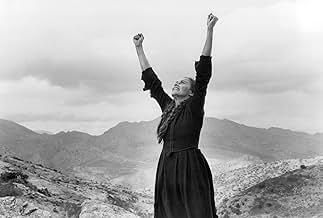
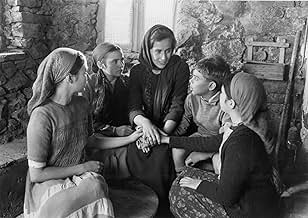
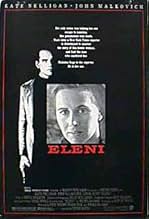
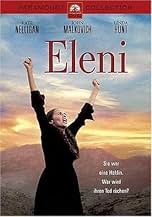
A mother's love for her children leads to a son's revenge for her death in this dramatic thriller that begins during the Greek civil war.A mother's love for her children leads to a son's revenge for her death in this dramatic thriller that begins during the Greek civil war.A mother's love for her children leads to a son's revenge for her death in this dramatic thriller that begins during the Greek civil war.



- Director
- Writers
- All cast & crew
- Production, box office & more at IMDbPro
6.91.7K
1
2
3
4
5
6
7
8
9
10
Featured reviews
Decent Story But In A Word: Grim
This is another of those supposedly based-on-a-true story accounts, this one dealing with a man's (writer Nicholas Gage) quest to return to his native Greece and avenge his mother's death which occurred 30 years earlier.
This is not an uplifting story but it's not depressing, either.....but it is grim. It begins with the Grecian mother protecting her kids from the vicious Communisits of the late 1940s. The film switches back and forth from that period to modern-day but it's never disjointed. The acting by John Malkovich, Kate Nelligan and Linda Hunt is excellent and the scenery is pleasing and very little, if any, profanity if memory serves me. It's a decent film but not anything I'd watch more than once.
This is not an uplifting story but it's not depressing, either.....but it is grim. It begins with the Grecian mother protecting her kids from the vicious Communisits of the late 1940s. The film switches back and forth from that period to modern-day but it's never disjointed. The acting by John Malkovich, Kate Nelligan and Linda Hunt is excellent and the scenery is pleasing and very little, if any, profanity if memory serves me. It's a decent film but not anything I'd watch more than once.
Taking sides? At least admit to it...
This is not a comment to the movie itself. The bits I have seen show at least an accurate portrayal of rural Greece in the late 40's along with the political "turmoil" of the time. Acting was above average in general, although some members of the cast, notably Malkovich, could have done a slightly better job.
So, is this propaganda? Of course it is BUT with more grains of truth than your average propaganda film, especially an American made. Yes, Mr Gatzoyannis (unless he is ashamed to use his real family name and resorts to "Gage") had lost his mother during the civil war. He is supposed to be one-sided, who wouldn't? He wrote a book about it, good for him. Someone made a film based on it, good for them. And now, many of us are bickering about what it is, propaganda or not, who are the good and who are the bad ones and so on...
A commentator before said that war is the end of civilization. True! A civil war though makes an "ordinary" war look quite civilized and "noble". Americans surely have their experience, they have gone through a terrible civil war. We, Greeks, have our experience which, sadly, is more "fresh" - lots of people that lived through it are still around to talk about it. Kids being taken from their mothers' arms to be transported..where? Brother killing brother (literally!) and generally bringing down whatever was once dear. Who's the bad guy? Which brother gets moral high ground? The one who took to mountains, kidnapped young ones to put them through a grim life behind the Iron Curtain, laid waste to his land and his home? Or the other, who after suffering all that, imprisoned those left behind (the majority of which were not part of the armed struggle and suffered along too), exiled them to desolate barren islands (there are more than we need of those in the Aegean), made them "dance" with cats in a sack (interesting how democracy, or "democracy", can be as horrendous as communism or any other totalitarian regime) and generally held them at the "border" of society until 1974. Who gets praise and who gets blame? You don't know? I think you do!
History was always written by victors, this is no exception. What is an exception in this case is that this particular "victor" (Gage) abstained his country's drama until it "suited" him to be a part of it. Having lost a loved one, a parent, in war is no unique to him, millions of people did! Did he live the ongoing "plague" that the civil war was? From the comfort of his house, half a world away. It is almost as if I, who have never been to the US, write a book about the drama of the Indians. Whatever moral high ground he possessed he lessened being that "distanced" from the whole scenery of it and its consequences. In short, this book and film portray HIS side, not his ideology's side but his personal side. It is easy to place blame, very hard to do so for one side only!
I will not go into the politics of that period, that is for another place and another time. Decent film, worth a viewing if not for anything else for an accurate portrayal of the "scenery". No stars awarded as I have not seen it all, just bits and pieces.
So, is this propaganda? Of course it is BUT with more grains of truth than your average propaganda film, especially an American made. Yes, Mr Gatzoyannis (unless he is ashamed to use his real family name and resorts to "Gage") had lost his mother during the civil war. He is supposed to be one-sided, who wouldn't? He wrote a book about it, good for him. Someone made a film based on it, good for them. And now, many of us are bickering about what it is, propaganda or not, who are the good and who are the bad ones and so on...
A commentator before said that war is the end of civilization. True! A civil war though makes an "ordinary" war look quite civilized and "noble". Americans surely have their experience, they have gone through a terrible civil war. We, Greeks, have our experience which, sadly, is more "fresh" - lots of people that lived through it are still around to talk about it. Kids being taken from their mothers' arms to be transported..where? Brother killing brother (literally!) and generally bringing down whatever was once dear. Who's the bad guy? Which brother gets moral high ground? The one who took to mountains, kidnapped young ones to put them through a grim life behind the Iron Curtain, laid waste to his land and his home? Or the other, who after suffering all that, imprisoned those left behind (the majority of which were not part of the armed struggle and suffered along too), exiled them to desolate barren islands (there are more than we need of those in the Aegean), made them "dance" with cats in a sack (interesting how democracy, or "democracy", can be as horrendous as communism or any other totalitarian regime) and generally held them at the "border" of society until 1974. Who gets praise and who gets blame? You don't know? I think you do!
History was always written by victors, this is no exception. What is an exception in this case is that this particular "victor" (Gage) abstained his country's drama until it "suited" him to be a part of it. Having lost a loved one, a parent, in war is no unique to him, millions of people did! Did he live the ongoing "plague" that the civil war was? From the comfort of his house, half a world away. It is almost as if I, who have never been to the US, write a book about the drama of the Indians. Whatever moral high ground he possessed he lessened being that "distanced" from the whole scenery of it and its consequences. In short, this book and film portray HIS side, not his ideology's side but his personal side. It is easy to place blame, very hard to do so for one side only!
I will not go into the politics of that period, that is for another place and another time. Decent film, worth a viewing if not for anything else for an accurate portrayal of the "scenery". No stars awarded as I have not seen it all, just bits and pieces.
Fine moving drama of family by Communists
As another reviewer wrote, this is a movie about a family, not about politics - even though it is terror that causes that family to be harmed.
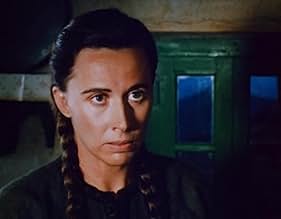
As the mother, Kate Nelligan is absolutely superb, shining, wonderful. As the son as an adult, John Malkovich is curiously detached.
Again, although the movie was first rate, I question the decision to alternate time periods with a parallel narratives throughout. I think it lessens the impact. I see no reason the story couldn't be told chronologically, to greater effect.
Those two reviewers from Argentina and Greece who wrote that the movie was propaganda are being silly. Neither this movie nor anyone denies that the Communists (and those democrats defending the former king and government who had returned to power after the war - the king wishing to reign but not rule) fought the Nazis during the Second World War.
This movie does not take place during that war - and doesn't refer to it.
Further, when the Second World War ended, there WERE no native Greek fascists fighting in the Civil War - when a reviewer writes that this was a fascist war, it's crazy. In the movie, you hear the Communists using the term, "fascist" in the same loose propagandistic way that, say, Prime Minister Tony Blair is referred to as a fascist - falsely.
As the Soviet Union's proxies looked to be gaining in the Civil War, Britain asked the United States to participate in an effort to aid the Greek government with financial aid and weapons. over this and the Communist insurgency in turkey, was the Truman doctrine of containment of Communist totalitarianism born. These are simply facts.
Moreover, the fact that the Greek Communists took tens of thousands of children from their parents and shipped them off to Communists countries such as Albania and Czechoslovakia is obviously well-documented in the book and movie. However, as I wrote above, the movie simply looks at a human story of a mother and her love for her children.
Kate Nelligan makes the movie heartfelt, moving, powerful. She should have won the Oscar for this performance.
As the mother, Kate Nelligan is absolutely superb, shining, wonderful. As the son as an adult, John Malkovich is curiously detached.
Again, although the movie was first rate, I question the decision to alternate time periods with a parallel narratives throughout. I think it lessens the impact. I see no reason the story couldn't be told chronologically, to greater effect.
Those two reviewers from Argentina and Greece who wrote that the movie was propaganda are being silly. Neither this movie nor anyone denies that the Communists (and those democrats defending the former king and government who had returned to power after the war - the king wishing to reign but not rule) fought the Nazis during the Second World War.
This movie does not take place during that war - and doesn't refer to it.
Further, when the Second World War ended, there WERE no native Greek fascists fighting in the Civil War - when a reviewer writes that this was a fascist war, it's crazy. In the movie, you hear the Communists using the term, "fascist" in the same loose propagandistic way that, say, Prime Minister Tony Blair is referred to as a fascist - falsely.
As the Soviet Union's proxies looked to be gaining in the Civil War, Britain asked the United States to participate in an effort to aid the Greek government with financial aid and weapons. over this and the Communist insurgency in turkey, was the Truman doctrine of containment of Communist totalitarianism born. These are simply facts.
Moreover, the fact that the Greek Communists took tens of thousands of children from their parents and shipped them off to Communists countries such as Albania and Czechoslovakia is obviously well-documented in the book and movie. However, as I wrote above, the movie simply looks at a human story of a mother and her love for her children.
Kate Nelligan makes the movie heartfelt, moving, powerful. She should have won the Oscar for this performance.
Outstanding
Powerful performances all around in this tale of a family's struggle to escape the Greek Civil War after World War II. Based on a true story, and with a powerful performance by Kate Nelligan as the title character. John Malkovich does not disappoint as her son who seeks to avenge his mother's execution. Oscar winner Linda Hunt also gives a fine supporting performance. A gripping, suspenseful mystery!
A lot of the comments miss the point
This film seems to have unjustly attracted a lot of nonsensical comments, mostly from left of center commentators; and it's sadly revealing how the facts cited by other viewers are not even addressed, but simply ignored by the left-ist commentators. Those who accuse the film of being anti-communist propaganda mostly use ad hominem arguments, and insult and invective. But ask yourself: what good is a political view which assumes itself (because it is self-described as "revolutionary") to be above ordinary moral or political criticism? If that were true, then there could never be any way to judge the value of the actions performed in its name.
In short, this is a reasonably good film, with a fine performance by Kate Nelligan, and much less good work by other members of the cast. The direction is not inspired, and the flashback structure of the film seeks to maximize the emotional effects without stopping to consider just how powerful those effects are all by themselves, that is, the use of that structure betrays the fear of the film-makers that the story might not have the impact they wanted it to have.
The original book is stronger, but it too is flawed by Nicholas Gage's failure to ask himself about how it was that the communists picked on his mother, even though he presents some of the evidence that answers the question. It's clear from the book that some members of his family -- I think his grandfather, but it's been a long time since I read the book -- had serious disputes with other people in the village in the 20s and 30s and perhaps even earlier, and that there may even have been a murder involved; naturally, Gage is not all that clear on the point. The communists, men, most of them, couldn't go after the grandfather, so, brave souls that they were, went after the most vulnerable: the Gage womenfolk. Despicable, but that is often the tenor of village and peasant life.
And to me, this was the message of the book, that the politics of revolution were, in many cases, simply another weapon in the never-ending village war between its own members. The problem with the film is that it never really clarifies this central aspect of the drama, and so the power of Nelligan's performance is marooned. It affects, but it's almost in a vacuum, and Malkovich's portrayal of Gage, which I thought quite good, is similarly detached; but the flaw lay in the original book, which ducks important questions because Gage, North American that he is, simply doesn't understand the deeper currents of village life.
Worth a look, no matter its flaws. No work of art is ever perfect, and this one gets high marks for trying.
In short, this is a reasonably good film, with a fine performance by Kate Nelligan, and much less good work by other members of the cast. The direction is not inspired, and the flashback structure of the film seeks to maximize the emotional effects without stopping to consider just how powerful those effects are all by themselves, that is, the use of that structure betrays the fear of the film-makers that the story might not have the impact they wanted it to have.
The original book is stronger, but it too is flawed by Nicholas Gage's failure to ask himself about how it was that the communists picked on his mother, even though he presents some of the evidence that answers the question. It's clear from the book that some members of his family -- I think his grandfather, but it's been a long time since I read the book -- had serious disputes with other people in the village in the 20s and 30s and perhaps even earlier, and that there may even have been a murder involved; naturally, Gage is not all that clear on the point. The communists, men, most of them, couldn't go after the grandfather, so, brave souls that they were, went after the most vulnerable: the Gage womenfolk. Despicable, but that is often the tenor of village and peasant life.
And to me, this was the message of the book, that the politics of revolution were, in many cases, simply another weapon in the never-ending village war between its own members. The problem with the film is that it never really clarifies this central aspect of the drama, and so the power of Nelligan's performance is marooned. It affects, but it's almost in a vacuum, and Malkovich's portrayal of Gage, which I thought quite good, is similarly detached; but the flaw lay in the original book, which ducks important questions because Gage, North American that he is, simply doesn't understand the deeper currents of village life.
Worth a look, no matter its flaws. No work of art is ever perfect, and this one gets high marks for trying.


Did you know
- TriviaAdditional flashback scenes were filmed featuring Alfred Molina as Nick's father Christos (played by Steve Plytas in the 1980s scenes). Although Molina was credited as "Young Christos" in press materials, and his scenes were shown in publicity photos, his role was almost completely cut from the final version, and his name does not appear in the credits. Molina's only remaining footage in the released film is a single shot of Christos taking a photograph of Eleni, Nikola and family, with his face partially obscured by his camera.
- How long is Eleni?Powered by Alexa
Details
Box office
- Budget
- $12,000,000 (estimated)
- Gross US & Canada
- $305,102
- Opening weekend US & Canada
- $27,875
- Nov 3, 1985
- Gross worldwide
- $305,102
- Runtime
- 1h 54m(114 min)
- Color
- Sound mix
- Aspect ratio
- 1.85 : 1
Contribute to this page
Suggest an edit or add missing content