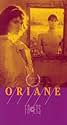
A young girl is sent to a South American hacienda, where she learns about the life of her reclusive aunt, OrianaA young girl is sent to a South American hacienda, where she learns about the life of her reclusive aunt, OrianaA young girl is sent to a South American hacienda, where she learns about the life of her reclusive aunt, Oriana
- Awards
- 8 wins & 1 nomination total
6.7475
1
2
3
4
5
6
7
8
9
10
Featured reviews
a haunting mystery / romance
A French woman inherits the remote, South American hacienda of her reclusive Aunt Oriane, and while preparing an inventory of the property recalls the summer when, still a teenager, she visited Oriane and tried (unsuccessfully) to pierce the mystery of her aunt's own shadowed adolescence. The first feature by director Fina Torres unfolds in layers of delicate, haunting flashbacks, with the memory of the young girl's visit leading back to the childhood of Oriane herself: her illicit romance with the adapted stable boy, and the violent response of her dictatorial father. The missing piece of the narrative puzzle, when it finally falls into place, not only solves the lingering mystery of the hacienda, but also neatly ties each flashback together, reminding us in elegant fashion how the past is never altogether past. Rarely has a debut film shown such confidence and maturity.
Memories of the living and memories of the dead
Maria visits the rural hacienda of her now dead aunt Oriana with a view to selling it. But as Maria wanders around the old, dark and dusty house memories of her encounter years ago with Oriana flood back. Director Fina Torres' debut feature film from Venezuela was a prize winner when first released in 1985, and is set during four separate time periods as memories of the living are then replaced by memories of the dead. The unprolific Torres has created a film with pacing which is very slow in a dialogue light drama where not much happens, and which tries to achieve it's atmosphere through mood, feeling and image, as the dead come to life through an exploration of the past through memory. This involves a certain amount of creeping around in the dark through creaking doors, walking past symbolic barred windows and swings, contending with grumpy maids, and digging into family secrets in locked boxes (with Beethoven and Bach on the soundtrack). Inspired by the story 'Oriana, Tia Oriana' by Marvel Moreno (as adapted by Torres and Antoine Lacomblez) the theme of the links and influence of the past on the present ends up in a dusty old turgid soap opera. One of those films where you can tell where it's going almost from the outset. The ending is strangely moving.
The house of the spirits
Fina Torres' body of work has revolved around her own identity as a Venezuelan artist living and working in France, with a heavy European influence, but with a keen eye for things that are obviously very familiar to her from her native land.
Oriana is a rare film that works slowly on the viewer until he gets to know the terrible things that happened in the hacienda once owned by wealthy people, but now is in disarray.
Maria, as a woman, Oriana's niece, goes back to inspect the property, as she and her French husband want to dispose of it, the sooner, the better. But something happens to Maria, for whom the house has a magic spell as she steps into the dusty and unkempt main house of the hacienda, where once, she has spent summer vacations.
Maria, we see, has an inquisitive mind. In her mind, her aunt Oriana is an enigma. We get to know the past through the eyes of Maria, as a young girl, who is the one that discovers things that are safely hidden in her aunt's closet. This is a story seen through three generations of this family, although basically the present time bears nothing on the story, or the tragedy that we get to realize happened years ago in the hacienda. We also discover why Oriana decided to stay behind, by herself, playing her piano and living in the past by herself.
Basically, young Maria, played by Daniela Silverio, is the center of the story. As Oriana, the mysterious aunt, Doris Wells brings a dignity and a remoteness unique to the drama.
Even though the film moves at a very slow pace, it's quite enjoyable because of the director's fine tuning behind the camera.
Oriana is a rare film that works slowly on the viewer until he gets to know the terrible things that happened in the hacienda once owned by wealthy people, but now is in disarray.
Maria, as a woman, Oriana's niece, goes back to inspect the property, as she and her French husband want to dispose of it, the sooner, the better. But something happens to Maria, for whom the house has a magic spell as she steps into the dusty and unkempt main house of the hacienda, where once, she has spent summer vacations.
Maria, we see, has an inquisitive mind. In her mind, her aunt Oriana is an enigma. We get to know the past through the eyes of Maria, as a young girl, who is the one that discovers things that are safely hidden in her aunt's closet. This is a story seen through three generations of this family, although basically the present time bears nothing on the story, or the tragedy that we get to realize happened years ago in the hacienda. We also discover why Oriana decided to stay behind, by herself, playing her piano and living in the past by herself.
Basically, young Maria, played by Daniela Silverio, is the center of the story. As Oriana, the mysterious aunt, Doris Wells brings a dignity and a remoteness unique to the drama.
Even though the film moves at a very slow pace, it's quite enjoyable because of the director's fine tuning behind the camera.
Hovering...
...over this movie is the mystery of other people, symbolised by the unknown, hidden past. Uneasy discovery is the subject: very Proustian.
If you are interested in action, pace, fancy shots, virtuoso transitions, and all the shenanigans that fascinate a certain segment of the film_BUFF_ "community", forget it. There is an almost Zen minimalism to the dramaturgy of this film: precisely like a South American Summer siesta. The Gothic element comes almost as an anticlimax, so perfectly is the mystery evoked. We might prefer not to discover, then? The protagonist, at the end, chooses to perpetuate her enigmas. Good for her. "The hacienda is not for sale." An outstanding Latin-American work of art.
Great movie with many various symbols, and deep characters.
Although some may think this movie is boring, in fact, it has a quite interesting background, which focus on the characters and their individual actions. Also flashbacks or "echoes" add great emphasis to the story.
Did you know
- TriviaOfficial submission of Venezuela for the 'Best Foreign Language Film' category of the 58th Academy Awards in 1986.
- Quotes
Oriana, adolescent: Tell me what he said.
Sergio: That I have no right to this land.
Oriana, adolescent: Neither to the land nor to the daughter, right?
- ConnectionsFeatured in Cine Invisible (2023)
- How long is Oriana?Powered by Alexa
Details
Contribute to this page
Suggest an edit or add missing content


