IMDb RATING
7.5/10
3.8K
YOUR RATING

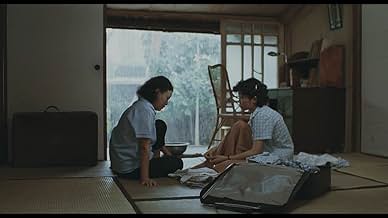
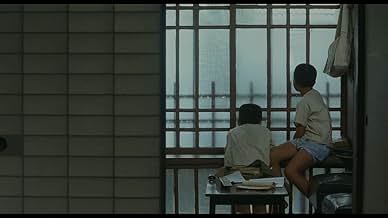
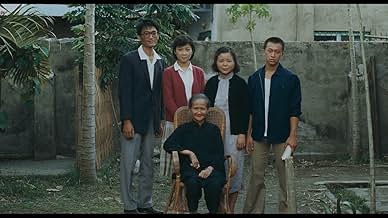
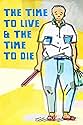
The semi-autobiographical film on director Hou Hsiao-Hsien's childhood and adolescence, when he was growing up in Taiwan, living through the deaths of his father, mother and grandmother.The semi-autobiographical film on director Hou Hsiao-Hsien's childhood and adolescence, when he was growing up in Taiwan, living through the deaths of his father, mother and grandmother.The semi-autobiographical film on director Hou Hsiao-Hsien's childhood and adolescence, when he was growing up in Taiwan, living through the deaths of his father, mother and grandmother.
- Awards
- 8 wins & 5 nominations total


- Director
- Writers
- All cast & crew
- Production, box office & more at IMDbPro
7.53.8K
1
2
3
4
5
6
7
8
9
10
Featured reviews
The most personal work by one of the greatest living directors
This film, which first brought Hou and the Taiwanese New Wave to international attention, seems deceptively simple, like your run-of-the mill growing-up-humbly-in-a-third-world-country narrative: a young boy, whose family has been transplanted from China to Taiwan, faces a hard path to adulthood complete with neighborhood tussles and family deaths. But gradually its manner of telling draws you in: at first, events seem like fragmented vignettes, but are actually blended in a succession that has been described as `like watching clouds floating by.' His propensity towards graphically composed, image-driven storytelling recalls the styles of Ozu, Satyajit Ray and even Tarkovsky, but where Hou excels is in applying his style towards an examination on the nature of history. For my money, there has never been a filmmaker as consumed by the idea of history than Hou, and this deeply autobiographical film may shed light on his motivations. By the time we reach the devastating ending, there's an overwhelming feeling of a time and place, an entire way of life, that has slowly disappeared before our eyes, but even more heartbreaking is the profound sense of guilt, of youthful opportunity squandered in hoodlum-like loitering, of parents whose presence was taken for granted until the sudden arrival of their ineffable absence. Watch this film to see how movies are humankind's noble, anxious attempt to retrieve lost time, and how the retrieval only reflects back on the mournful permanence of that loss.
My favourite Hao's film.
Although I think The Puppetmaster is the real best masterpiece of Hao, Time to live and the time to die is the one I love most. Despite the implication and background of Taiwan history in the film, as I am not so clear about it and not close to me, the story about growing-up is the reason that the film move me so much. The trip of the main kid "ar Ha" and his grandma become the warmest and most unforgettable part of the film. By the way, I think the relatively slow and quiet style of Hao extremely suit the story of rural and history background, much better than modern city background.
Coming of age in Taiwan
The Taiwanese movie Tong nien wang shi was shown in the U.S. with the title A Time to Live, a Time to Die (1985). The movie was co-written and directed by Hsiao-hsien Hou, and is said to be semi-autobiographical.
The film is a coming of age story of Ah-Ha, whom we meet as a boy of about seven, and whose life we follow until his late teen years. Ah-Ha's family fled China in 1947, and now live in Taiwan. At first, there was still talk about recapturing the mainland, although those discussions faded away as the reality became clear. Still, Ah-Ha's grandmother is convinced that she can walk back to the mainland, and frequently asks people to help her to get there.
If the movie does, indeed, contain autobiographical elements, Hsiao-hsien Hou had a difficult boyhood. His family was poor, and Illness stalked them. As a teenager, Ah-Ha joins a gang that is extraordinarily violent. (The violence takes place off screen, but it is an ever-present plot element in the second half of the film.)
The plot doesn't give us too many heart-rending moments, but it's still very grim. In fact, as I thought back about it, there was only one truly positive scene when—to Ah-Ha's astonishment--his grandmother is able to juggle three guavas. Imagine a movie that is more than two hours long, and has only about 30 seconds of true happiness in it.
It's hard to recommend a movie like this, but, on the positive side, the camera work is brilliant, the acting is excellent, and the film gives us a glimpse of what life was like for a Chinese subculture—people from the mainland who migrated to Taiwan.
We saw this movie at the excellent Dryden Theatre at Eastman House in Rochester, NY as part of a Hsiao-hsien Hou retrospective. It will work well on DVD.
The film is a coming of age story of Ah-Ha, whom we meet as a boy of about seven, and whose life we follow until his late teen years. Ah-Ha's family fled China in 1947, and now live in Taiwan. At first, there was still talk about recapturing the mainland, although those discussions faded away as the reality became clear. Still, Ah-Ha's grandmother is convinced that she can walk back to the mainland, and frequently asks people to help her to get there.
If the movie does, indeed, contain autobiographical elements, Hsiao-hsien Hou had a difficult boyhood. His family was poor, and Illness stalked them. As a teenager, Ah-Ha joins a gang that is extraordinarily violent. (The violence takes place off screen, but it is an ever-present plot element in the second half of the film.)
The plot doesn't give us too many heart-rending moments, but it's still very grim. In fact, as I thought back about it, there was only one truly positive scene when—to Ah-Ha's astonishment--his grandmother is able to juggle three guavas. Imagine a movie that is more than two hours long, and has only about 30 seconds of true happiness in it.
It's hard to recommend a movie like this, but, on the positive side, the camera work is brilliant, the acting is excellent, and the film gives us a glimpse of what life was like for a Chinese subculture—people from the mainland who migrated to Taiwan.
We saw this movie at the excellent Dryden Theatre at Eastman House in Rochester, NY as part of a Hsiao-hsien Hou retrospective. It will work well on DVD.
A great introduction to the world's greatest director
I recommend A TIME TO LIVE AND A TIME TO DIE as a great introduction to the films of Hou Hsiao Hsien, who I consider the greatest director working today. Like most of his films, this one is about the telling of history, the effort to recreate the memories of the past, in this case his childhood memories growing up in rural Taiwan. His family has escaped Communist China but live as if they will make their return someday. That someday never comes, the family grows old, and members die one by one. These tragedies (filmed with heartbreaking solemnity) serve as punctuation marks for the film's narrative, which isn't so much concerned with plot details as it is with capturing the sense of what it was like to live at that time, as the kids develop their own sense of belonging, in a country they have adpoted just as it has adopted them. His method of editing and storytelling is something close to revolutionary, and he would refine it in his later films. His ability to set scene after impeccable scene and let the ideas ferment over their totality is unparalleled. This is perhaps his most accessible film, full of heart and pathos. It may seem slowgoing by Hollywood standards, but if you have the willingness to let it wash over you, you will be transported, both mentally and emotionally.
A miraculous merging of personal and political
"A Time to Live and a Time to Die" reads like a family saga, but it is just as much a film about the passing of traditional China and the dislocation of exile. Of course the plot points are given away; Hou isn't interested in dramatic tension and Aristotelian unities--these are so dependent on Western ideas of
personality and the separation of individual and world that they make little
sense in China. He doesn't push the events in our faces, either--they just
happen, often in the middle distance with a tree in the foreground, the way real life happens. (Remember Auden's "Musee de Beaux Arts", with Icarus plunging
in the sea far off while a ploughman works on his field?)
The space Hou gives his events and his characters doesn't give us the intimacy with people that we expect in the West. But it gives us a rich sense of the
texture of life and the things that pass among members of a family and a
community, even one that is thrown together and can just as suddenly fall
apart, as it begins to here. It's that feeling for social space, in part, that allows this film and others of his to address social and historical questions without ever losing the sharp particularity of a personal story.
personality and the separation of individual and world that they make little
sense in China. He doesn't push the events in our faces, either--they just
happen, often in the middle distance with a tree in the foreground, the way real life happens. (Remember Auden's "Musee de Beaux Arts", with Icarus plunging
in the sea far off while a ploughman works on his field?)
The space Hou gives his events and his characters doesn't give us the intimacy with people that we expect in the West. But it gives us a rich sense of the
texture of life and the things that pass among members of a family and a
community, even one that is thrown together and can just as suddenly fall
apart, as it begins to here. It's that feeling for social space, in part, that allows this film and others of his to address social and historical questions without ever losing the sharp particularity of a personal story.


Did you know
- TriviaThis film is inspired by screenwriter-turned-director Hou Hsiao-Hsien's coming-of-age story. It is the second installment of Hou Hsiao-Hsien's "Coming-of-Age Trilogy" that features three prominent Taiwanese screenwriters' coming-of-age stories - the other two are A Summer at Grandpa's (1984) (inspired by the childhood memories of Chu Tien-Wen) and Dust in the Wind (1986) (inspired by the coming-of-age story of Wu Nien-Jen).
- ConnectionsFeatured in When Cinema Reflects the Times: Hou Hsiao-Hsien and Edward Yang (1993)
- How long is A Time to Live and a Time to Die?Powered by Alexa
Details
- Release date
- Country of origin
- Official site
- Languages
- Also known as
- A Time to Live, a Time to Die
- Filming locations
- Production companies
- See more company credits at IMDbPro
Contribute to this page
Suggest an edit or add missing content