The Singing Detective
- TV Mini Series
- 1986
- 1h 10m
IMDb RATING
8.5/10
5.1K
YOUR RATING

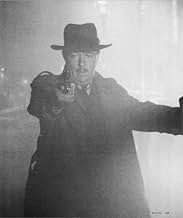
Tormented and bedridden by a debilitating disease, a mystery writer relives his detective stories through his imagination and hallucinations.Tormented and bedridden by a debilitating disease, a mystery writer relives his detective stories through his imagination and hallucinations.Tormented and bedridden by a debilitating disease, a mystery writer relives his detective stories through his imagination and hallucinations.
- Won 3 BAFTA Awards
- 6 wins & 8 nominations total
Browse episodes



8.55K
1
2
3
4
5
6
7
8
9
10
Featured reviews
One of the Greatest Things Ever Seen on Television
The BBC television production of "The Singing Detective" caused a huge stir when it was first broadcast back in 1986, and now it is commonly acknowledged as a classic.
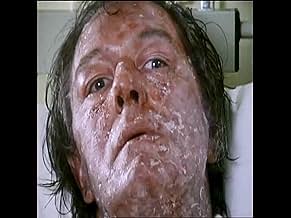
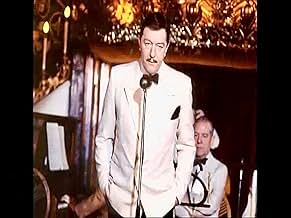
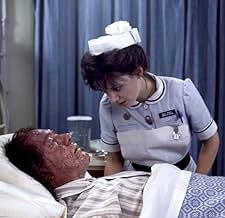
Hospitalised by a severe case of psoriasis, crime novelist Philip E Marlow, escapes the grim realities of ward life into a rich inner world where he imagines himself as the "singing detective", hero of his own novels. From these fantasies he drifts to memories of his grim childhood during World War Two, and paranoid fantasies about his estranged wife.
The script, by celebrated writer Dennis Potter, is truly remarkable. The acting is good, especially from Michael Gambon (as Philip Marlow) who is perfect in a very difficult role.
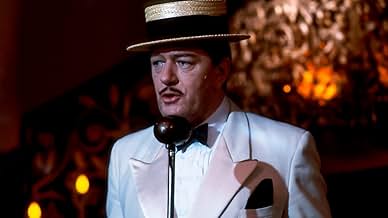
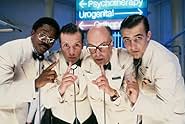
The series lasts nearly seven hours and yet never fails to entertain. The series has a rich vain of dark humour and features some hilariously surreal song-and-dance sequences.
This is a true masterpiece and, very possibly, the best TV series ever made. Don't miss any opportunity to catch it.
Hospitalised by a severe case of psoriasis, crime novelist Philip E Marlow, escapes the grim realities of ward life into a rich inner world where he imagines himself as the "singing detective", hero of his own novels. From these fantasies he drifts to memories of his grim childhood during World War Two, and paranoid fantasies about his estranged wife.
The script, by celebrated writer Dennis Potter, is truly remarkable. The acting is good, especially from Michael Gambon (as Philip Marlow) who is perfect in a very difficult role.
The series lasts nearly seven hours and yet never fails to entertain. The series has a rich vain of dark humour and features some hilariously surreal song-and-dance sequences.
This is a true masterpiece and, very possibly, the best TV series ever made. Don't miss any opportunity to catch it.
As good as it gets
There's no point in reiterating the praise for this miniseries. Many have called it the best television production ever, and as far as I can tell, they're absolutely correct. This is (NBC notwithstanding) the true definition of 'must-see TV'.
I just want to comment on something that struck me when I watched this recently on DVD. There's no way that an actor like Michael Gambon could ever get cast as the leading man in an American production (for TV or movies). He's just not physically attractive enough in the conventional sense; for example, he has the beginnings of a double-chin (more of a sloping-down from his chin to his collar), and I can't imagine any American producer being willing to give such an "not hot" actor so much screen time in the lead role.
Yet, it hardly needs be said, he is 100% perfect in this role, and it's hard to imagine anyone else doing as good a job. He can convey more feeling (rage, helplessness, love, hatred) in one close-up of his eyes than some actors do in their entire careers. His presence in this film is, in a sense, a reminder of how lucky we all are that it ever got made at all, by a BBC that was willing to give producer Kenith Trodd almost complete autonomy, as long as he stayed within budget. With the possible exception of HBO, you just don't see that sort of artistic freedom too often over on this side of the pond.
Anyway, as others said, it's a masterpiece, brilliantly written and brilliantly acted. Truly one of the most incredible uses of the television medium ever.
I just want to comment on something that struck me when I watched this recently on DVD. There's no way that an actor like Michael Gambon could ever get cast as the leading man in an American production (for TV or movies). He's just not physically attractive enough in the conventional sense; for example, he has the beginnings of a double-chin (more of a sloping-down from his chin to his collar), and I can't imagine any American producer being willing to give such an "not hot" actor so much screen time in the lead role.
Yet, it hardly needs be said, he is 100% perfect in this role, and it's hard to imagine anyone else doing as good a job. He can convey more feeling (rage, helplessness, love, hatred) in one close-up of his eyes than some actors do in their entire careers. His presence in this film is, in a sense, a reminder of how lucky we all are that it ever got made at all, by a BBC that was willing to give producer Kenith Trodd almost complete autonomy, as long as he stayed within budget. With the possible exception of HBO, you just don't see that sort of artistic freedom too often over on this side of the pond.
Anyway, as others said, it's a masterpiece, brilliantly written and brilliantly acted. Truly one of the most incredible uses of the television medium ever.
10shark-43
As Good As TV Gets
I absolutely adore this piece of work. Jon Amiel's sensitive, clever direction, Dennis Potter's biting, brilliant script & the towering lead performance by the great Michael Gambon makes this a treat to watch. It's for those viewers who like to be treated as if they have a brain in their head and they don't need everything spelled out for them and telegraphed what is about to happen. With patience, this story unfolds with amazing power and in the long run, stunning optimism. There are three stories going on, really: an ill writer with a horrible skin condition is hospitalized and he rants and yells at all of those who come by him; fellow patients, nurses and doctors. But as he lays in bed, he begins to hallucinate from his high fever and he begins to re-write an old crime noir novel he once wrote called, The Singing Detective. He also is completely overwhelmed with memories from his childhood and growing up amongst a poor, ignorant coal-mining family in the woods of England. Aside from the amazing Gambon, this film is loaded with great performances: from Janet Suzman to Bill Patterson to Alison Steadman (as his unhappy Mother). I own a copy of this magnificent mini-series and I watch it over and over. A masterpiece. Mr. Potter, rest in peace, sir.
10adam_12
Brilliant psychological drama
"The Singing Detective" very well may be the best thing done on television. Gambon is outstanding as the lead role, Marlow; he takes command of the performance so that you the viewer see Gambon as Phillip. The story is so rich and detailed with psychological questions that Marlow reflects on from his hospital bed; as you see him find resolutions to his questions, his skin condition becomes better. In the flashbacks, as he has more problems, it becomes worse. This is just one of many predicaments that Marlow faces throughout his time in his life. The story asks psychological questions about childhood, humans as sexual beings, the existence of God, and the healing (and destroying) powers of the mind. "The Singing Detective" is a quite cerebral and a brilliant show. SEEK THIS SERIES OUT and treasure it!
A landmark work of detective fiction and personal examination
The Singing Detective is one of those great works that inspire something deep within the viewer, leaving them both shaken and elated by the spectacle they have just witnessed. Few cinematic works can inspire such a feeling, let alone a work for television; and it is this sense of genius that elevates this work above the comparatively "okay" likes of say, Cracker, Brideshead Revisited, and Prime Suspect et al. This is down to the fact that The Singing Detective is a work far greater than anything else; a microcosm of life, love, anger, defeat, consciousness and the sub-conscious. It deals with the intricate realms of fantasy and reality, the written, the understood and the real. If this sounds complicated then we're on the right track, because this is one of Dennis Potter's most detailed narrative constructs. The story chronicles a writer's decent into personal hell, as well as a decent into a book being written in his own imagination and a book written many years before; with his past, present and future all jostling for our attention throughout the epic, six-hours-plus running-time.
It is a testament to Potter's ability as a screenwriter that the whole thing zips along so quickly, with the multi-layered story never pausing for a moment; constantly being carried along at every step by the combined genius of Potter's characters, the skillful and visually rich direction of Jon Amiel and that towering central performance from the brilliant Michael Gambon. The writing is truly ecstatic, with Potter obviously relishing every chance he gets to play with both the musical and detective-movie clichés - bringing to mind both Casablanca and Potter's own-classic Pennies From Heaven - whilst the dialog of Gambon's inner-monologues have more in common with the profane poetry of 60's playwrights that anything you'd expect to hear on BBC 2. The story also has obvious political overtones, with Potter using the hospital setting of the present sequences to double as an allegory of 80's Britain under the tyrannical leadership of Margaret Thatcher (bringing to mind the Elvis Costello song Tramp the Dirt Down and those other hospital set political parables, One Flew Over the Cuckoo's Nest and Britannia Hospital).
The story is also somewhat semi-autobiographical from Potter's point of view, with the writer, at this point in time, suffering from the same psoriatic-arthritis that Gambon's character Marlow has (creating that devastating, iconic image of the paralytic Marlow languishing half-naked in bed, being greased by a young Joanne Whally). There are also the much deeper autobiographical aspects with the young Marlow's childhood in the shady and evergreen Forest of Dean, in which the pastoral setting gives way to some truly shocking moments; recalling similar childhood traumas from such diverse examples as Iain Bank's Complicity and Rob Reiner's film Stand by Me. However, within this mire of bitterness, surrealism, bouts of lip-synced cabaret and phantasmagorical shoot-outs, there is also a great deal of humour. Anyone who has seen one of Potter's early TV plays or, for that matter, later classics like Karaoke and Cold Lazarus will know of his depth and range as both a humorist and a satirist; and it is this darkly acerbic wit that underlines the central narrative strands of The Singing Detective.
Some would argue that this is the best that television has to offer, though I would politely disagree. The Singing Detective is a work of art too good to be considered simply for television. Now, thanks to the magic of DVD we have the chance to experience Potter's classic in its definitive unabridged, unedited, uninterrupted from. A truly great piece of work.
It is a testament to Potter's ability as a screenwriter that the whole thing zips along so quickly, with the multi-layered story never pausing for a moment; constantly being carried along at every step by the combined genius of Potter's characters, the skillful and visually rich direction of Jon Amiel and that towering central performance from the brilliant Michael Gambon. The writing is truly ecstatic, with Potter obviously relishing every chance he gets to play with both the musical and detective-movie clichés - bringing to mind both Casablanca and Potter's own-classic Pennies From Heaven - whilst the dialog of Gambon's inner-monologues have more in common with the profane poetry of 60's playwrights that anything you'd expect to hear on BBC 2. The story also has obvious political overtones, with Potter using the hospital setting of the present sequences to double as an allegory of 80's Britain under the tyrannical leadership of Margaret Thatcher (bringing to mind the Elvis Costello song Tramp the Dirt Down and those other hospital set political parables, One Flew Over the Cuckoo's Nest and Britannia Hospital).
The story is also somewhat semi-autobiographical from Potter's point of view, with the writer, at this point in time, suffering from the same psoriatic-arthritis that Gambon's character Marlow has (creating that devastating, iconic image of the paralytic Marlow languishing half-naked in bed, being greased by a young Joanne Whally). There are also the much deeper autobiographical aspects with the young Marlow's childhood in the shady and evergreen Forest of Dean, in which the pastoral setting gives way to some truly shocking moments; recalling similar childhood traumas from such diverse examples as Iain Bank's Complicity and Rob Reiner's film Stand by Me. However, within this mire of bitterness, surrealism, bouts of lip-synced cabaret and phantasmagorical shoot-outs, there is also a great deal of humour. Anyone who has seen one of Potter's early TV plays or, for that matter, later classics like Karaoke and Cold Lazarus will know of his depth and range as both a humorist and a satirist; and it is this darkly acerbic wit that underlines the central narrative strands of The Singing Detective.
Some would argue that this is the best that television has to offer, though I would politely disagree. The Singing Detective is a work of art too good to be considered simply for television. Now, thanks to the magic of DVD we have the chance to experience Potter's classic in its definitive unabridged, unedited, uninterrupted from. A truly great piece of work.


Did you know
- TriviaThe first time Sir Michael Gambon was wheeled onto set in his full make-up, all the cast and crew were reduced to a stunned silence. Gambon broke the ice by saying "What's all this fuss about Chernobyl then? I went there for a holiday and it didn't do me any harm."
- Quotes
Philip Marlow: I used to think that all I wanted was the good opinion of honorable men and the ungrudging love of beautiful women. Now I know for sure that all I really want is a cigarette.
- ConnectionsFeatured in Arena: Dennis Potter (1987)
- SoundtracksPeg o' My Heart
(uncredited)
Music by Fred Fisher
Performed by Max Harris & His Novelty Trio during the credits
Details
Contribute to this page
Suggest an edit or add missing content