IMDb RATING
7.1/10
7.4K
YOUR RATING


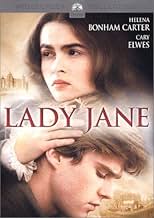
The story of Lady Jane Grey, who was Queen of England for only nine days.The story of Lady Jane Grey, who was Queen of England for only nine days.The story of Lady Jane Grey, who was Queen of England for only nine days.


- Director
- Writers
- All cast & crew
- Production, box office & more at IMDbPro
7.17.4K
1
2
3
4
5
6
7
8
9
10
Featured reviews
Historical and yet not for History Buffs
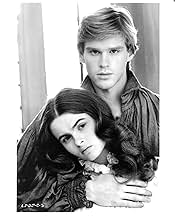
"The next time I see your face, I want it for eternity." If you know much at all about Lady Jane Grey and her unfortunate marriage to Guildford Dudley, you must know this cannot at all be what she said to him as they were parted for the last time. Yet the story branches away from the historical aspects of Jane's life and builds up a romance completely created in the minds of the writers, who have done an excellent job. In the beginning, the scene at Bradgate in Leicester, with the dance for the King, is extremely well shot. The plot thickens between the cunning Earl of Northumberland and the cold, greedy Duchess of Suffolk, while Jane argues theology with the Catholic doctor. Comparing this with history, I believe this was also very well written; from what I've read on Jane Grey (I have done extensive Tudor period research) I know she was very Protestant and, unlike the later Queen Elizabeth, very willing to argue on the topic of religion. Perhaps my favorite scene in the entire movie is the one where Jane goes to visit the Princess Mary. In this scene the Renaissance class system is extremely well depicted. The outwardly friendly but rather sneaky nature the Princess' maid (I believe that is Lady Anne Wharton) conducts herself shows the "subservience of the lesser nobility"; the proud way Jane speaks to the maid shows what the upper nobility could do; and then the regal, majestic, icy cold way the Princess Mary enters the room and "embraces" her second-cousin is the perfect example of a Princess of two royal bloodlines. Later, the love that blooms between Guildford and Jane will, without a doubt, sweep you off your feet. If you've ever been in love, I guarantee you'll relive some fond memories there. Overall, an excellent movie and highly recommended.
Beautiful and Moving
It's hard for me to be objective about this film as I find both the main actors so divine, but I thought the portrayal of the developing romance extremely moving, by the time the film ended I was sobbing, and I say that about almost NO movie.
The cinematography was stunning, both indoor and outdoor shots were beautifully visualised and captured. The sets and costumes also were extremely well done.
The cinematography was stunning, both indoor and outdoor shots were beautifully visualised and captured. The sets and costumes also were extremely well done.
4 stars
I first saw this movie in 88 on cable, and have seen it numerous times since. I never tire of watching it. It was the first Elwes movie I saw, and was so moved by his performance, that I have become a dedicated fan of his since. Although in real life Jane and Gilford never loved each other, the on screen love story is very moving. Lady Jane is an excellent, yet, overlooked, piece of work, and I highly recommend it.
God is in the details
It's difficult to know how to take a film that begins with a history lesson (to the self-important sound of a beating drum, no less) and ends with a quote from Plato. Between the two is a narrative that wants to be both a conventional love story and an unconventional period film. It doesn't quite succeed at either, but for viewers of LADY JANE, the pleasure is in the details, and there are plenty of those.
To first dispense with the glaring historical inaccuracy that lies at the film's center, Lady Jane Grey, the Nine-Day Queen of England in 1553, did not in truth have a passionate love match in her husband, Guilford Dudley. Theirs was an arranged marriage, highly political in nature and masterminded by Dudley's ambitious father, the Duke of Northumberland. In reality, Jane resented and distrusted her husband, who was a spoiled and rather empty-headed young man with none of the high intellectual achievement so prominent in Jane.
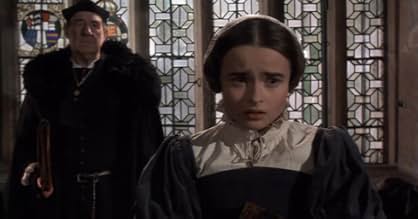
For the second dispensation, Helena Bonham Carter, who plays Jane, is still unskilled at acting in this, her first role. She can furrow her brow with admirable dexterity to denote every emotion from confusion to embarrassment to sexual fulfillment, but there's little evidence of much going on behind, in the furrows of an actor's brain. However, since those afore-mentioned details surround her, it becomes fairly easy for a more demanding audience to overlook her callowness.
Now for the details, beginning with everyone else in the cast. Has John Wood ever utilised his supercilious half-smile to better advantage? As Northumberland, he's perfect - driven by the need to consolidate his power when Jane's cousin Edward VI falls into a fatal illness, he conceives a scheme that will require relentless control over nearly everyone at court. While his fellow ministers, all burly toughs, inevitably knuckle under to his combination of silken flattery and outright threats, he's thwarted by two seemingly weak women - Jane and Mary Tudor (played with real grit and bitterness by Jane Lapotaire). It's a tossup whether Wood is better at the threats or at two points of emotional breakdown - one, when he must cast the die and order the agonising prolongation of Edward's death to complete his plans, or when, mud-pelted and dishevelled following his defeat by Mary's army, he ends up in the Tower, where all he can offer to his sons and followers is a weary, `I'm sorry.' It's the rare film where Wood's comic instincts don't get the better of his serious performance - this is one of them.
As Jane's equally controlling parents, Patrick Stewart and Sara Kestelman are almost as good. Stewart's character, the Duke of Suffolk, isn't a bright man, but his pursuit of his ambitions never quite overrides his notion of family honor, and this keeps him sympathetic, as all the supposed villains of the film remain. That's another of the details that deserves cherishing - the refusal to go for simplistic characters. Stewart is especially good when he throws all caution to the wind and raises an army to rescue his daughter, overriding even the objections of his formidable wife.
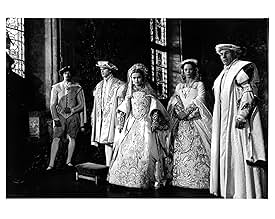
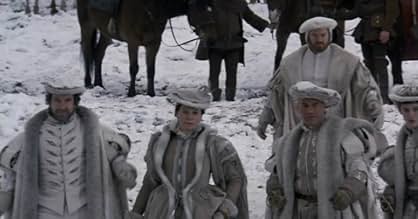
Other details are in the costuming, the suitably squalid tavern and brothel scenes, the bit where the aristocratic Kestelman chows down on her dinner, gnawing on a greasy chop and wiping her mouth with her sleeve, and the achingly beautiful winter deer hunt that runs under the opening credits. All this and more make up for a downbeat ending and a central failure to come up with a satisfying examination of that most enigmatic of queens, Lady Jane Grey.
To first dispense with the glaring historical inaccuracy that lies at the film's center, Lady Jane Grey, the Nine-Day Queen of England in 1553, did not in truth have a passionate love match in her husband, Guilford Dudley. Theirs was an arranged marriage, highly political in nature and masterminded by Dudley's ambitious father, the Duke of Northumberland. In reality, Jane resented and distrusted her husband, who was a spoiled and rather empty-headed young man with none of the high intellectual achievement so prominent in Jane.
For the second dispensation, Helena Bonham Carter, who plays Jane, is still unskilled at acting in this, her first role. She can furrow her brow with admirable dexterity to denote every emotion from confusion to embarrassment to sexual fulfillment, but there's little evidence of much going on behind, in the furrows of an actor's brain. However, since those afore-mentioned details surround her, it becomes fairly easy for a more demanding audience to overlook her callowness.
Now for the details, beginning with everyone else in the cast. Has John Wood ever utilised his supercilious half-smile to better advantage? As Northumberland, he's perfect - driven by the need to consolidate his power when Jane's cousin Edward VI falls into a fatal illness, he conceives a scheme that will require relentless control over nearly everyone at court. While his fellow ministers, all burly toughs, inevitably knuckle under to his combination of silken flattery and outright threats, he's thwarted by two seemingly weak women - Jane and Mary Tudor (played with real grit and bitterness by Jane Lapotaire). It's a tossup whether Wood is better at the threats or at two points of emotional breakdown - one, when he must cast the die and order the agonising prolongation of Edward's death to complete his plans, or when, mud-pelted and dishevelled following his defeat by Mary's army, he ends up in the Tower, where all he can offer to his sons and followers is a weary, `I'm sorry.' It's the rare film where Wood's comic instincts don't get the better of his serious performance - this is one of them.
As Jane's equally controlling parents, Patrick Stewart and Sara Kestelman are almost as good. Stewart's character, the Duke of Suffolk, isn't a bright man, but his pursuit of his ambitions never quite overrides his notion of family honor, and this keeps him sympathetic, as all the supposed villains of the film remain. That's another of the details that deserves cherishing - the refusal to go for simplistic characters. Stewart is especially good when he throws all caution to the wind and raises an army to rescue his daughter, overriding even the objections of his formidable wife.
Other details are in the costuming, the suitably squalid tavern and brothel scenes, the bit where the aristocratic Kestelman chows down on her dinner, gnawing on a greasy chop and wiping her mouth with her sleeve, and the achingly beautiful winter deer hunt that runs under the opening credits. All this and more make up for a downbeat ending and a central failure to come up with a satisfying examination of that most enigmatic of queens, Lady Jane Grey.
Moving tale of love and betrayal
Although it has been more than a decade since I saw Lady Jane, I remember that it moved me greatly. The ambiance and characters are fully developed. Helen Bonham Carter was quite young, perfect for the role, and turned out to be quite a revelation. I saw the film in Madrid. I'll never forget the sight of a middle aged Spaniard (male) in the audience weeping at the conclusion. (The Spanish nobility were the "bad guys" of this drama).


Did you know
- TriviaWhile imprisoned, the real Guilford Dudley carved the name "Jane" inside his cell at the Tower of London. It can still be seen today.
- GoofsAlthough the movie clearly has rewritten history to make a romance, in reality Jane and Guilford never lived in their own home, nor did they ever live as man and wife in the short time they were together; within a month of the marriage Jane was crowned Queen (and refused to crown Guilford King), and 9 days later they were both in prison, lodged in separate towers, and never had contact again.
- ConnectionsReferenced in As You Wish: The Story of 'The Princess Bride' (2001)
- How long is Lady Jane?Powered by Alexa
Details
- Release date
- Country of origin
- Languages
- Also known as
- Lady Jane - Königin für neun Tage
- Filming locations
- Dover Castle, Castle Hill, Dover, Kent, England, UK(on location)
- Production companies
- See more company credits at IMDbPro
Box office
- Budget
- $8,500,000 (estimated)
- Gross US & Canada
- $277,646
- Opening weekend US & Canada
- $55,964
- Feb 9, 1986
- Gross worldwide
- $277,646
- Runtime
- 2h 16m(136 min)
- Sound mix
- Aspect ratio
- 1.85 : 1
Contribute to this page
Suggest an edit or add missing content