IMDb RATING
5.6/10
2.1K
YOUR RATING

Historical fiction set against the backdrop of Hong Kong in its early years of British rule.Historical fiction set against the backdrop of Hong Kong in its early years of British rule.Historical fiction set against the backdrop of Hong Kong in its early years of British rule.
- Awards
- 2 nominations total
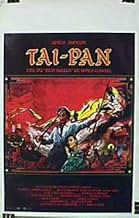

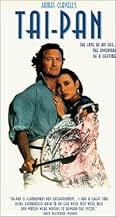
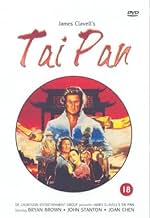
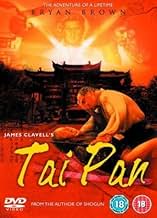


- Director
- Writers
- All cast & crew
- Production, box office & more at IMDbPro
5.62K
1
2
3
4
5
6
7
8
9
10
Featured reviews
Not bad!
I found this movie to follow the novel pretty closely, considering of course that the novel is about 900 pages and the movie is only two hours! While not of the same outstanding caliber of adaptation as the Shogun miniseries, it nevertheless manages to generate some excitement and give a flavor for the happenings of that period, during which the colony of Hong Kong was founded.
Joan Chen was especially good as Mai-Mai, and all the other parts were at least adequately cast. The locations, sets and production values were of uniformly good quality. The only thing lacking was enough time to tell a story this long and complex--in such a short production one only has time to hit the high points of the plot. But it was enjoyable nevertheless.
Joan Chen was especially good as Mai-Mai, and all the other parts were at least adequately cast. The locations, sets and production values were of uniformly good quality. The only thing lacking was enough time to tell a story this long and complex--in such a short production one only has time to hit the high points of the plot. But it was enjoyable nevertheless.
Very interesting historical movie about the beginning of Hong Kong with a bad ending.
The movie has an interesting historical background and makes us understand the terrible racism and cultural problems of the Chinese towards other more educated and more advanced peoples of the world.
Even the amorous plot is pleasant and vaguely realistic but the ending too often repeats the idea of jealousies, hatreds, like a continuous struggle and violence that ends without a clear meaning.
Even the amorous plot is pleasant and vaguely realistic but the ending too often repeats the idea of jealousies, hatreds, like a continuous struggle and violence that ends without a clear meaning.
If you love exotic melodramas, this one's for you!
TAI-PAN
Aspect ratio: 2.39:1 (J-D-C Scope)
Sound format: Dolby Stereo
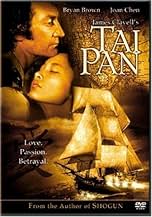
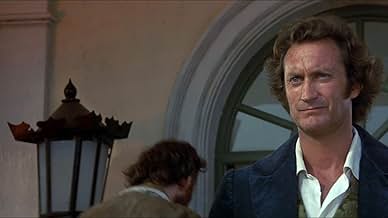
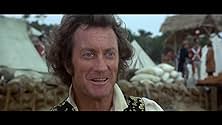
1840's China: Thrown off the mainland because of his opium dealings, a western merchant (Bryan Brown) sets up home on the island of Hong Kong where he faces conflict from friend and foe alike in the lead-up to colonization.
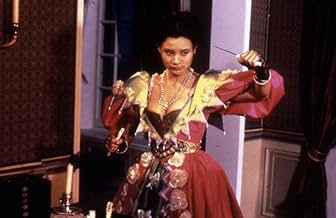
Hugely derided at the time of its release, this handsome production - based on the novel by James Clavell, and directed by TV specialist Daryl Duke (THE THORN BIRDS) - plays to the gallery at every turn, embracing the book's labyrinthine plot and outrageous melodrama with unashamed fervour, an approach which appears to have sealed its fate at the box-office. The movie opens a little too abruptly, indicating a troubled post-production, but John Briley's busy screenplay (co-written with Stanley Mann) unfolds against a colorful historical backdrop and includes just enough nudity and violence to keep boredom at bay. Brown's performance is compromised by an unconvincing Scottish accent, and he's upstaged by Joan Chen (THE LAST EMPEROR) as the Chinese girl who loves him regardless of his failings, while handsome Tim Guinee (HOW TO MAKE AN American QUILT) is achingly sincere as Brown's naive young son, led astray by villainous merchants plotting his family's downfall. Also starring John Stanton, Russell Wong, Norman Rodway, Kyra Sedgwick and Bert Remsen in supporting roles. Production values strive to capture an epic feel and are largely successful, though no one's ever going to mistake this for "Lawrence of Hong Kong"! Italian makeup maestro Giannetto de Rossi (a regular contributor to the films of Lucio Fulci) provides some occasional flashes of gore, including a brief - but realistic - decapitation near the beginning of the picture.
Aspect ratio: 2.39:1 (J-D-C Scope)
Sound format: Dolby Stereo
1840's China: Thrown off the mainland because of his opium dealings, a western merchant (Bryan Brown) sets up home on the island of Hong Kong where he faces conflict from friend and foe alike in the lead-up to colonization.
Hugely derided at the time of its release, this handsome production - based on the novel by James Clavell, and directed by TV specialist Daryl Duke (THE THORN BIRDS) - plays to the gallery at every turn, embracing the book's labyrinthine plot and outrageous melodrama with unashamed fervour, an approach which appears to have sealed its fate at the box-office. The movie opens a little too abruptly, indicating a troubled post-production, but John Briley's busy screenplay (co-written with Stanley Mann) unfolds against a colorful historical backdrop and includes just enough nudity and violence to keep boredom at bay. Brown's performance is compromised by an unconvincing Scottish accent, and he's upstaged by Joan Chen (THE LAST EMPEROR) as the Chinese girl who loves him regardless of his failings, while handsome Tim Guinee (HOW TO MAKE AN American QUILT) is achingly sincere as Brown's naive young son, led astray by villainous merchants plotting his family's downfall. Also starring John Stanton, Russell Wong, Norman Rodway, Kyra Sedgwick and Bert Remsen in supporting roles. Production values strive to capture an epic feel and are largely successful, though no one's ever going to mistake this for "Lawrence of Hong Kong"! Italian makeup maestro Giannetto de Rossi (a regular contributor to the films of Lucio Fulci) provides some occasional flashes of gore, including a brief - but realistic - decapitation near the beginning of the picture.
It could have been so much more...
As another reviewer put it, this movie was very similar to Dune. Very interesting comparison, since Raffaella De Laurentiis produced them both. This was her first project right after Dune. Both were sweeping epic sagas with multiple intertwined plotlines. Both should have been six or eight hour mini series and not feature films. As with Dune, you will find that if you have not read the book, you will not understand the movie. However, if you have read the book, then the movie isn't all that bad. James Clavell's 'Asian Saga' is one of my favorite book series, so I bought this movie cheap just to see it. The characters are like old friends to me, so I didn't think that the movie was all that bad. I realized while watching it though, that someone who had not read the book would not be able to keep up with all of the plot points. My suggestion to you is to read the book, then watch the movie. You will discover two things; first it's a super good book. Second, this movie had everything going for it in cast and settings; it just had too much story to tell in too short a time. It definitely should have been a six-hour miniseries.
A crushing disappointment
It's worth pointing out that I came to this film having read James Clavell's excellent novel, TAI-PAN, on which this is based. If I hadn't read the book beforehand, I probably would have enjoyed this adaptation a lot more.
Sadly, I was left feeling that the filmed TAI-PAN is a crushing disappointment, purely because it cuts so very much out of the story. The whole background is missing, the Triad stuff, the politics, the trade with the Chinese. The story is reduced to the human relationships and particularly the family rivalries between the main characters, but there was so much more to it than that.
I do understand that films are very different to books and that adaptations have to cut material out, but TAI-PAN has a two hour running time and a lot of it is slow-paced. If it had told events at a much faster pace, it would have been able to include a lot more of the details and subtleties that are missing here. As it is, there are elements of greatness - plus the novelty of seeing Bryan Brown in a leading role - but it could have been so much more. A miniseries would suffice better, I think.
Sadly, I was left feeling that the filmed TAI-PAN is a crushing disappointment, purely because it cuts so very much out of the story. The whole background is missing, the Triad stuff, the politics, the trade with the Chinese. The story is reduced to the human relationships and particularly the family rivalries between the main characters, but there was so much more to it than that.
I do understand that films are very different to books and that adaptations have to cut material out, but TAI-PAN has a two hour running time and a lot of it is slow-paced. If it had told events at a much faster pace, it would have been able to include a lot more of the details and subtleties that are missing here. As it is, there are elements of greatness - plus the novelty of seeing Bryan Brown in a leading role - but it could have been so much more. A miniseries would suffice better, I think.


Did you know
- TriviaProducer Martin Ransohoff and the Metro-Goldwyn-Mayer studio in 1966 acquired the rights to James Clavell's source "Tai-Pan" novel for US $500,000. The movie was then announced by MGM in 1967-68 to star Patrick McGoohan to play Dirk Struan, to be directed by Michael Anderson, with source novelist Clavell writing the screenplay. The picture was originally budgeted to cost US $26 million which was then reduced to US $20 million. The project sat around stagnant for a time in development hell. However, after severe operating losses, the epic was one of a number of expensive projects the new management at the MGM studio dropped as being too costly. The project and the development of the movie at MGM was in the end canceled by executive James T. Aubrey.
- GoofsIn a scene, set in 1841, several of the ladies were wearing bright mauve outfits. That would have been most unlikely for the wives of middle class traders at that time as the color purple was prohibitively expensive before the invention of analine dyes in London - in 1856. By 1870 these gaudy colors had become so cheap and commonplace that it became a status symbol to mimic the subtler, paler colors of the pre analine dye days.
- Quotes
Dirk Struan: No emperor has seen the guns of a British man-of-war.
- ConnectionsFeatured in Siskel & Ebert: 52 Pick-Up/Nobody's Fool/Tai Pan/The Sacrifice (1986)
- How long is Tai-Pan?Powered by Alexa
Details
- Release date
- Country of origin
- Language
- Also known as
- Tai Pan
- Filming locations
- Chen Family Temple - Guangzhou, China(Commissioner Lin's court)
- Production company
- See more company credits at IMDbPro
Box office
- Budget
- $25,000,000 (estimated)
- Gross US & Canada
- $4,007,250
- Opening weekend US & Canada
- $1,863,469
- Nov 9, 1986
- Gross worldwide
- $4,007,250
- Runtime
- 2h 7m(127 min)
- Sound mix
- Aspect ratio
- 2.35 : 1
Contribute to this page
Suggest an edit or add missing content