
When a leprous winery owner in 1930s China dies a few days after his arranged marriage, his young widow is forced to run the winery to make a living while contending with bandits, her drunka... Read allWhen a leprous winery owner in 1930s China dies a few days after his arranged marriage, his young widow is forced to run the winery to make a living while contending with bandits, her drunkard lover, and the invading Japanese army.When a leprous winery owner in 1930s China dies a few days after his arranged marriage, his young widow is forced to run the winery to make a living while contending with bandits, her drunkard lover, and the invading Japanese army.
- Awards
- 17 wins & 7 nominations total




Rujun Teng
- Wo Luohan Yeye (Uncle Luohan)
- (as Rujun Ten)

- Director
- Writers
- All cast & crew
- Production, box office & more at IMDbPro
7.310.5K
1
2
3
4
5
6
7
8
9
10
Featured reviews
Reviewing Red Sorghum (1988)
Reviewing Red Sorghum (1988) The movie Red Sorghum (1988) adapted from the novel of the same tile won Golden Bear Award at the 38th Berlin International Film Festival. The film won the international reputation for its director, Yimou Zhang; and also star the actress, Li Gong.
This film is about the story of 'my grandmother and grandfather' in a rural village in Northern China. The story started from my grandmother who was on the way to her prearranged old husband's winery distillery factory. My grandmother, a young bride, was sent to get married with an owner of a wine distillery factory. After experiencing attack by a bandit, abduction, and mysterious death of her prearranged husband, my grandmother inherited that wine distillery. The story was ended by the death of my grandma during the period of Japanese invasion.
Off-screen voices adopted as one important dramatic element is unique characteristic of this movie. The plot is structured into a completed story by the "narrator"- I , the grandson of the protagonists. At the beginning, audiences can hear the off-screen voices arose: "I'll talk about my grandpa and my grandpa" (Red Sorghum,1988). The narrator did not appear in the movie, which makes him in the neutral objective position; in the other hand, he is the descendant of story characters, which makes him becoming a subjective participation to some degree. "I" was telling the story; and also I was told about my family history. Off-screen narration appear 12 times in the movie. The relationships between characters and the progress of plot at turning point depends on 'my narration', for example, the relationship between my grandma, her prearranged leprosy husband and sedan carriage worker (my grandpa); the mysterious death of leprosy husband, the process of my grandma abduction, the left of Uncle Lohan, and the appearance of Japanese troops. The integration of real family history and unreal story completely depends on my off-screen narrations, which helps the connection of past with present, the real with the unreal. The film narrative approach ultimately generates historical distant effects in time and space.
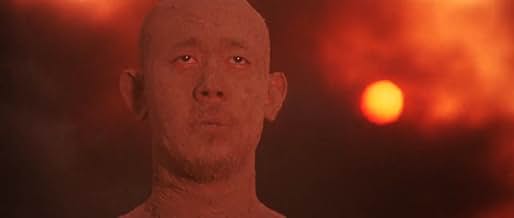
Cinematographic style is another prominent characteristic of the film. The director stylized the film with intense and rich red color. The screen is completely occupied by bright red color. At the beginning, a red scarf is filled with the whole screen; under the red scarf is my grandma's brighten young face with red makeup; the red sorghum stalk is glittered with the flash sunlight in the fields; the red sorghum wine liking rains is prayed around; the naked body is completely full of blood; and the world become the totally red after the mysterious total solar eclipse. At the end of the film, the flowing black red sorghum emphasized on the screen, which generates a brilliant and strong visual effect. This is not a realistic representation of time and space; it is the externalization of human innate desire for natural life and validity. Regardless of the plot, the extension of the red force gives audiences a pure emotional experience that is filled with wild and heroic.
Unlike other Chinese films of the same period, Red Sorghum is not a typical realism film. The director did neither tell a legend of China's farmers nor seek for " the national cultural root" (Ni, 2002). The film only wants to praise 'life, endless vitality, freedom, life expansion and stretch' (Ni, 2002).The sun is regarded as the origin of life. The brilliant red filled with the screen represents the mythology of "worship of the Sun" (Ni, 2002). Covered with a mysterious color, the director explores the significance of freedom and the nature of life, which goes beyond political ideology, social structure, and cultural differences. The themes going through the film are about the vitality and the freedom. The film expresses the desire for a liberated, plain and undistorted state. This is not the world what has been understood by people now; it is a world that concerns for the life rights of human being instead (Ni, 2002). Because the praise for vigorous vitality and freedom is an universal idea of human regardless of language and culture, this film won the international honors.
Overall, the high artistic achievement in cinematography and the uniqueness in plot structure make this film becoming one representative works of China's fifth generation filmmakers. Audiences can read the reconsideration for the nature of life, the future world as well as the destiny of mankind in that world known for us.
References Ni, Z (2002). Memoirs from the Beijing Film Academy: The Genesis of China's Fifth Generation. translated by Chris Berry. Durham, NC: Duke University Press.
Red Sorghum (1988) Yimou Zhang
This film is about the story of 'my grandmother and grandfather' in a rural village in Northern China. The story started from my grandmother who was on the way to her prearranged old husband's winery distillery factory. My grandmother, a young bride, was sent to get married with an owner of a wine distillery factory. After experiencing attack by a bandit, abduction, and mysterious death of her prearranged husband, my grandmother inherited that wine distillery. The story was ended by the death of my grandma during the period of Japanese invasion.
Off-screen voices adopted as one important dramatic element is unique characteristic of this movie. The plot is structured into a completed story by the "narrator"- I , the grandson of the protagonists. At the beginning, audiences can hear the off-screen voices arose: "I'll talk about my grandpa and my grandpa" (Red Sorghum,1988). The narrator did not appear in the movie, which makes him in the neutral objective position; in the other hand, he is the descendant of story characters, which makes him becoming a subjective participation to some degree. "I" was telling the story; and also I was told about my family history. Off-screen narration appear 12 times in the movie. The relationships between characters and the progress of plot at turning point depends on 'my narration', for example, the relationship between my grandma, her prearranged leprosy husband and sedan carriage worker (my grandpa); the mysterious death of leprosy husband, the process of my grandma abduction, the left of Uncle Lohan, and the appearance of Japanese troops. The integration of real family history and unreal story completely depends on my off-screen narrations, which helps the connection of past with present, the real with the unreal. The film narrative approach ultimately generates historical distant effects in time and space.
Cinematographic style is another prominent characteristic of the film. The director stylized the film with intense and rich red color. The screen is completely occupied by bright red color. At the beginning, a red scarf is filled with the whole screen; under the red scarf is my grandma's brighten young face with red makeup; the red sorghum stalk is glittered with the flash sunlight in the fields; the red sorghum wine liking rains is prayed around; the naked body is completely full of blood; and the world become the totally red after the mysterious total solar eclipse. At the end of the film, the flowing black red sorghum emphasized on the screen, which generates a brilliant and strong visual effect. This is not a realistic representation of time and space; it is the externalization of human innate desire for natural life and validity. Regardless of the plot, the extension of the red force gives audiences a pure emotional experience that is filled with wild and heroic.
Unlike other Chinese films of the same period, Red Sorghum is not a typical realism film. The director did neither tell a legend of China's farmers nor seek for " the national cultural root" (Ni, 2002). The film only wants to praise 'life, endless vitality, freedom, life expansion and stretch' (Ni, 2002).The sun is regarded as the origin of life. The brilliant red filled with the screen represents the mythology of "worship of the Sun" (Ni, 2002). Covered with a mysterious color, the director explores the significance of freedom and the nature of life, which goes beyond political ideology, social structure, and cultural differences. The themes going through the film are about the vitality and the freedom. The film expresses the desire for a liberated, plain and undistorted state. This is not the world what has been understood by people now; it is a world that concerns for the life rights of human being instead (Ni, 2002). Because the praise for vigorous vitality and freedom is an universal idea of human regardless of language and culture, this film won the international honors.
Overall, the high artistic achievement in cinematography and the uniqueness in plot structure make this film becoming one representative works of China's fifth generation filmmakers. Audiences can read the reconsideration for the nature of life, the future world as well as the destiny of mankind in that world known for us.
References Ni, Z (2002). Memoirs from the Beijing Film Academy: The Genesis of China's Fifth Generation. translated by Chris Berry. Durham, NC: Duke University Press.
Red Sorghum (1988) Yimou Zhang
Life around the color red.
This film captures the Chinese landscape with a touch of love, love that the filmmakers had for their people and their culture which fuses with the sorghum fields and the folk songs they sing when they are happy or when they are in pain and anguish, beautifully. I felt the Japanese effect or the tyrannical force with which they subdued the Chinese should have been shown a little more, it all happened in a jiffy. The storytelling is pretty but fails to connect on many levels. Like the transition of a poor village girl into a strong distillery owner and the level of trust and love she is shown by the workers and the sudden infatuation that develops and is accepted between her and Yu. Also the way we are shown the attack sequence was not at all engaging, it only had slow-mo shots of people falling/running but the final shot of redness surrounding Yu and his son was brilliant. Watch it, for you'll get a peek into Chinese culture, the position of women in it, their traditions and songs and most importantly the red wine, red like blood mingling to mark a jarringly tough Chinese wartime life.
Joyful, painful, funny, and horrifying and why isn't it on DVD?
Credit goes to Yimou for stripping this epic 2 novel series down to this spare and gorgeous little hour and a half. For all the recent fantastic forays into Chinese fantasy, this story (which is allegedly true) shown as it is, is as close to a fairy tale as it gets, at least until the very end. Every shot is a painting. For some reason this film is still near-impossible to find on DVD. I truly hope it is not being suppressed for anti-Japanese sentiment expressed in it. That would be a terrible shame. This film was released shortly before Tienanmenn (sp) and it has a boldness and frank humor rarely seen in Chinese film since.
10P-Style
Red Sorghum is a cinematic wonder...
Red Sorghum will delight those that enjoy the art of cinematography. This visually stunning film truly deserves its international acclaim simply because of the way it presents the tale through its remarkable use of imagery, lighting, and filters.
Until I saw this film, I would have never thought that one could say so much about character, setting, mood and plot simply through the use of layout and image composition. This controversial film set in the 1920's - 1930's, by the rebellious Zhang Yimou, follows the life of sorghum wine farmers from Northern China.
If you follow the history of Chinese film, you will see how nicely this film combines motif's of many of its precursor films. Chinese history and culture has been vastly explored through many Chinese films, however I believe that this is a good film for the average American film goer to get a taste of the Chinese film industry and culture through their perspective. I say this for a variety of reasons, the pacing of this drama is quicker and faster moving compared to other related Chinese films before its time. Generally Chinese film have a tendency to be slow, when set aside the general American preferred standards.
It presents to us some of the Northern Chinese cultural traditions. Its display of the Japanese brutality could not have been better presented. The Japanese have been quite swinish during this period in Chinese history. All I can say is it says it all as it really was, very well indeed.
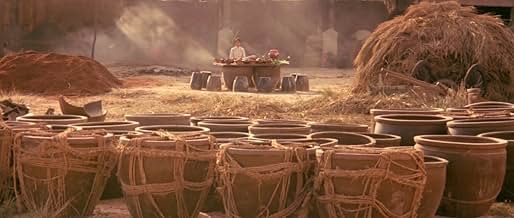
This is the last but most important reason to watch this film... look at its cinematography. It has to be among the best I have ever seen. It amazed me to see how resourceful a cinematographer can be when working for a film of little budget. Yimou showed me how simple things can be filmed to be works of art. Unfortunately I have not been able to see the film in its original cinematic scope however, even in full screen it is still quite visually stunning. The aperture, f-stop and lens settings were set just perfectly giving the film a very rich vibrant look making Yimou my favorite Chinese film cinematographer/director of all time to date. Oh, it is a film that you just have to see for yourself! Hope you enjoy it! Happy Viewing!
Until I saw this film, I would have never thought that one could say so much about character, setting, mood and plot simply through the use of layout and image composition. This controversial film set in the 1920's - 1930's, by the rebellious Zhang Yimou, follows the life of sorghum wine farmers from Northern China.
If you follow the history of Chinese film, you will see how nicely this film combines motif's of many of its precursor films. Chinese history and culture has been vastly explored through many Chinese films, however I believe that this is a good film for the average American film goer to get a taste of the Chinese film industry and culture through their perspective. I say this for a variety of reasons, the pacing of this drama is quicker and faster moving compared to other related Chinese films before its time. Generally Chinese film have a tendency to be slow, when set aside the general American preferred standards.
It presents to us some of the Northern Chinese cultural traditions. Its display of the Japanese brutality could not have been better presented. The Japanese have been quite swinish during this period in Chinese history. All I can say is it says it all as it really was, very well indeed.
This is the last but most important reason to watch this film... look at its cinematography. It has to be among the best I have ever seen. It amazed me to see how resourceful a cinematographer can be when working for a film of little budget. Yimou showed me how simple things can be filmed to be works of art. Unfortunately I have not been able to see the film in its original cinematic scope however, even in full screen it is still quite visually stunning. The aperture, f-stop and lens settings were set just perfectly giving the film a very rich vibrant look making Yimou my favorite Chinese film cinematographer/director of all time to date. Oh, it is a film that you just have to see for yourself! Hope you enjoy it! Happy Viewing!
A Singular Chinese Film
There are several versions of this film available on video. Some are in wide screen, some aren't. The impact of the visuals is lost without the full-shot wide screen. Then there are two different subtitled versions, one that has large subtitles and another that uses smaller but less intrusive subtitles, which is the best of the two. So depending on what version of the video you're watching, your experience of the film can vary. But assuming you get your hands on the good version...
This film is like a quiet fairy tale that transforms into something that I didn't see coming. The visuals are stunning. The story slowly unfolds but is presented so well that it's completely compelling. The acting is as good as it gets. And the ending hits you like a punch in the stomach.
This films stands out from all other Chinese films I have seen. It has a character uniquely its own, and is well worth seeking out.
This film is like a quiet fairy tale that transforms into something that I didn't see coming. The visuals are stunning. The story slowly unfolds but is presented so well that it's completely compelling. The acting is as good as it gets. And the ending hits you like a punch in the stomach.
This films stands out from all other Chinese films I have seen. It has a character uniquely its own, and is well worth seeking out.


Did you know
- ConnectionsFeatured in The Turandot Project (2000)
- How long is Red Sorghum?Powered by Alexa
Details
- Release date
- Country of origin
- Languages
- Also known as
- Das rote Kornfeld
- Filming locations
- Production company
- See more company credits at IMDbPro
Box office
- Gross worldwide
- $108,371
- Runtime
- 1h 31m(91 min)
- Sound mix
- Aspect ratio
- 2.35 : 1
Contribute to this page
Suggest an edit or add missing content