IMDb RATING
5.9/10
4.7K
YOUR RATING


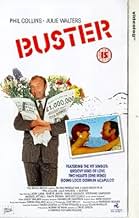
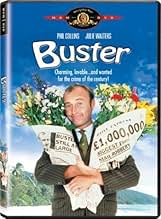
Based on the story of Ronald Christopher "Buster" Edwards (Phil Collins), one of the thieves involved in "The Great Train Robbery" of 1963.Based on the story of Ronald Christopher "Buster" Edwards (Phil Collins), one of the thieves involved in "The Great Train Robbery" of 1963.Based on the story of Ronald Christopher "Buster" Edwards (Phil Collins), one of the thieves involved in "The Great Train Robbery" of 1963.
- Nominated for 1 Oscar
- 4 wins & 1 nomination total


- Director
- Writer
- All cast & crew
- Production, box office & more at IMDbPro
5.94.6K
1
2
3
4
5
6
7
8
9
10
Featured reviews
Really Popular Movie When Released
This movie was a big hit at the cinema when it was first released and then again as a video rental....Those were the days! The soundtrack was also a big hit and most of the songs were chart hits on the back of the movie, and not just the Phil Collins songs who was at the height of his popularity as a solo artist at the time. The story and movie itself is far from being as bad as some of the reviews here make out, its an upbeat movie for the most part and still watchable. Phil Colins can act, although he hasn't really had the chance to show that in very many roles since. The fact that you could pick this movie up free on DVD recently with a newspaper and if you missed that offer can pop into any Poundland in the UK and pick it up for a pound (on a double bill with Diamond of Jeru) I'd recommend you looking it up...even only if its to hear that great soundtrack again..5/10
Paved The Way For Lock, Stock And Endless Imitations
I remember watching Buster one afternoon at High School during the fag end of term time before summer holidays. The opening scene with the dust bin going through the window raise quite a cheer!
Buster is a typical sort of British crime film that is not actually as bad as its detractors will insist, but neither as good as its champions try and tell you. It supposedly recounts the infamous Great Train Robbery of 1963 from the perspective of Ronald 'Buster' Edwards - probably the most well known participants, although not the most important. Just a pity then the planning and execution of 'the job' only takes up about twenty minutes.
The remaining running time, before and after the Robbery, including a fairly lackadaisical police pursuit, and the extended holiday in Mexico, is a dull kitchen sink drama between Phil Collins and his beloved Julie Walters; she's the long suffering wife; he's the lovelable rogue, heart of gold, good family man, lives by 'respect', etc.
In other words, Buster sets the template for any or all of the cheeky chappy Mockney geezers in the endless cycle of runabouts and capers we would see a decade later.
Given the level of talent involved the acting is generally quite good - but it could have been better; Walters's incessant whinging soon grates; Collins isn't bad in the lead role, but he doesn't make much of an impact either. The soundtrack is OK, but overall I'd say Buster was a bit of a chore to sit through.
That the film downplays the violence of the robbery, the critical injuries sustained by train driver Jack Mills, the threats to Post Office staff, and the unsavoury background of the principals - most were professional criminals who did not baulk at using force, and were who were aware of the risks of who they were ripping off - caused great contraversy at the time. Sure, one or two minor members may have been unjustly sentenced, but I'd question how much public sympathy there was for these 'Robin Hoods' when the extent of Mr Mills's ordeal became known.
Try Bank Heist, Thief, The League of Gentlemen or The First Great Train Robbery if you want to see a decent heist movie with a lot more tension and comedy. Compared to these gems, Buster is a bit of a letdown.
Buster is a typical sort of British crime film that is not actually as bad as its detractors will insist, but neither as good as its champions try and tell you. It supposedly recounts the infamous Great Train Robbery of 1963 from the perspective of Ronald 'Buster' Edwards - probably the most well known participants, although not the most important. Just a pity then the planning and execution of 'the job' only takes up about twenty minutes.
The remaining running time, before and after the Robbery, including a fairly lackadaisical police pursuit, and the extended holiday in Mexico, is a dull kitchen sink drama between Phil Collins and his beloved Julie Walters; she's the long suffering wife; he's the lovelable rogue, heart of gold, good family man, lives by 'respect', etc.
In other words, Buster sets the template for any or all of the cheeky chappy Mockney geezers in the endless cycle of runabouts and capers we would see a decade later.
Given the level of talent involved the acting is generally quite good - but it could have been better; Walters's incessant whinging soon grates; Collins isn't bad in the lead role, but he doesn't make much of an impact either. The soundtrack is OK, but overall I'd say Buster was a bit of a chore to sit through.
That the film downplays the violence of the robbery, the critical injuries sustained by train driver Jack Mills, the threats to Post Office staff, and the unsavoury background of the principals - most were professional criminals who did not baulk at using force, and were who were aware of the risks of who they were ripping off - caused great contraversy at the time. Sure, one or two minor members may have been unjustly sentenced, but I'd question how much public sympathy there was for these 'Robin Hoods' when the extent of Mr Mills's ordeal became known.
Try Bank Heist, Thief, The League of Gentlemen or The First Great Train Robbery if you want to see a decent heist movie with a lot more tension and comedy. Compared to these gems, Buster is a bit of a letdown.
Two hearts are better than one.
'Buster (1988)' is mainly notable for starring Phil Colins and being the reason he created some of his most famous songs (such as 'Two Hearts', which plays over the credits). Inspired by the true story of "The Great Train Robbery" of 1963, in which a group of criminals robbed a Royal Mail train and made off with £1,000,000, this sort of romantic comedy spends most its time focusing on the aftermath of its infamous inciting incident. It follows Ronald Christopher "Buster" Edwards as he goes on the lamb and hides from the law, eventually finding a way to smuggle himself and his family out of the country. It's pretty much a family drama, more concerned with the dynamic between its protagonist and his wife than it is with the mechanics or ethics of his actions. Apparently, the feature was subject to controversy at the time of its release, with its most vocal critics claiming it glamourised - or, at least, downplayed - the supposedly vicious crime on which it is based (I say "supposedly" because it seems quite gentle as depicted here, although I'm sure some liberties were taken with it). I don't think such a response is particularly warranted, especially given the eventual outcome of the characters' actions; it's a typical case of conservative exaggeration in the hopes of cinematic censorship. However, the flick does depict its central character as a lovable rogue just doing what he can to get by. Although he isn't exactly the best husband, with behavioral tendencies that aren't just necessitated by current circumstance like he insists they are, he's ultimately portrayed as a harmless and big-hearted romantic with unrelenting love for those close to him. It's not so much a problematic interpretation as it is a surprising one, as the material doesn't exactly cry out for the light-hearted, almost rom-com treatment it receives. This is a sappy, sentimental affair with a beating heart and a romantic outlook, the opposite of the gritty gangster drama it so easily could have been. It's all just rather mild and, in many ways, it doesn't feel like it makes good use of the true story on which it's based. When it reaches its midpoint, it starts to stagnate after a change of scenery basically necessitates a change in pace. It basically spins its wheels while also feeling sort of xenophobic in some ways, even if being homesick isn't inherently the same as feeling superior to your current surroundings, and it loses what steam it initially had. It isn't bad, but its melodrama never quite connects as much as it should and it also isn't particularly funny. Still, it's consistently watchable and is relatively well-made. Collins is likeable enough as the leading man, and Julie Walters gives a good performance while somehow feeling vaguely overqualified for her role. The 60s period setting is believably recreated, with the grime of London's streets being enhanced by the damage to the film stock itself. It's basically a well-produced TV movie in style and tone, which isn't necessarily a bad thing. It's quaint, almost a relic of a lost era. It isn't great, nor even all that interesting, but it's enjoyable enough for what it is.
So so. The 1963 Great Train Robbery
With the title "Buster" given to this film starring Phil Collins in the title role, this movie directed by David Green is all about the 1963 Great Train Robbery when a gang of robbers carried out the biggest robbery in criminal history for £2.5 million was big money for 1963 prices. Worst, the train driver Jack Mills sustained head injuries during the attack and later died from leukaemia. For a reason why Phil Collins made this film was that he maintained close contact with one of the robbers Ronald "Buster" Edwards.
The 1960s scenes are well put together on film here but it's very underrated. Larry Lamb looks almost strikingly like one of the gang leaders Bruce Reynolds. Well, the film has been criticised for glorifying the robbery. There is nothing glamorous about the robbery as it was a vicious crime. Phil Collins might steal your heart but not on this film while some of the robbers have returned to their criminal haunts and it now seems to be that many years after the robbery, most of the gang members have long since disappeared just like most of the money and in 1994, Buster Edwards struck down by depression,hanged himself in a disused garage near London's Waterloo Station where he traded as a flower seller.
Extremely likable film about actual people and events
Buster (Phil Collins) is a petty thief with some skill. If he wants a new suit, he just breaks a store window and makes off with a mannequin. If the baby needs supplies, Buster sneaks into the chemist's at night and picks out what is needed. His wife June is getting a bit tired of this and would love to have a place of their own, not a rental. Therefore, Buster arranges a major train robbery (THE Great Train Robbery in the early sixties). The plot is almost successful but Buster does not remain anonymous and is a hunted man, post robbery. Will he ever see his family again? This is a very likable movie about an unlikely charmer. Buster does not want an honest job to support his family but one just can not help liking the guy. Collins is quite good as this amusing thief. Julie Walters, as his wife, is also sweet and attractive. The plot is amazing when one realizes these events actually took place. Part love story, part cat and mouse game, this film is a fun view. Anyone who sits down to Buster will be laughing in short order, leaving the sometimes somber world behind.


Did you know
- TriviaThe movie was conceived with Bob Hoskins as Ronald Christopher "Buster" Edwards, but the filmmakers decided he'd played that sort of part in The Long Good Friday (1980) and Mona Lisa (1986). Phil Collins was cast instead after director David Green saw his performance in Miami Vice (1984). David Jason was also considered for the role of Buster at one point.
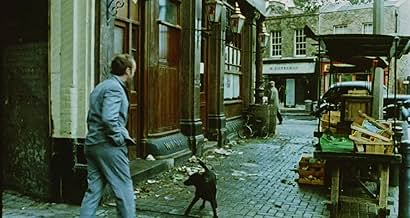
- GoofsIn the opening scenes, when Buster walks off wearing a new suit he has just stolen, a Vespa P range motor scooter is visible. That model was introduced in 1977.
- Quotes
June Edwards: [when discussing buying a house worth £3,000] You could get a mortgage like other people!
Buster Edwards: Do what?
June Edwards: Borrow it from a bank.
Buster Edwards: Well, I *do* borrow from banks, that is my job.
June Edwards: I mean with their permission
Buster Edwards: I thought you needed a reference to do that,
- Crazy creditsBuster Edwards never got the deal he hoped for. On the 9th December 1966 he was sentenced to 15 years imprisonment for conspiring to rob Her Majesty's Royal Mail Train.
- Alternate versionsThe initial U.S. release of this film had its running time cut from 102 minutes to 94 minutes by its U.S. distributor, Hemdale Films. The subsequent video release by HBO Home Video was based on this edited version, however, a more recent release by MGM Home Video includes the complete film uncut.
- ConnectionsFeatured in Parkinson One to One: Episode #2.7 (1988)
- SoundtracksTwo Hearts (One Mind)
Performed by Phil Collins
Written by Lamont Dozier / Phil Collins
Courtesy of Hit & Run Music Ltd./Buster Films Ltd.
Published by Philip Collins Ltd./Hit & Run Music (Publishing) Ltd./Warner Brothers Music
- How long is Buster?Powered by Alexa
Details
- Release date
- Country of origin
- Languages
- Also known as
- Hırsız
- Filming locations
- Great Central Railway, Leicestershire, England, UK(robbery scene)
- Production companies
- See more company credits at IMDbPro
Box office
- Gross US & Canada
- $540,000
- Opening weekend US & Canada
- $265,038
- Nov 27, 1988
- Gross worldwide
- $540,000
- Runtime
- 1h 42m(102 min)
- Color
- Sound mix
- Aspect ratio
- 1.85 : 1
Contribute to this page
Suggest an edit or add missing content