Dekalog, dziewiec
- Episode aired Jun 29, 1990
- TV-MA
- 1h
IMDb RATING
8.0/10
3.9K
YOUR RATING

Following the discovery of his sexual impotence, a man urges his wife to take a lover.Following the discovery of his sexual impotence, a man urges his wife to take a lover.Following the discovery of his sexual impotence, a man urges his wife to take a lover.
- Director
- Writers
- Stars




- Director
- Writers
- All cast & crew
- Production, box office & more at IMDbPro
8.03.8K
1
2
3
4
5
6
7
8
9
10
Featured reviews
A compressed domestic tragedy founded on impotence
Eventually, this episode from the DEKALOG series will take on a life of its own. Beginning with a melodramatic premise-- a successful young doctor afflicted with irremediable impotence instructs his loving wife to take a lover-- Kieslowski constructs a 50 minute drama of extraordinary impact, the end of which is an affirmation of their marriage as a spiritual state these partners only half-perceive themselves. I called the film tragic above, but its arc parallels Shakespeare's late romance, THE WINTER'S TALE, right down to a near-miraculous conclusion. A lovely piece of work.
the atmosphere
An episod about its viewers. Doubts and generosity, fear and trust. And the impecable mannonesty. And about the structure of vulnerability. All - simple and clear and powerfull. er to show an ordinary story defining its basic traits. A husband and his wife. A good advice and a secret. The appearences. And the cold truth. But, more important, the right choice. The atmosphere is the lead pillar. Sure, each episode is defined but atmosphere but in this case , it represents the key for define attitudes, thoughts, gestures and decisions. A film about the roots of h
The finest piece of cinema in the Decalogue
I notice that not too many people have commented on Decalogue Nine. I find this remarkable, but I think it might be because not too many people get this far in the series. From a writing standpoint, the best of the series are in the middle (I would say, maybe, 3, 5, and 6), but from a cinematic standpoint, Nine is the best. It predicts a lot of the trick film-making he would go on to do in Trois Couleurs: Bleu. Take note particularly of the shots through glass and the on the elevator in which the characters act in a scene somewhere between strobe light and slide show. All of this is not to say, however, that the writing or acting in this one are sub-par. In fact, the man who plays the doctor is remarkable and, like all of the films, there is a powerful ambiguity in which Kieslowski and Piesiewicz seem to, at once, take the commandments with a grain of salt and look upon them with the utmost seriousness.
10Aquilant
The drama of a married couple driven to despair
To my way of thinking, what really makes this episode of "Dekalog 9" ("Thou shalt not covet thy neighbour's wife") very singular is the fundamental importance ascribed to dialectics between sex and love applied to the theme of transgression and violation of the bond of conjugal fidelity. The drama of a married couple driven to despair and harassed by problems not easy to solve floats before our eyes in a disturbing way. The gravity of the situation cannot be underestimated, even if the two of them are still linked together by a close bond of affection.
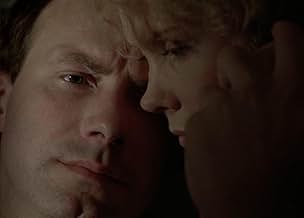
Kieslowski doesn't show any scruples about following Hanka's and Roman's despairing thoughts in the course of their restless, toiling existence and carries out his purpose by a series of very frequent close ups, using long focal length zoom lens, enveloping the two characters in a sort of crude grazing lighting, showing up faces furrowed with wrinkles, placing their features in anything but a favorable light, casting a gloomy shadow over their future, almost prefiguring the uncertain life of the soul kept aside for them. He looks mercilessly into their pale and strained faces, revealing false pretenses mingled with an indefinite sense of guilt, ready to expose their congenital hypocrisy, to dismantle every misleading sense of security. Truly determined to penetrate the defensive shield erected around the married couple, Kieslowski finds out painful scars of time concealed into the folds of their skin worn away by perpetual stress in their marriage, violates the privacy of their facial features revealing all their disarming vulnerability, all their secret consistency of pure mirrors of souls double-crossing each other.
In this embarrassing situation where the impurity of deviating thoughts finds its barycenter in ill-concealed impulses of jealousy, a particular mention goes to the directorial use of the phone, invested with the task of unmasking every ambiguous situations and gratified with many meaningful close ups. Once again the director takes delight in evoking a suggestive game of mirrors in the successful attempt of rendering with great evidence the sense of estrangement and the ambiguous atmosphere of the story. He redoubles the nervous tension due to the dialectic game of two lonely souls with their nerves on the edge, with their barren make-believe opportunely unmasked for the benefit of the audience. Even if the doubtful transgression of the ninth commandment is perceived vaguely, the ninth episode of the "Dekalog" is one of the most significant of the whole series, full of inmost Bergmanian suggestions. And already one can perceive clear premonitory echoes of "The double life of Véronique" between the folds of this story.
Kieslowski doesn't show any scruples about following Hanka's and Roman's despairing thoughts in the course of their restless, toiling existence and carries out his purpose by a series of very frequent close ups, using long focal length zoom lens, enveloping the two characters in a sort of crude grazing lighting, showing up faces furrowed with wrinkles, placing their features in anything but a favorable light, casting a gloomy shadow over their future, almost prefiguring the uncertain life of the soul kept aside for them. He looks mercilessly into their pale and strained faces, revealing false pretenses mingled with an indefinite sense of guilt, ready to expose their congenital hypocrisy, to dismantle every misleading sense of security. Truly determined to penetrate the defensive shield erected around the married couple, Kieslowski finds out painful scars of time concealed into the folds of their skin worn away by perpetual stress in their marriage, violates the privacy of their facial features revealing all their disarming vulnerability, all their secret consistency of pure mirrors of souls double-crossing each other.
In this embarrassing situation where the impurity of deviating thoughts finds its barycenter in ill-concealed impulses of jealousy, a particular mention goes to the directorial use of the phone, invested with the task of unmasking every ambiguous situations and gratified with many meaningful close ups. Once again the director takes delight in evoking a suggestive game of mirrors in the successful attempt of rendering with great evidence the sense of estrangement and the ambiguous atmosphere of the story. He redoubles the nervous tension due to the dialectic game of two lonely souls with their nerves on the edge, with their barren make-believe opportunely unmasked for the benefit of the audience. Even if the doubtful transgression of the ninth commandment is perceived vaguely, the ninth episode of the "Dekalog" is one of the most significant of the whole series, full of inmost Bergmanian suggestions. And already one can perceive clear premonitory echoes of "The double life of Véronique" between the folds of this story.
Dekalog 9
This is one of the most potent Dekalogs for a while. The setup is one of those brilliant Kieslowski touches of sending us echoes that we're uncertain if from a hazy future or from inside the soul. He had plans to turn this into a third Short Film but gave up after exhaustion.
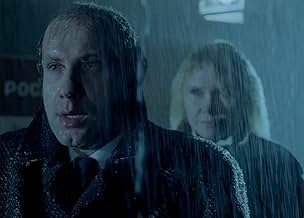
A husband discovers he's unable to have children, the doctor suggesting divorce, the end of his marriage. This is interlaid with shots of the wife back home looking for him in an empty apartment. There's a desolate sense between the two of them, something lost along the way and no one looked for it to put it back in. They lay on the same bed now, he has shared the news, and suggests she takes up an affair.
But is all of this, as in film noir, a dreamlike urge of pushing her away from him, or deep down wanting to? At the hospital where he works we get the sense that he's fascinated by a young patient who has a lovely voice but her heart might give way if she becomes a singer. She is content to not pursue this love.
So there is something, the Kieslowskian touch as I am discovering with these Dekalogs, of elusively inhabiting something that's been laying in wait and opens chasms in who these characters are. What we see may be what she's thought about before in a marriage that was draining itself away.
But then it slowly drains itself away. It sets itself up for formulaic surprises where now the boyfriend shows up where she went on a trip and he finds out and is heartbroken. We have what's by now a very typical tension in the series. If you have seen previous Dekalogs in a row, like I did, this will be slight by now.
A husband discovers he's unable to have children, the doctor suggesting divorce, the end of his marriage. This is interlaid with shots of the wife back home looking for him in an empty apartment. There's a desolate sense between the two of them, something lost along the way and no one looked for it to put it back in. They lay on the same bed now, he has shared the news, and suggests she takes up an affair.
But is all of this, as in film noir, a dreamlike urge of pushing her away from him, or deep down wanting to? At the hospital where he works we get the sense that he's fascinated by a young patient who has a lovely voice but her heart might give way if she becomes a singer. She is content to not pursue this love.
So there is something, the Kieslowskian touch as I am discovering with these Dekalogs, of elusively inhabiting something that's been laying in wait and opens chasms in who these characters are. What we see may be what she's thought about before in a marriage that was draining itself away.
But then it slowly drains itself away. It sets itself up for formulaic surprises where now the boyfriend shows up where she went on a trip and he finds out and is heartbroken. We have what's by now a very typical tension in the series. If you have seen previous Dekalogs in a row, like I did, this will be slight by now.

Did you know
- TriviaKieslowski and co-screenwriter Krzysztof Piesiewicz expressed an affection for the character of the young singer who contemplates surgery, and they lamented the fact that there was little for her to do in this story. When they began writing "The Double Life of Veronique", they remembered the plight of the singer in Dekalog--how her passion was limited by her sickness--and transferred this storyline to the characters of Veronique and Weronika.
- ConnectionsReferenced in Three Colors: Red (1994)
Details
Contribute to this page
Suggest an edit or add missing content