IMDb RATING
7.4/10
6.2K
YOUR RATING


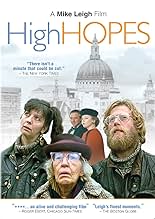
The life of a working class couple living in London and their complicated relationships with other members of the family.The life of a working class couple living in London and their complicated relationships with other members of the family.The life of a working class couple living in London and their complicated relationships with other members of the family.
- Director
- Writer
- Stars
- Awards
- 6 wins & 6 nominations total



Phil Davis
- Cyril
- (as Philip Davis)


Aidan Harrington
- Man in Street
- (uncredited)
- Director
- Writer
- All cast & crew
- Production, box office & more at IMDbPro
7.46.2K
1
2
3
4
5
6
7
8
9
10
Featured reviews
sad, hilarious cross-section of England in the 1980's
Mike Leigh's bittersweet social satire dissected with devastating accuracy (and a sometimes heartbreaking sense of humor) the widening gap between the haves and have-nots in Margaret Thatcher's England, moving from transparent criticism to crass parody to, finally, a touching plea on behalf of the elderly. It's a gray little film, giddy and depressing all at once, although often as funny (and just as striking) as hearing fingernails scraped down a blackboard. Leigh's cross-section of British society rings true even at its most exaggerated, and his ear for language, whether mumbled Cockney slang or nasal upper-class snobbery, is pitch perfect.
The film is essentially a showcase for some wonderfully defined characters: marginalized counterculture Marxists Cyril and Shirley; Cyril's ultra-neurotic middle-class sister and her vulgar salesman husband; an infirm old mum; a pair of callous upscale neighbors; and an odd, occasional houseguest named Wayne. The plotting is furtive: nothing much happens over the course of the film, giving the cast plenty of room to stretch out in their roles. The characters and story lines were created by the entire cast through extensive pre-production rehearsals, but the finished film is remarkably cohesive, with acting so natural it could easily be mistaken for improvisation if it weren't so well written. The result is a film of rare and genuine emotion: it's either the gloomiest comedy ever made or a tragedy with no shortage of laughs.
The film is essentially a showcase for some wonderfully defined characters: marginalized counterculture Marxists Cyril and Shirley; Cyril's ultra-neurotic middle-class sister and her vulgar salesman husband; an infirm old mum; a pair of callous upscale neighbors; and an odd, occasional houseguest named Wayne. The plotting is furtive: nothing much happens over the course of the film, giving the cast plenty of room to stretch out in their roles. The characters and story lines were created by the entire cast through extensive pre-production rehearsals, but the finished film is remarkably cohesive, with acting so natural it could easily be mistaken for improvisation if it weren't so well written. The result is a film of rare and genuine emotion: it's either the gloomiest comedy ever made or a tragedy with no shortage of laughs.
More bleak moments
The title of Mike Leigh's first film was "Bleak Moments" and he's been having them, on and off, ever since. Leigh's films are the comedic equivalent of the Theatre of Cruelty. The pain running through a Mike Leigh movie far outweighs anything 'funny'. You wonder why they are called comedies at all. And the pain is usually the pain of belonging to a family unit. In "High Hopes" the family unit is Edna Dore's almost catatonic London pensioner, her appalling daughter Valerie and her equally appalling husband Martin and her son Cyril and his partner Shirley. Dore's next-door neighbours are a couple of Sloane Rangers with a double-barreled name and if Leigh has a fault it's that he can't help lampooning Valerie and Martin and the snooty neighbours. (Valerie is a clone of the awful Beverly in "Abigail's Party"). These are cartoon characters and they don't ring true.
However Dore, who does virtually nothing, is quietly magnificent as the mother whose life has evaporated in front of her eyes and Philip Davis and Ruth Sheen are heartbreakingly real as the socialist son and the woman he loves but not enough to give her the child she craves. Indeed, Davis and Sheen give the kind of performances that seem to transcend mere 'acting' and which in a just world would be showered with prizes. (Sheen and Dore did win European Film Awards). In fact, everyone is first-rate even the caricatured neighbours and the lamentable Valerie. An uneven work, then, but when Davis and Sheen are on screen it's as good as Leigh gets.
However Dore, who does virtually nothing, is quietly magnificent as the mother whose life has evaporated in front of her eyes and Philip Davis and Ruth Sheen are heartbreakingly real as the socialist son and the woman he loves but not enough to give her the child she craves. Indeed, Davis and Sheen give the kind of performances that seem to transcend mere 'acting' and which in a just world would be showered with prizes. (Sheen and Dore did win European Film Awards). In fact, everyone is first-rate even the caricatured neighbours and the lamentable Valerie. An uneven work, then, but when Davis and Sheen are on screen it's as good as Leigh gets.
high hopes
This is early Mike Leigh before he achieved that perfect balance in tone between critical and affectionate that distinctly marks his best films. Consequently, while there are wonderfully observed sad and funny bits (like the visit to Karl Marx's grave and the way the Marxist couple treats the lost waif in search of his mom) the main set pieces soon descend into undue caricature (the Yuppie couple in the gentrified housing block) or nastiness (the mom's 70th b-day party). Give it a B minus if only for Ruth Sheen's warm hearted performance that would foreshadow Alison Steadman in the later, better "Life Is Sweet".
Really lovely movie
Of course the marketing people hype every movie like it's a cross between "Titanic" and "Wedding Crashers" but there is such a thing as a small lovely film and "High Hopes" is it. It's a comedy but nobody passes gas or accidentally drinks urine, so it's a cut above any comedy produced in the U.S. during the last thirty years. It's just about people, working class people in London trying to get by. But its got a good heart and the smiles it provides will stick with you longer than the brain-dead belly laughs strained over in Hollywood comedies. It just feels like real life. The actors don't seem to be acting. And you end up pretty hopeful regarding the human condition.
Thatcher's London through the eyes of a socialist.
Released in 1988, this is Mike Leigh's (director of Vera Drake) sublime comedy which examines the social climate of 1980s London.
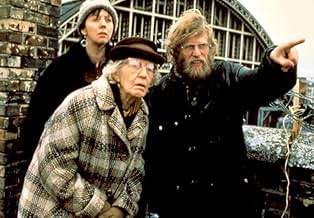
I really liked this film, it centres on one extended family living in London during the Thatcher years. Cyril is a Marxist, who does despite his strong values and views chooses not to act on them, giving the world up for a hopeless cause. His partner, Shirley, desperately wants a baby, despite Cyril's strong views that the world is already "over-populated". Living in the last council house on a now yuppie infested road is Cyril's mum. A member of the generation who has been forgotten, she is slowly losing her marbles, much to the distaste of her neighbours. And as for Cyril's sister, Valerie, who lives in the social climbing climate of the middle class, she has seemingly to forgotten her roots and family ties, no doubt due to her excessive drinking of cheap champagne and her leeching husband.
This film is a brilliant gem of 1980s British cinema, despite its clear socialist values (it's cartoonish portrayal of the rich and yuppie somewhat softens the blow of its left wing message), it brings up so many interesting questions in an intelligent manner, portraying all its characters from a variety of angles and political stances, its hard not to like Cyril, but when he criticises a young 'active' Marxist follower for planning to open a market stall, he is shown to be hypocritical.
Leigh' doesn't just direct, but also write, and the script is water tight. It is extremely witty, just full of emotion and very down to earth.
This film is a very good snap shot of life in a variety of social situations and views in the churning world of the 1980s as the capitalistic London really began to boom. It is a flick that will not doubt have you smiling from cheek to cheek, yet also leave you feeling emotionally vulnerable and self-questioning.
I really liked this film, it centres on one extended family living in London during the Thatcher years. Cyril is a Marxist, who does despite his strong values and views chooses not to act on them, giving the world up for a hopeless cause. His partner, Shirley, desperately wants a baby, despite Cyril's strong views that the world is already "over-populated". Living in the last council house on a now yuppie infested road is Cyril's mum. A member of the generation who has been forgotten, she is slowly losing her marbles, much to the distaste of her neighbours. And as for Cyril's sister, Valerie, who lives in the social climbing climate of the middle class, she has seemingly to forgotten her roots and family ties, no doubt due to her excessive drinking of cheap champagne and her leeching husband.
This film is a brilliant gem of 1980s British cinema, despite its clear socialist values (it's cartoonish portrayal of the rich and yuppie somewhat softens the blow of its left wing message), it brings up so many interesting questions in an intelligent manner, portraying all its characters from a variety of angles and political stances, its hard not to like Cyril, but when he criticises a young 'active' Marxist follower for planning to open a market stall, he is shown to be hypocritical.
Leigh' doesn't just direct, but also write, and the script is water tight. It is extremely witty, just full of emotion and very down to earth.
This film is a very good snap shot of life in a variety of social situations and views in the churning world of the 1980s as the capitalistic London really began to boom. It is a flick that will not doubt have you smiling from cheek to cheek, yet also leave you feeling emotionally vulnerable and self-questioning.


Did you know
- TriviaBefore High Hopes (1988), director Mike Leigh had made Bleak Moments (1971), released in 1971, and Meantime (1983), released in 1983. This gap in his filmography was attributable in part to his process for creating films: When he applied for financial backing, he did not yet have finished scripts, preferring to allow actors, once they were hired, to use improvisation sessions to create the dialogue. As a result, given the absence of a concrete script, many potential financial backers were reluctant to support Leigh's work. For "High Hopes," that spelled doom until the British TV station Channel 4 stepped in and partially funded it. The result is one of the most moving and engaging films of the 1980s and an early masterwork in Leigh's catalog.
- GoofsAfter they come back from the opera, Lætitia sings the aria "La ci darem" to Rupert, which she claims was from the opera they just saw. They proceed to talk about the characters Susanna and Cherubino. However, these characters are from The Marriage of Figaro whereas the aria "La ci darem" is from Don Giovanni.
- Quotes
Rupert Boothe-Braine: Now... what made this country great was a place for everyone, and everyone in his place. And this is my place.
- How long is High Hopes?Powered by Alexa
Details
- Release date
- Country of origin
- Language
- Also known as
- Velike nade
- Filming locations
- Stanley Passage, King's Cross, London, England, UK(apartment of Ruth Sheen and Philip Davis)
- Production companies
- See more company credits at IMDbPro
Box office
- Budget
- £1,800,000 (estimated)
- Gross US & Canada
- $1,192,322
- Opening weekend US & Canada
- $27,964
- Feb 26, 1989
- Gross worldwide
- $1,192,322
Contribute to this page
Suggest an edit or add missing content