
King Henry VIII wants to divorce his wife, and seeks the approval of the aristocracy. Sir Thomas More is a man of principle and reason, and is thus placed in a difficult position: should he ... Read allKing Henry VIII wants to divorce his wife, and seeks the approval of the aristocracy. Sir Thomas More is a man of principle and reason, and is thus placed in a difficult position: should he stand up for his principles, risking the wrath of a corrupt King fond of executing people ... Read allKing Henry VIII wants to divorce his wife, and seeks the approval of the aristocracy. Sir Thomas More is a man of principle and reason, and is thus placed in a difficult position: should he stand up for his principles, risking the wrath of a corrupt King fond of executing people for treason? Or should he bow to the seemingly unstoppable corruption of King Henry VIII, ... Read all
- Awards
- 1 win & 2 nominations total
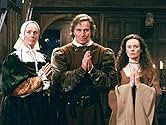


- Cardinal Wolsey
- (as Sir John Gielgud)


- Richard Rich
- (as Jonathon Hackett)

- Director
- Writer
- All cast & crew
- Production, box office & more at IMDbPro
Featured reviews
A Pleasant Surprise
Couldn't Disagree More
Heston was brilliant as More and Redgrave was outstanding as Mistress More. The teleplay had much more of the sense of the original stage play than the hacked-up Hollywood flick the OP speaks of.
Guess it's a matter of taste, but Heston has NEVER been wooden, EVER. One of the greatest actors of our age. In my opinion only Richard Burton could probably have been a better casting choice than Heston--and he was dead by this time.
Heston was also remarkably gracious and effusive about Miss Redgrave's talent, even though they would never see eye-to-eye politically. He is a gracious man, a talented actor, and a wonderful husband and father. Would there were many more like him out of the dreck of Hollywood.
Heston is not Scofield
Cannot stand comparison with the Scofield/Zinnemann version
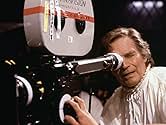
Charlton Heston was a great admirer of Bolt's play, in which he had starred a number of times on the stage, and had hoped to be chosen to play More in Zinnemann's film. He was, of course, disappointed in that ambition (the role went to Paul Scofield), but when, more than twenty years later, he was given the chance to direct and act in his own version for the TNT television network he eagerly accepted the opportunity.
Heston was not, however, (as his autobiography makes clear) a great admirer of Zinnemann's film or of Scofield's performance, which he regarded as too "astringent". He therefore sought to make his own performance here quite different from Scofield's, playing More as warmer, more humorous and less ascetic and intellectual. Personally, I felt that Scofield set a standard which it would be difficult for anyone, even an actor of Heston's stature, to better, but I felt that Heston's performance in this film represented a quite valid and praiseworthy attempt to find an alternative interpretation.
And yet, this film is not in the same class as Zinnemann's- indeed, in my view comes nowhere near it. There are several reasons for this. Heston's film is considerably longer than the original- indeed, it was recently shown on British television as a two-part miniseries. For the purposes of Zinnemann's film, Bolt (who wrote the screenplay) pared down his original text, omitting altogether one major character (the Spanish Ambassador), to produce something more suited to the cinema than the stage. Heston's film restores these cuts, presumably to produce something of the regulation length required by the American TV schedules, and the result is a film which flows less easily and lacks the dramatic urgency of the first film.
Another change Bolt made for the 1966 film was to abandon the Brechtian device of the "Common Man", the character who acts as the narrator in the play. Again, this character is restored in Heston's version, and again I do not think that the change is for the better. The character played by Roy Kinnear, a wily, self-interested comic rogue, seems out of place in the tragic drama of More. Brecht's "alienation effect" may be a valid technique in the theatre (although critics and dramatic theorists are divided on this point), but for me it certainly does not work in the different media of television and the cinema.
In the original film all the cast were excellent without a single poor performance. Here, few really stand out. Apart from Sir John Gielgud as Cardinal Wolsey, in a cameo appearance even briefer than that of Orson Welles. The only one of the cast who can stand comparison with the earlier film is Richard Johnson as the Duke of Norfolk. The role of Norfolk is played in a quite different way in the two films. In the earlier version, Norfolk, as played by Nigel Davenport, was a basically decent if intellectually undistinguished man who did his best to protect his friend More. Here, the character played by Johnson is a fundamentally more unpleasant character, who hides his moral cowardice beneath a show of hearty friendship. Despite claiming to be More's friend, he eventually acts as the presiding judge at his show trial and in that capacity sentences him to death. (In Zinnemann's film this was done by another character, the Lord Chief Justice).
None of the other actors stand out. Martin Chamberlain's King Henry VIII is a pale copy of Robert Shaw's. Even an actress as talented as Vanessa Redgrave was not as authoritative as Wendy Hiller as More's wife Alice. (Redgrave had a cameo appearance as Anne Boleyn in the 1966 version). According to Heston, Redgrave originally intended to give Alice a (historically correct) West Country accent, but this was changed because it was feared that American audiences would find it difficult to understand. In the final version of the film, Alice speaks with a Northern accent, although I wonder if Americans found this any easier to cope with.
The two interpretations I did not like in this version were from Benjamin Whitrow as Thomas Cromwell and Jonathan Hackett as Richard Rich. Whitrow's Cromwell had too much the smooth, silky politician about him and not enough of the thug. At one point More compares Cromwell to a dockside bully; a description which admirably fits Leo McKern's blustering character but which seems lost on Whitrow's. The mistake Hackett makes is to confuse moral weakness with cowardice. John Hurt's character is weak, but only in the sense that he lacks the moral strength to put his principles before his ambitions. Where those ambitions are concerned he can be steely and ruthless in pursuit of them. Hackett's Rich is too much of a physical coward to take any risks; he comes across as the sort of man who would do anything for a quiet life, even exchanging the life of a courtier for that of a schoolmaster (which is the choice More offers him).
As an actor, Heston gives a perfectly respectable performance in this film (even though personally I would prefer Scofield's). He was not, however, a particularly experienced director (this was the last of only three films that he directed during his career) and the weakness of his version is that he was not able to bring out great performances from his supporting cast in the way that Zinnemann had done. 7/10, compared to 10/10 for Zinnemann's film.
There can be no "Man For All Seasons' without a Thomas More".


Did you know
- TriviaMore was tried for High Treason for opposing the King's desire to be named head of the Church in England. Charges of treason were used to silence opposition to the King. When the Founding Fathers drafted the U.S. Constitution, cases such as More's led them to define treason in narrow terms, that is, "Treason against the United States, shall consist only in levying war against them, or in adhering to their enemies, giving them aid and comfort. No person shall be convicted of treason unless on the testimony of two witnesses to the same overt act, or on confession in open court."
- GoofsIn all the scenes which are supposed to take place on or near the River Thames, the waterbody is clearly a narrow lake, not a river.
- ConnectionsVersion of A Man for All Seasons (1966)
- SoundtracksOriginal Tudor Music
Composed by Henry VIII (as H.R.H. Henry VIII)
Details
- Release date
- Countries of origin
- Language
- Also known as
- Un hombre de dos reinos
- Filming locations
- Production companies
- See more company credits at IMDbPro