IMDb RATING
4.8/10
1.1K
YOUR RATING

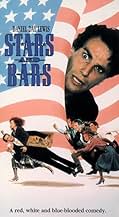
A British art expert travels across America in order to purchase a rare Renoir painting in the South but comes across some crazy characters in the process.A British art expert travels across America in order to purchase a rare Renoir painting in the South but comes across some crazy characters in the process.A British art expert travels across America in order to purchase a rare Renoir painting in the South but comes across some crazy characters in the process.
- Awards
- 1 win total


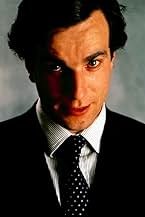
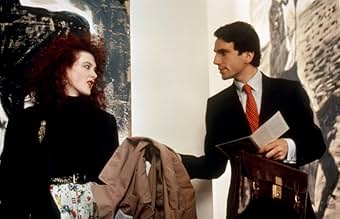


Daniel Day-Lewis
- Henderson Dores
- (as Daniel Day Lewis)


- Director
- Writer
- All cast & crew
- Production, box office & more at IMDbPro
4.81K
1
2
3
4
5
6
7
8
9
10
Featured reviews
New York in the late 80s.
I remember standing in a long line to see this in Manhattan, and thinking that the New York parts were a perfect representation of the city at that moment in time. It's a weird vehicle for Daniel Day-Lewis, apart from his ability to play a perfect British upper class twit - I don't think he's done a comedy since (and certainly not before). The use of Joan Cusack as leading lady and love object is bizarre, too - up until this point she'd been relegated to kooky sidekick/friend of the heroine roles (Broadcast News springs immediately to mind), something she went back to almost immediately after this film. It's strange all around, but also a funny time capsule of sorts. I too wish it was out on DVD.
Kudos!
Oh, how I would love to own this on DVD! A marvelous job by Daniel Day
Lewis, Harry Dean Stanton, Joan Cusack and Glann Headley. In my opinion
it
is a deep South tour-de-farce. I guess you have to have lived there to
appreciate the humorous poke at what lies behind the moss-covered trees
that
line the backroads of the South. It reminds me of Out on a Limb, a
similar
Southern dark comedy with Matthew Broderick. Both are hysterical
weekends
with people whose family trees "don't branch!!" You'll never see Lewis
doing this whimsy again, except perhaps as the pansy boyfriend in "Room
with
a View" which he did at about the same time. Both characters are played
with equal artistic integrity he grants all his roles. Kudos and many
laughs to all!
Extreme flop, to be kept off Dan's resume
My review was written in March 1988 after watching the film at a Manhattan screening room.
In David Puttam's legacy at Columbia Pictures, "Stars and Bars" represents a major faux pas. Unfunny mixture of farce and misdirected satire has no conceivable audience apart from undiscriminating pay-cable viewers.
Project was developed by Puttna, but given to his ex-partner Sandy Lieberson to produce after Puttnam acceded to head of Columbia. Though an American picture, it features a high complement of U. K. personnel behind the camera.
Scripted by William Boyd from his novel, thin story line follows the misadventures of a Brit in America, or rather someone's view of what America is like (targets of Boyd's satire are all straw men). Daniel Day-Lewis plays the hapless hero, an art expert sent by his boss to acquire a rare Renoir painting (worth about $10,000,000) from hayseed Harry Dean Stanton, who claims to have bought it for $500 in France in 1946.
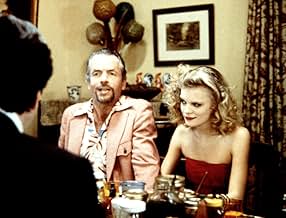
Bulk of the pic deals with Day-Lewis' interactions with Stanton's weird brood, including Maury Chaykin as his Elvis-imitating son who already has sold the painting to unscrupulous, rival New York art dealers. Nonsensical gags and caricatures represent a real comedown from Hollywood's cutesy but effective portrayal of Southern goofballs, especially in such funny films as the 1945 Fred MacMurray vehicle, "Murder, He Says".
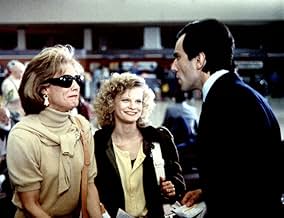
Add to this concoctions some awkward bedroom farce (Day-Lewis unconvincingly juggling his new pickup, Joan Cusack, at an Atlanta hotelwith his fiancee Laurie Metcalf) that wouldn't pass muster as a West End farce for the tourist trade, and pic self-destructs rapidly. Helmer Pat O'Connor evidences no feel for comedy, having the cast overact unmercifully, except for standup comic Steven Wright (as Day-Lewis' business rival) who maintains his familiar deadpan pesona.
Day-Lewis is downright embarrassing, suffering through two extended nude chase scenes and nearly bursting a blood vessel in his uncharacteristic turn. Stanton is wasted in the sort of role he graduated from a decade ago and juve actress Martha Plimpton is miscast in a precocious temptress role.
Supporting cast is one long in-joke, featuring tons of New York talent whose presence will mean nothing to national audiences and add nothing to the picture, e.g., Spalding Gray, Rockets Redglare. Structurally the fact that Will Patton (recently impressive as the villain in "No Way Out") has a key role but doesn't show up on screen until two brief scenes in the final reel is mystifying.
Sting contributes an excellent theme song "An Englishman in New York", from his latest LP, which is pointlessly reprised near the end of the film.
In David Puttam's legacy at Columbia Pictures, "Stars and Bars" represents a major faux pas. Unfunny mixture of farce and misdirected satire has no conceivable audience apart from undiscriminating pay-cable viewers.
Project was developed by Puttna, but given to his ex-partner Sandy Lieberson to produce after Puttnam acceded to head of Columbia. Though an American picture, it features a high complement of U. K. personnel behind the camera.
Scripted by William Boyd from his novel, thin story line follows the misadventures of a Brit in America, or rather someone's view of what America is like (targets of Boyd's satire are all straw men). Daniel Day-Lewis plays the hapless hero, an art expert sent by his boss to acquire a rare Renoir painting (worth about $10,000,000) from hayseed Harry Dean Stanton, who claims to have bought it for $500 in France in 1946.
Bulk of the pic deals with Day-Lewis' interactions with Stanton's weird brood, including Maury Chaykin as his Elvis-imitating son who already has sold the painting to unscrupulous, rival New York art dealers. Nonsensical gags and caricatures represent a real comedown from Hollywood's cutesy but effective portrayal of Southern goofballs, especially in such funny films as the 1945 Fred MacMurray vehicle, "Murder, He Says".
Add to this concoctions some awkward bedroom farce (Day-Lewis unconvincingly juggling his new pickup, Joan Cusack, at an Atlanta hotelwith his fiancee Laurie Metcalf) that wouldn't pass muster as a West End farce for the tourist trade, and pic self-destructs rapidly. Helmer Pat O'Connor evidences no feel for comedy, having the cast overact unmercifully, except for standup comic Steven Wright (as Day-Lewis' business rival) who maintains his familiar deadpan pesona.
Day-Lewis is downright embarrassing, suffering through two extended nude chase scenes and nearly bursting a blood vessel in his uncharacteristic turn. Stanton is wasted in the sort of role he graduated from a decade ago and juve actress Martha Plimpton is miscast in a precocious temptress role.
Supporting cast is one long in-joke, featuring tons of New York talent whose presence will mean nothing to national audiences and add nothing to the picture, e.g., Spalding Gray, Rockets Redglare. Structurally the fact that Will Patton (recently impressive as the villain in "No Way Out") has a key role but doesn't show up on screen until two brief scenes in the final reel is mystifying.
Sting contributes an excellent theme song "An Englishman in New York", from his latest LP, which is pointlessly reprised near the end of the film.
comic misfire has its moments
It may be a far cry from classic screwball comedy, but even during its many forgettable moments this fish-out-of-water farce isn't a total write-off. Certainly there's nothing in it to justify the cold-blooded lack of confidence that killed it at the Box Office: the throwaway release it received is usually reserved for lame dogs someone wants put out of misery, and in this case it worked.
At least the film never pretends to be anything more than what it is: a self-consciously wacky social comedy with an outsider's exaggerated, broad-as-a-barn-door view of American manners, starring Daniel Day Lewis as a dapper English art appraiser who runs into an oddball collection of cartoon Confederate rebels while investigating a lost Renoir in backwoods Georgia. All the film needs is a laugh-track to become a respectable TV sitcom (a degenerate Beverly Hillbillies?), but director Pat O'Connor doesn't show much aptitude for low comedy, and the laughs collapse into a feeble slapstick conclusion, leaving the door wide open for a sequel which will never be made.
At least the film never pretends to be anything more than what it is: a self-consciously wacky social comedy with an outsider's exaggerated, broad-as-a-barn-door view of American manners, starring Daniel Day Lewis as a dapper English art appraiser who runs into an oddball collection of cartoon Confederate rebels while investigating a lost Renoir in backwoods Georgia. All the film needs is a laugh-track to become a respectable TV sitcom (a degenerate Beverly Hillbillies?), but director Pat O'Connor doesn't show much aptitude for low comedy, and the laughs collapse into a feeble slapstick conclusion, leaving the door wide open for a sequel which will never be made.
Weak, with some enjoyable moments
"Stars and Bars" is not that bad, but it's not that good to warrant many words of praise. Without a doubt it's the weakest film on Daniel Day-Lewis
resume, yet it's not his fault since he delivers a nice comedic performance. The story, as written by novelist William Boyd and directed by Pat O'Connor, is all
over the place with its criticism on cultural clashes between Americans and British, with a series of unfunny moments, stereotypes and cliches. A couple
of scenes work, the acting is quite good but the final result is awkward. It might be one of those cases that work best on a book, but doesn't translate well
as a movie.
The premise is somewhat interesting and with a large ensamble cast we are easily seduced by everything, at first. Day-Lewis plays Henderson Dores, a shy and polite British art expert who is commissioned to purchase a rare Renoir painting that was somehow acquired by a hillbilly American family living down south.
The patriarch Loomis (Harry Dean Stanton) doesn't have a clue about the real worth of such lovely painting and accepts the other man's offer. The problem arises when other members of the family begin to interfere with the selling, ruining the foreign man's peace of mind, and a few women he's connected are also part of the confusion like his boss wife (Laurie Metcalf), her teenage daughter (Martha Plimpton) who invited herself to the trip as she's obsessed with him; and a potential girlfriend (Joan Cusack).
What's to like about "Stars and Bars"? The bond between Henderson and Loomis, the only meaningful interaction between characters despite the Brit sort of fooling the other guy. But it's a great connection as they share common values about what's important in life. The dinner scene with family and friends gathered is amazingly hilarious with many action going on but we're mostly focused on Spalding Gray making some on the teenage girl, and she surprises him in a painful manner. And the bookened scenes with Keith David as Henderson's fencing instructor.
As for the rest...it's simply a series of repetitive acts against the leading man, over-the-top anti-British scenarios that go nowhere, and some odd twists related with the family members - the blind woman who sees everything, the brother that never leaves the room to later appear on a key moment, etc. The generalization bias on both cultures were simply annoying and thrown in a dumb manner.
As said earlier, Daniel Day-Lewis was good in it, but not great. It's unlike anything we're used to see him doing, since he's mostly an amazing dramatic performer, and here he tries for many good humored moments and a very physical comedy. Had the filmmakers waited a little longer to make this film, the perfect choice for the role would be Hugh Grant, especially in the 1990's.
Anyway, they tried too hard to get some laughs from us, and I tried too hard to like it. Simply couldn't. 5/10.
The premise is somewhat interesting and with a large ensamble cast we are easily seduced by everything, at first. Day-Lewis plays Henderson Dores, a shy and polite British art expert who is commissioned to purchase a rare Renoir painting that was somehow acquired by a hillbilly American family living down south.
The patriarch Loomis (Harry Dean Stanton) doesn't have a clue about the real worth of such lovely painting and accepts the other man's offer. The problem arises when other members of the family begin to interfere with the selling, ruining the foreign man's peace of mind, and a few women he's connected are also part of the confusion like his boss wife (Laurie Metcalf), her teenage daughter (Martha Plimpton) who invited herself to the trip as she's obsessed with him; and a potential girlfriend (Joan Cusack).
What's to like about "Stars and Bars"? The bond between Henderson and Loomis, the only meaningful interaction between characters despite the Brit sort of fooling the other guy. But it's a great connection as they share common values about what's important in life. The dinner scene with family and friends gathered is amazingly hilarious with many action going on but we're mostly focused on Spalding Gray making some on the teenage girl, and she surprises him in a painful manner. And the bookened scenes with Keith David as Henderson's fencing instructor.
As for the rest...it's simply a series of repetitive acts against the leading man, over-the-top anti-British scenarios that go nowhere, and some odd twists related with the family members - the blind woman who sees everything, the brother that never leaves the room to later appear on a key moment, etc. The generalization bias on both cultures were simply annoying and thrown in a dumb manner.
As said earlier, Daniel Day-Lewis was good in it, but not great. It's unlike anything we're used to see him doing, since he's mostly an amazing dramatic performer, and here he tries for many good humored moments and a very physical comedy. Had the filmmakers waited a little longer to make this film, the perfect choice for the role would be Hugh Grant, especially in the 1990's.
Anyway, they tried too hard to get some laughs from us, and I tried too hard to like it. Simply couldn't. 5/10.


Did you know
- TriviaA rejected score was composed by Elmer Bernstein.
- ConnectionsFeatured in Nostalgia Critic: Should We Stop Method Acting? (2020)
- How long is Stars and Bars?Powered by Alexa
Details
Box office
- Budget
- $7,500,000 (estimated)
- Runtime
- 1h 34m(94 min)
- Color
- Sound mix
Contribute to this page
Suggest an edit or add missing content