

A spoiled Manhattan housewife re-evaluates her life after visiting a Chinatown healer.A spoiled Manhattan housewife re-evaluates her life after visiting a Chinatown healer.A spoiled Manhattan housewife re-evaluates her life after visiting a Chinatown healer.
- Nominated for 1 Oscar
- 1 win & 7 nominations total


Matthew H. Williamson
- Dennis
- (as Matt Williamson)


- Director
- Writer
- All cast & crew
- Production, box office & more at IMDbPro
6.616K
1
2
3
4
5
6
7
8
9
10
Featured reviews
Enjoyable romp
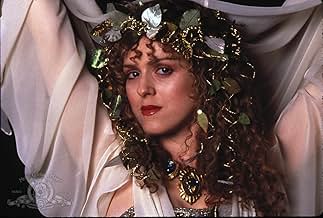
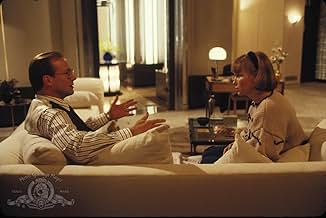
Next to the Front, this contains Woody Allen's best ending. There's one striking visual image in the plot I still can't get out my head: Mia is cheating on William Hurt with Joseph Mantegna and the 2 of them are over at Mantegna's apartment, while a glorious downpour crashes against a huge glass window behind them. The sound of the rain hitting the window compliments their nervous dialogue perfectly. One of Farrow's nicest performances (the Purple Rose of Cairo is her most heartbreaking). And where else are you going to see invisibility in the same story as Mother Theresa? One of Allen's better cast jobs, too. Even the smallest roles are exquisite. Gwen Vernon as Farrow's old time movie star mother is sublime. And Bernadette Peters makes a great wise cracking muse.
"I've done things I didn't know I had in me. "
Less known that Allen's "Annie Hall", "Hannah and her Sisters", "Crimes and Misdemeanors", and "Manhattan", "Alice" is a charming and delightful film that can be viewed as Allen's remake of "Juliet of Spirits" with some obvious themes from "Alice in Wonderland". Mia Farrow plays a wealthy New Yorker who one day feels that something is missing in her sheltered and comfortable life. She turns to a Chinese doctor whose magic herbs help her to reevaluate her life and her relationships with her husband, lover, mother, and sister. She may not find the answers for all the questions but she certainly learned a lot about herself. During the few days that film takes place, Alice experiences romance, finds spirituality, and even enjoys the power of invisibility. This film has one of the most optimistic endings in Woody's film. Mia Farrow is absolutely wonderful.
Allen fails to really inject any spark into a rather unsympathetic tale
Alice is a happily married, upper-east side NY mother who has children, a maid, a babysitter and so on. She never thought she was unhappy until she meets a man at her children's school and begins thinking about having an affair with him. She goes to an herbal doctor, Dr Yang, who gives her herbs that, in a variety of ways, help her in her voyage of self-discovery.
I'm a keen fan of Woody Allen but hopefully not to the point where I can't call a dog a dog! This film is not a dog, but it is certainly very lifeless and dull, despite the imaginative plot device of Dr Yang's herbs. For one thing it is very difficult indeed to really care for Alice or her friends. Usually Allen manages to get over this by making them witty, deeper characters of just having his film move slickly. Here he can't get the pace up nor does he manage to give Alice anything resembling a real problem - unless you live the self-obsessed type of life she lives, in which case you may disagree. I struggled to really get into the story and it was only made harder by the fact that, although imaginative, the film wasn't really that funny.
The dialogue lacked the sort of imaginative sparkle that Allen films can usually be relied upon to have and it seemed to rely more on character than anything - which was a mistake as they are a fairly unsympathetic lot with more money than problems. Farrow tries her best to win the audience round but I never got more from Alice than a woman going through a midlife crisis of sorts. Mantegna and Hurt are both good actors but here they have nothing really to do and appear hamstrung by their characters. The only time I connected with Alice was when she danced with the ghost of her husband and we hear flashbacks to their marriage - at this point I saw a person. This is mostly due to a good performance by Baldwin in a minor role.
Overall this is typical Allen and I guess fans may love it for that. For me, I really didn't feel the film had any life to it and that it came across as flat and listless. The plot relies on characters who I couldn't either relate to or like, the dialogue isn't as funny as it should be even though the invisibility etc all make it seem more interesting. It's an OK film but I couldn't help but feel disappointed with the whole thing.
I'm a keen fan of Woody Allen but hopefully not to the point where I can't call a dog a dog! This film is not a dog, but it is certainly very lifeless and dull, despite the imaginative plot device of Dr Yang's herbs. For one thing it is very difficult indeed to really care for Alice or her friends. Usually Allen manages to get over this by making them witty, deeper characters of just having his film move slickly. Here he can't get the pace up nor does he manage to give Alice anything resembling a real problem - unless you live the self-obsessed type of life she lives, in which case you may disagree. I struggled to really get into the story and it was only made harder by the fact that, although imaginative, the film wasn't really that funny.
The dialogue lacked the sort of imaginative sparkle that Allen films can usually be relied upon to have and it seemed to rely more on character than anything - which was a mistake as they are a fairly unsympathetic lot with more money than problems. Farrow tries her best to win the audience round but I never got more from Alice than a woman going through a midlife crisis of sorts. Mantegna and Hurt are both good actors but here they have nothing really to do and appear hamstrung by their characters. The only time I connected with Alice was when she danced with the ghost of her husband and we hear flashbacks to their marriage - at this point I saw a person. This is mostly due to a good performance by Baldwin in a minor role.
Overall this is typical Allen and I guess fans may love it for that. For me, I really didn't feel the film had any life to it and that it came across as flat and listless. The plot relies on characters who I couldn't either relate to or like, the dialogue isn't as funny as it should be even though the invisibility etc all make it seem more interesting. It's an OK film but I couldn't help but feel disappointed with the whole thing.
Tour de Force for Mia
This is one of those scatter gun films that kept me attending throughout. Of course, it is part of the Woody Allen canon. Mia is rich and has it all, all except a feeling of purpose and happiness. She shops, eats, lives in luxury, and, ultimately, admires more than anything, Mother Teresa. But now we move into the supernatural element, where Keye Luke (number one son) is able to provide her with magical potions, allowing her to observe the lives of those she wishes. It isn't a good thing for her. The man she truly loves and finally gets together with is conflicted and can't make the move forward. Her husband is a total jerk, using her as a prop. I was so pleased with the way this film ended.
Alice in Wondering-Land...
Or "Alice Doesn't Live Here Anymore" (Scorsese fans will get the reference), there seems to be some inner-girl escape-impulse associated to the name Alice and Woody Allen's heroine, played by the irresistible Mia Farrow, is no exception.
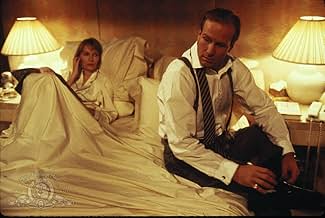
Alice is married to Doug, a wealthy businessman played by William Hurt. Together, they live in a luxurious apartment of Manhattan, her kids go to a private Catholic school, she's got a baby sitter, a cook, a trainer, a decorator, and all the time in the world to go shopping, get beauty treatments, gossip with her friends... and worry.
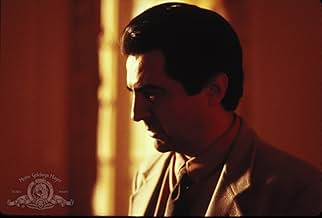
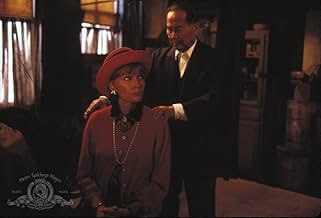
Some deep torment expresses itself through backaches and a sort of Catholic guilt due to her infatuation on Joe Ruffalo, a dark and handsome Jazz musician played by Joe Mantegna. Something is burning inside, channeling itself through that innocent lust, behind the obvious, there might be some strong existential call. Following numerous advice, Alice visits Dr. Yang (Keye Luke) a herbalist who seems to know what it's all about, certainly not the back.
The film deals with serious matters such as existential boredom, meaning of life, infidelity, but the "Chinese Riff" and tango leitmotifs remind us that this is all played for laughs, so we're not surprised when the treatment ventures in the realm of fantasy. Comedy needs that extra-kick when the laughs are too mild-mannered. For instance, when Alice mentions that penguin mate for life, Yang's answers "you think they're Catholic?" echo the infamous 'pigeon' quote from "Hannah and her Sisters" and it's not a good sign when Allen recycles his own jokes.
Only halfway through the film when the adoration of Mother Teresa and a few references about childhood reemerged that I understood that Catholicism wouldn't be the butt-monkey of Allen's humor but something with a strong bearing on Alice's guilt and existential crisis. Something that can be summed up in that quote from "Inherit the Wind": "What touches you, what warms you? Every man has a dream. What do you dream about? What... what do you need?"
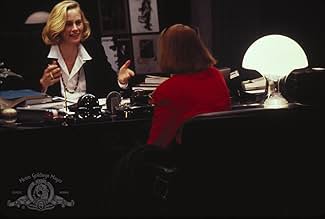
The answer is surely not in Alice's life, Doug constantly belittles her ambitions, a TV series executives played by Cybil Shepherd dismisses her writing projects, and everyone treats her with relative condescendence. It's hard to believe that the film was released 22 years after "Rosemary's Baby". Here is Mia Farrow as a middle-aged mother caught in the suffocating coziness of an apartment supported by seemingly benevolent people and looking as frail, powerless and "young" as her Rosemary counterpart.
I guess fragility has always been Mia's strongest suit, one she wears with grace and gentleness, the only negative feeling she's capable to embody is that Catholic guilt less as a principle than an alibi to her incapability to fight, except her own demons. That's Alice Tate in a nutshell, and one can draw parallels with Cecilia from "The Purple Rose of Cairo", a woman who could only find artifices to escape her condition (and coincidentally, the film became my highly rater movie for helpfulness).
So there's one thing that Woody Allen's "Alice" gets right is the casting, Diane Keaton is too strong and free-spirited to fit the character. It's obvious Allen wrote it for and with Mia in mind, a few years before their marriage would collapse, foreshadowing of many scandals and accusations. I'd rather ignore the storm and contemplate the silence; this is one of Mia Farrow's best roles and it was written by someone who obviously knew her a lot and loved her enough to provide her a character with a happy ending, not bittersweet but happy. Mia was overdue one.
There's a catch though, she's so sweet and genuinely sympathetic that she' not really the best choice for a leading comedic role, it's not a case of "women can't be funny" but there's a moment where after drinking of a mixture, she learns how to talk with a seductive voice and talks sexy with Joe , who responds nervously. That scene was funny but it was incongruous and I was afraid it would be a "reveal your inner self" moment. I needed to relate to the real Alice, which happens to be in line with Mia's personality.
So the film is a series of situation where a fantasy device allows Alice to know about her husband's whereabouts, to talk with her deceased ex-boyfriend, a sexy bad boy played by Alec Baldwin, to have a hilarious talk with her muse played by Bernadette Peters, to talk with her mother... it's basically a psychoanalysis through magical plants with many visual gags, some genuinely good moments, especially the visit to her sister played by Blythe Danner, but we're never taken to the heights reached by "Hannah and Her Sisters" or "The Purple Rose of Cairo" except for a hilarious sequence involving a love potion.
Despite a few moments of creativity, the film is Woody Allen at his mildest, driving us at cruise speed to a satisfying ending where Alice finally fulfills her dreams because she knew how to control herself and get rid from her entourage's nuisance, embodying that quote from a French great man named Clemenceau: "in life, you've got to know what you want to do, have the courage to say it and the energy to do it."
Still, had they made a "Real Housewives of Manhattan" in 1990, I wonder if a character like Alice Tate would have been kept in regard to audiences' premises. She'd be just too gentle, too shy, too introverted to contribute to the narrative dynamics... and yet she is the titular heroine of a film with a high promise, the result is uneven, it's heart-warming but slow-paced though not deprived of interesting dynamics.
Maybe there's a reason why it's rarely mentioned among Allen's best... but never among his worst. Some would call it a gem, I would call it an enjoyable little film. Which is good enough.
Alice is married to Doug, a wealthy businessman played by William Hurt. Together, they live in a luxurious apartment of Manhattan, her kids go to a private Catholic school, she's got a baby sitter, a cook, a trainer, a decorator, and all the time in the world to go shopping, get beauty treatments, gossip with her friends... and worry.
Some deep torment expresses itself through backaches and a sort of Catholic guilt due to her infatuation on Joe Ruffalo, a dark and handsome Jazz musician played by Joe Mantegna. Something is burning inside, channeling itself through that innocent lust, behind the obvious, there might be some strong existential call. Following numerous advice, Alice visits Dr. Yang (Keye Luke) a herbalist who seems to know what it's all about, certainly not the back.
The film deals with serious matters such as existential boredom, meaning of life, infidelity, but the "Chinese Riff" and tango leitmotifs remind us that this is all played for laughs, so we're not surprised when the treatment ventures in the realm of fantasy. Comedy needs that extra-kick when the laughs are too mild-mannered. For instance, when Alice mentions that penguin mate for life, Yang's answers "you think they're Catholic?" echo the infamous 'pigeon' quote from "Hannah and her Sisters" and it's not a good sign when Allen recycles his own jokes.
Only halfway through the film when the adoration of Mother Teresa and a few references about childhood reemerged that I understood that Catholicism wouldn't be the butt-monkey of Allen's humor but something with a strong bearing on Alice's guilt and existential crisis. Something that can be summed up in that quote from "Inherit the Wind": "What touches you, what warms you? Every man has a dream. What do you dream about? What... what do you need?"
The answer is surely not in Alice's life, Doug constantly belittles her ambitions, a TV series executives played by Cybil Shepherd dismisses her writing projects, and everyone treats her with relative condescendence. It's hard to believe that the film was released 22 years after "Rosemary's Baby". Here is Mia Farrow as a middle-aged mother caught in the suffocating coziness of an apartment supported by seemingly benevolent people and looking as frail, powerless and "young" as her Rosemary counterpart.
I guess fragility has always been Mia's strongest suit, one she wears with grace and gentleness, the only negative feeling she's capable to embody is that Catholic guilt less as a principle than an alibi to her incapability to fight, except her own demons. That's Alice Tate in a nutshell, and one can draw parallels with Cecilia from "The Purple Rose of Cairo", a woman who could only find artifices to escape her condition (and coincidentally, the film became my highly rater movie for helpfulness).
So there's one thing that Woody Allen's "Alice" gets right is the casting, Diane Keaton is too strong and free-spirited to fit the character. It's obvious Allen wrote it for and with Mia in mind, a few years before their marriage would collapse, foreshadowing of many scandals and accusations. I'd rather ignore the storm and contemplate the silence; this is one of Mia Farrow's best roles and it was written by someone who obviously knew her a lot and loved her enough to provide her a character with a happy ending, not bittersweet but happy. Mia was overdue one.
There's a catch though, she's so sweet and genuinely sympathetic that she' not really the best choice for a leading comedic role, it's not a case of "women can't be funny" but there's a moment where after drinking of a mixture, she learns how to talk with a seductive voice and talks sexy with Joe , who responds nervously. That scene was funny but it was incongruous and I was afraid it would be a "reveal your inner self" moment. I needed to relate to the real Alice, which happens to be in line with Mia's personality.
So the film is a series of situation where a fantasy device allows Alice to know about her husband's whereabouts, to talk with her deceased ex-boyfriend, a sexy bad boy played by Alec Baldwin, to have a hilarious talk with her muse played by Bernadette Peters, to talk with her mother... it's basically a psychoanalysis through magical plants with many visual gags, some genuinely good moments, especially the visit to her sister played by Blythe Danner, but we're never taken to the heights reached by "Hannah and Her Sisters" or "The Purple Rose of Cairo" except for a hilarious sequence involving a love potion.
Despite a few moments of creativity, the film is Woody Allen at his mildest, driving us at cruise speed to a satisfying ending where Alice finally fulfills her dreams because she knew how to control herself and get rid from her entourage's nuisance, embodying that quote from a French great man named Clemenceau: "in life, you've got to know what you want to do, have the courage to say it and the energy to do it."
Still, had they made a "Real Housewives of Manhattan" in 1990, I wonder if a character like Alice Tate would have been kept in regard to audiences' premises. She'd be just too gentle, too shy, too introverted to contribute to the narrative dynamics... and yet she is the titular heroine of a film with a high promise, the result is uneven, it's heart-warming but slow-paced though not deprived of interesting dynamics.
Maybe there's a reason why it's rarely mentioned among Allen's best... but never among his worst. Some would call it a gem, I would call it an enjoyable little film. Which is good enough.


Did you know
- TriviaSean Young filmed a small role, but it was later cut. She had been deleted from Woody Allen's previous film Crimes and Misdemeanors (1989) as well.
- GoofsWhen Thelonious Monk's version of "Darn That Dream" appears on the soundtrack, the LP sleeve of "Monk's Dream" is shown, implying that Alice and Joe are listening to it. However, the tune is not featured on that album.
However, implications are not necessarily fact; it might be that Alice and Joe had been listening to several Monk albums and had not been meticulous in returning the discs to the appropriate sleeves.
- SoundtracksLimehouse Blues
Written by Philip Braham & Douglas Furber
Performed by Jackie Gleason
Courtesy of Capitol Records, Inc.
By arrangement with CEMA Special Markets
Details
- Release date
- Country of origin
- Languages
- Also known as
- 艾莉絲
- Filming locations
- Production companies
- See more company credits at IMDbPro
Box office
- Budget
- $12,000,000 (estimated)
- Gross US & Canada
- $7,331,647
- Opening weekend US & Canada
- $36,274
- Dec 25, 1990
- Gross worldwide
- $7,331,647
- Runtime
- 1h 46m(106 min)
- Color
- Aspect ratio
- 1.85 : 1
Contribute to this page
Suggest an edit or add missing content