IMDb RATING
7.8/10
1.1K
YOUR RATING


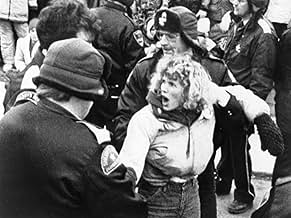
Recounts the 1985-86 strike against the Hormel Foods Corporation in Minnesota after its employees' wages and benefits were cut.Recounts the 1985-86 strike against the Hormel Foods Corporation in Minnesota after its employees' wages and benefits were cut.Recounts the 1985-86 strike against the Hormel Foods Corporation in Minnesota after its employees' wages and benefits were cut.
- Won 1 Oscar
- 12 wins & 3 nominations total



Dan Rather
- Self
- (archive footage)

Ronald Reagan
- Self
- (archive footage)
7.81.1K
1
2
3
4
5
6
7
8
9
10
Featured reviews
First-class documentary on a labor strike by blue-collar workers in 80's America
"American Dream" is a sobering and fascinating documentary depicting the social, economic and emotional ramifications of a labor strike initiated by employees at a Hormel meatpacking plant in Austin, Minnesota. Although the film depicts events that take place in 1986, the content is every bit as relevant today on the subject of the perennial gap that exists between rank-and-file workers and top executives at major U.S. corporations, and the general greed and mercenary attitude that drives said corporations at the expense of hard-working employees. Like "Roger & Me," the acclaimed documentary by Michael Moore that savaged General Motors and the 80's corporate ethos of "profits above everything else," "American Dream" is a priceless portrait of blue-collar work and life in small-town America, the kind of place that people who live in New York, Washington D.C., Los Angeles or any other major metro area will probably never see.
Austin is a town where one company is the largest employer (in this case, the Hormel meat company), on whom generations of workers depend for their livelihood. The film puts a human face on the repercussions that result when Hormel, despite record profits, cuts the salaries of its workers. If the balding, grey-suited, humorless Hormel executives depicted here (wearing huge eyeglasses in the style of Lee Iaccoca) are not the epitome of 80's greed, I don't know what is. They are Gordon Gekko come to life, caring only about their bottom line and how to maximize profit, completely indifferent to the plight of their workers. The Enron debacle shows that, for all their economic might and wealth creation, there is a dark side to corporate America. "American Dream," its ironic title aside, is a journey to that dark side that should be seen by every worker, blue-collar or white-collar. Try to catch it on the Sundance or Independent Film Channel.
Austin is a town where one company is the largest employer (in this case, the Hormel meat company), on whom generations of workers depend for their livelihood. The film puts a human face on the repercussions that result when Hormel, despite record profits, cuts the salaries of its workers. If the balding, grey-suited, humorless Hormel executives depicted here (wearing huge eyeglasses in the style of Lee Iaccoca) are not the epitome of 80's greed, I don't know what is. They are Gordon Gekko come to life, caring only about their bottom line and how to maximize profit, completely indifferent to the plight of their workers. The Enron debacle shows that, for all their economic might and wealth creation, there is a dark side to corporate America. "American Dream," its ironic title aside, is a journey to that dark side that should be seen by every worker, blue-collar or white-collar. Try to catch it on the Sundance or Independent Film Channel.
American labor in the 1980s
It may at times resemble an illustrated Bruce Springsteen protest ballad, but the tragedy in Barbara Kopple's Oscar winning documentary portrait of a Minnesota meat packer's strike is too rich to ignore, not unlike the film 'Roger & Me' but without Michael Moore's self-serving humor. The story begins in the mid 1980s, when the Hormel Company in Austin, Minnesota, tried to lower wages despite showing a healthy profit, leading members of Local P-9 to ignore their parent Union and hire an rhetoric spouting outside agitator (labor 'consultant' Ray Rogers), who transformed their grievance into a noble but ultimately self-defeating grassroots crusade. Kopple herself remains more or less invisible throughout the film, but her sympathy for the renegade P-9 underdogs (and her anti-Reaganomics attitude) is obvious, and she reveals the personal and civic consequences of labor disunion with heartbreaking clarity. The strike itself may not have made headlines outside the Mid West, but the story has some devastating implications for organized labor nationwide, and beyond that supplies enough drama and character to match any Hollywood blockbuster.
Barbara Kopple's bleak follow up to "Harlan County, USA"
Remaining in obscurity, this is another Union strike documentary from director Barbara Kopple, the brilliant filmmaker who brought us the landmark masterpiece documentary "Harlan County, USA", this time chronicling a strike of meat-packers in Austin, Minnesota -- around the time where Reagan put the clamp down on Unions, with his decision to fire the striking air-traffic controllers. Is it as great as "Harlan County, USA"? No. Is it worth seeing? Most definitely, especially for those who were fans of the previously mentioned film, for while it is not on the same level, American Dream is a very fine film in its own right, bringing some more interesting things to the table.
It starts a little slow, and I am not sure how relevant the film remains today, but it slowly becomes more and more absorbing. If Kopple's previous film, 14 years earlier, was a profound documentation of the power of the working class and the success of the Unions and people working together -- then "American Dream" is a documentary about the FAILURE of the Unions. This is a rather bleak film, augmented by the shots of the snow-covered, frozen land of Minnesota winter, giving the film at times a very cold mood. I would say that this film, although obviously taking sides with the strikers, is fairly even-handed. More importantly, however, it shows the major divisions in the Unions in how to achieve their goals and how to avoid the worst outcome, which is everyone losing their jobs and in essence being crushed by the companies.
As in "Harlan County, USA", the film is at its best when dealing with individual dramas and human moments between the people. While Kopple does offer some occasional narration and an added musical score, her presence is often unseen, allowing the people to tell the story, with the drama ultimately being created by the film's editing. We essentially see how the people of the Union, from the top down, are basically torn apart as their cause becomes more and more hopeless. How people of the community have to pick between crossing the picket line and reviving their job, or keeping their promises and integrity to the Union and to the community. We see people in heated arguments, we see people in brawls, best friends against best friends, brothers against brothers. There are some fantastic moments of drama. Like in "Harlan County, USA" where we feel the overwhelming feeling of a people united, standing up against the powers that be, here we see it all crumbling and falling down. For this alone it, it makes "American Dream" very much so worth seeing, as it is works as a very interesting continuation of Kopple's previous film, only 14 years later, and this time the vision of the American worker and the community it creates is only ever more bleak.
It starts a little slow, and I am not sure how relevant the film remains today, but it slowly becomes more and more absorbing. If Kopple's previous film, 14 years earlier, was a profound documentation of the power of the working class and the success of the Unions and people working together -- then "American Dream" is a documentary about the FAILURE of the Unions. This is a rather bleak film, augmented by the shots of the snow-covered, frozen land of Minnesota winter, giving the film at times a very cold mood. I would say that this film, although obviously taking sides with the strikers, is fairly even-handed. More importantly, however, it shows the major divisions in the Unions in how to achieve their goals and how to avoid the worst outcome, which is everyone losing their jobs and in essence being crushed by the companies.
As in "Harlan County, USA", the film is at its best when dealing with individual dramas and human moments between the people. While Kopple does offer some occasional narration and an added musical score, her presence is often unseen, allowing the people to tell the story, with the drama ultimately being created by the film's editing. We essentially see how the people of the Union, from the top down, are basically torn apart as their cause becomes more and more hopeless. How people of the community have to pick between crossing the picket line and reviving their job, or keeping their promises and integrity to the Union and to the community. We see people in heated arguments, we see people in brawls, best friends against best friends, brothers against brothers. There are some fantastic moments of drama. Like in "Harlan County, USA" where we feel the overwhelming feeling of a people united, standing up against the powers that be, here we see it all crumbling and falling down. For this alone it, it makes "American Dream" very much so worth seeing, as it is works as a very interesting continuation of Kopple's previous film, only 14 years later, and this time the vision of the American worker and the community it creates is only ever more bleak.
Great follow-up to "Harlon County, USA"
This Oscar-winning 1991 documentary is captivating, personal, and heartfelt. It is also, however, a bleak and dark film, and the vantage it provides into American capitalism is a haunting one. Much like Kopple's previous documentary: "Harlan County, U.S.A.," "American Dream" is more than an examination of a labor dispute. (Specifically, the 1984 strike of Hormel, Inc. meatpackers in Minnesota). This film asks that we look at the bigger picture, and it was made during a time when the American economy was faltering. Through her frank and journalistic interactions with various stakeholders, Kopple presents a riveting deconstruction of the working class in America, as well as big business and the interworkings of organized labor. Underneath it all, though, this is a human interest story, and watching the strike unfold chronologically - from various viewpoints - is magnetizing. Brother is pitted against brother, union against union, and Kopple's delicate political handling is masterful. Anyone interested in organized labor in America, as well as the sometimes fleeting notion of the American Dream, this is one you SHOULD NOT MISS. This is gripping, psyche-dwelling stuff. (PS: During the film's closing credits, take note of the huge amount of organizations and people who contributed their money, and volunteeered their talent to this project. Perhaps nothing else is greater testament to its importance). ---|--- Was this review helpful?
Reminds me of the good IL' days
I was raised in a beef slaughtering plant family in Northeastern Colorado. My father was a member of UFCW Local 7 for many years as well as my brothers and my mother. Watching this movie brought back memories of how life was during strike time. I will hand it to Kopple, about catching the true realities of a plant family on strike. The scenes of the negotiation teams and plant management were excellent, since I didn't get to see what happens behind closed doors, there were guys that told me, but it really hits home when you see it. The scenes of the slaughter, even though my family worked in beef plant and this was a hog plant, I could hear the noise and smell the smells and oddly enough, it was like being back home. This movie brought some tears to my eyes and some bittersweet memories...please e-mail if you have any questions about what life is like on strike...


Did you know
- How long is American Dream?Powered by Alexa
Details
- Release date
- Countries of origin
- Official site
- Language
- Also known as
- Американская мечта
- Filming locations
- Production companies
- See more company credits at IMDbPro
Box office
- Gross US & Canada
- $269,823
- Opening weekend US & Canada
- $9,291
- Mar 22, 1992
- Gross worldwide
- $269,823
Contribute to this page
Suggest an edit or add missing content