Edison Kinetoscopic Record of a Sneeze
- 1894
- 1m
IMDb RATING
5.4/10
2.4K
YOUR RATING

A man (Thomas Edison's assistant) takes a pinch of snuff and sneezes. This is one of the earliest Thomas Edison films and was the second motion picture to be copyrighted in the United States... Read allA man (Thomas Edison's assistant) takes a pinch of snuff and sneezes. This is one of the earliest Thomas Edison films and was the second motion picture to be copyrighted in the United States.A man (Thomas Edison's assistant) takes a pinch of snuff and sneezes. This is one of the earliest Thomas Edison films and was the second motion picture to be copyrighted in the United States.
- Director
- Stars
- Awards
- 1 win total

5.42.3K
1
2
3
4
5
6
7
8
9
10
Featured reviews
And shortly before he sneezed, . . .
One story has it that, in 1877, railroad tycoon Leland Stanford and a pal were having drinks on Stanford's California stud farm, when one or the other of them wondered aloud whether or not a galloping horse ever had all four hooves off the ground.
Stanford directed his chief researcher to find out. In turn, the researcher hired Eadweard Muybridge (real name: Edward Muggeridge) a landscape photographer of note, to set up 24 cameras with trip wires along a track. A horse ran through the wires, tripping the shutters of the cameras, and the resulting photographs showed that, indeed, all four of the horses' hooves were off the ground for quite a while. When viewed rapidly in sequence, these photos were the precursor to "motion pictures".
What was needed of course, was film that moved through the camera, and several people created cameras and projectors (sometimes the same device) that did this, but all had various shortcomings.
Thomas Edison directed his employee, a Scotsman named W. K. L. Dickson (who would later go on to found Biograph Pictures), to study the inferior machines then in use, and come up with something better. He did, sort of, and he (under Edison's name) came up with the kinetograph (the camera), the kinetoscope (the projector) and the kinetophone (the projected film). None of these technologies were actually new, but Dickson's advances in each device resulted in a system that simply produced better looking presentations.
On April 14, 1894, at a theater on Broadway in New York City, several of Dickson's films were presented together, at an admission fee of 25 cents. The show included short films of a dancing bear, some Vaudeville pratfalls, and, . . . "Fred Ott's Sneeze", which became the very first copyrighted motion picture.
Stanford directed his chief researcher to find out. In turn, the researcher hired Eadweard Muybridge (real name: Edward Muggeridge) a landscape photographer of note, to set up 24 cameras with trip wires along a track. A horse ran through the wires, tripping the shutters of the cameras, and the resulting photographs showed that, indeed, all four of the horses' hooves were off the ground for quite a while. When viewed rapidly in sequence, these photos were the precursor to "motion pictures".
What was needed of course, was film that moved through the camera, and several people created cameras and projectors (sometimes the same device) that did this, but all had various shortcomings.
Thomas Edison directed his employee, a Scotsman named W. K. L. Dickson (who would later go on to found Biograph Pictures), to study the inferior machines then in use, and come up with something better. He did, sort of, and he (under Edison's name) came up with the kinetograph (the camera), the kinetoscope (the projector) and the kinetophone (the projected film). None of these technologies were actually new, but Dickson's advances in each device resulted in a system that simply produced better looking presentations.
On April 14, 1894, at a theater on Broadway in New York City, several of Dickson's films were presented together, at an admission fee of 25 cents. The show included short films of a dancing bear, some Vaudeville pratfalls, and, . . . "Fred Ott's Sneeze", which became the very first copyrighted motion picture.
A Historical Novelty
This ultra-short feature has historical significance in addition to its novelty value. As one of a number of surviving features that the Edison Company made not for exhibiting commercially, but as experiments or for other purposes, it is part of the interesting historical record of the very earliest stages of motion picture development.
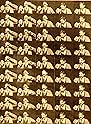
Made just a couple of months before Edison's Kinetoscopes were opened for public viewing, this feature was originally filmed for a magazine article, in which the individual frames could illustrate the way that the Kinetoscope would produce the effect of motion. Naturally, for such a purpose they did not need or want more than a few seconds of film.
One thing that is interesting about the earliest movies is their choice of material. A good many of the Edison Company's movie subjects, whether commercial or experimental, are either offbeat or provocative. This contrasts with, for example, the early Lumière movies, which featured so many aesthetically pleasing and even lyrical sights. This subject is one of the offbeat ones, recording Edison employee Fred Ott in the act of sneezing.
For its original purpose this was a suitable subject, since the action would all be contained within a narrow camera field, and it would last only a very short time. Now, so many years later, it is useful in a different way, as a record of one of the many steps on the way to commercially-made movies. It should also be noted that the footage, very short and simple though it is, succeeds in recording motion clearly and smoothly.
Made just a couple of months before Edison's Kinetoscopes were opened for public viewing, this feature was originally filmed for a magazine article, in which the individual frames could illustrate the way that the Kinetoscope would produce the effect of motion. Naturally, for such a purpose they did not need or want more than a few seconds of film.
One thing that is interesting about the earliest movies is their choice of material. A good many of the Edison Company's movie subjects, whether commercial or experimental, are either offbeat or provocative. This contrasts with, for example, the early Lumière movies, which featured so many aesthetically pleasing and even lyrical sights. This subject is one of the offbeat ones, recording Edison employee Fred Ott in the act of sneezing.
For its original purpose this was a suitable subject, since the action would all be contained within a narrow camera field, and it would last only a very short time. Now, so many years later, it is useful in a different way, as a record of one of the many steps on the way to commercially-made movies. It should also be noted that the footage, very short and simple though it is, succeeds in recording motion clearly and smoothly.
The mystery behind the sneeze
This film might have been the greatest movie ever made but it is full of mysteries. I will quote some of the questions you should ask yourself while watching this movie numbering them.
1 - Is the sneeze real?
How do we know the sneeze is a real sneeze or a wonderful piece of acting by the great Ott? 2 - If the sneeze was real, what caused it?
As we know it, Ott might have been allergic to something waved in front of him by Edison himself. In this case we should feel sorry for Ott and what he went through to create this masterpiece.
3 - What does he say during the sneeze?
We don't know whether he made rude sound or a more polite sound.
4 - Did Edison even bother to say "Bless you"?
Because the sneeze is silent, I wonder did Edison at least say "Bless you" or not? Mysteries that will never have an answer. Bet you didn't think a sneeze hid so many mysteries.
1 - Is the sneeze real?
How do we know the sneeze is a real sneeze or a wonderful piece of acting by the great Ott? 2 - If the sneeze was real, what caused it?
As we know it, Ott might have been allergic to something waved in front of him by Edison himself. In this case we should feel sorry for Ott and what he went through to create this masterpiece.
3 - What does he say during the sneeze?
We don't know whether he made rude sound or a more polite sound.
4 - Did Edison even bother to say "Bless you"?
Because the sneeze is silent, I wonder did Edison at least say "Bless you" or not? Mysteries that will never have an answer. Bet you didn't think a sneeze hid so many mysteries.
Making movie history without really knowing it.
This film was purely made for publicity purposes, as a series of still photographs to accompany an article in Harper's weekly, so it wasn't even supposed to be even ever shown as a motion-picture in the first place. It must have been a real blast for Edison and Co. to make this movie and I'm sure it good a good laugh out of people at the time.
To me the sneeze itself really didn't seemed real, also because of the reason that of course in those days they couldn't shoot for several minutes straight, in order to wait for Fred Ott to finally sneeze. But who knows, maybe that really is how people sneezed over 100 years ago. It was a very highly sophisticated looking sneeze. A real gentleman's sneeze.
The movie isn't looking of the greatest quality but this is of course all due to the fact that this film was never meant to be shown as a motion-picture in the first place.
The film is historically interesting for a couple of reasons 1. It of course is the first ever recorded sneeze, as if that is really historically significant. 2. It was the first ever motion picture to be registered with the U.S. Copyright Office and 3. It's the first film to feature a close-up of a persons face. So without really knowing at the time, and without those intentions I would guess, this movie has become part of film-history.
8/10
http://bobafett1138.blogspot.com/
To me the sneeze itself really didn't seemed real, also because of the reason that of course in those days they couldn't shoot for several minutes straight, in order to wait for Fred Ott to finally sneeze. But who knows, maybe that really is how people sneezed over 100 years ago. It was a very highly sophisticated looking sneeze. A real gentleman's sneeze.
The movie isn't looking of the greatest quality but this is of course all due to the fact that this film was never meant to be shown as a motion-picture in the first place.
The film is historically interesting for a couple of reasons 1. It of course is the first ever recorded sneeze, as if that is really historically significant. 2. It was the first ever motion picture to be registered with the U.S. Copyright Office and 3. It's the first film to feature a close-up of a persons face. So without really knowing at the time, and without those intentions I would guess, this movie has become part of film-history.
8/10
http://bobafett1138.blogspot.com/
The First Snuff Film
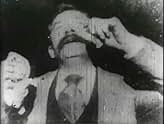
In this film, Fred Ott, an employee of Thomas Edison, takes a pinch of snuff and sneezes. It's not a particularly dramatic sneeze. In fact, if I hadn't known it was a film showing a man sneeze, I wouldn't have been sure what he was doing. It looked more like an artificially vigorous yawn after a nose scratch.
The film was made sometime in the first week of January, 1894, and was projected through Edison's Kinetoscope, a projector that only one viewer could use at a time by looking through a peephole at the top of the device. The film was actually not initially meant to be shown as a film to audiences. Rather, it was shot for publicity reasons, to generate a series of still photographs for a Harper's Weekly article. Edison and company, led by William Kennedy Laurie Dickson, had been gearing up for commercial production of films since late 1891. Fred Ott's Sneeze was an important promotional idea which was to help with this.
The film is significant for featuring the first medium close-up shot of a performer, now one of the most common types of shots used in film and television.
The film was made sometime in the first week of January, 1894, and was projected through Edison's Kinetoscope, a projector that only one viewer could use at a time by looking through a peephole at the top of the device. The film was actually not initially meant to be shown as a film to audiences. Rather, it was shot for publicity reasons, to generate a series of still photographs for a Harper's Weekly article. Edison and company, led by William Kennedy Laurie Dickson, had been gearing up for commercial production of films since late 1891. Fred Ott's Sneeze was an important promotional idea which was to help with this.
The film is significant for featuring the first medium close-up shot of a performer, now one of the most common types of shots used in film and television.


Did you know
- TriviaFirst motion picture with a close-up.
- Alternate versionsAn additional 36 frames, almost half to the copyrighted paper print we see today, had been published in Harper's Weekly the year they were taken. This means the complete film, not the surviving copyrighted paper print, is nearly twice the length of the original copyrighted version. So surviving copies of the Harpers Weekly magazine technically contain an alternate version of "The Sneeze"
- ConnectionsEdited into Women Who Made the Movies (1992)
Details
- Release date
- Country of origin
- Language
- Also known as
- Edison Kinetoscopic Record of a Sneeze, January 7, 1894
- Filming locations
- Production company
- See more company credits at IMDbPro
- Runtime
- 1m
- Color
- Sound mix
- Aspect ratio
- 1.33 : 1
Contribute to this page
Suggest an edit or add missing content