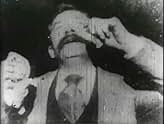
Edison Kinetoscopic Record of a Sneeze
- 1894
- 1m
IMDb RATING
5.4/10
2.4K
YOUR RATING
A man (Thomas Edison's assistant) takes a pinch of snuff and sneezes. This is one of the earliest Thomas Edison films and was the second motion picture to be copyrighted in the United States... Read allA man (Thomas Edison's assistant) takes a pinch of snuff and sneezes. This is one of the earliest Thomas Edison films and was the second motion picture to be copyrighted in the United States.A man (Thomas Edison's assistant) takes a pinch of snuff and sneezes. This is one of the earliest Thomas Edison films and was the second motion picture to be copyrighted in the United States.
- Director
- Stars
- Awards
- 1 win total
5.42.3K
1
2
3
4
5
6
7
8
9
10
Featured reviews
And shortly before he sneezed, . . .
One story has it that, in 1877, railroad tycoon Leland Stanford and a pal were having drinks on Stanford's California stud farm, when one or the other of them wondered aloud whether or not a galloping horse ever had all four hooves off the ground.
Stanford directed his chief researcher to find out. In turn, the researcher hired Eadweard Muybridge (real name: Edward Muggeridge) a landscape photographer of note, to set up 24 cameras with trip wires along a track. A horse ran through the wires, tripping the shutters of the cameras, and the resulting photographs showed that, indeed, all four of the horses' hooves were off the ground for quite a while. When viewed rapidly in sequence, these photos were the precursor to "motion pictures".
What was needed of course, was film that moved through the camera, and several people created cameras and projectors (sometimes the same device) that did this, but all had various shortcomings.
Thomas Edison directed his employee, a Scotsman named W. K. L. Dickson (who would later go on to found Biograph Pictures), to study the inferior machines then in use, and come up with something better. He did, sort of, and he (under Edison's name) came up with the kinetograph (the camera), the kinetoscope (the projector) and the kinetophone (the projected film). None of these technologies were actually new, but Dickson's advances in each device resulted in a system that simply produced better looking presentations.
On April 14, 1894, at a theater on Broadway in New York City, several of Dickson's films were presented together, at an admission fee of 25 cents. The show included short films of a dancing bear, some Vaudeville pratfalls, and, . . . "Fred Ott's Sneeze", which became the very first copyrighted motion picture.
Stanford directed his chief researcher to find out. In turn, the researcher hired Eadweard Muybridge (real name: Edward Muggeridge) a landscape photographer of note, to set up 24 cameras with trip wires along a track. A horse ran through the wires, tripping the shutters of the cameras, and the resulting photographs showed that, indeed, all four of the horses' hooves were off the ground for quite a while. When viewed rapidly in sequence, these photos were the precursor to "motion pictures".
What was needed of course, was film that moved through the camera, and several people created cameras and projectors (sometimes the same device) that did this, but all had various shortcomings.
Thomas Edison directed his employee, a Scotsman named W. K. L. Dickson (who would later go on to found Biograph Pictures), to study the inferior machines then in use, and come up with something better. He did, sort of, and he (under Edison's name) came up with the kinetograph (the camera), the kinetoscope (the projector) and the kinetophone (the projected film). None of these technologies were actually new, but Dickson's advances in each device resulted in a system that simply produced better looking presentations.
On April 14, 1894, at a theater on Broadway in New York City, several of Dickson's films were presented together, at an admission fee of 25 cents. The show included short films of a dancing bear, some Vaudeville pratfalls, and, . . . "Fred Ott's Sneeze", which became the very first copyrighted motion picture.
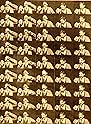
Greatest Sneeze
Edison Kinetoscopic Record of a Sneeze (1894)
**** (out of 4)
If entertainment is what you're seeking then don't take my four-star review meaning a great movie. The word entertainment might not fit too well with these early films but on a historical level this here is one of the all time greats. Running just five seconds we see a man sneeze. Yes, that's all there is to it. This is famous for many reasons including it being one of the earliest films made by Edison. According to records it was filmed on January 7th, 1894 and became the first movie to have a copyright two days later.
**** (out of 4)
If entertainment is what you're seeking then don't take my four-star review meaning a great movie. The word entertainment might not fit too well with these early films but on a historical level this here is one of the all time greats. Running just five seconds we see a man sneeze. Yes, that's all there is to it. This is famous for many reasons including it being one of the earliest films made by Edison. According to records it was filmed on January 7th, 1894 and became the first movie to have a copyright two days later.
The First Snuff Film
In this film, Fred Ott, an employee of Thomas Edison, takes a pinch of snuff and sneezes. It's not a particularly dramatic sneeze. In fact, if I hadn't known it was a film showing a man sneeze, I wouldn't have been sure what he was doing. It looked more like an artificially vigorous yawn after a nose scratch.
The film was made sometime in the first week of January, 1894, and was projected through Edison's Kinetoscope, a projector that only one viewer could use at a time by looking through a peephole at the top of the device. The film was actually not initially meant to be shown as a film to audiences. Rather, it was shot for publicity reasons, to generate a series of still photographs for a Harper's Weekly article. Edison and company, led by William Kennedy Laurie Dickson, had been gearing up for commercial production of films since late 1891. Fred Ott's Sneeze was an important promotional idea which was to help with this.
The film is significant for featuring the first medium close-up shot of a performer, now one of the most common types of shots used in film and television.
The film was made sometime in the first week of January, 1894, and was projected through Edison's Kinetoscope, a projector that only one viewer could use at a time by looking through a peephole at the top of the device. The film was actually not initially meant to be shown as a film to audiences. Rather, it was shot for publicity reasons, to generate a series of still photographs for a Harper's Weekly article. Edison and company, led by William Kennedy Laurie Dickson, had been gearing up for commercial production of films since late 1891. Fred Ott's Sneeze was an important promotional idea which was to help with this.
The film is significant for featuring the first medium close-up shot of a performer, now one of the most common types of shots used in film and television.
a tongue-in-cheek reaction to a short
I have seen this film numerous times in documentaries about the history of the silent film. I have always loved the history of the silent film and this is undoubtedly the seed from which some of the great comedies of our time have been based. I feel sneezing (nowadays) has become an overdone gimmick in comedies and this film started it even though I laughed at it. My final word on this film is this, IT BLEW ME AWAY!!! (HA HA)
This is where it begins.
This is it. This is ground zero. This is what led to Gone With The Wind, The Godfather, Star Wars and Titanic. You could arguably call it the first successful action movie. No idea what the gross was or what the overseas receipts were but certainly many a coin was spent by early film patrons to witness the most basic of human acts... the instinctual expulsion of invading micro-particles for the maintenance of Fred Ott's health. But, did Fred Ott fake it? Was he truly the first stunt man? No matter, its brevity and succinctness are exemplary to this day. It is better than some 3 hour epics in today's multiplexes.
Did you know
- TriviaFirst motion picture with a close-up.
- Alternate versionsAn additional 36 frames, almost half to the copyrighted paper print we see today, had been published in Harper's Weekly the year they were taken. This means the complete film, not the surviving copyrighted paper print, is nearly twice the length of the original copyrighted version. So surviving copies of the Harpers Weekly magazine technically contain an alternate version of "The Sneeze"
- ConnectionsEdited into Women Who Made the Movies (1992)
Details
- Release date
- Country of origin
- Language
- Also known as
- Edison Kinetoscopic Record of a Sneeze, January 7, 1894
- Filming locations
- Production company
- See more company credits at IMDbPro
- Runtime
- 1m
- Color
- Sound mix
- Aspect ratio
- 1.33 : 1
Contribute to this page
Suggest an edit or add missing content