IMDb RATING
6.8/10
8.2K
YOUR RATING

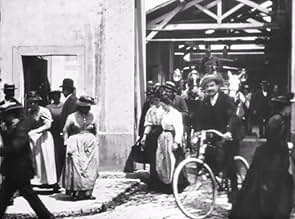
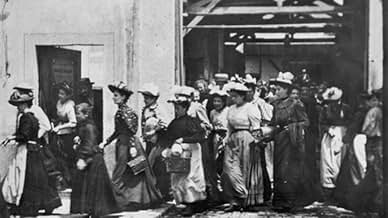
Workers leaving the Lumière factory for lunch in Lyon, France in 1895; a place of great photographic innovation and one of the birth places of cinema.Workers leaving the Lumière factory for lunch in Lyon, France in 1895; a place of great photographic innovation and one of the birth places of cinema.Workers leaving the Lumière factory for lunch in Lyon, France in 1895; a place of great photographic innovation and one of the birth places of cinema.
- Director




6.88.1K
1
2
3
4
5
6
7
8
9
10
Featured reviews
A window into another time.
The appeal of ancient films like this one is that you get to see an actual moving image of life over 100 years ago. Here are a lot of people leaving a factory, all of them dead by now and none of them even remotely aware of the magnitude of the invention that they are walking before. I was shocked to read one reviewer call this film as boring as home videos today, and at least one other mistakenly identified it as the first film ever made (it was the first film made at the rate of 16 frames per second, rather than the then-normal 46 frames per second).
Sure, all you see is a lot of people filing out of a building and passing before the cinematograph on their way home from work, but this is a curiosity piece for dozens of reasons, not the least of which is that it was the first film made by the Lumiére brothers, who probably had a stronger impact on the development of the cinema than any other individual or group of individuals in history.
Sure, all you see is a lot of people filing out of a building and passing before the cinematograph on their way home from work, but this is a curiosity piece for dozens of reasons, not the least of which is that it was the first film made by the Lumiére brothers, who probably had a stronger impact on the development of the cinema than any other individual or group of individuals in history.
shows Lumieres' curiosity about world around them
This one-minute film is arguably the first movie ever made. Other inventors had previously filmed actions - like Edison's motion photography of a sneeze - but the Lumiere brothers developed equipment that tremendously advanced the medium. At the time, of course, their `cinematograph' must have bewildered their peers, including their subjects. In this first instance, the brothers record employees leaving their factory, some of whom understandably struggle to hide their awareness of the camera. The Lumieres attempt to make the film more entertaining by introducing animals and a bicycle, but `La Sortie Des Usines Lumiere' doesn't nearly match the ingenuity of their later films. The most interesting aspect of this short film is the brothers' selection of a familiar working class ritual as their subject. Their choice is the initial evidence of their curiosity about all of the world's people, a quality that makes viewing their experiments immensely rewarding and fascinating today.
Rating: 8
Rating: 8
Lumière
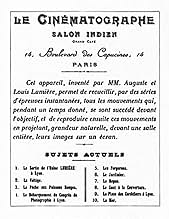
On the 28th of December, 1895, in the Grand Café in Paris, film history was writing itself while Louis Lumière showed his short films, all single shots, to a paying audience. 'La Sortie des Usines Lumière' was the first film to be played and I wish I was there, not only to see the film, but also the reactions of the audience.
We start with closed doors of the Lumière factory. Apparently, since the image seems a photograph, people thought they were just going to see a slide show, not something they were hoping for. But then the doors open and people are streaming out, heading home. First a lot of women, then some men, and one man on a bike with a big dog. When they are all out the doors close again.
Whether this is the first film or not (some say 'L'Arrivée d'un Train à la Ciotat' was the first film Lumière recorded), it is an impressive piece of early cinema. Being bored by this is close to impossible for multiple reasons. One simple reason: it is only fifty seconds long. But also for people who normally only like the special effect films there must be something interesting here; you don't get to see historical things like this every day.
We start with closed doors of the Lumière factory. Apparently, since the image seems a photograph, people thought they were just going to see a slide show, not something they were hoping for. But then the doors open and people are streaming out, heading home. First a lot of women, then some men, and one man on a bike with a big dog. When they are all out the doors close again.
Whether this is the first film or not (some say 'L'Arrivée d'un Train à la Ciotat' was the first film Lumière recorded), it is an impressive piece of early cinema. Being bored by this is close to impossible for multiple reasons. One simple reason: it is only fifty seconds long. But also for people who normally only like the special effect films there must be something interesting here; you don't get to see historical things like this every day.
Firsts: Actuality of Cinema
This 50-or-so-seconds-long film has held a special place in movie history for being the first of ten 50-or-so-seconds-long films to be shown to a paying audience at the Grand Café in Paris on 28 December 1895. This wasn't the first commercial exhibition of cinema; the Skladanosky brothers, for example, had accomplished the feat with their Bioscope nearly two months prior. Still earlier, Charles Francis Jenkins and Thomas Armat projected films to a paying audience as early as September 1895. There were also the Lathams, whose experiments in projection were aided by William K.L. Dickson, who was still employed by Thomas Edison at the time. Some historians have made even earlier claims for others. If animated pictures on discs or other non-celluloid materials are included, another host of precedents can be added. Nevertheless, this showing by the Lumière brothers changed the world. It and subsequent presentations were exceedingly popular, and the projection of the films and the films themselves displayed technological and aesthetic advancement over previous equipment and pictures.
We now know that the Lumière brothers made at least three versions of "Workers Leaving the Lumière Factory", because these exist today. Until recently, however, it was generally believed that there was only one version. In the 1940s, Louis Lumière claimed to have made it once; he also misremembered the approximate date he filmed it. He likely made the three films separately between 19 May 1895 and August 1986. The brothers projected the first version (the one-horse version) at their first private screening on 22 May 1895. The second version (two horses) is the one that appeared on the screen on 28 December 1895. The final version (with no horses) was long believed (still confused to be by some) to be the first film and is still more widely distributed than the others. (For all three versions with the best quality transfer available, see "The Lumière Brothers' First Films" (1996).)
The light weight of the Lumière Cinématographe, as opposed to the bulky and generally immobile Kinetograph, allowed the Lumière brothers to create a new genre with their actuality films (a genre that, at least for a while, was probably more popular than the earliest fictional story films). Moreover, other advancements made for crisper and steadier films (although contemporaries complained of excessive flickering). The Lumière brothers would consequently be the firsts to largely decide the framing for their subjects. In this one of workers leaving the factory, the framing is essentially a perpendicular long take of the action. It's not quite as interesting as, say, the diagonal framing in "L'Arrivée d'un train" (1896), but the action here doesn't call for it. The camera is also stationary, but one of the Lumière filmmakers, Alexandre Promio, would change that by the following year, such as in "Panorama du Grand Canal vu d'un bateau".
"Workers Leaving the Lumière Factory" is the first so-called "actuality" film, a proto-documentary genre of early cinema. It is simply a film, as its title implies, of workers exiting the Lumière photographic factory in Lyons to passing out of frame to either side. Its major spectacle is that there's movement--projected on a screen. These actuality films were very popular, for the natural and realistic settings, the variety of subjects that were available, as well as the superior picture quality of the Cinématographe films. This prompted the Edison Company to create their own actuality films, in addition to improving their camera and, eventually, moving to the projection of cinema. Other early filmmakers, like Robert W. Paul and Georges Méliès, would also begin making films within the actuality genre. Yet, today, it seems apparent that this film and many other so-called actualités are directed--events have been manipulated. The camera is not an invisible recorder; it influences. "L'Arrivée d'un train" and some other actuality films do appear to be undirected, though; some even achieve the metaphoric invisibility of the camera (Louis Le Prince's "Traffic Crossing Leeds Bridge" (1888) appears to accomplish it).
Reportedly (including by Méliès), when this film was projected to audiences, the projectionist would temporarily freeze the first frame and then amaze audiences by running the motion picture. Méliès later said of this: "I must admit we were all stupefied as you can understand. I immediately said, 'That's for me. What an extraordinary thing.'"
On an interesting side note, the first projectionist of these showings was Charles Moisson, who also introduced the Lumière's to film, helped them invent the Cinématographe and made some of the company's earlier films. With Francis Doublier (who claims to appear in "Leaving the Lumière Factory"), they photographed the coronation of Tsar Nikolas II, which ended in tragedy when a stand gave way and thousands of people were trampled to death in an ensuing panic. Russian authorities confiscated the film, and it was never seen again. On the issue of actuality films, this was a dramatic example of the camera as a relative non-participant of events.
Anyhow, this film, "Leaving the Lumière Factory", is an important landmark in film history, for not only introducing many to cinema, but also for introducing, through their actuality films, a new way of seeing. Within and without the frame, the gates were opened.
(Note: This is the fifth in a series of my comments on 10 "firsts" in film history. The other films covered are Traffic Crossing Leeds Bridge (1888), Blacksmith Scene (1893), Annabelle Serpentine Dance (1895), The Execution of Mary, Queen of Scots (1895), L'Arroseur arose (1895), L'Arrivée d'un train à La Ciotat (1896), Panorama du Grand Canal vu d'un bateau (1896), Return of Lifeboat (1897) and Panorama of Eiffel Tower (1900).)
We now know that the Lumière brothers made at least three versions of "Workers Leaving the Lumière Factory", because these exist today. Until recently, however, it was generally believed that there was only one version. In the 1940s, Louis Lumière claimed to have made it once; he also misremembered the approximate date he filmed it. He likely made the three films separately between 19 May 1895 and August 1986. The brothers projected the first version (the one-horse version) at their first private screening on 22 May 1895. The second version (two horses) is the one that appeared on the screen on 28 December 1895. The final version (with no horses) was long believed (still confused to be by some) to be the first film and is still more widely distributed than the others. (For all three versions with the best quality transfer available, see "The Lumière Brothers' First Films" (1996).)
The light weight of the Lumière Cinématographe, as opposed to the bulky and generally immobile Kinetograph, allowed the Lumière brothers to create a new genre with their actuality films (a genre that, at least for a while, was probably more popular than the earliest fictional story films). Moreover, other advancements made for crisper and steadier films (although contemporaries complained of excessive flickering). The Lumière brothers would consequently be the firsts to largely decide the framing for their subjects. In this one of workers leaving the factory, the framing is essentially a perpendicular long take of the action. It's not quite as interesting as, say, the diagonal framing in "L'Arrivée d'un train" (1896), but the action here doesn't call for it. The camera is also stationary, but one of the Lumière filmmakers, Alexandre Promio, would change that by the following year, such as in "Panorama du Grand Canal vu d'un bateau".
"Workers Leaving the Lumière Factory" is the first so-called "actuality" film, a proto-documentary genre of early cinema. It is simply a film, as its title implies, of workers exiting the Lumière photographic factory in Lyons to passing out of frame to either side. Its major spectacle is that there's movement--projected on a screen. These actuality films were very popular, for the natural and realistic settings, the variety of subjects that were available, as well as the superior picture quality of the Cinématographe films. This prompted the Edison Company to create their own actuality films, in addition to improving their camera and, eventually, moving to the projection of cinema. Other early filmmakers, like Robert W. Paul and Georges Méliès, would also begin making films within the actuality genre. Yet, today, it seems apparent that this film and many other so-called actualités are directed--events have been manipulated. The camera is not an invisible recorder; it influences. "L'Arrivée d'un train" and some other actuality films do appear to be undirected, though; some even achieve the metaphoric invisibility of the camera (Louis Le Prince's "Traffic Crossing Leeds Bridge" (1888) appears to accomplish it).
Reportedly (including by Méliès), when this film was projected to audiences, the projectionist would temporarily freeze the first frame and then amaze audiences by running the motion picture. Méliès later said of this: "I must admit we were all stupefied as you can understand. I immediately said, 'That's for me. What an extraordinary thing.'"
On an interesting side note, the first projectionist of these showings was Charles Moisson, who also introduced the Lumière's to film, helped them invent the Cinématographe and made some of the company's earlier films. With Francis Doublier (who claims to appear in "Leaving the Lumière Factory"), they photographed the coronation of Tsar Nikolas II, which ended in tragedy when a stand gave way and thousands of people were trampled to death in an ensuing panic. Russian authorities confiscated the film, and it was never seen again. On the issue of actuality films, this was a dramatic example of the camera as a relative non-participant of events.
Anyhow, this film, "Leaving the Lumière Factory", is an important landmark in film history, for not only introducing many to cinema, but also for introducing, through their actuality films, a new way of seeing. Within and without the frame, the gates were opened.
(Note: This is the fifth in a series of my comments on 10 "firsts" in film history. The other films covered are Traffic Crossing Leeds Bridge (1888), Blacksmith Scene (1893), Annabelle Serpentine Dance (1895), The Execution of Mary, Queen of Scots (1895), L'Arroseur arose (1895), L'Arrivée d'un train à La Ciotat (1896), Panorama du Grand Canal vu d'un bateau (1896), Return of Lifeboat (1897) and Panorama of Eiffel Tower (1900).)
And so it begins.......
Even as the first film to come to cinema, it's still better than a lot of the films that come out today. The origin story of this film is completely fascinating. An unknowing audience attend the cinema assuming it will be a series of still images, until they get hit with the greatest twist of all time - a moving picture. The 33/100 who went to see this film are some of the luckiest people of all time, just imagine their shock.......


Did you know
- TriviaIt was the first film ever to be projected to a paying audience.
- Alternate versionsThree versions of the film exist. There are a number of differences between them, such as the clothing styles worn by the workers change to reflect the different seasons the versions were shot in, and the horse-drawn carriage that appears in the first version is pulled by one horse, two horses in the second version, and no horse and no carriage in the third version.
- ConnectionsEdited into The Lumière Brothers' First Films (1996)
Details
- Release date
- Country of origin
- Official sites
- Language
- Also known as
- Employees Leaving the Lumière Factory
- Filming locations
- Production company
- See more company credits at IMDbPro
- Runtime
- 1m
- Color
- Sound mix
- Aspect ratio
- 1.33 : 1
Contribute to this page
Suggest an edit or add missing content