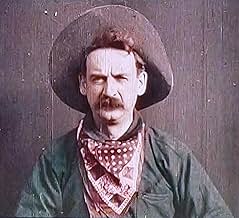
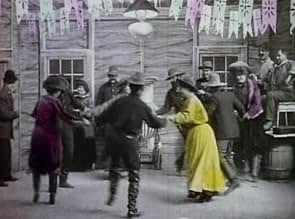
A group of bandits stage a brazen train hold-up, only to find a determined posse hot on their heels.A group of bandits stage a brazen train hold-up, only to find a determined posse hot on their heels.A group of bandits stage a brazen train hold-up, only to find a determined posse hot on their heels.
- Director
- Writers
- Stars
- Awards
- 2 wins total
Gilbert M. 'Broncho Billy' Anderson
- Bandit
- (uncredited)
- …
A.C. Abadie
- Sheriff
- (uncredited)
Justus D. Barnes
- Bandit Who Fires at Camera
- (uncredited)
Walter Cameron
- Sheriff
- (uncredited)
John Manus Dougherty Sr.
- Fourth Bandit
- (uncredited)
Donald Gallaher
- Little Boy
- (uncredited)
Shadrack E. Graham
- Child
- (uncredited)
Frank Hanaway
- Bandit
- (uncredited)
Adam Charles Hayman
- Bandit
- (uncredited)
Robert Milasch
- Trainman
- (uncredited)
- …
Marie Murray
- Dance-Hall Dancer
- (uncredited)
Frederick T. Scott
- Man
- (uncredited)
Mary Snow
- Little Girl
- (uncredited)
- Director
- Writers
- All cast & crew
- Production, box office & more at IMDbPro
7.222.4K
1
2
3
4
5
6
7
8
9
10
Featured reviews
Pioneer work possible birthplace of Western
Arguably the first motion picture to employ the milieu of what would quickly become known as the Western genre, Edwin S. Porter's The Great Train Robbery was a smashing success with audiences (dozens of film history texts report with glee how viewers shrieked with fear and delight when a tightly-framed gunslinger pointed and fired directly at the camera) and made remarkable strides toward the establishment of longer, more narratively developed films. Porter's cutting was also among the most sophisticated to date, as multiple locations and events were suffused with a previously unseen urgency. Based on actual events, The Great Train Robbery ignited the imaginations of the scores who saw it -- making the movie one of the earliest examples of sensationalized, fictionalized screen adaptations taken from historical precedent.
this film sets the stage for every westren which followed
The wild west. Tales of daring do on horse back. Such images conjured up by the term "wild west" conjure images of cowboys making peace with indians, train robberys, buffalo hunts and the indian wars. This term also conjures up law and order which, in that era a live by the sword and die by it venture. THE GREAT TRAIN ROBBERY captures the brutal lawless stories of the old west and translates it to film. Literally the film that started it all, this film proved story telling had moved from cave wall drawings, to pen and paper, and now celluloid. A great film for the era in which it was made and today as a historical heirloom. The GREAT TRAIN ROBBERY helped permanently capture the imagination of audiences everywhere.
Formation of Cinematic Narrative
I enjoy this film even though it is very old and compared to today's cinema, very limited in its attempt at realism. But today's cinema would not be what it is without the original innovation of cinematic devices by Edwin S. Porter, one of films first masters. His progress in narrative construction and his work in special effects techniques astonished audiences like never before. His work was limited specifically because he used the static camera affecting the impact of each of his shots. His unique and influential editing style allowed the audience to take part in the action of the film, not sitting idly watching it. The movie is 12 minutes long and is considered the first narrative film in history. The most exciting scene is when the gangsters raid the train station and rob the train. The train is a really well done mat-shot of a train pulling into the station, frightening the audience in their seats. I personally am most excited by the final closing scene of the gangster shooting his gun, aiming it directly at the audience. This audience point of view shot makes me feel like the narrative of the train robbery enticed me to cheer for the Sheriff, and the angry gangster shoots at me because I was cheering for his enemy. This film and this sequence of the gangster shooting the audience was solidified in cinematic history when Martin Scorsese pays homage in 'Goodfellas', with Joe Pesci gun barrage and sinister look.
A start that filmmakers should be proud of...
As an early film, this film is quite spectacular. Ok, so it's only twelve minutes, but that is twelve minutes of pure action and entertainment. When this film was made, things like special effects were hardly thought of, but notice how well the transgression from person to doll on the "throw the dead guy off the train" goes, and how nicely they have "moved the train" without moving the camera when they leave the locomotive behind.
This movie is probably the best preview to how modern westerns became, at least if you take the best twelve minutes of many westerns, the twelve where people get shot, beat up and alerted. The movie follows it's storyline perfectly, and is easy to grasp the continuance throughout the film, in all, quite a masterpiece that comes highly recommended.
Christian Lockert
This movie is probably the best preview to how modern westerns became, at least if you take the best twelve minutes of many westerns, the twelve where people get shot, beat up and alerted. The movie follows it's storyline perfectly, and is easy to grasp the continuance throughout the film, in all, quite a masterpiece that comes highly recommended.
Christian Lockert
Film Editing Is Born
It's hard to assign "The Great Train Robbery" a rating, as it shouldn't really be watched as a film the way we watch films now. But from a historical perspective, it's fascinating, and is an excellent example of the use of film editing, an art form then in its infancy and now an award category recognized every year at the Oscars.
Before this movie, it wasn't customary to tell multiple story lines simultaneously, but here, various activities going on in different locations are intercut to create suspense. D.W. Griffith would use this technique much more ambitiously (and combine it with many other developing film techniques) in "The Birth of a Nation" over ten years later, but credit must be given to "Train Robbery" for blazing a trail.
Also, this is the movie famous for the shot of an outlaw shooting a gun directly at the camera. I can't imagine what effect this had on audiences at the time, who were probably diving behind their chairs for cover.
Grade: A
Before this movie, it wasn't customary to tell multiple story lines simultaneously, but here, various activities going on in different locations are intercut to create suspense. D.W. Griffith would use this technique much more ambitiously (and combine it with many other developing film techniques) in "The Birth of a Nation" over ten years later, but credit must be given to "Train Robbery" for blazing a trail.
Also, this is the movie famous for the shot of an outlaw shooting a gun directly at the camera. I can't imagine what effect this had on audiences at the time, who were probably diving behind their chairs for cover.
Grade: A
Did you know
- TriviaThe original camera negative still exists in excellent condition. The Library of Congress, who holds it, can still make new prints.
- GoofsWhen the telegraph operator revives with his hands tied behind his back, he uses one of his hands to help him stand up and then quickly puts the hand behind his back again.
- Alternate versionsThere is an Italian edition of this film on DVD, distributed by DNA srl, "CENTRO! (Straight Shooting, 1917) + IL CAVALLO D'ACCIAIO (The Iron Horse, 1924) + LA GRANDE RAPINA AL TRENO (The Great Train Robbery, 1903)" (3 Films on a single DVD), re-edited with the contribution of film historian Riccardo Cusin. This version is also available for streaming on some platforms.
- ConnectionsEdited into Hollywood: The Dream Factory (1972)
Details
Box office
- Budget
- $150 (estimated)
- Runtime
- 11m
- Sound mix
- Aspect ratio
- 1.33 : 1
Contribute to this page
Suggest an edit or add missing content