IMDb RATING
5.6/10
1.8K
YOUR RATING

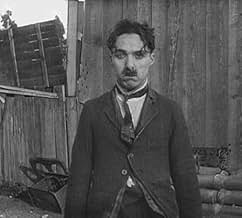
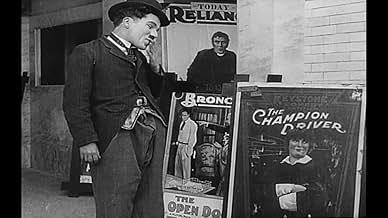
Charlie attempts to meet his favorite movie actress at the Keystone Studio, but does not win friends there.Charlie attempts to meet his favorite movie actress at the Keystone Studio, but does not win friends there.Charlie attempts to meet his favorite movie actress at the Keystone Studio, but does not win friends there.
- Director
- Writers
- Stars


Dan Albert
- Audience Member
- (uncredited)
Hampton Del Ruth
- Lead Actor
- (uncredited)

Minta Durfee
- Self
- (uncredited)
- …
Billy Gilbert
- Theatre Usher
- (uncredited)
William Hauber
- Audience Member
- (uncredited)
Bert Hunn
- Audience Member
- (uncredited)

George Jeske
- Prop Boy in White Shirt
- (uncredited)

Edgar Kennedy
- Director
- (uncredited)
Sadie Lampe
- Audience Member
- (uncredited)

Henry Lehrman
- Self
- (uncredited)

Hank Mann
- Prop Boy in Overalls
- (uncredited)

Harry McCoy
- Fireman
- (uncredited)
- …

George Nichols
- Older Actor on Screen
- (uncredited)
- Director
- Writers
- All cast & crew
- Production, box office & more at IMDbPro
5.61.8K
1
2
3
4
5
6
7
8
9
10
Featured reviews
Interesting behind-the-scenes look at filmmaking
Shot very early in Chaplin's film career, A Film Johnny (I have no idea what the title means) is a short, but fascinating look at how movies were made in the earliest days of Hollywood.
Unfortunately, the DVD version I saw was a 1930s reissue edit that, for some reason, omits the prologue in which Chaplin decides to visit a movie studio after falling for a girl on the screen. But what remains is a fast-paced, sometimes confusing montage of scenes in which the Little Tramp (fast developing into the character the world would come to love) basically causes havoc at the real-life Keystone Studios.
Reportedly, Mack Sennett and Fatty Arbuckle and even Mabel Normand appear in the film. I think I spotted Sennett, but I have no idea what role Arbuckle played, while Normand was nowhere to be seen (though she might be the girl seen laughing at Charlie at the end). But as I saw a shortened version, it's possible their scenes were simply cut out.
What does survive is a very funny (and innovative) gag in which Chaplin lights a cigarette by firing a gun loaded with blanks at it. That, plus a fleeting glimpse of the Keystone Studios mere weeks after Chaplin began his movie career, makes this worthwhile. Chaplin's later film, Behind the Screen, another movie lot comedy, is a much better film, however.
Unfortunately, the DVD version I saw was a 1930s reissue edit that, for some reason, omits the prologue in which Chaplin decides to visit a movie studio after falling for a girl on the screen. But what remains is a fast-paced, sometimes confusing montage of scenes in which the Little Tramp (fast developing into the character the world would come to love) basically causes havoc at the real-life Keystone Studios.
Reportedly, Mack Sennett and Fatty Arbuckle and even Mabel Normand appear in the film. I think I spotted Sennett, but I have no idea what role Arbuckle played, while Normand was nowhere to be seen (though she might be the girl seen laughing at Charlie at the end). But as I saw a shortened version, it's possible their scenes were simply cut out.
What does survive is a very funny (and innovative) gag in which Chaplin lights a cigarette by firing a gun loaded with blanks at it. That, plus a fleeting glimpse of the Keystone Studios mere weeks after Chaplin began his movie career, makes this worthwhile. Chaplin's later film, Behind the Screen, another movie lot comedy, is a much better film, however.
Behind the Scenes
Film Johnnie, A (1914)
** (out of 4)
Charles Chaplin plays a film buff who goes to Keystone Studios to meet his favorite stars, which he does but at the same time he doesn't find himself welcomed after a while. Roscoe 'Fatty' Arbuckle, Virginia Kirtley, Mabel Normand and Ford Sterling are among the stars seen at the studio and while this it's fun to see all these stars together I wouldn't go further by calling this a good movie. Chaplin is quite animated here as he finds himself getting into one mess after another, which eventually leads to his setting a set on fire. Some historians seem to think that this movie was a way for the studio to display their feelings towards Chaplin. It was well known that he was causing trouble with his attitude even this early in his career so historians believe the annoying character here is the studio showing him as he was. I'm not sure how true this is but it's an interesting theory.
** (out of 4)
Charles Chaplin plays a film buff who goes to Keystone Studios to meet his favorite stars, which he does but at the same time he doesn't find himself welcomed after a while. Roscoe 'Fatty' Arbuckle, Virginia Kirtley, Mabel Normand and Ford Sterling are among the stars seen at the studio and while this it's fun to see all these stars together I wouldn't go further by calling this a good movie. Chaplin is quite animated here as he finds himself getting into one mess after another, which eventually leads to his setting a set on fire. Some historians seem to think that this movie was a way for the studio to display their feelings towards Chaplin. It was well known that he was causing trouble with his attitude even this early in his career so historians believe the annoying character here is the studio showing him as he was. I'm not sure how true this is but it's an interesting theory.
Fresh and laughable
Edgar English's work in this picture will keep it amusing. There are many good situations, fresh and laughable, and the offering ought to be welcome everywhere as a Tightener of the program. Camera work helps a lot. - The Moving Picture World, March 7, 1914
Charlie visits the Keystone lot in this scrappy little comedy
According to some of the central figures involved, including Charlie Chaplin and producer Mack Sennett, Chaplin's first weeks making movies at the Keystone Studio were not pleasant ones. No one knew what to make of this temperamental young Englishman, while Chaplin, for his part, was bewildered by film technique and didn't get along with his colleagues. Though it may seem hard to believe now, there were serious doubts all around that Chaplin could make good in the movies.
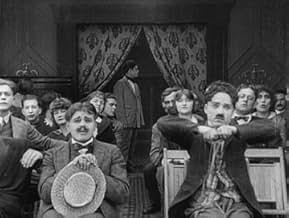
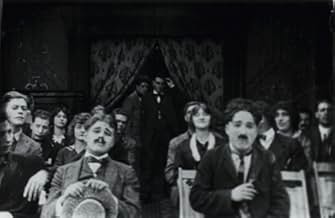
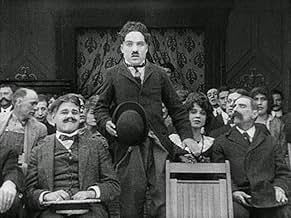
Viewed in this light Chaplin's fifth comedy, A Film Johnnie, a fairly amusing short in its own right, takes on some additional historical weight as something of an inside joke, an indirect comment on Chaplin's actual off-screen status at his studio. In the opening sequence a scruffy-looking Charlie goes into a cinema and sees a Keystone comedy featuring an actress he admires. When her co-star, an older man, gets fresh with her Charlie becomes so upset and agitated he is ejected from the theater. He heads straight to the Keystone Studio, seeking to get in. (Thus the title: he's like the "stage door johnnies" who would hang around theaters, hoping to meet the performers and/or get a job with the acting company.) He watches as prominent performers such as Roscoe Arbuckle and Ford Sterling, wearing their street garb, step out of cars and casually enter the studio, smiling and chatting. They're members of the In Crowd, but he is not. Approaching a bemused Arbuckle, he requests and receives a hand-out. He tries this again with Sterling, but -- in a reflection of their alleged off-camera friction? -- receives nothing; Sterling even takes the coin Arbuckle had given Charlie earlier. The studio director (Edgar Kennedy) refuses Charlie admission, but he easily slips past the elderly doorman. Once inside he finds the girl he so admires (Virginia Kirtley) but ruins the scene she's acting in because he believes it's actually happening. He runs amok with a prop pistol, scaring everyone, then leaves.
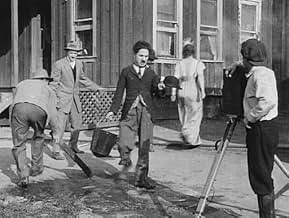
The comic mayhem that occurs in the studio and at a nearby house fire --which might have been a real event-- amounts to routine Keystone knockabout, apparently improvised while the cameras were rolling. Charlie contributes some cute gags: he lights a cigarette by shooting it with a pistol, and starts to kick a stage hand but when the man turns he quickly switches to scratching his ankle. What's really of interest here is the context and the subtext: essentially Chaplin was still on probation when this film was made, and his colleagues' wariness towards him appears to be genuine. A Film Johnnie captures a time when Charlie hadn't made the grade, just yet.
Viewed in this light Chaplin's fifth comedy, A Film Johnnie, a fairly amusing short in its own right, takes on some additional historical weight as something of an inside joke, an indirect comment on Chaplin's actual off-screen status at his studio. In the opening sequence a scruffy-looking Charlie goes into a cinema and sees a Keystone comedy featuring an actress he admires. When her co-star, an older man, gets fresh with her Charlie becomes so upset and agitated he is ejected from the theater. He heads straight to the Keystone Studio, seeking to get in. (Thus the title: he's like the "stage door johnnies" who would hang around theaters, hoping to meet the performers and/or get a job with the acting company.) He watches as prominent performers such as Roscoe Arbuckle and Ford Sterling, wearing their street garb, step out of cars and casually enter the studio, smiling and chatting. They're members of the In Crowd, but he is not. Approaching a bemused Arbuckle, he requests and receives a hand-out. He tries this again with Sterling, but -- in a reflection of their alleged off-camera friction? -- receives nothing; Sterling even takes the coin Arbuckle had given Charlie earlier. The studio director (Edgar Kennedy) refuses Charlie admission, but he easily slips past the elderly doorman. Once inside he finds the girl he so admires (Virginia Kirtley) but ruins the scene she's acting in because he believes it's actually happening. He runs amok with a prop pistol, scaring everyone, then leaves.
The comic mayhem that occurs in the studio and at a nearby house fire --which might have been a real event-- amounts to routine Keystone knockabout, apparently improvised while the cameras were rolling. Charlie contributes some cute gags: he lights a cigarette by shooting it with a pistol, and starts to kick a stage hand but when the man turns he quickly switches to scratching his ankle. What's really of interest here is the context and the subtext: essentially Chaplin was still on probation when this film was made, and his colleagues' wariness towards him appears to be genuine. A Film Johnnie captures a time when Charlie hadn't made the grade, just yet.
Charlie behind the scenes
Am a big fan of Charlie Chaplin, have been for over a decade now. Many films and shorts of his are very good to masterpiece, and like many others consider him a comedy genius and one of film's most important and influential directors.
He did do better than 'A Film Johnnie', still made very early on in his career where he was still finding his feet and not fully formed what he became famous for. Can understand why the Keystone period suffered from not being as best remembered or highly remembered than his later efforts, but they are mainly decent and important in their own right. 'A Film Johnnie' is a long way from a career high, but has a lot of nice things about it.
'A Film Johnnie' is not as hilarious, charming or touching as his later work and some other shorts in the same period. The story is flimsy and the production values not as audacious. Occasionally, things feel a little scrappy and confused.
For someone who was still relatively new to the film industry and had literally just moved on from their stage background, 'A Film Johnnie' is not bad at all.
While not audacious, the film hardly looks ugly, is more than competently directed and is appealingly played. Chaplin looks comfortable for so early on and shows his stage expertise while opening it up that it doesn't become stagy or repetitive shtick. The Tramp did become more likeable later but again he was still evolving.
Although the humour, charm and emotion was done even better and became more refined later, 'A Film Johnnie' is humorous, sweet and easy to like, though the emotion is not quite there. It moves quickly and doesn't feel too long or short.
Overall, far from one of Chaplin's best but pretty good and perhaps one of his better efforts from the early Keystone period. 7/10 Bethany Cox
He did do better than 'A Film Johnnie', still made very early on in his career where he was still finding his feet and not fully formed what he became famous for. Can understand why the Keystone period suffered from not being as best remembered or highly remembered than his later efforts, but they are mainly decent and important in their own right. 'A Film Johnnie' is a long way from a career high, but has a lot of nice things about it.
'A Film Johnnie' is not as hilarious, charming or touching as his later work and some other shorts in the same period. The story is flimsy and the production values not as audacious. Occasionally, things feel a little scrappy and confused.
For someone who was still relatively new to the film industry and had literally just moved on from their stage background, 'A Film Johnnie' is not bad at all.
While not audacious, the film hardly looks ugly, is more than competently directed and is appealingly played. Chaplin looks comfortable for so early on and shows his stage expertise while opening it up that it doesn't become stagy or repetitive shtick. The Tramp did become more likeable later but again he was still evolving.
Although the humour, charm and emotion was done even better and became more refined later, 'A Film Johnnie' is humorous, sweet and easy to like, though the emotion is not quite there. It moves quickly and doesn't feel too long or short.
Overall, far from one of Chaplin's best but pretty good and perhaps one of his better efforts from the early Keystone period. 7/10 Bethany Cox


Did you know
- TriviaAlthough some sources credit Mack Sennett with playing himself, the film director, the role is actually played by Edgar Kennedy--who, besides being a comic actor, was also a respected director.
- GoofsMembers of the audience behind Charlie Chaplin change - for example, Minta Durfee is sitting behind Chaplin in some shots, but a different actress is seated behind him in others.
- Alternate versions1930s reissue version, entitled Film Johnny, (released on DVD) omits the opening sequence in the movie theater.
- ConnectionsFeatured in Crazy Days (1962)
Details
- Release date
- Country of origin
- Official sites
- Languages
- Also known as
- Charlie the Actor
- Filming locations
- Bryson Apartments, 2701 Wilshire Blvd., Los Angeles, California, USA(Apartment Building)
- Production company
- See more company credits at IMDbPro
- Runtime
- 15m
- Color
- Sound mix
- Aspect ratio
- 1.33 : 1
Contribute to this page
Suggest an edit or add missing content