
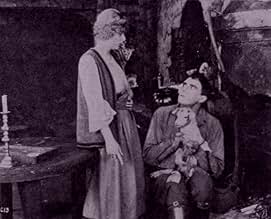
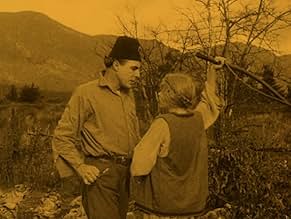
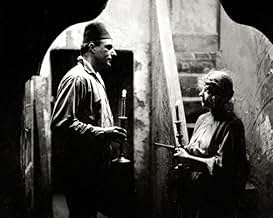
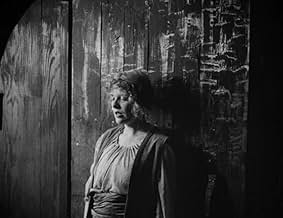
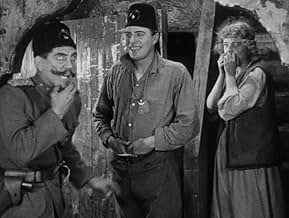
With her brother killed Sonya is given Turkish captive Mahmud to do the hard work on the farm. After they become fond of each other he strikes a Turkish officer. When peace arrives, his blow... Read allWith her brother killed Sonya is given Turkish captive Mahmud to do the hard work on the farm. After they become fond of each other he strikes a Turkish officer. When peace arrives, his blow costs him his noble lands. She is burned out of her house. They meet again on the road wi... Read allWith her brother killed Sonya is given Turkish captive Mahmud to do the hard work on the farm. After they become fond of each other he strikes a Turkish officer. When peace arrives, his blow costs him his noble lands. She is burned out of her house. They meet again on the road with nothing but each other.
- Director
- Writers
- Stars


- Turkish Officer
- (as Billy Elmer)

- Peasant Girl
- (uncredited)

- Soldier
- (uncredited)

- Turkish Soldier
- (uncredited)
- Director
- Writers
- All cast & crew
- Production, box office & more at IMDbPro
Featured reviews
The 34 Year Old Cecil B. DeMille
Early DeMille Offering Is A Real Eye Opener.
The DeMIlle family took very good care of his movies depositing several prints at the George Eastman House. Thanks to their efforts most of his early films have not only survived but look terrific. The print is easily the best one of this vintage that I have ever seen surpassing the same year's CARMEN. However what was even more remarkable to me is the relevancy of the storyline in today's political climate something that DeMille and co-writer Jeanie MacPherson (who appears briefly in the cabbage scene) obviously couldn't have foreseen. Set in 1913 during the Balkan Wars, the story concerns a Turkish prisoner who is sent to do manual labor for a young Montenegro woman whose brother is killed at the front. After a rough beginning, they start to get along when the Turks invade her village, threaten her, and expect him to join them. How captors and captives are treated changes throughout the film. In the end there are only refugees.
The beauty of the silent film is that since it's driven by visuals, anyone can be anything. Blanche Sweet is an ideal peasant woman while House Peters (a silent matinee idol who was born in England) is believable as the Turkish captive of the title. The performances are remarkably restrained and make the story quite believable. Even this early in the game DeMille had a great pictorial sense of where to place his camera and how to stage his scenes. The film would have looked great then and it really looks great now thanks to this stunning transfer. It sounds great as well thanks to Lucy Duke's idiomatic original score. A must for fans of early cinema and a real eye opener for those who only know DeMille by his later movies. This is the third Olive Films release of a silent title after 1914's THE UNDESIRABLE and the recently released WAGON TRACKS with William S. Hart. Hopefully there will be many more...For more reviews visit The Capsule Critic.
Duly enjoyable and well made, a minor joy for silent devotees
I mean no particular disrespect to producer Jessie L. Lasky, filmmaker Cecil B. DeMille, or co-writer Jeanie MacPherson when I say that 'The captive' is not one of those foremost exemplars. It is charming, however, and duly well made and enjoyable, and strictly speaking, that's all it needs to be. For lack of especial outstanding qualities it may perhaps be most remembered all these decades later as a tragic early example of fatal injuries occurring during production, but it remains suitably worthwhile on its own merits. The original story is solid and ably absorbing as friendship and love blossoms between a young woman and the prisoner of war who is assigned to work her farm, with tidbits of humor and more stark drama fleshing out the core romance. The cast give capable performances appropriate to the predominant contemporary style of acting on-screen. The production design and art direction are fetching, and what stunts and practical effects are exercised look good. The filming locations are nice, and even DeMille's direction and Alvin Wyckoff's cinematography, at a time early in cinema's development, have moments where they shine a bit more brightly.
If this praise sounds unenthusiastic, do not mistake that lack of excitement for a lack of appreciation. I like 'The captive' on its own strengths, as well as for the place it holds as an enduring vestige of a past age in the medium. It has faults, perhaps, including somewhat choppy narrative flow, and the use of brownface that was common in years past, but these are neither exclusive to this piece, nor so severe as to significantly diminish the whole. The biggest problem facing the movie in retrospect is simply a lack of anything vibrant or striking enough to truly make a lasting impression. Still, little moments here and there are extra sharp, and all told this is a good time. It's not likely to change the minds of anyone who isn't already enamored of the silent era, but for those who are open to all the wide wonders and rich history of cinema, 'The captive' is a minor joy and worth checking out.
Early DeMille Picture Delivers
This early Demille movie counted coup with Miss Sweet, recently recruited from D.W. Griffith's company. For the period, it was not an expensive movie; estimates are its budget was about $12,000, and its gross of about $50,000 offered a handsome profit for the growing concern that would become Paramount. The performances are good, particularly Miss Sweet's (unsurprisingly) and, despite the costumes, it struck me as essentially a Civil War movie about the reconciliation of the nations that had been transferred to an exotic locale, to avoid comparisons to Griffith's blockbuster BIRTH OF A NATION.
I should offer an admiring word or forty about the Olive Films DVD I saw this on. It was a fine transfer from a perfectly preserved print, with many colored sections and a good supporting score by Lucy Duke. Although the modern viewer may find the film techniques of 1915 a bit telegraphic, for the period it is a solid work and worthwhile viewing for anyone interested in DeMille or Sweet's career.
Entertaining Silent Highlights Forgotten Balkan Wars
Lovely Blanche Sweet is Sonya Martinovich, the young widow who loses her brother and, left with a son and a small flock of goats, struggles to work her farm alone. Meanwhile, Muhamud Hassan, played by House Peters, is a Turkish nobleman soldiering in the Ottoman army. Hassan is captured and assigned to work for Martinovich. Needless to say in this simple, but touching story, Hassan befriends Sonya's son and an attraction develops between Sonya and Hassan. Based on a play by Jeanie MacPherson, the short 50-minute film has no time to delve into any impediments to romance, such as religious, linguistic, and cultural differences, not to mention the dangers of Hassan's taking sides against his own troops.
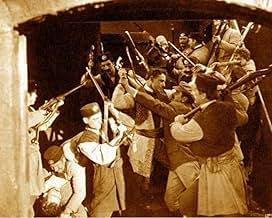
Although supporting players mug and twirl their mustaches, Sweet and Peters give naturalistic performances that largely avoid the pitfalls of the "grand style." While DeMille maintains a good pace, budgetary limits restrict his battle scenes, and the town's capture and re-capture appear to occur in one room. Appropriately tinted, the cinematography by Alvin Wyckoff is clear and sharp, although the landscapes are Southern California and not Montenegro. Despite quibbles that are largely a product of the period, aficionados of early silent films will definitely find "The Captive" worthy and perhaps essential viewing. However, European history buffs may also find the film of interest, because it throws light on the little-known Balkan Wars that were precursors to World War I. With a talented actress of early cinema, a rising directorial talent, and a surprisingly engaging story, "The Captive" is more than an historical curiosity, it is an entertaining movie.


Did you know
- TriviaAn extra was killed in the making of the film. A gun being used to bang on a door discharged, killing an extra.
- ConnectionsFeatured in The House That Shadows Built (1931)
Details
Box office
- Budget
- $12,154 (estimated)
- Runtime
- 50m
- Color
- Sound mix
- Aspect ratio
- 1.33 : 1