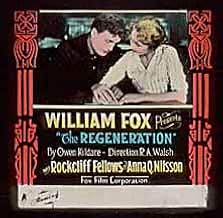
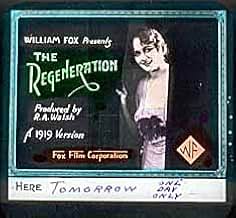
The Regeneration
- 1h 12m
IMDb RATING
6.8/10
1.5K
YOUR RATING

A boy surrounded by violence grows up to become an infamous gangster.A boy surrounded by violence grows up to become an infamous gangster.A boy surrounded by violence grows up to become an infamous gangster.
- Awards
- 1 win total


James A. Marcus
- Jim Conway
- (as James Marcus)

Harry McCoy
- Owen - Age 17
- (as H. McCoy)
Peggy Barn
- Woman
- (uncredited)
William Dyer
- Drunk Friend of Jim Conway
- (uncredited)
6.81.5K
1
2
3
4
5
6
7
8
9
10
Featured reviews
Birth of a genre
Raoul Walsh, aged 28, has already done it all : he's been a Cow-boy, an actor, and Griffith's assistant for BIRTH OF A NATION, in witch he also played Lincoln's murderer. That's certainly why his very first movies, as this "Regeneration", are already so mastered and so mature. The story of the movie is quite simple : it tells us the life of a gang leader : Owen, from his unhappy childhood to his "regeneration", thanks to Mary, a young lady, who believed in his kindness, and allows him a second chance. But beyond this classical story, this movie is both a brilliant example of Griffith's omnipotent influence on early American cinema and also a totally original and new form of cinema, for it invents the codes of the Gangster's movie and of the "Film Noir" for the years to come.
As in a Griffith's feature, the ideas of the movie are developed thanks to an original use of the editing. For instance, at the beginning of the movie, Walsh superposes a frame of Owen adult, drinking a beer, with one of the same character as a child, eating an ice cream in the exact same position. This editing has of course a narrative function it reminds us that Owen is the same character of the beginning of the movie, only few years after but it also presents him, whereas he could appears as a dangerous criminal, as the same innocent victim that he was younger. This king of narrative and yet symbolist use of the editing is both a homage to Griffith and an introduction to Walsh'own style and thematic.
Griffith's influence is also very strong in the movie's will to be spectacular. When Walsh wants to show how Owen tries to change in the contact of Mary, he creates for instance a gigantic fire on a boat, where Owen risks his life saving children. Of course, we're not really in the bigger than life world of INTOLERANCE or of BIRTH OF A NATION, but still, it's the same spectacular idea of the cinema that Walsh and Griffith share. In 1915, Raoul Walsh is certainly still in the shadow of Griffith, but "Regeneration" is a lot more than a copy of Griffith's cinema, and can be fully appreciates without its relation to its style.
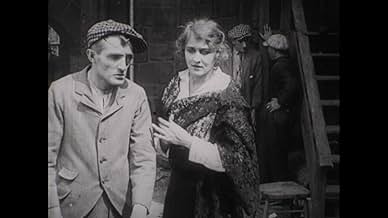
The movie is particularly realistic and has nothing to see with Griffith traditional romanticism. It's the adaptation of an ex-criminal autobiography, and Walsh is really good in showing sordid and realistic details, especially in the description of Owen's terrible childhood. The movie is surprisingly strong, violent and realistic for its age. But Walsh also adds to this realistically point of view, a sort or mythification of his Gangster's character, who almost become an icon, witch we'll find again in the all American Cinema to come, from Hawks 's SCARFACE, to Scorsese's movies. Fiction is already torn between realism and myth, and a large part of Walsh's Cinema will develops this thematic, as in his absolute masterpiece : THEY DIED WITH THEIR BOOTS ON.
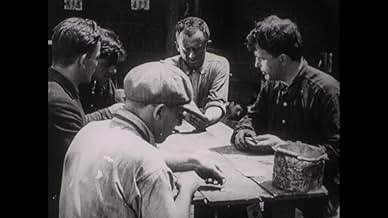
The realism of the movie even goes with the myth, for it's mostly in the realistically description of a gangster's everyday life that the "Film Noir" will takes its future codes. Owen and his gang spend most of their time doing nothing : they walk on the docks, in the streets or drinks in clubs, but we almost never see them in action. Or when we do, we see them doing good things, for action time is in the movie regeneration time. Morality is in Walsh'Cinema a rhythm question. Inaction and immobility stuck to the Gangster's life, whereas action and movements is associated to honesty and to the opportunity to grab a good life.
That's how « Regeneration » always seems to be torn between external (Griffith/Walsh) and internal (realism/myth) conflicts, that are the extension of Owen's inner fights between a honest's life and a gangster's one, between the soft world of Mary, and the harsh and masculine one of the Gang. The end of the movie literally destroys this psychological conflict, when the two characters that symbolized each side both died. After having destroyed the two conflicted sides of his personality, Owen's life can really begins, as well as Walsh's cinema.
As in a Griffith's feature, the ideas of the movie are developed thanks to an original use of the editing. For instance, at the beginning of the movie, Walsh superposes a frame of Owen adult, drinking a beer, with one of the same character as a child, eating an ice cream in the exact same position. This editing has of course a narrative function it reminds us that Owen is the same character of the beginning of the movie, only few years after but it also presents him, whereas he could appears as a dangerous criminal, as the same innocent victim that he was younger. This king of narrative and yet symbolist use of the editing is both a homage to Griffith and an introduction to Walsh'own style and thematic.
Griffith's influence is also very strong in the movie's will to be spectacular. When Walsh wants to show how Owen tries to change in the contact of Mary, he creates for instance a gigantic fire on a boat, where Owen risks his life saving children. Of course, we're not really in the bigger than life world of INTOLERANCE or of BIRTH OF A NATION, but still, it's the same spectacular idea of the cinema that Walsh and Griffith share. In 1915, Raoul Walsh is certainly still in the shadow of Griffith, but "Regeneration" is a lot more than a copy of Griffith's cinema, and can be fully appreciates without its relation to its style.
The movie is particularly realistic and has nothing to see with Griffith traditional romanticism. It's the adaptation of an ex-criminal autobiography, and Walsh is really good in showing sordid and realistic details, especially in the description of Owen's terrible childhood. The movie is surprisingly strong, violent and realistic for its age. But Walsh also adds to this realistically point of view, a sort or mythification of his Gangster's character, who almost become an icon, witch we'll find again in the all American Cinema to come, from Hawks 's SCARFACE, to Scorsese's movies. Fiction is already torn between realism and myth, and a large part of Walsh's Cinema will develops this thematic, as in his absolute masterpiece : THEY DIED WITH THEIR BOOTS ON.
The realism of the movie even goes with the myth, for it's mostly in the realistically description of a gangster's everyday life that the "Film Noir" will takes its future codes. Owen and his gang spend most of their time doing nothing : they walk on the docks, in the streets or drinks in clubs, but we almost never see them in action. Or when we do, we see them doing good things, for action time is in the movie regeneration time. Morality is in Walsh'Cinema a rhythm question. Inaction and immobility stuck to the Gangster's life, whereas action and movements is associated to honesty and to the opportunity to grab a good life.
That's how « Regeneration » always seems to be torn between external (Griffith/Walsh) and internal (realism/myth) conflicts, that are the extension of Owen's inner fights between a honest's life and a gangster's one, between the soft world of Mary, and the harsh and masculine one of the Gang. The end of the movie literally destroys this psychological conflict, when the two characters that symbolized each side both died. After having destroyed the two conflicted sides of his personality, Owen's life can really begins, as well as Walsh's cinema.
Startlingly fresh realism in 1915
People who think that all silents are sticky with Victorian melodrama will be surprised by the sustained pace, the bracing realism, and the soft-pedaling of the sentimental elements of this startlingly fresh film. The 28-year old Raoul Walsh had already written and produced a dozen films when he directed this. Although the narrative rambles a bit, Walsh's dynamic use of film grammar - closeups, dollies in and out, cross-cutting between scenes, sharp editing - makes REGENERATION look more modern than many silent films made ten years later. Walsh shows his creativity when he uses the circling movements of dancers to foreshadow public panic in an impressively staged sequence of a fire [although it has little plot function]. Titles are used sparingly throughout, and even they are terse and direct. The performances are also surprisingly natural, from square-jawed Rockcliffe Fellowes [who looks something like Robert Stack] to Anna Q. Nilsson, who gives a delicate, sympathetic performance as the good girl/settlement worker. Within the outline of a traditional melodrama, Walsh forthrightly portrays the underside of contemporary society, keeps the sentiment light, and provides an ending that is not without surprises either.
Raoul Walsh's first feature, one of his best; and one of the earliest features to utilize New York City locations effectively.
Raoul Walsh had just come off _The Birth of a Nation_ both as one of Griffith's assistant directors and as an actor (most prominently as John Wilkes Booth), when he made this film. In his autobiography, Walsh credits Griffith with "teaching" him not only about much of the art of fiction filmmaking, but also about production management technics that aided him in taking full advantage of many of New York City's most pictorial exterior locations.
The locations play an important role in adding to the naturalism of an otherwise highly melodramatic plot with the high society young woman turned heroine social worker (much overplayed by a major star of the 1910s, Anna Q Nilsson) and the regeneration of the one-time Lower Manhatan gang leader.
The wonder of this film is the performance of the male "star", Rockliffe Fellowes, who played in over a dozen nearly unremembered films until he died in 1950. His performance is so subtly varied and electrically alive that one is reminded of Brando in his early 1950s films. An interesting sidenote about his performance: The movieola film editing machine -- that magnified the small 35mm frame to about 4 inches by 6 inches as it ran the film stock through the viewer at the proper projection speed -- was not invented until much later. In 1915, editors had to hold the footage up to the light to see each frame and/or use a magnifying glass; but they could not also run the film at speed at the same time. Hence, many of the subtlest nuances that cross the hero's face could not be clearly seen and judged in editing: _Regeneration's_ editor often cuts away before the movement has settled, or cuts into a close or medium shot of the hero after the nuance has already begun.
Watching the film on a large screen today, one is aware how powerful present-day editing technics are at capturing all such movements in the hands of a skilled editor. In _Regeneration_ there is a distinct feeling of rough editing at the moments we leave or cut to the hero at the "wrong" instant. By the way, the original title was NOT _The Regeneration_, but _Regeneration_ alone. From which we can surmise that Walsh was looking to create a work with universal meaning.
The locations play an important role in adding to the naturalism of an otherwise highly melodramatic plot with the high society young woman turned heroine social worker (much overplayed by a major star of the 1910s, Anna Q Nilsson) and the regeneration of the one-time Lower Manhatan gang leader.
The wonder of this film is the performance of the male "star", Rockliffe Fellowes, who played in over a dozen nearly unremembered films until he died in 1950. His performance is so subtly varied and electrically alive that one is reminded of Brando in his early 1950s films. An interesting sidenote about his performance: The movieola film editing machine -- that magnified the small 35mm frame to about 4 inches by 6 inches as it ran the film stock through the viewer at the proper projection speed -- was not invented until much later. In 1915, editors had to hold the footage up to the light to see each frame and/or use a magnifying glass; but they could not also run the film at speed at the same time. Hence, many of the subtlest nuances that cross the hero's face could not be clearly seen and judged in editing: _Regeneration's_ editor often cuts away before the movement has settled, or cuts into a close or medium shot of the hero after the nuance has already begun.
Watching the film on a large screen today, one is aware how powerful present-day editing technics are at capturing all such movements in the hands of a skilled editor. In _Regeneration_ there is a distinct feeling of rough editing at the moments we leave or cut to the hero at the "wrong" instant. By the way, the original title was NOT _The Regeneration_, but _Regeneration_ alone. From which we can surmise that Walsh was looking to create a work with universal meaning.
A gem, almost gone forever
Rather than repeat what others have written, I'd like to comment on how this film managed to get into circulation.
The only known print of the film was found in the basement of a building in Montana in 1976. Preserved (and not too soon given the deterioration seen in the middle of the film), it was part of a series of films shown during the New York Film Festival representing titles which had recently (1978) been saved. I remember seeing all of them; they included Lillom (recently issued on DVD in the Murnau/Borzage box and worth seeing), and The Letter (with Jeanne Eagles, which blew everyone away).
It is a miracle that films still turn up in such a manner even this late in the game. Most films from this time period have long ago turned into flammable dust (they started to deteriorate as early as the thirties), and it is particularly fortunate that "Regeneration" is now among the living. Despite its crudities, it feels like a documentary of the seedier elements of New York, and it still works its magic; it has matured very well. Given that we can see how the streets of New York really looked almost 100 years ago, the film may play better than it did back then. Most of the people in this film are not actors, they are real people, and that is what we reacted to when we saw this back in the seventies.
Additionally, the film is a real window into the transitional period when the one-reeler had turned into a longer, more ambitious feature. As a first feature for Walsh, this film is really extraordinary when we consider that the tools of film-making were still crude (the comments on the editing of the film are correct. However, the abruptness plays better on the big screen). Even more, the film also reminds us that the numerous features made between 1914 and 1920 included some real gems that are gone forever, and cannot be re-evaluated. How many really good actors and directors are known in name only because their work has disappeared?
I consider this one of the finest examples of an early silent feature, and one of the landmark films of the silent era. It is an illustration of how the director of that time found his or her way, made mistakes and had chances to improve. It shows how filmmakers were taking the vocabulary used by Griffith and some European filmmakers to expand the techniques of storytelling to hold an audience's interest for an hour's worth of entertainment.
A must-see if you are interested in silent films.
The only known print of the film was found in the basement of a building in Montana in 1976. Preserved (and not too soon given the deterioration seen in the middle of the film), it was part of a series of films shown during the New York Film Festival representing titles which had recently (1978) been saved. I remember seeing all of them; they included Lillom (recently issued on DVD in the Murnau/Borzage box and worth seeing), and The Letter (with Jeanne Eagles, which blew everyone away).
It is a miracle that films still turn up in such a manner even this late in the game. Most films from this time period have long ago turned into flammable dust (they started to deteriorate as early as the thirties), and it is particularly fortunate that "Regeneration" is now among the living. Despite its crudities, it feels like a documentary of the seedier elements of New York, and it still works its magic; it has matured very well. Given that we can see how the streets of New York really looked almost 100 years ago, the film may play better than it did back then. Most of the people in this film are not actors, they are real people, and that is what we reacted to when we saw this back in the seventies.
Additionally, the film is a real window into the transitional period when the one-reeler had turned into a longer, more ambitious feature. As a first feature for Walsh, this film is really extraordinary when we consider that the tools of film-making were still crude (the comments on the editing of the film are correct. However, the abruptness plays better on the big screen). Even more, the film also reminds us that the numerous features made between 1914 and 1920 included some real gems that are gone forever, and cannot be re-evaluated. How many really good actors and directors are known in name only because their work has disappeared?
I consider this one of the finest examples of an early silent feature, and one of the landmark films of the silent era. It is an illustration of how the director of that time found his or her way, made mistakes and had chances to improve. It shows how filmmakers were taking the vocabulary used by Griffith and some European filmmakers to expand the techniques of storytelling to hold an audience's interest for an hour's worth of entertainment.
A must-see if you are interested in silent films.
Raoul Walsh's First Feature Film
Raoul Walsh had been an actor and an understudy assistant director under D. W. Griffith when Fox Films hired him to direct his first feature film, September 1915's "Regeneration." Many cite Walsh's full-length directorial debut as cinema's first gangster feature film.
Walsh had run away from home at 15 and worked a series of laborious, dangerous jobs, including a cow hand and a seafarer. His hands at that time were so calloused he refused to shake hands. Because of his horse-riding skills, D. W. Griffith hired him as an actor, with one of his first roles as a young version of Mexican revolutionist Pancho Villa.
Walsh showed enough of a curiosity of filmmaking that Griffith took him on as an assistant director, most notably helping him out in "The Birth of a Nation." In the 1915 film, Walsh also plays John Wilkes Booth, who kills Abraham Lincoln. Newly formed Fox Films Corporation heard and saw so many good things from Walsh that William Fox hired him to do one of his studio's first feature films.
"Regeneration," adapted from a 1908 play based on Owen Kildare's autobiography, was a redemption tale of a boy who grew up to become a criminal, but eventually realizing the wrongs he had committed through the guiding influence of a female social worker. Walsh decided to film in New York City's poor Lower East Side using actual criminals and prostitutes to heighten his movie's authenticity.
Elements of Griffith, who Walsh labeled as his teacher, is clearly visible in "Regeneration:" the masking of the lens, the parallel editing and camera positioning, numerous close ups and implementing newly devised cinematic techniques such as a handful of dolly movements. Certain scenes Walsh filmed contained chiaroscuro lighting, anticipating Germanic Expressionism film aesthetics by a few years.
Walsh would become one of Hollywood's auteurs noted for his hard-hitting, macho crime movies such as 1939's "The Roaring Twenties," 1941 "High Sierra," and 1949's "White Heat." He would direct until his final film in 1964, and have a script of his produced as a movie in 1970.
Walsh had run away from home at 15 and worked a series of laborious, dangerous jobs, including a cow hand and a seafarer. His hands at that time were so calloused he refused to shake hands. Because of his horse-riding skills, D. W. Griffith hired him as an actor, with one of his first roles as a young version of Mexican revolutionist Pancho Villa.
Walsh showed enough of a curiosity of filmmaking that Griffith took him on as an assistant director, most notably helping him out in "The Birth of a Nation." In the 1915 film, Walsh also plays John Wilkes Booth, who kills Abraham Lincoln. Newly formed Fox Films Corporation heard and saw so many good things from Walsh that William Fox hired him to do one of his studio's first feature films.
"Regeneration," adapted from a 1908 play based on Owen Kildare's autobiography, was a redemption tale of a boy who grew up to become a criminal, but eventually realizing the wrongs he had committed through the guiding influence of a female social worker. Walsh decided to film in New York City's poor Lower East Side using actual criminals and prostitutes to heighten his movie's authenticity.
Elements of Griffith, who Walsh labeled as his teacher, is clearly visible in "Regeneration:" the masking of the lens, the parallel editing and camera positioning, numerous close ups and implementing newly devised cinematic techniques such as a handful of dolly movements. Certain scenes Walsh filmed contained chiaroscuro lighting, anticipating Germanic Expressionism film aesthetics by a few years.
Walsh would become one of Hollywood's auteurs noted for his hard-hitting, macho crime movies such as 1939's "The Roaring Twenties," 1941 "High Sierra," and 1949's "White Heat." He would direct until his final film in 1964, and have a script of his produced as a movie in 1970.


Did you know
- TriviaMost of the extras in this film were real locals from the Bowery area, as well as from Hell's Kitchen, and had never appeared before in films. Most of the gangster characters were actual gangsters in real life.
- Quotes
District Attorney Ames: Very fine and loyal, my boy, but you can't save your friend, and you have lost whatever chance you had - with her.
- Crazy creditsThere is no cast list during the opening credits or at the end. Actors, however, are credited by intertitles as they appear within the movie, and that is used for the IMDb cast ordering. Actors never mentioned are marked uncredited.
- Alternate versionsKino International released a version which runs 72 minutes and contains an uncredited piano score.
Details
- Release date
- Country of origin
- Language
- Also known as
- Возрождение
- Filming locations
- Hudson River, Nyack, New York, USA(burning of the excursion barge)
- Production company
- See more company credits at IMDbPro
- Runtime
- 1h 12m(72 min)
- Color
- Sound mix
- Aspect ratio
- 1.33 : 1
Contribute to this page
Suggest an edit or add missing content