IMDb RATING
6.6/10
2.9K
YOUR RATING

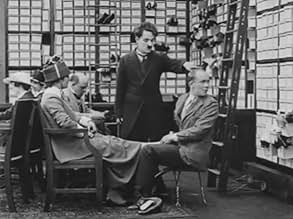
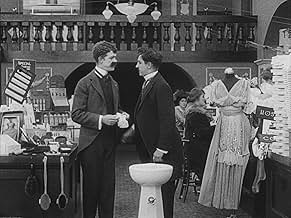
The Tramp is tricked into impersonating an embezzling floorwalker in a department store.The Tramp is tricked into impersonating an embezzling floorwalker in a department store.The Tramp is tricked into impersonating an embezzling floorwalker in a department store.
- Director
- Writers
- Stars





Henry Bergman
- Old Man
- (uncredited)

Frank J. Coleman
- Janitor
- (uncredited)
Fred Goodwins
- Shoe clerk
- (uncredited)

Bud Jamison
- Small Role
- (uncredited)
Tom Nelson
- Detective
- (uncredited)


Wesley Ruggles
- Policeman
- (uncredited)
- Director
- Writers
- All cast & crew
- Production, box office & more at IMDbPro
6.62.8K
1
2
3
4
5
6
7
8
9
10
Featured reviews
Below standard Chaplin
Although Charlie Chaplin made some great short comedies in the late 1910's, others don't quite make it. Examples like His New Job and Shanghaied come to mind, and I would also The Floorwalker in this category.
Charlie gets mistaken for a manager of a department store (and vice versa). This manager tries to steal money from the cash register and make a run for it, and Charlie is just an honest costumer but getting blamed for some missing objects, stolen by other costumers.
There aren't many laughs in it, except for the last couple of minutes or so with some great scenes on the escalator. For the rest, quite disappointing.
4/10.
Charlie gets mistaken for a manager of a department store (and vice versa). This manager tries to steal money from the cash register and make a run for it, and Charlie is just an honest costumer but getting blamed for some missing objects, stolen by other costumers.
There aren't many laughs in it, except for the last couple of minutes or so with some great scenes on the escalator. For the rest, quite disappointing.
4/10.
Has Some Very Good Moments
There are some good moments in "The Floorwalker" that make up for the more routine parts. Chaplin gets good mileage out of an identity mix-up - a theme he always liked - and he also has some good slapstick moments with Eric Campbell, one of his best supporting actors. The plot is mostly goofy, serving mainly as an excuse to allow the characters to chase each other around the store. Overall, it's about average for a Chaplin short feature, which makes it pretty good by most other standards.
The first escalator ever used in a film?
So evidently the floorwalker is the guy that walks around the store making sure no one is shoplifting, which provides a wonderful situation for a little mixed identity. Chaplin plays an obnoxious browser, testing all of the products in the store and generally making a big mess without buying anything (this may be one of the few times in his career when he displayed a little understanding of the plight of the store owners dealing with pesky shoppers who don't buy anything). Soon, however, he is back to sticking up for the people. The floorwalker begins harassing Charlie while a real thief robs the place blind right behind him.
There are two new and interesting things in this film. One is the escalator, which I have a feeling is the first escalator ever to appear in a motion picture (if you know of an earlier one, I'd be curious to hear about it), and the other is a Chaplin look-a-like. He's much bigger than the diminutive Chaplin, of course, but it's the first time I've seen his double appear with him in one of his movies.
The escalator is well used here, as well. The humor surrounding it goes a long way, and Chaplin speed walking down it is one of the more memorable moments of his early career. Soon, the double, in his efforts to make off with a suitcase full of cash, pays Charlie to trade clothes with him (I am always suspicious of someone who wants me to wear their clothes out of a store), which Charlie foolishly accepts.
The set up for the physical comedy is unusually clever in this film. The real bad guy gets caught and Charlie is congratulated for helping to capture him, then later an oafish guard wakes up (he had fallen victim to that silent film curiosity where someone gets knocked out and then later wakes up as though well-rested from a deep sleep), and comes after Charlie, unaware of his new hero status. He gives Charlie a hilarious thrashing.
My favorite moment in the film is Charlie's brief farewell dance before he attempts to dive into that handbag. It reminds me of the prestidigitonious (something like that) scene in Sword in the Stone, one of my all time favorite animated films.
There is a great scene near the end where Charlie does a hilarious little dance. It's hard to pinpoint it, but there is something definitely charming about the way he dances. I feel like I've seen a thousand other people do the same thing, and yet it still looks totally unique when he does it. The ending of this film is a little abrupt, but this is probably some of his best physical comedy yet.
There are two new and interesting things in this film. One is the escalator, which I have a feeling is the first escalator ever to appear in a motion picture (if you know of an earlier one, I'd be curious to hear about it), and the other is a Chaplin look-a-like. He's much bigger than the diminutive Chaplin, of course, but it's the first time I've seen his double appear with him in one of his movies.
The escalator is well used here, as well. The humor surrounding it goes a long way, and Chaplin speed walking down it is one of the more memorable moments of his early career. Soon, the double, in his efforts to make off with a suitcase full of cash, pays Charlie to trade clothes with him (I am always suspicious of someone who wants me to wear their clothes out of a store), which Charlie foolishly accepts.
The set up for the physical comedy is unusually clever in this film. The real bad guy gets caught and Charlie is congratulated for helping to capture him, then later an oafish guard wakes up (he had fallen victim to that silent film curiosity where someone gets knocked out and then later wakes up as though well-rested from a deep sleep), and comes after Charlie, unaware of his new hero status. He gives Charlie a hilarious thrashing.
My favorite moment in the film is Charlie's brief farewell dance before he attempts to dive into that handbag. It reminds me of the prestidigitonious (something like that) scene in Sword in the Stone, one of my all time favorite animated films.
There is a great scene near the end where Charlie does a hilarious little dance. It's hard to pinpoint it, but there is something definitely charming about the way he dances. I feel like I've seen a thousand other people do the same thing, and yet it still looks totally unique when he does it. The ending of this film is a little abrupt, but this is probably some of his best physical comedy yet.
David Jeffers for SIFFblog.com
Monday September 10, 7:00 pm, The Paramount Theater, Seattle
The first of twelve films Charles Chaplin produced for the Mutual Film Corporation, The Floorwalker(1916) might have been titled The Escalator, which is the focal point and primary source of the film's humor. Chaplin developed the idea after visiting department stores in New York and worked out the details while filming. Much of this process can be understood by viewing Chaplin's outtakes featured in Unknown Chaplin, the remarkable documentary produced by Kevin Brownlow and David Gill in 1983. Charlie wanders into a store and amuses himself while a clerk (Albert Austin) observes. The floorwalker (who bears a striking resemblance to Charlie) and store manager (Eric Campbell) attempt to embezzle a suitcase filled with cash while their startled secretary (Edna Purviance) observes. Identities are confused and the floorwalker (dressed in Charlie's cloths) is arrested by the store detective, while the manager struggles with Charlie, and the escalator, to retrieve the suitcase.
The first of twelve films Charles Chaplin produced for the Mutual Film Corporation, The Floorwalker(1916) might have been titled The Escalator, which is the focal point and primary source of the film's humor. Chaplin developed the idea after visiting department stores in New York and worked out the details while filming. Much of this process can be understood by viewing Chaplin's outtakes featured in Unknown Chaplin, the remarkable documentary produced by Kevin Brownlow and David Gill in 1983. Charlie wanders into a store and amuses himself while a clerk (Albert Austin) observes. The floorwalker (who bears a striking resemblance to Charlie) and store manager (Eric Campbell) attempt to embezzle a suitcase filled with cash while their startled secretary (Edna Purviance) observes. Identities are confused and the floorwalker (dressed in Charlie's cloths) is arrested by the store detective, while the manager struggles with Charlie, and the escalator, to retrieve the suitcase.
Decent if not great Chaplin fare
If you have read my other reviews of Chaplin's comedy shorts, you may have noticed that I have generally given very poor reviews of films made during his first couple years in Hollywood (1914-1915). In general, they had no script or direction, were never really edited and just weren't particularly funny. In addition, Chaplin had a lot to learn about and develop regarding his Little Tramp character. by 1916, however, the movies began to improve as Chaplin was now the creative force behind all his films and he had honed his craft.
For a 1916 short, this is a pretty good film. It does have a pretty decent plot and it's pretty enjoyable. There's just one problem and I doubt if it is Chaplin's fault. When the film is nearing its conclusion, it just seems to end abruptly during the final climactic fight. I really think that the last few seconds of the film have been lost and that is why it ends this way. This isn't too uncommon for Chaplin shorts, as many have been pieced together from many different prints and many differing versions of the same short exist. I'd love to see a more complete print than was available on THE ESSENTIAL CHARLIE CHAPLIN COLLECTION, v. 7.
For a 1916 short, this is a pretty good film. It does have a pretty decent plot and it's pretty enjoyable. There's just one problem and I doubt if it is Chaplin's fault. When the film is nearing its conclusion, it just seems to end abruptly during the final climactic fight. I really think that the last few seconds of the film have been lost and that is why it ends this way. This isn't too uncommon for Chaplin shorts, as many have been pieced together from many different prints and many differing versions of the same short exist. I'd love to see a more complete print than was available on THE ESSENTIAL CHARLIE CHAPLIN COLLECTION, v. 7.


Did you know
- TriviaThis film was noted for the first "running staircase" (escalator) used in films.
- GoofsThe bag with the money goes up the escalator and remains upstairs. It is always seen in the background until the women enters the scene. Whenever she is in the shot, the moneybag disappears.
- Alternate versionsKino International distributes a set of videos containing all the 12 Mutual short films made by Chaplin in 1915 - 1917. They are presented by David Shepard, who copyrighted the versions in 1984, and has a music soundtrack composed and performed by Michael Mortilla who copyrighted his score in 1989. The running time of this film is 24 minutes.
- ConnectionsEdited into The Chaplin Cavalcade (1941)
Details
- Release date
- Country of origin
- Official sites
- Languages
- Also known as
- Shop
- Filming locations
- Production company
- See more company credits at IMDbPro
- Runtime
- 29m
- Color
- Sound mix
- Aspect ratio
- 1.33 : 1
Contribute to this page
Suggest an edit or add missing content