
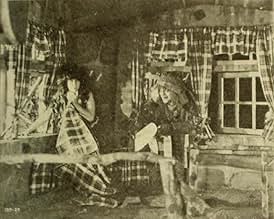
Snow White, a beautiful girl, is despised by a wicked queen who tries to destroy her. With the aid of dwarves in the woods, Snow White overcomes the queen.Snow White, a beautiful girl, is despised by a wicked queen who tries to destroy her. With the aid of dwarves in the woods, Snow White overcomes the queen.Snow White, a beautiful girl, is despised by a wicked queen who tries to destroy her. With the aid of dwarves in the woods, Snow White overcomes the queen.
- Director
- Writers
- Stars

Dorothy Cumming
- Queen Brangomar
- (as Dorothy G. Cumming)


Richard Barthelmess
- Pie Man
- (uncredited)

Arthur Donaldson
- King
- (uncredited)
Irwin Emmer
- Dwarf
- (uncredited)
Billy Platt
- Dwarf
- (uncredited)
Herbert Rice
- Dwarf
- (uncredited)
Jimmy Rosen
- Dwarf
- (uncredited)
- Director
- Writers
- All cast & crew
- Production, box office & more at IMDbPro
6.3503
1
2
3
4
5
6
7
8
9
10
Featured reviews
The soil from which greater things sprang
The 1916 SNOW WHITE is undoubtedly one of the most important movies in the history of fantasy pictures. Without it, we would have no Disney SNOW WHITE, and without a Disney SNOW WHITE, the 1939 WIZARD OF OZ would have never been greenlit, along with many other great fantasy films we have enjoyed in the subsequent years. Regardless of this significance, the 1916 SNOW WHITE is not necessarily a classic in its own right,
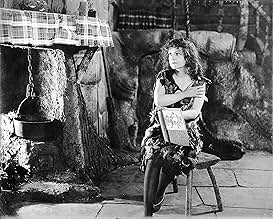
The positives first though: Marguerite Clark is an exuberant lead, channeling both the princess's innocence and her burgeoning romantic yearning for the prince. The aesthetics of the film are charming in a classic storybook mode, filled with the usual anachronisms you'll find in the world of fairy tales. I also thought the other actors were game with their performances, especially Dorothy Cummings as the vain, scheming queen.
My main issue with this version is the storytelling. So much time is wasted on uninteresting court politics or the Huntsman's cuddly little kids. The dramatic moments lack urgency: when Snow White learns the Huntsman plans to kill her, she basically laughs it off. There is nothing like suspense at all, even as the story builds to its climax. It makes a striking contrast with the Disney adaptation, which, despite its sentimental nature and cheerful songs, undoubtedly had narrative urgency and moments of pure terror that made the happy ending feel earned.
Another problem is the direction, which is flat and static even by 1910s standards. You never really feel transported into another world like you do with, say, Douglas Fairbanks' THE THIEF OF BAGDAD from a few years later. The few moments of interesting staging, such as a close-up of Snow White peeking into the dwarves' cottage through the window (later aped for the Disney movie), throw the overall flatness into even greater relief.
Still, regardless of how this movie plays today, it inspired young Walt Disney to the point where he still treasured the memory of it into his thirties. And for silent film enthusiasts, the survival of this movie is still a great blessing, not just because of the film's historical significance, but because it gives us a glimpse of the otherwise elusive Marguerite Clark, who has so little work surviving.
The positives first though: Marguerite Clark is an exuberant lead, channeling both the princess's innocence and her burgeoning romantic yearning for the prince. The aesthetics of the film are charming in a classic storybook mode, filled with the usual anachronisms you'll find in the world of fairy tales. I also thought the other actors were game with their performances, especially Dorothy Cummings as the vain, scheming queen.
My main issue with this version is the storytelling. So much time is wasted on uninteresting court politics or the Huntsman's cuddly little kids. The dramatic moments lack urgency: when Snow White learns the Huntsman plans to kill her, she basically laughs it off. There is nothing like suspense at all, even as the story builds to its climax. It makes a striking contrast with the Disney adaptation, which, despite its sentimental nature and cheerful songs, undoubtedly had narrative urgency and moments of pure terror that made the happy ending feel earned.
Another problem is the direction, which is flat and static even by 1910s standards. You never really feel transported into another world like you do with, say, Douglas Fairbanks' THE THIEF OF BAGDAD from a few years later. The few moments of interesting staging, such as a close-up of Snow White peeking into the dwarves' cottage through the window (later aped for the Disney movie), throw the overall flatness into even greater relief.
Still, regardless of how this movie plays today, it inspired young Walt Disney to the point where he still treasured the memory of it into his thirties. And for silent film enthusiasts, the survival of this movie is still a great blessing, not just because of the film's historical significance, but because it gives us a glimpse of the otherwise elusive Marguerite Clark, who has so little work surviving.
A Visually Lovely Film
"Snow White", directed in the far away year 1916 by Herr J. Searle Dawley, is a beautiful film adaptation of the classic Grimm fairy tale.This film was considered long lost but fortunately a copy was found in the"Filmmuseum", a kind of Dutch film archives where the nitrates are not very well arranged, certainly nothing like this German aristocrat's film archives where the films are perfectly organized and classified in a German way, so in this way no film is lost, including Herr Stroheim's "Greed" (in its 9 hours complete version
). Anyway, thanks to the good luck of finding this lost silent film, every silent film fan can now appreciate Herr Searle's talent.
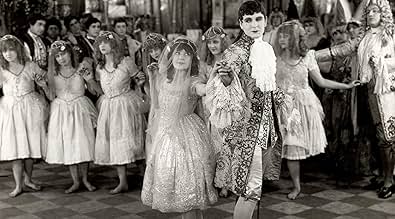
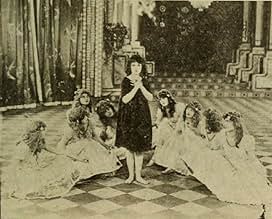
"Snow White" ( this German count doesn't think it necessary to relate this well-know story about beauty competitions in the Middle Ages ), as this aristocrat said before, is a visually lovely film in which the art direction and the sets are absolutely outstanding, not to mention the make-up, some charming special effects and even a little animated sequence. As it happens with some remarkable early silent film versions of fairy tales, there is a remarkable concern to depict and recreate in detail the magical atmosphere of those original stories on the screen and this one is a perfect recreation of the tale. It must said though that in those classic film productions, there is not usually a trace of transgression or boldness ( which is scarcely necessary most of the time since the original stories are full of cruelty ),and they are conservative and polite adaptations intended to be harmless and wholesome entertainment for families around the world. "Snow White" starred Dame Marguerite Clark, an important film star in the teens, and she plays her pure and chaste role very well, and the rest of the cast is equally good, all perfect for an early film that doesn't suffer with the passage of time.
And now, if you'll allow me, I must temporarily take my leave because this German Count has an appointment with the evil Queen.
Herr Graf Ferdinand Von Galitzien http://ferdinandvongalitzien.blogspot.com/
"Snow White" ( this German count doesn't think it necessary to relate this well-know story about beauty competitions in the Middle Ages ), as this aristocrat said before, is a visually lovely film in which the art direction and the sets are absolutely outstanding, not to mention the make-up, some charming special effects and even a little animated sequence. As it happens with some remarkable early silent film versions of fairy tales, there is a remarkable concern to depict and recreate in detail the magical atmosphere of those original stories on the screen and this one is a perfect recreation of the tale. It must said though that in those classic film productions, there is not usually a trace of transgression or boldness ( which is scarcely necessary most of the time since the original stories are full of cruelty ),and they are conservative and polite adaptations intended to be harmless and wholesome entertainment for families around the world. "Snow White" starred Dame Marguerite Clark, an important film star in the teens, and she plays her pure and chaste role very well, and the rest of the cast is equally good, all perfect for an early film that doesn't suffer with the passage of time.
And now, if you'll allow me, I must temporarily take my leave because this German Count has an appointment with the evil Queen.
Herr Graf Ferdinand Von Galitzien http://ferdinandvongalitzien.blogspot.com/
A Lively Performance By Marguerite Clark
The highlight of this version of "Snow White" is the lively performance by Marguerite Clark, who fits into the role very well and shows why she was so popular in her time. Overall, the movie is a pleasant, old-fashioned telling of the story, with a stage-like technique but some pretty good production values for the mid-1910s.
At one time, Clark was as popular as any other actress of her day, but almost all of her movies have since been lost. Even this movie is still missing some material at various points, although the reconstruction in the Treasures From American Film Archives collection is very nicely done, and makes it fit together as well as it possibly could have.
Even when compared with the other great actresses of her day, Clark works very well in the role of a young girl. Her small stature certainly helps, but her actions and mannerisms are also very believable. For the story to work, "Snow White" has to be extremely sympathetic and engaging, and Clark is able to do that quite well.
The story stays fairly close to the Grimm Brothers' original, though downplaying or eliminating some of its more violent aspects. Most of the supporting characters are one- dimensional, but the cast members do a solid job with them. Without Clark, it would have been a decent movie anyway, though probably of interest only to those who are devoted fans of silent movies. Clark's performance makes it pretty good, and well worth seeing.
At one time, Clark was as popular as any other actress of her day, but almost all of her movies have since been lost. Even this movie is still missing some material at various points, although the reconstruction in the Treasures From American Film Archives collection is very nicely done, and makes it fit together as well as it possibly could have.
Even when compared with the other great actresses of her day, Clark works very well in the role of a young girl. Her small stature certainly helps, but her actions and mannerisms are also very believable. For the story to work, "Snow White" has to be extremely sympathetic and engaging, and Clark is able to do that quite well.
The story stays fairly close to the Grimm Brothers' original, though downplaying or eliminating some of its more violent aspects. Most of the supporting characters are one- dimensional, but the cast members do a solid job with them. Without Clark, it would have been a decent movie anyway, though probably of interest only to those who are devoted fans of silent movies. Clark's performance makes it pretty good, and well worth seeing.
Camera Switching Seats
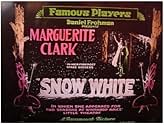
Adolph Zukor's company Famous Players in Famous Plays, despite releasing some stagy early feature-length films (e.g. "Queen Elizabeth" (1912) and "The Count of Monte Cristo" (1913)), managed to sign two actresses who become two of the most popular movie stars, Mary Pickford and, the star of "Snow White", Marguerite Clark. Clark had already been a hit on Broadway, including playing the title role in the 1912 theatrical version of "Snow White", for which this film is based. In just her first film, Clark's performance in "Wildflower" (1914) was voted by fans for Motion Picture Magazine the second greatest performance to date by 1916--right above Henry B. Walthall's third place role in "The Birth of a Nation" (1915). As further evidence of her fame, Clark was voted the second most popular movie star in a 1918 Motion Picture Magazine poll, below only Mary Pickford. A Princeton poll in 1919 placed her third among screen actresses. And, she was voted the top female box-office draw by a 1920 Quigley poll.
The filmed "Snow White" is comparable in film technique to another available Famous Plays production, "Cinderella" (1914), which starred Mary Pickford (also to Pickford's "The Taming of the Shrew" (1914), although the print of it that I saw wasn't in the good condition these other two films are in). The camera generally remains stationary as in the earliest feature-length films and mostly from a long-shot framing, but the shot succession is more frequent and better paced in these later films—changing shots based on character movement and with some crosscutting—and there are a few medium shots and closer views, although not nearly enough. "Snow White" seems choppy in parts today, but that's at least partially due to some lost footage.
Although rather stagy even for a 1916 production, "Snow White" is a somewhat enjoyable, light fairytale. As mentioned elsewhere, it borrows from "Cinderella" the part of Snow White forced to do chores by her stepmother. It's also interesting to see Walt Disney's inspiration for his 1937 animated version. The dwarfs are amusing. Additionally, Snow White is friendly with animals in the forests. I don't know how a lion got to a woodland in what one assumes is somewhere in medieval Europe, though. There are a few special effects shots, including the basic superimpositions and substitution-splices for lapse dissolves, as well as a brief animation shot of the witch flying away on her broom, and the miniaturized double exposure of the actors in the introductory tie-in of the film's release with Christmas. Clark does as well as Mary Pickford did; and, unlike the film, she isn't too theatrical. Like Pickford, she was small and often played child and ingénue roles. Unfortunately, most of her films are now unavailable, which makes "Snow White" an even more recommended treat.
The filmed "Snow White" is comparable in film technique to another available Famous Plays production, "Cinderella" (1914), which starred Mary Pickford (also to Pickford's "The Taming of the Shrew" (1914), although the print of it that I saw wasn't in the good condition these other two films are in). The camera generally remains stationary as in the earliest feature-length films and mostly from a long-shot framing, but the shot succession is more frequent and better paced in these later films—changing shots based on character movement and with some crosscutting—and there are a few medium shots and closer views, although not nearly enough. "Snow White" seems choppy in parts today, but that's at least partially due to some lost footage.
Although rather stagy even for a 1916 production, "Snow White" is a somewhat enjoyable, light fairytale. As mentioned elsewhere, it borrows from "Cinderella" the part of Snow White forced to do chores by her stepmother. It's also interesting to see Walt Disney's inspiration for his 1937 animated version. The dwarfs are amusing. Additionally, Snow White is friendly with animals in the forests. I don't know how a lion got to a woodland in what one assumes is somewhere in medieval Europe, though. There are a few special effects shots, including the basic superimpositions and substitution-splices for lapse dissolves, as well as a brief animation shot of the witch flying away on her broom, and the miniaturized double exposure of the actors in the introductory tie-in of the film's release with Christmas. Clark does as well as Mary Pickford did; and, unlike the film, she isn't too theatrical. Like Pickford, she was small and often played child and ingénue roles. Unfortunately, most of her films are now unavailable, which makes "Snow White" an even more recommended treat.
This is the most charming version of the Grimm's tale ever done!!!
The 1916 film of "Snow White" is a screen adaptation of the 1912 Broadway play, written by Jessie Braham White. It tells the familiar tale of the "Stepmother from Hell" and the princess with "skin as white as snow, lips as red as blood and hair as black as night". It was thought to have been lost, until the George Eastman House located a print in a Danish film vault.....and the film world is so lucky they did!
Marguerite Clark recreates her Broadway role as "Snow White", and must have been born to play this faerie tale heroine!!! She is the epitome of this character!!!! I only wish that I was alive in 1912 to see her do the role live on stage.
Creighton Hale (The Cat and the Canary) is dashing as Prince Florimond, Snow White's love interest. It is a thankless role, but he manages to shine.
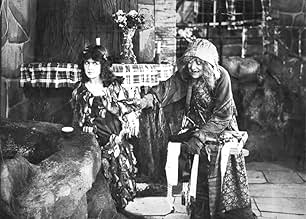
Dorothy Cumming is the vain "Queen Brangomar", Snow White's nemisis. It's ironic that years later she would play the "Virgin Mary" in "King of Kings".....quite a turn around!!!
The rest of the cast handles their roles equally as well as the above mentioned......including Lionel Braham (A Christmas Carol) as "Berthold the Huntsman", and Alice Washburn as "Witch Hex".
Hollywood folklore says that this is the film that inspired Walt Disney to create his animated classic. The similarities between the two are amazing! In the opening of the 1916 film, Snow White is a kitchen maid, going about her daily duties.....very much like Disney's heroine scrubbing the castle steps and crooning to doves. A little brown bird shows Snow White the way to the dwarfs' cottage....just like the animated animals did for her in the cartoon. She also cleans up the cottage, in both versions, before the dwarfs come home, and then falls asleep.
I highly recommend seeking out a copy of this film!!!!
Marguerite Clark recreates her Broadway role as "Snow White", and must have been born to play this faerie tale heroine!!! She is the epitome of this character!!!! I only wish that I was alive in 1912 to see her do the role live on stage.
Creighton Hale (The Cat and the Canary) is dashing as Prince Florimond, Snow White's love interest. It is a thankless role, but he manages to shine.
Dorothy Cumming is the vain "Queen Brangomar", Snow White's nemisis. It's ironic that years later she would play the "Virgin Mary" in "King of Kings".....quite a turn around!!!
The rest of the cast handles their roles equally as well as the above mentioned......including Lionel Braham (A Christmas Carol) as "Berthold the Huntsman", and Alice Washburn as "Witch Hex".
Hollywood folklore says that this is the film that inspired Walt Disney to create his animated classic. The similarities between the two are amazing! In the opening of the 1916 film, Snow White is a kitchen maid, going about her daily duties.....very much like Disney's heroine scrubbing the castle steps and crooning to doves. A little brown bird shows Snow White the way to the dwarfs' cottage....just like the animated animals did for her in the cartoon. She also cleans up the cottage, in both versions, before the dwarfs come home, and then falls asleep.
I highly recommend seeking out a copy of this film!!!!


Did you know
- TriviaThe first movie Walt Disney ever saw.
- GoofsA crew member's shadow is visible on the ground in front of Snow White after Berthold the Huntsman leaves her in the forest.
- Alternate versionsOriginal release prints contained, according to a review by Variety, a sequence in which a stork delivers the infant Snow White to her mother, is not in the Treasures from American Film Archives print.
- ConnectionsFeatured in The Walt Disney Story (1973)
- How long is Snow White?Powered by Alexa
Details
- Runtime
- 1h 3m(63 min)
- Color
- Sound mix
- Aspect ratio
- 1.33 : 1
Contribute to this page
Suggest an edit or add missing content