
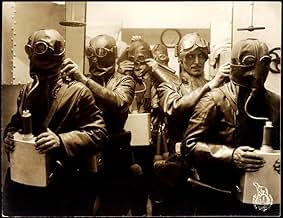
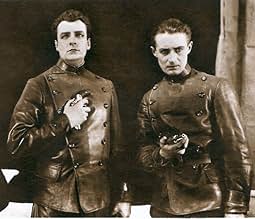
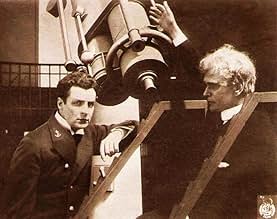
A group of researchers from Earth travel in a spaceship to Mars, where, to big surprise, they find a peaceful vegetarian and pacifist civilization.A group of researchers from Earth travel in a spaceship to Mars, where, to big surprise, they find a peaceful vegetarian and pacifist civilization.A group of researchers from Earth travel in a spaceship to Mars, where, to big surprise, they find a peaceful vegetarian and pacifist civilization.
- Director
- Writers
- Stars







Nils Asther
- Wounded Martian Citizen
- (uncredited)
Alfred Osmund
- Martian Priest
- (uncredited)
- Director
- Writers
- All cast & crew
- Production, box office & more at IMDbPro
6.4898
1
2
3
4
5
6
7
8
9
10
Featured reviews
A TRIP TO MARS (Holger-Madsen, 1918) **1/2
The only time I've seen this rare Scandinavian foray into sci-fi territory mentioned anywhere - prior to its DVD availability courtesy of the Danish Film Institute - was in a literate appraisal of the genre by noted critic Philip Strick (who, incidentally, passed away recently). This alone would make it interesting and a film to seek out - but, alas, while undeniably good to look at (a traditionally Danish quality, I might add), dramatically it turned out to be a major disappointment!
Apart from being technically stilted and plagued by the exaggerated gestures of the actors (a well-established liability of most Silent-era product), it also presents a totally different view of Mars and its inhabitants to the one we've grown accustomed to seeing in later American films tinged by paranoia. Not only is there no concentrated effort to show an alternative landscape for the red planet, but the Martians themselves are merely benevolent humans fitted in Roman-era attire (with the addition of some outlandish accoutrements): apparently, they were once as 'barbaric' as us but have gradually attained enlightenment - and, though their language is different from that of their earthly visitors, they're somehow able to transmit their thoughts to them! In essence, it's clear that the film is infused with the last remnants of 19th century Romanticism (some of the title cards are unbelievably hokey) which Weimar Germany and, then, the Wall Street crash helped eradicate - leading to a change in the general attitude of cinema.
The ultimate intent of the picture, obviously, was a general plea for tolerance and understanding (WWI was still raging when the film emerged); however, while certainly watchable (and short enough at 81 minutes not to lapse into boredom), the almost total lack of tension between the inhabitants of the two planets - where, back home, it's represented by the ripe but highly amusing villainy of a Mephistophelean character who, eventually, gets his just desserts by way of a lightning bolt! - makes for an altogether dull narrative. Besides, virtually none of the occupants of the vessel - which itself constitutes nothing more fanciful than an airship - who have been assembled from all over the world (and are contemplating mutiny against their stoic captain when the journey takes longer than expected!) get to do much of anything once they land on Mars!!
Apart from being technically stilted and plagued by the exaggerated gestures of the actors (a well-established liability of most Silent-era product), it also presents a totally different view of Mars and its inhabitants to the one we've grown accustomed to seeing in later American films tinged by paranoia. Not only is there no concentrated effort to show an alternative landscape for the red planet, but the Martians themselves are merely benevolent humans fitted in Roman-era attire (with the addition of some outlandish accoutrements): apparently, they were once as 'barbaric' as us but have gradually attained enlightenment - and, though their language is different from that of their earthly visitors, they're somehow able to transmit their thoughts to them! In essence, it's clear that the film is infused with the last remnants of 19th century Romanticism (some of the title cards are unbelievably hokey) which Weimar Germany and, then, the Wall Street crash helped eradicate - leading to a change in the general attitude of cinema.
The ultimate intent of the picture, obviously, was a general plea for tolerance and understanding (WWI was still raging when the film emerged); however, while certainly watchable (and short enough at 81 minutes not to lapse into boredom), the almost total lack of tension between the inhabitants of the two planets - where, back home, it's represented by the ripe but highly amusing villainy of a Mephistophelean character who, eventually, gets his just desserts by way of a lightning bolt! - makes for an altogether dull narrative. Besides, virtually none of the occupants of the vessel - which itself constitutes nothing more fanciful than an airship - who have been assembled from all over the world (and are contemplating mutiny against their stoic captain when the journey takes longer than expected!) get to do much of anything once they land on Mars!!
Himmelskibet is available again
I saw this film from 1918 recently at our local Helsinkian film archive. It seems that the Danish Film Institute has reconstructed it in 2006 to celebrate the 100th anniversary of Nordisk filmcompany, which was one of the largest in the world in the early 20th century. I believe there are several copies with English translations circulating around Europe at the moment.
I found the film fascinating and the trip to Mars well thought out. The plot line is certainly original, but I really don't want to reveal any more of it at the moment, as now the danger of spoiling things for you really exists ;-).
The film is also available on DVD, query the Danish Film Institute (Det Danske Filminstitut) web pages at dfi.dk with 'Himmelskibet' to get more info.
I found the film fascinating and the trip to Mars well thought out. The plot line is certainly original, but I really don't want to reveal any more of it at the moment, as now the danger of spoiling things for you really exists ;-).
The film is also available on DVD, query the Danish Film Institute (Det Danske Filminstitut) web pages at dfi.dk with 'Himmelskibet' to get more info.
A Pacifist Sci-Fi Film
The early first days of the last century were times of great human curiosity about new technologies and the marvellous possibilities in the world of science; startling discoveries and new inventions set the world on the path to modernity. Unfortunately, this time of enlightenment also coincided with terrible conflicts and war, mankind at its worst.
That human duality is very well reflected in the Danish film "Himmelskibet" (1918), directed by the great director Herr Holger-Madsen. It is a sci-fi film that includes a clear and sincere pacifist claim.
The film tells of the eagerness and hardships of the sea captain Herr Avanti Planetaros, now reconverted into a space captain, and his project of a trip to Mars. Before embarking on his particular space odyssey, Captain Planetaros will have to bear the incredulity and the scorn of many conservative astronomers, especially Professor Dubius ( ah, what a proper name ) . In spite of such indifference and after many troubles and years of work, the spaceship "Excelsior" is finally constructed and Captain Planetaro's trip to Mars goes from dream to reality. Once on Mars, Captain Planetaros and his crew finds an advanced society in which peace is a way of life among its citizens.
Filmed during the terrible years of WWI, "Himmelskibet" was obviously influenced by that devastating conflict that destroyed Europe during four miserable years. The message of peace and morality comes from the archaic but advanced Martian society which hopes to influence the Terrestrial civilization and wean it from such bad habits as violence, wine and canned meat.
So, Martians will show Terrestrials the way to achieve a better society on Earth with pacifist messages reminiscent of those of religion and pious morality, and in stark contrast to the bad behaviour on earth which has wrought so much unhappiness through the centuries. The Martians hope their philosophy will be spread on Earth once Planetaros and his crew returns home.
In these modern times in which the movies are full of technological magic, the special effects in "Himmelskibet" are primitive by comparison but are still full of naive charm. In fairness, longhaired and modernen youngsters should remember that Herr Holger-Madsen was also a very modernen youngster in those olden times, a director who was innovative, imaginative and influential.
It must be said too that this Herr Graf thought that instead of journeying through space to Mars, Captain Planetaros may have travelled back in time to ancient Greece since the Martian citizens wear white and classical robes so reminiscent of the Hellene imaginarium ( Martians may look like Greeks but in comparison they are crashing bores ). However, in spite of its naive ways, the film effectively conveys its important message and one that is no less valid today where mankind still dreams of a world of peace and cooperation. Alas, even after Captain Planetaros' trip to Mars, the world seems not to have grown in wisdom.
And now, if you'll allow me, I must temporarily take my leave because this German Count must make love to one of his Teutonic heiress and war with the other one.
That human duality is very well reflected in the Danish film "Himmelskibet" (1918), directed by the great director Herr Holger-Madsen. It is a sci-fi film that includes a clear and sincere pacifist claim.
The film tells of the eagerness and hardships of the sea captain Herr Avanti Planetaros, now reconverted into a space captain, and his project of a trip to Mars. Before embarking on his particular space odyssey, Captain Planetaros will have to bear the incredulity and the scorn of many conservative astronomers, especially Professor Dubius ( ah, what a proper name ) . In spite of such indifference and after many troubles and years of work, the spaceship "Excelsior" is finally constructed and Captain Planetaro's trip to Mars goes from dream to reality. Once on Mars, Captain Planetaros and his crew finds an advanced society in which peace is a way of life among its citizens.
Filmed during the terrible years of WWI, "Himmelskibet" was obviously influenced by that devastating conflict that destroyed Europe during four miserable years. The message of peace and morality comes from the archaic but advanced Martian society which hopes to influence the Terrestrial civilization and wean it from such bad habits as violence, wine and canned meat.
So, Martians will show Terrestrials the way to achieve a better society on Earth with pacifist messages reminiscent of those of religion and pious morality, and in stark contrast to the bad behaviour on earth which has wrought so much unhappiness through the centuries. The Martians hope their philosophy will be spread on Earth once Planetaros and his crew returns home.
In these modern times in which the movies are full of technological magic, the special effects in "Himmelskibet" are primitive by comparison but are still full of naive charm. In fairness, longhaired and modernen youngsters should remember that Herr Holger-Madsen was also a very modernen youngster in those olden times, a director who was innovative, imaginative and influential.
It must be said too that this Herr Graf thought that instead of journeying through space to Mars, Captain Planetaros may have travelled back in time to ancient Greece since the Martian citizens wear white and classical robes so reminiscent of the Hellene imaginarium ( Martians may look like Greeks but in comparison they are crashing bores ). However, in spite of its naive ways, the film effectively conveys its important message and one that is no less valid today where mankind still dreams of a world of peace and cooperation. Alas, even after Captain Planetaros' trip to Mars, the world seems not to have grown in wisdom.
And now, if you'll allow me, I must temporarily take my leave because this German Count must make love to one of his Teutonic heiress and war with the other one.
A great early sci-fi
I don't know of any other full length science fiction film that was made before The Trip to Mars. So in that sense it's the first. I watched other silent sci-fi films from the beginning of the 20th century but all of them were no longer than 15 minutes, and this one was the first of that era that I took seriously.
It held my attention through the movie and it has some very nice and moving scenes. Despite being silent the makers managed to pack it with an interesting and engaging plot, good actors play, science fiction, drama, adventure and a love story. It has an amazing well-built spaceship and special effects are fairly good for the time. The film has very strong religious and Christianity-rooted undertones with a message of hope for humanity plagued with murder, hatred and deceit. Another surprise was that the film was nothing like many other sci-fi movies, most of which came out of Hollywood - just clichés that were about either aliens being vicious monsters, or some oversexed alien women, or an imbecile earth superhero. This one does offer the viewer a chance to engage his brain and heart which is probably more important that the above mentioned infantile and unintelligent consumer rubbish.
So it was quite an unexpected surprise to see such an old and yet very good film and I very much recommend it to any lover of science fiction who can be interested in the oldies just as much as the modern cinema and likes to get something out of film.
It held my attention through the movie and it has some very nice and moving scenes. Despite being silent the makers managed to pack it with an interesting and engaging plot, good actors play, science fiction, drama, adventure and a love story. It has an amazing well-built spaceship and special effects are fairly good for the time. The film has very strong religious and Christianity-rooted undertones with a message of hope for humanity plagued with murder, hatred and deceit. Another surprise was that the film was nothing like many other sci-fi movies, most of which came out of Hollywood - just clichés that were about either aliens being vicious monsters, or some oversexed alien women, or an imbecile earth superhero. This one does offer the viewer a chance to engage his brain and heart which is probably more important that the above mentioned infantile and unintelligent consumer rubbish.
So it was quite an unexpected surprise to see such an old and yet very good film and I very much recommend it to any lover of science fiction who can be interested in the oldies just as much as the modern cinema and likes to get something out of film.
green-cheese Danish
I saw "Heaven-Ship" ("Himmelskibet") at the 2006 Cinema Muto festival in Sacile, Italy. What a great movie! This Danish steampunk saga is the stirring tale of the first trip to Mars, in an era when wireless telegraphy hasn't been perfected. The spaceship hasn't got a radio, and the heroes are brought back from the landing field via horsecart. Even the intertitles are delightful ... some of them written in rhymed couplets in the original Danish.
The actors' performances are laughable, largely hand-to-brow histrionics. But the sets are astonishing, easily surpassing anything done by Georges Melies a decade earlier (or in "Die Frau im Mond" a decade later). Of course, the plot is simplistic. The spaceship's crew consist of seven thin guys and one fat slob. Guess which one cracks. Interestingly, everyone in this movie (except the dubious Professor Dubius) ardently believes in God. Even the Martians.
Impressively, the scenarists have the sense to acknowledge that a trip to Mars is no doddle: the title cards establish that it takes the scientists two years to build their spaceship (which has an airscrew) and six months to reach Mars. During the construction sequence, there's one extremely impressive set-up which must have been choreographed: dozens of workers all hustle through the worksite in different directions, with no hesitations and no collisions. The Danish scientists christen their ship "Excelsior" ("packing materials"?) and set course for Mars, even though the Moon and Venus are closer. When the ship (which flies horizontally, not vertically) lands on Mars, it is greeted by "Marsboerne" -- Martians -- who turn out to be Nordic blondes, all highly-developed pacifists and vegetarians. (As a highly-developed meat-eater, I resented that part.)
Conveniently enough, Mars turns out to have an atmosphere just like Earth's, as well as equal gravity. In an exterior shot of the Martian landscape, the Sun's apparent magnitude when seen from Mars is the same as it is when viewed from Earth. I also couldn't help observing that all the wise elder Martians are male. In fact, female elders are thin on the ground here: both the Earth-born hero and the Martian maiden are motherless. The Martians speak a universal language, wear ankhs on their robes, and greet the Earth visitors with a globe of Earth ... which of course they hold with its North Pole upward.
That Martian maiden is Marya, played by an ethereally beautiful Danish actress. (Waiter, I'll have some of that Danish!) We see a Martian dance of chastity which might have been twee or ludicrous but is actually quite touching and beautiful. Also, the Martian funeral scene features one shot which reminded me of a sequence in "The Seventh Seal". I wonder if Ingmar Bergman saw this film.
"Himmelskibet" has a few flaws, but its production design and its other merits very far outweigh its drawbacks. The Ole Olsen who is named in the credits (and who appears in a brief prologue) is no relation to Chic Johnson's vaudeville partner from "Hellzapoppin". I would give "Himmelskibet" a 12, but the scale tops off at 10 ... so, a full 10 out of 10 for this delightful trip to Mars, the blonde planet!
The actors' performances are laughable, largely hand-to-brow histrionics. But the sets are astonishing, easily surpassing anything done by Georges Melies a decade earlier (or in "Die Frau im Mond" a decade later). Of course, the plot is simplistic. The spaceship's crew consist of seven thin guys and one fat slob. Guess which one cracks. Interestingly, everyone in this movie (except the dubious Professor Dubius) ardently believes in God. Even the Martians.
Impressively, the scenarists have the sense to acknowledge that a trip to Mars is no doddle: the title cards establish that it takes the scientists two years to build their spaceship (which has an airscrew) and six months to reach Mars. During the construction sequence, there's one extremely impressive set-up which must have been choreographed: dozens of workers all hustle through the worksite in different directions, with no hesitations and no collisions. The Danish scientists christen their ship "Excelsior" ("packing materials"?) and set course for Mars, even though the Moon and Venus are closer. When the ship (which flies horizontally, not vertically) lands on Mars, it is greeted by "Marsboerne" -- Martians -- who turn out to be Nordic blondes, all highly-developed pacifists and vegetarians. (As a highly-developed meat-eater, I resented that part.)
Conveniently enough, Mars turns out to have an atmosphere just like Earth's, as well as equal gravity. In an exterior shot of the Martian landscape, the Sun's apparent magnitude when seen from Mars is the same as it is when viewed from Earth. I also couldn't help observing that all the wise elder Martians are male. In fact, female elders are thin on the ground here: both the Earth-born hero and the Martian maiden are motherless. The Martians speak a universal language, wear ankhs on their robes, and greet the Earth visitors with a globe of Earth ... which of course they hold with its North Pole upward.
That Martian maiden is Marya, played by an ethereally beautiful Danish actress. (Waiter, I'll have some of that Danish!) We see a Martian dance of chastity which might have been twee or ludicrous but is actually quite touching and beautiful. Also, the Martian funeral scene features one shot which reminded me of a sequence in "The Seventh Seal". I wonder if Ingmar Bergman saw this film.
"Himmelskibet" has a few flaws, but its production design and its other merits very far outweigh its drawbacks. The Ole Olsen who is named in the credits (and who appears in a brief prologue) is no relation to Chic Johnson's vaudeville partner from "Hellzapoppin". I would give "Himmelskibet" a 12, but the scale tops off at 10 ... so, a full 10 out of 10 for this delightful trip to Mars, the blonde planet!


Did you know
- TriviaReported by the British press in 1919 to have cost £20,000. After inflation this would be approaching £1.5 million in 2024.
- Quotes
Avanti Planetaros - Captain of the Space Ship: Glowing and calling planets... I am coming!
Details
- Release date
- Country of origin
- Official site
- Language
- Also known as
- Nebeska ladja
- Production company
- See more company credits at IMDbPro
- Runtime
- 1h 37m(97 min)
- Color
- Sound mix
- Aspect ratio
- 1.33 : 1
Contribute to this page
Suggest an edit or add missing content