IMDb RATING
7.3/10
2.5K
YOUR RATING
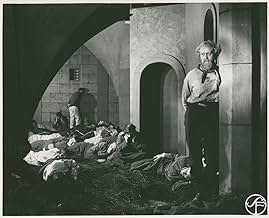
Terje Vigen, a sailor, suffers the loss of his family through the cruelty of another man. Years later, when his enemy's family finds itself dependent on Terje's beneficence, Terje must decid... Read allTerje Vigen, a sailor, suffers the loss of his family through the cruelty of another man. Years later, when his enemy's family finds itself dependent on Terje's beneficence, Terje must decide whether to avenge himself.Terje Vigen, a sailor, suffers the loss of his family through the cruelty of another man. Years later, when his enemy's family finds itself dependent on Terje's beneficence, Terje must decide whether to avenge himself.
- Director
- Writers
- Stars
Eric Abrahamsson
- En fiskare
- (uncredited)
Olof Ås
- Utkiken på den engelska korvetten
- (uncredited)
Hildur Carlberg
- En kvinna i byn
- (uncredited)
Gucken Cederborg
- Den nya hustrun i Terjes stuga
- (uncredited)
John Ekman
- Norsk fånge i fängelset
- (uncredited)
Nils Elffors
- En av Terjes kamrater (1)
- (uncredited)
Emil Fjellström
- En fiskare på stranden
- (uncredited)
Julius Hälsig
- Engelsk officer i fängelset
- (uncredited)
Herman Lantz
- En av Terjes kamrater (2)
- (uncredited)
William Larsson
- Den nye mannen i Terjes stuga
- (uncredited)
- …
Gunnar Norberg
- Self
- (uncredited)
Hans Sjöblom
- En liten pojke
- (uncredited)
Nanny Sjöblom
- Mor med son i knäet
- (uncredited)
Fritz Ström
- Vitskäggig gammal gubbe
- (uncredited)
- Director
- Writers
- All cast & crew
- Production, box office & more at IMDbPro
7.32.5K
1
2
3
4
5
6
7
8
9
10
Featured reviews
Victor Sjöström Gives Birth to an undying formula of Forgiveness over Vengeance in the most expensive Swedish film of its time.
Terje Vigen / A Man There Was (1917) :
Brief Review -
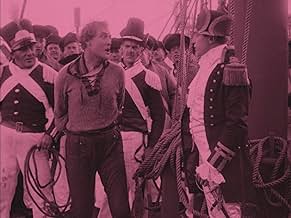
Victor Sjöström Gives Birth to an undying formula of Forgiveness over Vengeance in the most expensive Swedish film of its time. "Ingeborg Holm" (1913) by Victor Sjöström had a huge impact on the Swedish audience as well as foreign audiences who were underestimating Swedish films at the time. With Terje Vigen, he made the most expensive Swedish film of the time and apparently kicked off the golden era for Swedish cinema. I have witnessed this compassionate formula of "forgiveness" in many movies made in the last 10 decades, including a film made in 2022. Recently, there was a Bollywood film called "Jalsa", which used the same formula, while the most acclaimed works based on the same formula in the past few years had to be "Rubaru Roshni" (2019) and "Kaanekkaane" (2021). Knowing Terje Vigen has set the formula is nothing less than a blessing. I mean, I can't name all those hundreds of films that used the same formula in this brief write-up, but come on, how can they all be termed great for copying it from an old, unknown film? So let's give credit where it's due. The film is about Terje, a sailor who suffers the loss of his wife and kid during the Napoleonic Wars of 1809. He is captured by a brutal British officer, which changes his life forever and leaves him all alone in the world. Will he get his revenge? That's where the kick is. I won't spoil it, but I guess you already know it. Victor Sjöström's trendsetter drama is full of life, tragedy, drama, and conflicts, and all are relatable. You can find yourself in Terje, especially when you assume it's anything before the 21st century. Apart from pioneering dramatic conflicts, Terje Vigen also set benchmarks for big-scale movie making at that time. Overall, another great film in Master Victor Sjöström's filmography.
RATING - 7.5/10*
By - #samthebestest.
Victor Sjöström Gives Birth to an undying formula of Forgiveness over Vengeance in the most expensive Swedish film of its time. "Ingeborg Holm" (1913) by Victor Sjöström had a huge impact on the Swedish audience as well as foreign audiences who were underestimating Swedish films at the time. With Terje Vigen, he made the most expensive Swedish film of the time and apparently kicked off the golden era for Swedish cinema. I have witnessed this compassionate formula of "forgiveness" in many movies made in the last 10 decades, including a film made in 2022. Recently, there was a Bollywood film called "Jalsa", which used the same formula, while the most acclaimed works based on the same formula in the past few years had to be "Rubaru Roshni" (2019) and "Kaanekkaane" (2021). Knowing Terje Vigen has set the formula is nothing less than a blessing. I mean, I can't name all those hundreds of films that used the same formula in this brief write-up, but come on, how can they all be termed great for copying it from an old, unknown film? So let's give credit where it's due. The film is about Terje, a sailor who suffers the loss of his wife and kid during the Napoleonic Wars of 1809. He is captured by a brutal British officer, which changes his life forever and leaves him all alone in the world. Will he get his revenge? That's where the kick is. I won't spoil it, but I guess you already know it. Victor Sjöström's trendsetter drama is full of life, tragedy, drama, and conflicts, and all are relatable. You can find yourself in Terje, especially when you assume it's anything before the 21st century. Apart from pioneering dramatic conflicts, Terje Vigen also set benchmarks for big-scale movie making at that time. Overall, another great film in Master Victor Sjöström's filmography.
RATING - 7.5/10*
By - #samthebestest.
A Must-See
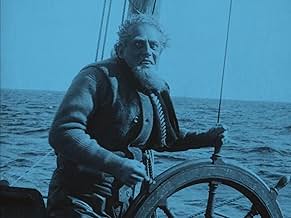
For students of film, this is a must-see. Sjostrom proved to be highly influential in the development of Scandanavian and Northern European film. His output was prolific, but TERJE VIGEN is one of my favorites-- it captures well the angst and anxiety so pregnant among Scandanavian and Danish masters (Dreyer and Bergman come to mind as spiritual successors/contemporaries of Sjostrom). TERJE VIGEN, in particular, is one of those stories that will haunt but also reward. The cinematography is what one would expect of a film that is literally more than 100 years old-- innovative for its time, it is very subtle. Where this film really shines is in the phenomenal acting, especially by Sjostrom himself.
Beautiful images and message
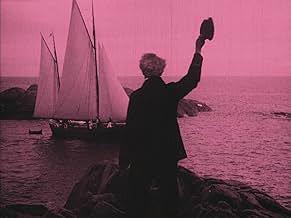
Beautiful cinematography along the rugged Norwegian coastline and a powerful message of forgiveness are the highlights of this film from Victor Sjöström, which was a landmark in its day. It's Ibsen's story of a man who tries to get past a British blockade to feed his hungry wife and baby, but is caught and imprisoned for five years. By the time he gets home, they've perished. I went in unfamiliar with the story and thought it might be a Tarantino-like tale 1917-style, especially when the man comes across the British captain who showed him no mercy and has a chance for vengeance. It's such a touching thing that he doesn't do so given the depths to which mankind was sinking in WWI at the time.
Channeling Christ really gives an extra meaning to the backlit crosses we see in the cemetery in one of the film's beautiful shots. Another that stands out in my mind is the old man sitting and staring out at the sunset over the water, and there is real depth of feeling throughout the film. The only reason for the slightly lower review score was the overall pace, which I found slow for such a simple story, with the exception of the scenes of tension. Sjöström immerses us so well into this world we can practically taste the sea salt and I love him for it, I just wish there had been a little meat on the bones of this story. On another night my score may have been higher, and this is worth seeing though.
One of the most innovative early films
Made by the legendary Victor Sjöström at the dawn of cinema, this 1917 picture is a true masterpiece, as per usual when it comes to Sjöström.
The art of silent filmmaking is one somewhat lost in time, focusing almost exclusively on the visual language and cinematography - and in that department, Terje Vigen shines. It's such a beautifully shot movie and the slow pacing and long shots tell so much more than any words ever could.
The story itself is very well-written as well, and the actors do a good job of conveying the characters.
Overall, one of the most important and innovative films ever made!
The art of silent filmmaking is one somewhat lost in time, focusing almost exclusively on the visual language and cinematography - and in that department, Terje Vigen shines. It's such a beautifully shot movie and the slow pacing and long shots tell so much more than any words ever could.
The story itself is very well-written as well, and the actors do a good job of conveying the characters.
Overall, one of the most important and innovative films ever made!
A Punch to the Gut
If this movie had been made in 1923, I'd have been more blasé, but for 1916 it's nothing short of miraculous.
The open-air filming is smooth and well-executed. The emotional rawness is hit hard but never gets overheated. The acting is intense but does not stray into laughable "stagger-and-clutch." Dutiful fidelity to Ibsen's poem may cramp the subtitles, but never interferes with masterful story-telling in the film itself.
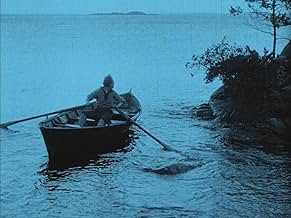
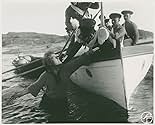
There is one sequence, in which a launch from a British warship destroys a fisherman's rowboat and then attempts to hunt down the fisherman while he's swimming for his life underwater, that is an absolute classic that will live in your memory.
This film is short, but very powerful, and worth going the extra mile to see.
The open-air filming is smooth and well-executed. The emotional rawness is hit hard but never gets overheated. The acting is intense but does not stray into laughable "stagger-and-clutch." Dutiful fidelity to Ibsen's poem may cramp the subtitles, but never interferes with masterful story-telling in the film itself.
There is one sequence, in which a launch from a British warship destroys a fisherman's rowboat and then attempts to hunt down the fisherman while he's swimming for his life underwater, that is an absolute classic that will live in your memory.
This film is short, but very powerful, and worth going the extra mile to see.
Did you know
- GoofsA title card references the year of the blockade as 1809. Great Britain and Sweden were allies in 1809, so there was no blockade. However, after she was forced to make peace with France after losing The Finnish War and the Pomeranian War, Sweden declared war against Great Britain. The Anglo-Swedish War (1810-1812) existed only on paper: British ships were still allowed to dock on the island of Hanö and trade with the Baltic states. Great Britain blockaded Sweden during World War I.
- Quotes
[first lines]
Title Card: On a barren, remote islet, there lived an odd, grizzled man.
- ConnectionsEdited into Catalogue of Ships (2008)
Details
Box office
- Budget
- SEK 60,000 (estimated)
- Runtime
- 1h 5m(65 min)
- Color
- Sound mix
- Aspect ratio
- 1.33 : 1
Contribute to this page
Suggest an edit or add missing content