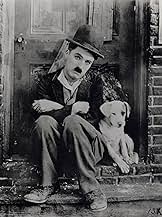
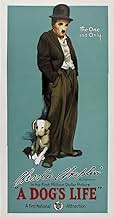
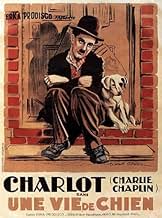
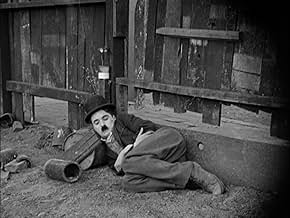
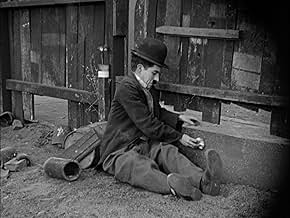
The Little Tramp and his dog companion struggle to survive in the inner city.The Little Tramp and his dog companion struggle to survive in the inner city.The Little Tramp and his dog companion struggle to survive in the inner city.
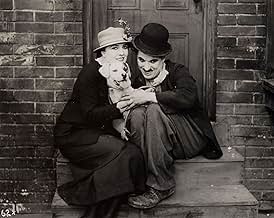
Edna Purviance
- Bar Singer
- (uncredited)
Dave Anderson
- Bartender
- (uncredited)
Bert Appling
- Unemployed Man
- (uncredited)
Albert Austin
- Crook
- (uncredited)
Henry Bergman
- Fat Unemployed Man
- (uncredited)
- …
Alva D. Blake
- Man in Dance Hall
- (uncredited)
Mel Brown
- Employment Agency Clerk
- (uncredited)
- …
Minnie Chaplin
- Dance-Hall Dramatic Lady
- (uncredited)
Syd Chaplin
- Lunchwagon Owner
- (uncredited)
Dorothy Cleveland
- Woman in Dance Hall
- (uncredited)
Slim Cole
- Unemployed Man
- (uncredited)
Margaret Cullington
- Woman in Dance Hall
- (uncredited)
Billy Dill
- Man in Dance Hall
- (uncredited)
Margaret Dracup
- Woman in Dance Hall
- (uncredited)
Jack Duffy
- Man in Dance Hall
- (uncredited)
Robert Dunbar
- Old Man in Dance Hall
- (uncredited)
Ella Eckhardt
- Woman in Dance Hall
- (uncredited)
- Director
- Writer
- All cast & crew
- Production, box office & more at IMDbPro
7.610.4K
1
2
3
4
5
6
7
8
9
10
Featured reviews
master of comic timing
By the time he made `A Dog's Life', Charlie Chaplin was already a master of cinematic comic timing. Editing techniques had not developed to the point at which they would be much help to Chaplin's physical comedy gags, so laughs required expertly handled choreography. Chaplin must have rehearsed countless takes to get each scene just right. The incredible opening sequence, seemingly shot all in one take, is particularly amazing. Chaplin and his fellow actors synchronize their movements perfectly so that, no matter what action they undertake, they always arrive on opposite sides of the fence at the exact same moment. Additionally, they make each movement at a natural pace so that, rehearsed though they may be, their motions always seem spontaneous and believable. You never get the sense that Chaplin or the policemen are speeding up or slowing down.
Rating: 6.5
Rating: 6.5
Very funny !
Let's face it : Chaplin's short films, before 1917, are not so good and funny anymore. After 1917, and waiting to make longer films, there are three films I'm really found of : The Imigrant, Shoulder Arms and A Dog's Life. I love A Dog's Life because Chaplin was never trampier than in this film. He's poor, miserable, probably dirty! He really looks like a real tramp! So is his dog! The dog is simply wonderful in this film!
Funny gags all the way. I'm mad about a scene in the café, when Edna Purviance sings a very sad song and makes everybody's crying. In my version, on video, they put some strange music while she sings, like a saw sound. It's a very funny sounds effect for the image of miss Purviance! The story is very sample and warm. This is Chaplin's shorts at his best!
The Kid / The Dog
Played as a double feature, A Dog's Life is the short comedy that played with one of Chaplin's famous and most adored comedies The Kid. Set in the same atmosphere of the depressing ghettos of 1918, The Tramp becomes friends with a stray dog. A lost soul much like himself, the Tramp and the tramp become friends and become a team. After finding a stolen loot, the two work together to re-take the money they found. The ending is cute and nothing more. For a short, it does the trick of making the audience laugh. The title indicated that this is the story of the dog, when in fact, the Dog is the Tramp! Both are homeless and without love in their lives. By the end of the movie, they both end up finding true love and end up living a better life, together.
The Little Tramp as a little tramp.
A Dog's Life has more layers than the usual Chaplin films, taking the character slightly more literally than he usually does. The overall appeal of Chaplin's Little Fellow is that he is such an everyman that he can be thrust into an almost endless multitude of situations, and Chaplin uses his limitless talent to mold it into brilliant, humanitarian farce. In this film, the little tramp is more of a homeless fellow than usual (I think he's usually just poor and struggling), and in the process he be-friends another homeless and struggling tramp.
There are some great scenes in the film, although even at only 40 minutes it is a bit too long for the material to support. One scene in particular, where Charlie knocks a bully unconscious, is going to be the most memorable one in the movie, along with a scene where he outsmarts some police officers. There is a charming romance that is neither cloying nor overly involving, just the right amount for a short, light-hearted comedy. This probably would have worked even better as a two reel film, but as it is it stands as one of Chaplin's better three reelers.
One of my favorites
Of Charlie Chaplin's many works, "A Dog's Life" is in my top 5, under "The Kid", "City Lights" and "Modern Times". Though just a short, I think this film is one of Chaplin's funniest and most poignant of them all. It had me laughing the whole time and this is the film that made me fall in love with his hands: It was the miming scene where the Tramp has to pretend to be the bully he's just knocked out, to get the wallet back, simply by using hand gestures! It's a moment that shines for all silent movies, showing how little sound is needed to communicate - it's a favorite scene of mine. This is a great film, and especially when coupled with "The Kid" (Chaplin's best work, I think, and my favorite film of all time) how could *anyone* refuse?
Did you know
- TriviaThis was Charles Chaplin's first film for First National Pictures under a $1M contract where Chaplin had full creative control over his films for the first time.
- GoofsDuring the fight at the lunch cart, one of the props holding up the awning gets knocked away. In subsequent shots, the prop is back in place.
- Quotes
Title Card: When dreams come true.
- ConnectionsEdited into The Chaplin Revue (1959)
Details
- Release date
- Country of origin
- Official sites
- Languages
- Also known as
- I Should Worry
- Filming locations
- Production company
- See more company credits at IMDbPro
- Runtime
- 33m
- Color
- Sound mix
- Aspect ratio
- 1.33 : 1
Contribute to this page
Suggest an edit or add missing content