IMDb RATING
7.2/10
12K
YOUR RATING

A frail waif, abused by her brutal boxer father in London's seedy Limehouse District, is befriended by a sensitive Chinese immigrant with tragic consequences.A frail waif, abused by her brutal boxer father in London's seedy Limehouse District, is befriended by a sensitive Chinese immigrant with tragic consequences.A frail waif, abused by her brutal boxer father in London's seedy Limehouse District, is befriended by a sensitive Chinese immigrant with tragic consequences.
- Director
- Writers
- Stars
- Awards
- 1 win total
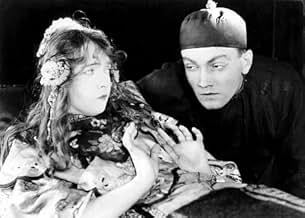
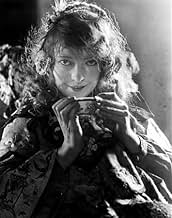
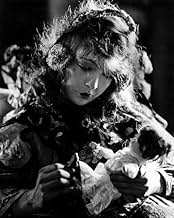
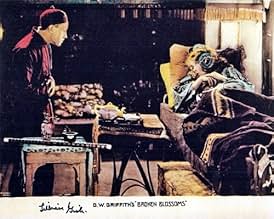

Lillian Gish
- Lucy - The Girl
- (as Miss Lillian Gish)

Richard Barthelmess
- Cheng Huan - The Yellow Man
- (as Mr. Richard Barthelmess)


Edward Peil Sr.
- Evil Eye
- (as Edward Peil)


Ernest Butterworth
- Secondary Role
- (uncredited)
Frederic Hamen
- Secondary Role
- (uncredited)
Wilbur Higby
- London Policeman
- (uncredited)
Man-Ching Kwan
- Buddhist Monk
- (uncredited)
Bobbie Mack
- Ringside Employee
- (uncredited)

Moy Ming
- Minor Role
- (uncredited)
Steve Murphy
- Fight Spectator
- (uncredited)

George Nichols
- Police Constable
- (uncredited)

Karla Schramm
- Burrows' Girlfriend
- (uncredited)
Bessie Wong
- Girl in China
- (uncredited)
- Director
- Writers
- All cast & crew
- Production, box office & more at IMDbPro
7.211.6K
1
2
3
4
5
6
7
8
9
10
Featured reviews
Personally the best ever silent movie, completed in 1983
This has been one of my all-time favourite films since I taped it off UK Channel 4 1st October 1988 on its second showing, one to savour and revel in every few years. There really is no choice: the only version worth seeing is this one, the Brownlow & Gill UK remaster with Louis F. Gottchalk's themes lushly orchestrated by David Cullen and Carl Davis and the Thames Silents Orchestra. From a good silent film Broken Blossoms is beautifully transformed into a work of Art, the merger of the music and Billy Bitzer's visuals can be so striking. And the intelligent tinting was gorgeous too. Over the years I've even played it just for the music sometimes!
The story? Depressed Chinese ex-missionary in London falls under the spell of listless poverty-stricken beautiful white 15 yo daughter of violent boxer. The crafty and base whites think the worst, but we know that the yellow man's love remained pure - even his worst foe says this ... I know that most people today would hoot at the acting abilities displayed: Lillian Gish's pathetic submissiveness, Donald Crisp's over the top savage expressions and Richard Barthelmess's determinedly serious inscrutability, but appreciation of silent melodramas as a genre is really required rather than simply selecting just one film to watch, such as this. And then again some people have to get over a white man playing a Chinese man whilst simultaneously approving of miscegenation in these much more enlightened times! Would these same people be bothered if a Chinese played a white man? Along with Birth of a Nation and Intolerance, this was Griffiths' best work, pinnacles of the cinema.
Utterly spellbinding poetic stuff for the enlightened, dreadful if your favourites are cgi-riddled and no older than 6 months. And don't expect a remotely happy ending! The beauty that all the world missed smote him to the heart (paraphrase).
The story? Depressed Chinese ex-missionary in London falls under the spell of listless poverty-stricken beautiful white 15 yo daughter of violent boxer. The crafty and base whites think the worst, but we know that the yellow man's love remained pure - even his worst foe says this ... I know that most people today would hoot at the acting abilities displayed: Lillian Gish's pathetic submissiveness, Donald Crisp's over the top savage expressions and Richard Barthelmess's determinedly serious inscrutability, but appreciation of silent melodramas as a genre is really required rather than simply selecting just one film to watch, such as this. And then again some people have to get over a white man playing a Chinese man whilst simultaneously approving of miscegenation in these much more enlightened times! Would these same people be bothered if a Chinese played a white man? Along with Birth of a Nation and Intolerance, this was Griffiths' best work, pinnacles of the cinema.
Utterly spellbinding poetic stuff for the enlightened, dreadful if your favourites are cgi-riddled and no older than 6 months. And don't expect a remotely happy ending! The beauty that all the world missed smote him to the heart (paraphrase).
An Americanized London Story
It is rather interesting to compare the silent D.W. Griffith BROKEN BLOSSOMS with its inspiration: the 1916 Thomas Burke short story The Chink And The Child, published in Limehouse Nights (Grant Richards Limited, London). Griffith has deliberately left out, added and changed parts of the story in his film. When Burke's collection of Limehouse stories was published it was feared that the book would be barred by the censor. Recently books by Vere Stacpoole (The Blue Lagoon) and D.H. Lawrence (The Rainbow) has been suppressed, as 'frankness in fiction was frowned upon...' (John Gawsworth - Foreword to: The Best Stories of Thomas Burke, Phoenix House, London, 1950). There were enough worrying themes in the story: its sadism, the utterly impossible interracial love affair and the girl's youth. In Burke's story Lucy is found in an opium joint, where a prostitute has taken her to make a profit out of the virgin. Cheng rescues the 'alabaster Cockney child' - she is only twelve - to bring her '...love and death.' Burke's poetic prose is not always graphic: «He took her hand and kissed it; repeated the kiss upon her cheek and lip and little bosom, twining his fingers in her hair. Docilely, and echoing the smile of his lemon lips in a way that thrilled him almost to laughter, she returned his kisses impetuously, gladly. ... And she was his; her sweet self and her prattle, and her birdlike ways were all his own. Oh, beautifully they loved. ...» Nevertheless elsewhere Burke clarifies the nature of their relation as « It may be that he forgot that he was in London and not in Tuan-tsen. It may be that he did not care. Of that nothing can be told. All that is known is that his love was a pure and holy thing.» Griffith's additions vary from Lucy's artificial smile to Cheng's religious mission. The Christian missionary is also Griffith's invention. He has a dig at Western Christian morality sending missionaries around the world while there's still enough to be done in Battling Burrows's own home town. Near the end Cheng kills Battling Burrows with a handgun as in any American western. In Burke's London Limehouse nights a snake deals with Battling Burrows. Was such a venomous revenge not personal enough to Griffith's American taste?
Griffith Makes a Course Correction.
D.W.Griffith returns for another one and it would appear that he was still fighting with the demons left over from A Birth of a Nation (1915). He again tried to deal with the fires of racism, but this time with a love story and another appearance by Lillian Gish, in Broken Blossoms (1919). This film's title is actually "Broken Blossoms or the Yellow Man and the Girl". "Yellow Man" refers to the Asian man, Cheng Huan, who falls in love with Gish's Lucy. Right off the bat we get exposed to old time racist terms. The "C" word makes an appearance too. But, Griffith does use this film as a tool to teach a lesson to those who are evil or just plain bad.
It covers a lot of domestic/controversial issues, such as, interracial relationships, child abuse, racism and bullying. It is a hope that this film was the first stepping stone to finding tolerance in the world. It also is a telling lesson about, no matter how civilized you are, you can still do a lot of wrong. Huan (Barthelmess), leaves his homeland to go to England to spread the wisdom of the Buddha to the West and the Anglo-Saxons. It is the biggest mistake he would make in his life. It is a telling story about how the good guy finishes last. The man who comes to the civilized world to try and help make those people better, finds out that he is in the wrong place at the wrong time and nothing but torment befalls him.
Huan assigns himself the job to look after a young woman (Gish), who is terrorized and beaten by her boxer father (Crisp), on a daily basis. Huan has to deal with snitches and liars who align themselves with the evil boxer and in the end finds himself falling into the same dark abyss that he tried to teach others to stay away from. This is an amazing story and has been told many times since, but being that this is a pioneering effort, makes it all the more powerful. True, there are parts that are slow and even boring, but it is that tense situation that starts to build and build until the terrifying and sad end.
8.1 (B MyGrade) = 8 IMDB
It covers a lot of domestic/controversial issues, such as, interracial relationships, child abuse, racism and bullying. It is a hope that this film was the first stepping stone to finding tolerance in the world. It also is a telling lesson about, no matter how civilized you are, you can still do a lot of wrong. Huan (Barthelmess), leaves his homeland to go to England to spread the wisdom of the Buddha to the West and the Anglo-Saxons. It is the biggest mistake he would make in his life. It is a telling story about how the good guy finishes last. The man who comes to the civilized world to try and help make those people better, finds out that he is in the wrong place at the wrong time and nothing but torment befalls him.
Huan assigns himself the job to look after a young woman (Gish), who is terrorized and beaten by her boxer father (Crisp), on a daily basis. Huan has to deal with snitches and liars who align themselves with the evil boxer and in the end finds himself falling into the same dark abyss that he tried to teach others to stay away from. This is an amazing story and has been told many times since, but being that this is a pioneering effort, makes it all the more powerful. True, there are parts that are slow and even boring, but it is that tense situation that starts to build and build until the terrifying and sad end.
8.1 (B MyGrade) = 8 IMDB
"With perhaps a whiff of the lilied pipe still in his brain..."
Turning away from the epic scale of his quintessential movies, Birth of a Nation and Intolerance, director D. W. Griffith turned to an altogether smaller and more intimate story in 1919. Instead of telling a vast tale spanning millennia and featuring a cast of thousands, he focused his attention on the tragic interplay between just three people: a Chinese immigrant to London (Richard Barthelmess), a young waif with whom he develops a brief but touching relationship (Lillian Gish), and her brutish father (Donald Crisp). It's been suggested this was another sop by Griffith to those who had accused him of being a racist due to the content of BoaN although, while Bathelmess' Chinese immigrant is a completely sympathetic character, the thoughtless racist attitudes that were commonplace back then are still very much in evidence. For example, the movie's secondary title is 'The Yellow Man and the Girl', and during a tender love scene, Gish's Lucy says to him: "Why are you so good to me, Chinky?" which tends to break the mood just a tad.
Griffith's trademark use of tiny gestures and changes of expression is very much in evidence in the performances of Barthelmess and Gish, while Crisp, who is barely recognisable as the kindly patriarch of countless 40s flicks, paints a broader picture of the loutish Battling Burrows. This counterpoint between screen father and daughter works well, stressing the fragile nature of Gish's waif, while emphasising the misery of her dependence upon her uncouth father. Barthelmess, meanwhile spends much of his time gazing miserably at the bleakness of the world around him as his character tries to lose himself in a haze of opium after failing to spread the word of peace. Chen seems to be moving through a dream for much of the film, passively allowing himself to be buffered by the world, and only shaking himself from his torpor when Lucy almost literally falls at his feet. This scene, in which Lucy and Chen first meet, is wonderfully atmospheric and beautifully framed and is, strangely, the prelude to the film's weakest segment. Having set the scene beautifully and created a great atmosphere, Griffith allows proceedings to slip into melodrama. While Battling's discovery of Lucy's new friendship is melodrama of the most Victorian kind, the relationship between the two potential lovers goes nowhere which, while perhaps true to the film's title, leaves the story struggling for momentum. Lucy enjoys a few hours of being spoiled by Chen the first time in her life that she ever has been, but there is very little interaction between them, and Chen's apparent consideration of forcing himself on Lucy before finally kissing her sleeve really doesn't ring true at all. In fact, the scene looks as if it were added almost as an afterthought to inject a little suspense.
Nevertheless, BROKEN BLOSSOMS is another example of one of the world's greatest directors operating at somewhere close to the top of his game. In another few years, Griffith's Victorian viewpoint would look horribly outdated to the Roaring Twenties crowd. There were still more classics to come, but in terms of technical and creative accomplishment he had already peaked.
Griffith's trademark use of tiny gestures and changes of expression is very much in evidence in the performances of Barthelmess and Gish, while Crisp, who is barely recognisable as the kindly patriarch of countless 40s flicks, paints a broader picture of the loutish Battling Burrows. This counterpoint between screen father and daughter works well, stressing the fragile nature of Gish's waif, while emphasising the misery of her dependence upon her uncouth father. Barthelmess, meanwhile spends much of his time gazing miserably at the bleakness of the world around him as his character tries to lose himself in a haze of opium after failing to spread the word of peace. Chen seems to be moving through a dream for much of the film, passively allowing himself to be buffered by the world, and only shaking himself from his torpor when Lucy almost literally falls at his feet. This scene, in which Lucy and Chen first meet, is wonderfully atmospheric and beautifully framed and is, strangely, the prelude to the film's weakest segment. Having set the scene beautifully and created a great atmosphere, Griffith allows proceedings to slip into melodrama. While Battling's discovery of Lucy's new friendship is melodrama of the most Victorian kind, the relationship between the two potential lovers goes nowhere which, while perhaps true to the film's title, leaves the story struggling for momentum. Lucy enjoys a few hours of being spoiled by Chen the first time in her life that she ever has been, but there is very little interaction between them, and Chen's apparent consideration of forcing himself on Lucy before finally kissing her sleeve really doesn't ring true at all. In fact, the scene looks as if it were added almost as an afterthought to inject a little suspense.
Nevertheless, BROKEN BLOSSOMS is another example of one of the world's greatest directors operating at somewhere close to the top of his game. In another few years, Griffith's Victorian viewpoint would look horribly outdated to the Roaring Twenties crowd. There were still more classics to come, but in terms of technical and creative accomplishment he had already peaked.
The best of all Griffith films
Many people believe the best Griffith film is "Intolerance"; some stand by "Way Down East" and still others believe in "Birth of a Nation" despite all its problems. However, I think "Broken Blossoms" is the Griffith film which stands the test of time and still rings true today, over 83 years from its debut.
"Broken Blossoms" is the story of two wounded, abused, seemingly hopeless individuals who find comfort and strength in one another. The Chinaman (played by Richard Barthelmess) and little Lucy Burrows (played by Lillian Gish) are as different as night is to day, however they complement each other and give each other what the other needs; Lucy gives the Chinaman respect as a human being, he in turn gives Lucy affection and love.
What happens to the two souls is, in my opinion, one of the most heartbreaking turn of events ever filmed. The brutal treatment of Lucy by her father and the ultimate sadness of the Chinaman at the end of the film always reduce me to tears.
Those who believe that silent movies are inferior to today's craft really needs to see "Broken Blossoms" and open their hearts and minds to a world that is beyond beauty and beyond pain.
"Broken Blossoms" is the story of two wounded, abused, seemingly hopeless individuals who find comfort and strength in one another. The Chinaman (played by Richard Barthelmess) and little Lucy Burrows (played by Lillian Gish) are as different as night is to day, however they complement each other and give each other what the other needs; Lucy gives the Chinaman respect as a human being, he in turn gives Lucy affection and love.
What happens to the two souls is, in my opinion, one of the most heartbreaking turn of events ever filmed. The brutal treatment of Lucy by her father and the ultimate sadness of the Chinaman at the end of the film always reduce me to tears.
Those who believe that silent movies are inferior to today's craft really needs to see "Broken Blossoms" and open their hearts and minds to a world that is beyond beauty and beyond pain.


Did you know
- TriviaThe film was produced by D.W. Griffith for Adolph Zukor's Artcraft company, a subsidiary of Paramount Pictures. However, when Griffith delivered the final print of the film to Zukor, the producer was outraged. "How dare you deliver such a terrible film to me!" Zukor raged. "Everybody in the picture dies!" Infuriated, Griffith left Zukor's office and returned the next day with $250,000 in cash, which he threw on Zukor's desk. "Here," Griffith shouted, "If you don't want the picture, I'll buy it back from you." Zukor accepted the offer, thus making this the first film released by United Artists, the production company formed in 1919 by Mary Pickford, Charles Chaplin, Douglas Fairbanks, and Griffith. It was a remarkably successful film, both critically and at the box office.
- GoofsThe intertitles state, "The Buddha says, 'What thou dost not want others to do thee, do thou not to others.'" It was actually not the Buddha but Confucius' teaching.
- Quotes
Lucy Burrows: Don't do it, Daddy! You'll hit me once too often - and then they'll - they'll hang yer!
- ConnectionsFeatured in The Philco Television Playhouse: The Birth of the Movies (1951)
- How long is Broken Blossoms?Powered by Alexa
Details
- Release date
- Country of origin
- Language
- Also known as
- Broken Blossoms or the Yellow Man and the Girl
- Filming locations
- Production company
- See more company credits at IMDbPro
Box office
- Budget
- $88,000 (estimated)
- Runtime
- 1h 30m(90 min)
- Sound mix
- Aspect ratio
- 1.33 : 1
Contribute to this page
Suggest an edit or add missing content