IMDb RATING
6.6/10
1.4K
YOUR RATING

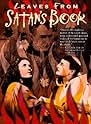
In 4 episodic tales of human suffering: the temptation of Jesus, the Spanish Inquisition, the French Revolution and the Russo-Finnish war of 1918, Satan attempts to win God's favor.In 4 episodic tales of human suffering: the temptation of Jesus, the Spanish Inquisition, the French Revolution and the Russo-Finnish war of 1918, Satan attempts to win God's favor.In 4 episodic tales of human suffering: the temptation of Jesus, the Spanish Inquisition, the French Revolution and the Russo-Finnish war of 1918, Satan attempts to win God's favor.
- Director
- Writers
- Stars
Jacob Texiere
- Judas (first sequence)
- (as Jacob Texière)


Nalle Halden
- The Majordomo (second sequence)
- (as Nalle Haldén)
Tenna Kraft
- Marie Antoinette (third sequence)
- (as Tenna Frederiksen Kraft)

Vilhelm Petersen
- Fouquier-Tinville (third sequence)
- (as Vilh. Petersen)

Clara Pontoppidan
- Siri (fourth sequence)
- (as Clara Wieth Pontoppidan)

- Director
- Writers
- All cast & crew
- Production, box office & more at IMDbPro
6.61.4K
1
2
3
4
5
6
7
8
9
10
Featured reviews
Dreyer Channels Griffith
With a pair of films under his belt, including the well-received The Parson's Widow, Carl Th. Dreyer set out to make a movie akin to D. W. Griffith's Intolerance, a huge series of interrelated stories in an anthology, spanning millennia. While Dreyer's third film doesn't reach the highs of Griffith's masterpiece, ultimately being fairly uneven, there's more than enough here to recommend it. This is a hugely ambitious work with often striking visuals and an interesting throughline that centers around an interesting recurring character.
The four stories are the betrayal of Jesus by Judas, a monk giving up his unrequited love to the Spanish Inquisition, a servant becoming a Revolutionary leader and betraying the aristocratic family he's helped hide, and a Finnish woman being forced to choose between her family and her part in the fight against the Bolsheviks. Out of these four, the first is the best, the most beautiful visually, and the most consistently acted. The least of the four is the last, which introduces too many characters for too short of a story and ends up just kind of confused as to what its overall purpose is. The Spanish Inquisition section feels remarkably like Dreyer's later The Passion of Joan of Arc, at least in storytelling focus, and is actually quite good. The third in the French Revolution is pretty good, bringing in Marie Antoinnette as a sympathetic figure who's supposed to mirror the plight of the aristocratic family the Chambords.
Through all four of these stories is Satan himself, and Dreyer takes an interesting take. Inspired somewhat by the tale of Job, Satan is viewed as a tool of God, sent to Earth to tempt mankind away from God where each soul he successfully turns away from God adds 100 years to his punishment while every soul he fails to turn away removes 1,000 years from his sentence. Satan pursues his mission with grim dedication, moving through the centuries in different guises (a Pharisee, the Grand Inquisitor, a Revolutionary official, and a Bolshevik officer), accomplishing his mission without any joy in it. His every success takes him further into human history to corrupt, away from God's Grace, while his only success is a tragedy of death.
However, as interesting as Satan's part is in the story, one thing I wish could change about the film is the explicit nature of Satan himself. He's played by the same actor in all four segments (Helge Nissen), but he wears so much makeup from one to the other that without the direct pointing out of him by intertitles his renewed presence would get lost on all but the most eagle-eyed viewers. I wish Dreyer had kept his appearance largely uniform across all the tales, and just shown this singular figure appearing in every tale, tempting humanity with maybe a reveal at the end that he was Satan, though I feel like the title of the film would have been evidence enough of whom he was.
The other problem I have to the film can be exemplified by the over-reliance on intertitles, especially in the final section. The Finnish part is about a husband and wife who manage a telegraph for the White Mensheviks. Their neighbor wants the wife for his own and turns to the Soviets in order to throw the husband in jail and allow him to have the wife. There's also another woman who watched the Soviets murder her father and wants to join the White army with little sense of anything other than vengeance. The focus ends up being the wife in the end, but the man who betrays is a large focus for a large amount of time, and Satan's part ends up feeling confused. There's a lot going on here, and the film has to rely heavily on intertitles to explain who's who and what's what. Coming two hours into a nearly three hour film, my patience was running thin on the vast amounts of exposition necessary in intertitles just to get this story going, and the addition of the girl going to war, who ends up playing a part in the story's finale that could have been largely interchangeable with any other background character, just adds to the frustration.
That being said, the section around Jesus is the best thing Dreyer had made up to that point, and the Spanish Inquisition section is a close second. The advantage these two sections have is that the first is one of the best known stories in the world so there's little need for lots of intertitles dragging the film down explaining things, and the second is so straightforward that it can largely play on its own after a certain point without needing lots of explanation.
This is also where Dreyer is coming into his own as a visual stylist. There are compositions from beginning to end that feel so much more than just setting up a camera on a tripod and letting a scene play out. There's a heavy use of irises to highlight subjects in frame, interesting compositions that highlight individual characters, and heavy uses of shadows that feel German inspired. He had also taken many lessons from Griffith, much more than just the idea of an anthology film through time. There's a very strong use of intercutting action that helps create a genuine sense of excitement at time, as well as use in the third section that helps draw the comparisons between Antoinette and the Chambords.
This is an ambitious film from a young director that took him two years to make. It's not a perfect film at all, ending far less well than it starts, but there's a very strong sense of visual composition, thematic purpose, and clarity of narrative that it represents Dreyer overreaching his grasp, but only so much. There's really compelling stuff in this film, and it represents the continued growth of the young Danish filmmaker.
The four stories are the betrayal of Jesus by Judas, a monk giving up his unrequited love to the Spanish Inquisition, a servant becoming a Revolutionary leader and betraying the aristocratic family he's helped hide, and a Finnish woman being forced to choose between her family and her part in the fight against the Bolsheviks. Out of these four, the first is the best, the most beautiful visually, and the most consistently acted. The least of the four is the last, which introduces too many characters for too short of a story and ends up just kind of confused as to what its overall purpose is. The Spanish Inquisition section feels remarkably like Dreyer's later The Passion of Joan of Arc, at least in storytelling focus, and is actually quite good. The third in the French Revolution is pretty good, bringing in Marie Antoinnette as a sympathetic figure who's supposed to mirror the plight of the aristocratic family the Chambords.
Through all four of these stories is Satan himself, and Dreyer takes an interesting take. Inspired somewhat by the tale of Job, Satan is viewed as a tool of God, sent to Earth to tempt mankind away from God where each soul he successfully turns away from God adds 100 years to his punishment while every soul he fails to turn away removes 1,000 years from his sentence. Satan pursues his mission with grim dedication, moving through the centuries in different guises (a Pharisee, the Grand Inquisitor, a Revolutionary official, and a Bolshevik officer), accomplishing his mission without any joy in it. His every success takes him further into human history to corrupt, away from God's Grace, while his only success is a tragedy of death.
However, as interesting as Satan's part is in the story, one thing I wish could change about the film is the explicit nature of Satan himself. He's played by the same actor in all four segments (Helge Nissen), but he wears so much makeup from one to the other that without the direct pointing out of him by intertitles his renewed presence would get lost on all but the most eagle-eyed viewers. I wish Dreyer had kept his appearance largely uniform across all the tales, and just shown this singular figure appearing in every tale, tempting humanity with maybe a reveal at the end that he was Satan, though I feel like the title of the film would have been evidence enough of whom he was.
The other problem I have to the film can be exemplified by the over-reliance on intertitles, especially in the final section. The Finnish part is about a husband and wife who manage a telegraph for the White Mensheviks. Their neighbor wants the wife for his own and turns to the Soviets in order to throw the husband in jail and allow him to have the wife. There's also another woman who watched the Soviets murder her father and wants to join the White army with little sense of anything other than vengeance. The focus ends up being the wife in the end, but the man who betrays is a large focus for a large amount of time, and Satan's part ends up feeling confused. There's a lot going on here, and the film has to rely heavily on intertitles to explain who's who and what's what. Coming two hours into a nearly three hour film, my patience was running thin on the vast amounts of exposition necessary in intertitles just to get this story going, and the addition of the girl going to war, who ends up playing a part in the story's finale that could have been largely interchangeable with any other background character, just adds to the frustration.
That being said, the section around Jesus is the best thing Dreyer had made up to that point, and the Spanish Inquisition section is a close second. The advantage these two sections have is that the first is one of the best known stories in the world so there's little need for lots of intertitles dragging the film down explaining things, and the second is so straightforward that it can largely play on its own after a certain point without needing lots of explanation.
This is also where Dreyer is coming into his own as a visual stylist. There are compositions from beginning to end that feel so much more than just setting up a camera on a tripod and letting a scene play out. There's a heavy use of irises to highlight subjects in frame, interesting compositions that highlight individual characters, and heavy uses of shadows that feel German inspired. He had also taken many lessons from Griffith, much more than just the idea of an anthology film through time. There's a very strong use of intercutting action that helps create a genuine sense of excitement at time, as well as use in the third section that helps draw the comparisons between Antoinette and the Chambords.
This is an ambitious film from a young director that took him two years to make. It's not a perfect film at all, ending far less well than it starts, but there's a very strong sense of visual composition, thematic purpose, and clarity of narrative that it represents Dreyer overreaching his grasp, but only so much. There's really compelling stuff in this film, and it represents the continued growth of the young Danish filmmaker.
Expect the Spanish inquisition
This pretentious historical drama of Satan's part in the treason of Jesus and the horrors of the Spanish inquisition, the French revolution and the Finnish civil war is stylistically a curious move backwards for Dreyer and the Danish film industry. After the technical innovations by director Benjamin Christensen, already in Det hemmelighedsfulde X (1914), as well as in Dreyers own first feature, Præsidenten (1919), which pioneered the use of both natural lightning and chiaroscuro effects that looked forwards to German expressionism, Blade af Satans bog returns to the all too brightly lit costume drama which dominated much of the early cinema. This means that even windowless rooms with only a few candles burning is lit up like it was broad daylight all over, eventually killing any sense of sinister atmosphere that the plots here surely calls for. Outside night scenes are likewise often shot in daylight, probably awaiting blue tinting. What could be genuinely scary with more imaginative lightning and a more cinematic style, remain lifeless tableaux. There are a few scenes that uses shadows to great effect, but in a film that is 157 minutes long the overall impact is rather dull, despite the excellent new, but untinted print provided on the DVD by the Danish Film Institute from a duplicate negative.
Despite these shortcomings, there are many interesting touches for fans of Dreyer's more acclaimed work. For instance the torture scenes in Spain that anticipates the ones in Jeanne d 'Arc, and the many carefully arranged portrait pans of elders that is used again (more sophistically) in Ordet. In the Finnish episode we also get some very dramatic scenes that combines fast action with small details in close ups, expertly framed and imaginatively put together by cross cutting. After all the static of the previous episodes, the swiftness in Finland comes as a blessing and a fitting climax bringing the history lesson up to date. That is, if you don't mind the white propaganda - proves you don't have to be a bolshie to see red. Thematically, there is also the interesting touch that Dreyer shows his obsession with how personal love affairs often dominate the course of historical events. If someone is tortured or executed, you bet it is because she failed to satisfy her jealous lover, who then turns out to make faith work fatally against her. The white girl loaded with hand grenades that captures two reds just when they were about to execute a brave white fighter, is of course also on a personal revenge trip, even if it is all for Finland, of course. There are enough of such situations here for more than a few topical theses, but I'll leave it at that. Anyone interested in Dreyer should see this anyway.
Oh, I forgot to mention Intolerance? But then it turns out, according to Casper Tybjerg, that the manuscript for Blade af Satans bog was written in 1913 (Oh yeah? I hear you say, but the Finnish episode is set in 1918? Go figure), and probably inspired by the Italian film Satanas by Luigi Maggi (1912), which (also probably?) inspired Intolerance. But Dreyer has confirmed that the close up of Siri's face in the Finnish suicide scene was directly inspired by the close up of Lilian Gish in Griffith's court scene. So there.
Despite these shortcomings, there are many interesting touches for fans of Dreyer's more acclaimed work. For instance the torture scenes in Spain that anticipates the ones in Jeanne d 'Arc, and the many carefully arranged portrait pans of elders that is used again (more sophistically) in Ordet. In the Finnish episode we also get some very dramatic scenes that combines fast action with small details in close ups, expertly framed and imaginatively put together by cross cutting. After all the static of the previous episodes, the swiftness in Finland comes as a blessing and a fitting climax bringing the history lesson up to date. That is, if you don't mind the white propaganda - proves you don't have to be a bolshie to see red. Thematically, there is also the interesting touch that Dreyer shows his obsession with how personal love affairs often dominate the course of historical events. If someone is tortured or executed, you bet it is because she failed to satisfy her jealous lover, who then turns out to make faith work fatally against her. The white girl loaded with hand grenades that captures two reds just when they were about to execute a brave white fighter, is of course also on a personal revenge trip, even if it is all for Finland, of course. There are enough of such situations here for more than a few topical theses, but I'll leave it at that. Anyone interested in Dreyer should see this anyway.
Oh, I forgot to mention Intolerance? But then it turns out, according to Casper Tybjerg, that the manuscript for Blade af Satans bog was written in 1913 (Oh yeah? I hear you say, but the Finnish episode is set in 1918? Go figure), and probably inspired by the Italian film Satanas by Luigi Maggi (1912), which (also probably?) inspired Intolerance. But Dreyer has confirmed that the close up of Siri's face in the Finnish suicide scene was directly inspired by the close up of Lilian Gish in Griffith's court scene. So there.
Leaves out of the Book of Satan 1918-1921
Original title: Blade af Satans bog
From a novel by Marie Corelli. The basic story is God judging and dooming Satan for tempting man to go against God's will. Now Satan must keep up the temptation if he wants his doom time abridged.
We get to listen to piano music by Philip Carli (2004), geared to the action while waiting for the doom to pass. They leave the intertitles up long enough to read. Probably a good example of film making of the time (I've seen better) and definably should be added to your film library.
30 years after the birth of Christ we get to see the real last supper, not that painting used in "The Da Vinci Code" (2006). "But Satan, the fallen angel, whose whole heart was set upon finding favor again in the eyes of the Almighty-he, was grieved to see his evil work completed"
Continue thy evil doings!
16th century in Seville in Spain we catch Don Fernandez y Argote teaching a "girl" Isabella, mathematics and history. And we all know what happened to the world after women fathomed math. At this time the inquisition has this thing about astrologers "He who pretends to read God's will in the stars is a heretic." So, it looks like Isabella is toast.
Continue thy evil doings!
Autumn 1793 Paris in the Republic of Liberty. Once again, we are dealing with a woman about to lose her head. An even gorier scene is a cat dragging on a one-pound rat; I think it may have been a metaphor. If you like this type of story be sure to read "The Scarlet Pimpernel" by Baroness Emmuska Orczy. If you do not like this type of story then read "How to Quickly Lose 10 Pounds" by Jose Delgado. "Liberté-Egalitè-Faternité."
Continue thy evil doings!
Spring 1918 Hirola Finland. The story is told in Red vs. White. It is about the fate of Siri. I know it is a distraction from the theme of the film but I am intrigued by the technology of the time.
Will Satan be free of this chore? Watch and see.
From a novel by Marie Corelli. The basic story is God judging and dooming Satan for tempting man to go against God's will. Now Satan must keep up the temptation if he wants his doom time abridged.
We get to listen to piano music by Philip Carli (2004), geared to the action while waiting for the doom to pass. They leave the intertitles up long enough to read. Probably a good example of film making of the time (I've seen better) and definably should be added to your film library.
30 years after the birth of Christ we get to see the real last supper, not that painting used in "The Da Vinci Code" (2006). "But Satan, the fallen angel, whose whole heart was set upon finding favor again in the eyes of the Almighty-he, was grieved to see his evil work completed"
Continue thy evil doings!
16th century in Seville in Spain we catch Don Fernandez y Argote teaching a "girl" Isabella, mathematics and history. And we all know what happened to the world after women fathomed math. At this time the inquisition has this thing about astrologers "He who pretends to read God's will in the stars is a heretic." So, it looks like Isabella is toast.
Continue thy evil doings!
Autumn 1793 Paris in the Republic of Liberty. Once again, we are dealing with a woman about to lose her head. An even gorier scene is a cat dragging on a one-pound rat; I think it may have been a metaphor. If you like this type of story be sure to read "The Scarlet Pimpernel" by Baroness Emmuska Orczy. If you do not like this type of story then read "How to Quickly Lose 10 Pounds" by Jose Delgado. "Liberté-Egalitè-Faternité."
Continue thy evil doings!
Spring 1918 Hirola Finland. The story is told in Red vs. White. It is about the fate of Siri. I know it is a distraction from the theme of the film but I am intrigued by the technology of the time.
Will Satan be free of this chore? Watch and see.
Endless, but Fascinating
God has set a few rules for Satan. He is to provide over historical events, usually playing one of the bad guys. If things go the way we would expect, he must endure more time in the underworld. If he can find a human willing to sacrifice for good, he will get a thousand years to his credit. Unfortunately, with the Crucifixion, the Inquisition, the French Revolution, and the invasion of the Reds into Finland, there's not much for him to pad his bank account. The stories are so bleak and hopeless. Women and children are not spared, and since we pretty much know what is going to happen, little suspense. It's one of the few cinematic treatments of Marie Antoinette where she comes off as upstanding (no cake here). The upside is, naturally, that there is wonderful film-making going on here with great images and depth. One should see as many of these films as possible in order to get a sense of our film heritage. This one may have taught a lot; Dryer taught a lot.
Disappointing
Leaves from Satan's Book (1922)
** (out of 4)
Carl Theodor Dreyer's tale of Satan's attempt to use temptation to get back into Heaven. We follow Satan through four periods including the crucifixion of Jesus and the Spanish Inquisition. The film is visually beautiful and the set design is remarkable but the stories are all deadly boring. The third segment, which is the longest, is downright bad. The first segment with Jesus has way too unintentional laughs and it's rather strange that Jesus looks a lot creepier than Satan!
Those expecting a horror film will probably be disappointing as this film plays out more like a historical drama.
** (out of 4)
Carl Theodor Dreyer's tale of Satan's attempt to use temptation to get back into Heaven. We follow Satan through four periods including the crucifixion of Jesus and the Spanish Inquisition. The film is visually beautiful and the set design is remarkable but the stories are all deadly boring. The third segment, which is the longest, is downright bad. The first segment with Jesus has way too unintentional laughs and it's rather strange that Jesus looks a lot creepier than Satan!
Those expecting a horror film will probably be disappointing as this film plays out more like a historical drama.


Did you know
- TriviaOne of the first films in the world that dealt with the Finnish civil war in 1918.
- Alternate versionsIn 2004, the Film Preservation Associates, Inc. copyrighted a version with a new piano music score by Philip Carli. It was produced for video by David Shepard and runs 121 minutes.
- ConnectionsEdited into From Camille to Joan of Arc (1961)
- SoundtracksLa Marseillaise
(1792) (uncredited)
Music and Lyrics by Claude Joseph Rouget de Lisle
Played in the 2004 alternate version score in the third sequence mostly to accompany the actors singing it silently on-screen
Details
- Release date
- Country of origin
- Language
- Also known as
- Leaves Out of the Book of Satan
- Filming locations
- Kagerup, Denmark(Finland scenes)
- Production company
- See more company credits at IMDbPro
- Runtime
- 2h 47m(167 min)
- Color
- Sound mix
- Aspect ratio
- 1.33 : 1
Contribute to this page
Suggest an edit or add missing content