Nosferatu: A Symphony of Horror
Original title: Nosferatu, eine Symphonie des Grauens


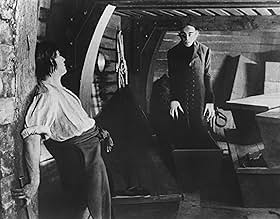
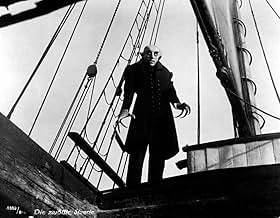
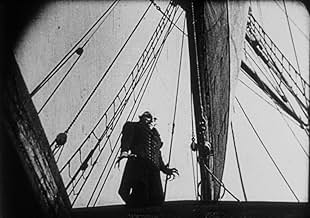
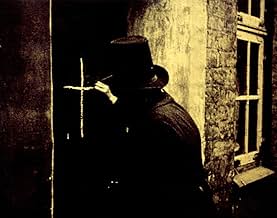
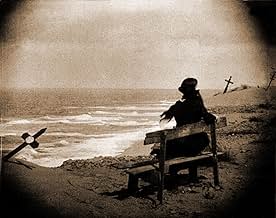
Vampire Count Orlok expresses interest in a new residence and real estate agent Hutter's wife.Vampire Count Orlok expresses interest in a new residence and real estate agent Hutter's wife.Vampire Count Orlok expresses interest in a new residence and real estate agent Hutter's wife.
- Director
- Writers
- Stars
- Awards
- 3 wins & 2 nominations total



Gustav von Wangenheim
- Hutter
- (as Gustav v. Wangenheim)

Greta Schröder
- Ellen - seine Frau
- (as Greta Schroeder)
Georg H. Schnell
- Harding - ein Reeder
- (as G.H. Schnell)


Karl Etlinger
- Kontrolleur am Kai
- (uncredited)
Hans Lanser-Ludolff
- A magistrate
- (uncredited)
Loni Nest
- Child at Window
- (uncredited)

Fritz Rasp
- Knocks Mitarbeiter
- (uncredited)
Josef Sareny
- Head Coachman
- (uncredited)
Fanny Schreck
- Krankenschwester im Hospital
- (uncredited)
Eric van Viele
- Matrose 2
- (uncredited)
- Director
- Writers
- All cast & crew
- Production, box office & more at IMDbPro
7.8121.9K
1
2
3
4
5
6
7
8
9
10
Featured reviews
"Is that your wife? What a lovely throat!"
As I'm sure it is the case for many cinema fans, my respect and admiration towards this production widely excels the enjoyment I had while watching it. "Nosferatu" is a milestone from every possible viewpoint and it's one of those very few movies I think everybody should view at least once (although it actually requires repeated viewings
) It is the very first version of Bram Stoker's legendary vampire tale and easily the most copied film in the history of cinema. I'm sure everyone is familiar with the story of young estate agent Jonathan Harker traveling to Transylvania where he acquaintances the eccentric count who feeds on blood and controls the ones he has bitten, but THIS is the original version. Shot by F.W. Murnau (who also made the equally essential titles "Faust" and "Der Januskopf") and made unforgettable by Max Schreck in his performance as the Count. And, even though this film is over 80 years old, Schreck's image is still as nightmarish as it can be. No visual or make-up effect could ever surpass the simple appearance of Max Schreck! The fact that this film is still very powerful therefore almost entirely depends on his unworldly character. "Nosferatu" is beautiful poetry, difficult to watch at times, but very rewarding. The sexual undertones as well as the shock-aspects have surely dated by now, but they're still present, and as I mentioned before they only increase my respect for Murnau and his crew. A definite must see, just make sure you're in the right mood.
Nosferatu
F.W. Murnau set the bar high for vampire movies, very high. Can not help but start praising the job Max Schreck and Murnau did to bring Count Orlok character to life on the screen. Orlok's face, hands and slender build along with his sly shuffling movements with the right camera angles and props brought a hell of a lot of general creepiness. The viewers in the twenties must have been shell shocked because they didn't tame it down which they most often did in this time period. For a full length silent feature film I found the time going fairly fast with a view dragged out scenes, that can be expected. The big bugaboo I have with Nosferatu though is the questionable ending being terribly anticlimactic. Regardless of the disappointing ending, Nosferatu is a killer film that is a must watch for horror or classic movie fans.
10jhclues
Max Schreck IS "Nosferatu"
In 1921, director F.W. Murnau set out to make a horror film based on Bram Stoker's novel, `Dracula,' but was denied the rights to the property by Stoker's estate. Undeterred, however, Murnau merely changed the title to `Nosferatu,' the name of the title character to `Count Orlok,' then proceeded to make what has come to be considered nothing less than a classic of the silent film era. An unsettling film (especially for the times in which it was made), it is a faithful adaptation of Stoker's story, and brings images to the screen, the likes of which at the time, had never before been seen. And although by today's standards much of it may seem relatively tame, there is an innate sense of the sinister about it that is timeless. For the same elements that so unnerved audiences in 1922 when it was released, are equally discomfiting now, most of which is courtesy of Max Schreck, who portrayed Count Orlok. It was the first screen appearance for what is now the most famous vampire in history, and the German character actor Schreck brought an eerie presence to the role that has never been equaled. Bela Lugosi may be considered the definitive Dracula-- his portrayal is certainly the most well known-- but even he could not match the sense of evil that Schreck brought to the character. The scene in which Schreck's shadow is cast on the wall as he slowly negotiates a staircase, emphasizing his misshapen head and elongated fingers and nails, is an image that leaves an indelible impression on the memory, as does Schreck's overall appearance: Lanky, though slightly stooped, with oversized, pointed ears and haunted, sunken eyes. It was Schreck's greatest screen role, and had it not been for a lawsuit by Stoker's estate that prevented wide distribution of the film, it would no doubt have made him a star. The supporting cast includes John gottowt, Alexander Granach, Wolfgang Heinz, Max Nemetz, Gustav von Wangenheim, Ruth Landshoff and Greta Schroder. An air of mystery surrounded the set during the filming of `Nosferatu' that became something of a myth, which began with the fact that Schreck, a method actor, was never seen by cast nor crew without his makeup and in character. And it was further perpetuated when it may have been implied by Murnau that Schreck was actually a vampire playing an actor playing a vampire, all of which goes a long way toward proving that `hype' is nothing new to the entertainment industry. One of the three most highly regarded German directors of the times, Murnau, whose philosophy was that `nothing existed beyond the frame,' directed a number of films, but none achieved the lasting notoriety of `Nosferatu.' For film buffs everywhere, as well as aficionados of silent pictures, this film is a must-see, and a perfect companion piece to the recently released (2000) `Shadow of the Vampire,' the film by E. Elias Merhige that chronicles the making of `Nosferatu.' A comparatively short film-- the restored DVD version runs 81 minutes, the video, 63 minutes-- it will nevertheless provide an entertaining and memorable cinematic experience. This is an example of not only the magic, but the magic at the very core of the movies. I rate this one 10/10.
"Here begins the land of phantoms..."
Highly influential silent horror classic. It follows the basic story of Dracula. As pretty much everybody knows, they did this adaptation of Stoker's novel without permission. His widow sued and won. The court ordered that every print of this film be destroyed. Thankfully for us, somebody saved a copy. That this film was made nearly a century ago is astonishing. The makeup for the ratlike Count Orlock, played by Max Schreck, is amazing even by modern standards. Orlock still stands to this day as the most uniquely frightening vampire ever put on film. Director F.W. Murnau creates an eerie, otherworldly atmosphere. He uses many authentic "Old World" locations that are very spooky. There are lots of creepy and scary moments in Nosferatu. As much as I love the Universal and Hammer Draculas for their entertainment value, I think this is the scariest of all the different versions I've seen. It's best seen at night, as most great horror films are.
A Distinctive & Memorable Version of the 'Dracula' Legend
F.W. Murnau's version of the 'Dracula' legend still remains as distinctive and memorable as ever. The enjoyable Bela Lugosi version is perhaps easier to watch, and strictly as light entertainment it might work better, and many later versions brought their own interpretations - but nothing matches "Nosferatu" for its engrossingly morbid atmosphere and its unusual interpretation of the main character.
Max Schreck and Murnau were able to create an image of the vampire that remains in your mind long after seeing it. Regardless of whether it or some other conception is closest to the 'true' Dracula (if such a thing even exists), it is quite effective, and it was particularly well-conceived for a silent screen version that cannot rely on dialogue to define a character. The settings and the story perfectly complement Schreck's weird character, creating an atmosphere full of constant strangeness, uncertainty, and foreboding.
It's unnecessary (and probably impossible) to make detailed comparisons among all the film versions of the Dracula character and legend. "Nosferatu" stands perfectly well on its own, as a unique and skillfully done adaptation of the story, and as one of the memorable classics of the silent era.
Max Schreck and Murnau were able to create an image of the vampire that remains in your mind long after seeing it. Regardless of whether it or some other conception is closest to the 'true' Dracula (if such a thing even exists), it is quite effective, and it was particularly well-conceived for a silent screen version that cannot rely on dialogue to define a character. The settings and the story perfectly complement Schreck's weird character, creating an atmosphere full of constant strangeness, uncertainty, and foreboding.
It's unnecessary (and probably impossible) to make detailed comparisons among all the film versions of the Dracula character and legend. "Nosferatu" stands perfectly well on its own, as a unique and skillfully done adaptation of the story, and as one of the memorable classics of the silent era.


Did you know
- TriviaThe movie was banned in Sweden due to excessive horror. The ban was finally lifted in 1972.
- Goofs(at around 30 mins) When Hutter is writing his letter to Ellen in Count Orlok's castle, the paper that he is meant to be writing on is clearly blank throughout the scene.
- Quotes
Graf Orlok: Your wife has such a beautiful neck...
- Alternate versionsThere are a confusing number of different surviving prints, restorations and alternate versions of Nosferatu. In the main, there are three 'complete' restorations and two incomplete, partially-restored versions. All five are available on DVD, while the latest two restorations, from 1995 and 2006, are also on Blu-ray. In addition there are countless low-quality public domain DVDs with different lengths, running speeds and soundtracks. All are derived from a single print held by the Museum of Modern Art (MoMA). They usually have replacement American intertitles and are always in black and white; the film was originally color tinted throughout and only meant to be seen that way. This comprehensive article explains all of them simply and clearly: Nosferatu: The Ultimate Blu-ray and DVD Guide.
- ConnectionsEdited into Boo! (1932)
- SoundtracksJeux d'enfants - Galop
Written by Jack Norworth
[Plays during the croquet scene in the 2006 restoration]
Details
- Release date
- Country of origin
- Official site
- Languages
- Also known as
- Nosferatu
- Filming locations
- Starhrad Castle, Nezbudská Lúcka, Slovakia(castle in ruins)
- Production companies
- See more company credits at IMDbPro
Box office
- Gross worldwide
- $53,514
- Runtime
- 1h 34m(94 min)
- Sound mix
- Aspect ratio
- 1.33 : 1
Contribute to this page
Suggest an edit or add missing content