The Marriage Circle
- 1h 25m
IMDb RATING
7.0/10
1.6K
YOUR RATING

Professor Stock and his wife Mizzi are always bickering. Mizzi tries to seduce Dr. Franz Braun, the new husband of her good friend Charlotte.Professor Stock and his wife Mizzi are always bickering. Mizzi tries to seduce Dr. Franz Braun, the new husband of her good friend Charlotte.Professor Stock and his wife Mizzi are always bickering. Mizzi tries to seduce Dr. Franz Braun, the new husband of her good friend Charlotte.
- Awards
- 2 wins total






- Director
- Writers
- All cast & crew
- Production, box office & more at IMDbPro
7.01.6K
1
2
3
4
5
6
7
8
9
10
Featured reviews
Lubitsch's First American Comedy
Through the urging of actress Mary Pickford, Austrian Ernst Lubitsch sailed to America to direct her dramatic film 1923's 'Rosita.' Newly-formed Warner Brothers Studio, familiar with Lubitsch's well-earned reputation in producing light-hearted comedies, signed him immediately to a three-year, six picture contract, giving him the right to select his actors and film crew. So unusual was the contract at the time, the studio also granted him final say on the finished motion picture.
Lubitsch rolled up his sleeves and directed what became his signature trademark: a sophisticated romantic comedy that suggested rather than overtly displaying possible infidelities in a marriage. His February 1924 "The Marriage Circle" was the director's first American comedy, jump-starting an impressive body of work still studied today by film academia.
"The Marriage Circle" consists of three couples: one, Charlotte (Marie Prevost), instigates a series of hinted extra-marital affairs in two other marriages. Inspired by Charlie Chaplin's 'A Woman of Paris,' Lubitsch saw the possibilities of well-meaning events having the potential of spiraling out of control when one spouse suspects the other of cheating when an innocent act is interpreted the wrong way.
Based on a Lothar Schmidt play, 'Only A Dream,' "The Marriage Circle" begins with the morning ritual of a couple ignoring one another, establishing a cold relationship between the two. Professor Josef Stock (Adolphe Menjou) is the disgruntled hubby unhappy with his selfish wife, Charlotte. Spotting her getting into a cab with a gentleman (Monte Blue), who's actually a stranger picking up flowers for his wife, Stock immediately suspects the worst and hires a detective to tail his wife. 'The Lubitsch touch,' a much-interpreted term applied to the director's style of sophisticated, witty charm mixed in with a dose of nuanced sexuality, is first seen in an American production in "The Marriage Circle." Marie Prevost, who played Charlotte, was a early favorite actress of Lubitsch when he first came to the United States. She played in several of his films before released by Warner Brothers in 1926. Her roles on the screen diminished after that. She became depressed and turned to alcohol and food, gaining a lot of weight in the process. She died at the age of 38 on January 1937, leaving only $300 in her estate. Her post-career poverty was given as a prime example of spurring the Hollywood community to rally around the proposed Motion Picture Country House and Hospital, operated by a charitable group designed to provide assistance and residential care for those in the film industry who are undergoing financial hardships later in life.
So admired has been "The Marriage Circle" that the American Film Institution nominated it for the Top 100 Funniest Movies of All Time as well as a nominee for its Top 100 America's Greatest Love Story Movies. Directors as diverse as Alfred Hitchcock, Yasujiro Ozu, Jean Renoir, and Douglas Sirk all expressed an affection towards Lubitsch's second American film.
Lubitsch rolled up his sleeves and directed what became his signature trademark: a sophisticated romantic comedy that suggested rather than overtly displaying possible infidelities in a marriage. His February 1924 "The Marriage Circle" was the director's first American comedy, jump-starting an impressive body of work still studied today by film academia.
"The Marriage Circle" consists of three couples: one, Charlotte (Marie Prevost), instigates a series of hinted extra-marital affairs in two other marriages. Inspired by Charlie Chaplin's 'A Woman of Paris,' Lubitsch saw the possibilities of well-meaning events having the potential of spiraling out of control when one spouse suspects the other of cheating when an innocent act is interpreted the wrong way.
Based on a Lothar Schmidt play, 'Only A Dream,' "The Marriage Circle" begins with the morning ritual of a couple ignoring one another, establishing a cold relationship between the two. Professor Josef Stock (Adolphe Menjou) is the disgruntled hubby unhappy with his selfish wife, Charlotte. Spotting her getting into a cab with a gentleman (Monte Blue), who's actually a stranger picking up flowers for his wife, Stock immediately suspects the worst and hires a detective to tail his wife. 'The Lubitsch touch,' a much-interpreted term applied to the director's style of sophisticated, witty charm mixed in with a dose of nuanced sexuality, is first seen in an American production in "The Marriage Circle." Marie Prevost, who played Charlotte, was a early favorite actress of Lubitsch when he first came to the United States. She played in several of his films before released by Warner Brothers in 1926. Her roles on the screen diminished after that. She became depressed and turned to alcohol and food, gaining a lot of weight in the process. She died at the age of 38 on January 1937, leaving only $300 in her estate. Her post-career poverty was given as a prime example of spurring the Hollywood community to rally around the proposed Motion Picture Country House and Hospital, operated by a charitable group designed to provide assistance and residential care for those in the film industry who are undergoing financial hardships later in life.
So admired has been "The Marriage Circle" that the American Film Institution nominated it for the Top 100 Funniest Movies of All Time as well as a nominee for its Top 100 America's Greatest Love Story Movies. Directors as diverse as Alfred Hitchcock, Yasujiro Ozu, Jean Renoir, and Douglas Sirk all expressed an affection towards Lubitsch's second American film.
the dawn of the Lubitsch world
'The Marriage Circle' from 1924 is one of the first films of Ernst Lubitsch's American career. The Berlin-born film director brought to American audiences a style of romantic comedy that he would develop after the advent of sound in talking films and especially in musicals. His influence as a director and producer would grow over the next two decades, setting one of the main directions of entertainment movies produced in Hollywood. 'The Marriage Circle' already hints to many of the hallmarks of the director's style ('the Lubitsch touch') and is a film that I have enjoyed despite, or perhaps precisely because of, the 101 years that have passed since its making.
The story takes place in Vienna, but it is an idealized Vienna, a Lubitsch space rather than how Vienna must have looked like in the years after World War I and the fall of the Austro-Hungarian Empire. At the center of the story are two wealthy couples who live in magnificent houses. Professor Stock suspects - and perhaps with some reason - his wife Mizzi of being unfaithful to him. He hires a detective to follow her and provide enough evidence for a convenient divorce. Dr. Braun and his wife Charlotte are newlyweds and very much in love with each other. Things get complicated when Mizzi sets her sights on the handsome Dr. Braun, while Charlotte is coveted by Dr. Mueller, her husband's friend and professional partner. Will the two marriages resist the intrigues and temptations of illicit relationships?
What I found very interesting in 'The Marriage Circle' is the role that music plays in a movie from the silent film era. To compensate for the lack of sound, Lubitsch attributed the film's heroes a passion for music and even indicated with scores on the screen at some points which pieces of music they are playing. A few years later, when the era of sound films began, Lubitsch would be one of the pioneers of musical movies, adding the dimension of musical soundtracks to the romantic comedies in which he specialized. Even this film would have a musical version a decade later, but the 1924 original surpasses the remake in the qualities of the narration and the actors' performances. Among those present on screen, I was particularly impressed by Marie Prevost, a beautiful actress with great comic and dramatic expressive talent, who had an all-too-short career and a tragic fate. Viewers interested in classic comedies and those who want to study the origins of the productions that would make Hollywood and its studios famous will enjoy watching 'The Marriage Circle'.
The story takes place in Vienna, but it is an idealized Vienna, a Lubitsch space rather than how Vienna must have looked like in the years after World War I and the fall of the Austro-Hungarian Empire. At the center of the story are two wealthy couples who live in magnificent houses. Professor Stock suspects - and perhaps with some reason - his wife Mizzi of being unfaithful to him. He hires a detective to follow her and provide enough evidence for a convenient divorce. Dr. Braun and his wife Charlotte are newlyweds and very much in love with each other. Things get complicated when Mizzi sets her sights on the handsome Dr. Braun, while Charlotte is coveted by Dr. Mueller, her husband's friend and professional partner. Will the two marriages resist the intrigues and temptations of illicit relationships?
What I found very interesting in 'The Marriage Circle' is the role that music plays in a movie from the silent film era. To compensate for the lack of sound, Lubitsch attributed the film's heroes a passion for music and even indicated with scores on the screen at some points which pieces of music they are playing. A few years later, when the era of sound films began, Lubitsch would be one of the pioneers of musical movies, adding the dimension of musical soundtracks to the romantic comedies in which he specialized. Even this film would have a musical version a decade later, but the 1924 original surpasses the remake in the qualities of the narration and the actors' performances. Among those present on screen, I was particularly impressed by Marie Prevost, a beautiful actress with great comic and dramatic expressive talent, who had an all-too-short career and a tragic fate. Viewers interested in classic comedies and those who want to study the origins of the productions that would make Hollywood and its studios famous will enjoy watching 'The Marriage Circle'.
Well made and pleasantly enjoyable, if not markedly striking
One near constant in the history of cinema is that romantic comedies tend to follow a very specific pattern. Chance encounters lead to romantic inclinations, and possibly drama in established relationships, but ultimately everyone is happy in the end - or at least most characters are, while anyone painted as a more antagonistic figure is probably left out in the cold. Even though we generally know the story before it's ever told, the finer points of the narrative can make all the difference. With slightly more somberly toned drama, this iteration is a little bit of a deviation from the genre norm, written with just enough deftness that for most of the length I wasn't actually sure exactly how it would end. Though hardly revelatory, 'The marriage circle' is fairly worthwhile.
All those small moments that cumulatively build into the divisions and connections between the characters are clever, and endearing as a viewer. Characterizations and intertitles aren't especially noteworthy, but the overall narrative is complete and cohesive, if unremarkable in retrospect nearly 100 years on. The scene writing is pleasantly engaging - a series of light scheming, misunderstandings, and near misses, with timing and cues just right to build the story with mild comedy. While their roles are pretty straightforward, the assembled cast put in solid performances to inhabit the parts and bring the tale to life. As the plot focuses most of all on the dynamics between Charlotte, Franz, and Mizzie, their respective actors get the most time in front of the camera, and Florence Vidor, Monte Blue, and Marie Prevost demonstrate suitable range, nuance, and physicality to communicate the mix of emotions sans sound or dialogue.
Whether one loves romantic comedies or hates them, there is nothing here to radically change one's mind about the genre. Meanwhile, enjoyable as this particular feature is, and for whatever tiny variations in the formula, there's nothing so outstanding about it that would make it a must-see. Yet it's ably written and directed, with capable performances from all involved, and is sufficiently appealing to keep us watching and entertained. Provided one is receptive to pictures from the silent era, and open to romcoms above all, 'The marriage circle' is an agreeable, satisfying diversion that's worth a look if you have the opportunity.
All those small moments that cumulatively build into the divisions and connections between the characters are clever, and endearing as a viewer. Characterizations and intertitles aren't especially noteworthy, but the overall narrative is complete and cohesive, if unremarkable in retrospect nearly 100 years on. The scene writing is pleasantly engaging - a series of light scheming, misunderstandings, and near misses, with timing and cues just right to build the story with mild comedy. While their roles are pretty straightforward, the assembled cast put in solid performances to inhabit the parts and bring the tale to life. As the plot focuses most of all on the dynamics between Charlotte, Franz, and Mizzie, their respective actors get the most time in front of the camera, and Florence Vidor, Monte Blue, and Marie Prevost demonstrate suitable range, nuance, and physicality to communicate the mix of emotions sans sound or dialogue.
Whether one loves romantic comedies or hates them, there is nothing here to radically change one's mind about the genre. Meanwhile, enjoyable as this particular feature is, and for whatever tiny variations in the formula, there's nothing so outstanding about it that would make it a must-see. Yet it's ably written and directed, with capable performances from all involved, and is sufficiently appealing to keep us watching and entertained. Provided one is receptive to pictures from the silent era, and open to romcoms above all, 'The marriage circle' is an agreeable, satisfying diversion that's worth a look if you have the opportunity.
A Touch of Sophistication
I wanted to retrace some of the steps in the development of the sophisticated romantic comedy film after reviewing some Oscar Wilde adaptations, of all things, the first great one being Ernst Lubitsch's 1925 "Lady Windermere's Fan." Based on another's play, "The Marriage Circle" seems to be where the director first formulated this new direction; from it, one may trace the evolution to modern and later comedies of sex and remarriage--not only drawing a line from here to Lubitsch's subsequent productions, but also to, say, a piece of classic Hollywood cinema such as "The Philadelphia Story" (1940). Even ignoring all of that, "The Marriage Circle" is delightfully light in tone, avoiding blunt moralizing, which somewhat obscures in seemingly superficial fluff what is some clever and subtle filmmaking--the "Lubitsch touch"--although his subsequent "Lady Windermere's Fan" is even better.
The circle of adulterous flirtation begins with a professor hiring a detective to gather evidence for a divorce from his wife, Mizzi, who, indeed, tries to woo the doctor husband of her friend, who, in turn, is admired by her husband's partner Gustav. Initially, the doctor's wife also mistakingly believes that her husband is having an affair with yet another woman. And around they go. The film is full of knowing looks and dramatic irony from characters misreading what they see. Like "Lady Windermere's Fan," there are some nice-looking shots involving windows and doors. A sly smile creeps up on the professor's face after he peers out a window to see his wife getting into a cab with the doctor, and there are a few compositions of characters seen through doorways. Once derided, but now celebrated by some like me, as "the director of doors," Lubitsch also includes a humorous episode where the doctor storms out of an apartment through four doors to get outside.
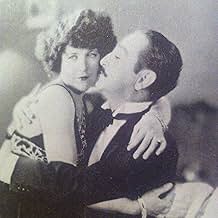
The cast is OK, although I mostly prefer the leads in Lubitsch's 1932 remake "One Hour with You." Monte Blue plays frazzled well enough as the doctor, but I prefer him in Lubitsch's later picture, "So This is Paris" (1926), and compared to Maurice Chevalier in the 1932 film, he's not preferred. And while I like that Marie Prevost's curls remind me of Clara Bow, her character comes off as too vampish and pathetic next to Genevieve Tobin's joyous Mitzi in the remake. The one big exception to my preference for the 1932 cast is Adolphe Menjou, who is perfect as the impervious professor. One benefit of Mizzi's characterization in this version is that it leads to a virtuoso, some-20 seconds long take of Menjou's startled expression when she hugs him--even though that scene, dropped from the remake, is a rather dramatic red herring. And the opening scene between the two is remarkable for conveying their marriage in disarray visually without needless intertitles.
Circling back, besides the emphasis on looks and the connected use of doors and windows, as well as the comedy of manners and misconceptions of infidelity, "The Marriage Circle" and "Lady Windermere's Fan" have a few more things in common. Both feature potentially adulterous couplings in a garden scene during a party, with the wife mistaking her husband for being caught in the act. Characters in both misread and reveal information from letters and other written documents, including dinner-party seating arrangements. The doctor's hat here also serves a similar function to that of the fan in the other film, and there are similar final scenes involving re-coupling and cars, which both resolve and prevent the narratives from becoming moral lessons. Where I'd fault "The Marriage Circle," by comparison, though, is that it doesn't seem quite as polished. The characters aren't quite as well rounded; the doctor's wife's jealousy on four separate occasions and pushing him away twice, seems repetitive, for instance--rather too circular. That three times shots of letters are repeated bothered me, too--I mean, we already read them, so shots of characters looking at them instead of just the letters themselves would suffice.
To come full circle, "The Marriage Circle," while establishing a precedent, of course, also has its antecedents, besides the earlier, more broad and grotesque comedies by Lubitsch while in Germany. Charlie Chaplin's "A Woman of Paris" (1923) is a frequently cited one, with the casting of Menjou in both films, in particular, being considered a nod by Lubitsch to Chaplin's display of a more deliberate form of pacing, a witty focus on particular details and a more restrained kind of cinematic acting within a more modern story--even though Chaplin's film suffers, unlike "The Marriage Circle," from its overbearing melodramatics. There are also the prior sex dramedies by Cecil B. DeMille, but they lack a similar level of narrative or visual sophistication, and even their titles indicate their greater gender imbalance, while perhaps simultaneously over-selling the sensationalism of the subject matter ("Old Wives for New," "Male and Female," "Don't Change Your Husband," "Why Change Your Wife?") compared to "A Woman of Paris" and the "The Marriage Circle," which respectively suggest femininity and gender equality, as well as sex. When the doctor's wife here states their infidelities to be "fifty-fifty," she's not far off. (Now, how the guy (DeMille) who went on to make Biblical epics started out with stories of marital infidelity and sexual promiscuity is a development in film history I may want to revisit later, too.) Discovering the formula that worked, Lubitsch remained rather faithful to the production of sophisticated romantic comedies, through his musicals, such as the remake "One Hour with You," to his other classic films of the 1930s and 1940s.
The circle of adulterous flirtation begins with a professor hiring a detective to gather evidence for a divorce from his wife, Mizzi, who, indeed, tries to woo the doctor husband of her friend, who, in turn, is admired by her husband's partner Gustav. Initially, the doctor's wife also mistakingly believes that her husband is having an affair with yet another woman. And around they go. The film is full of knowing looks and dramatic irony from characters misreading what they see. Like "Lady Windermere's Fan," there are some nice-looking shots involving windows and doors. A sly smile creeps up on the professor's face after he peers out a window to see his wife getting into a cab with the doctor, and there are a few compositions of characters seen through doorways. Once derided, but now celebrated by some like me, as "the director of doors," Lubitsch also includes a humorous episode where the doctor storms out of an apartment through four doors to get outside.
The cast is OK, although I mostly prefer the leads in Lubitsch's 1932 remake "One Hour with You." Monte Blue plays frazzled well enough as the doctor, but I prefer him in Lubitsch's later picture, "So This is Paris" (1926), and compared to Maurice Chevalier in the 1932 film, he's not preferred. And while I like that Marie Prevost's curls remind me of Clara Bow, her character comes off as too vampish and pathetic next to Genevieve Tobin's joyous Mitzi in the remake. The one big exception to my preference for the 1932 cast is Adolphe Menjou, who is perfect as the impervious professor. One benefit of Mizzi's characterization in this version is that it leads to a virtuoso, some-20 seconds long take of Menjou's startled expression when she hugs him--even though that scene, dropped from the remake, is a rather dramatic red herring. And the opening scene between the two is remarkable for conveying their marriage in disarray visually without needless intertitles.
Circling back, besides the emphasis on looks and the connected use of doors and windows, as well as the comedy of manners and misconceptions of infidelity, "The Marriage Circle" and "Lady Windermere's Fan" have a few more things in common. Both feature potentially adulterous couplings in a garden scene during a party, with the wife mistaking her husband for being caught in the act. Characters in both misread and reveal information from letters and other written documents, including dinner-party seating arrangements. The doctor's hat here also serves a similar function to that of the fan in the other film, and there are similar final scenes involving re-coupling and cars, which both resolve and prevent the narratives from becoming moral lessons. Where I'd fault "The Marriage Circle," by comparison, though, is that it doesn't seem quite as polished. The characters aren't quite as well rounded; the doctor's wife's jealousy on four separate occasions and pushing him away twice, seems repetitive, for instance--rather too circular. That three times shots of letters are repeated bothered me, too--I mean, we already read them, so shots of characters looking at them instead of just the letters themselves would suffice.
To come full circle, "The Marriage Circle," while establishing a precedent, of course, also has its antecedents, besides the earlier, more broad and grotesque comedies by Lubitsch while in Germany. Charlie Chaplin's "A Woman of Paris" (1923) is a frequently cited one, with the casting of Menjou in both films, in particular, being considered a nod by Lubitsch to Chaplin's display of a more deliberate form of pacing, a witty focus on particular details and a more restrained kind of cinematic acting within a more modern story--even though Chaplin's film suffers, unlike "The Marriage Circle," from its overbearing melodramatics. There are also the prior sex dramedies by Cecil B. DeMille, but they lack a similar level of narrative or visual sophistication, and even their titles indicate their greater gender imbalance, while perhaps simultaneously over-selling the sensationalism of the subject matter ("Old Wives for New," "Male and Female," "Don't Change Your Husband," "Why Change Your Wife?") compared to "A Woman of Paris" and the "The Marriage Circle," which respectively suggest femininity and gender equality, as well as sex. When the doctor's wife here states their infidelities to be "fifty-fifty," she's not far off. (Now, how the guy (DeMille) who went on to make Biblical epics started out with stories of marital infidelity and sexual promiscuity is a development in film history I may want to revisit later, too.) Discovering the formula that worked, Lubitsch remained rather faithful to the production of sophisticated romantic comedies, through his musicals, such as the remake "One Hour with You," to his other classic films of the 1930s and 1940s.
Clever Marriage Circle well rounded.
Professor Stock (Adolph Menjou) and wife Mizzi (Marie Provost) have reached an impasse in their marriage and he wants out. Mizzi's best friend Charlotte ( Florence Vidor ) is blissfully married to Dr. Charles Braun (Monte Blue). His partner Dr. Mueller (Creighton Hale) has designs on Charlotte who has no interest. When Mizzi sets her sights on Dr. Braun suspicions, stoked by misinterpretation and the diabolical Mizzi arise and accusations fly.
The Marriage Circle is an excellent comedy of errors from the Silent Era featuring the wit and sophistication of Ernst Lubitsch that would go on to brilliantly inform some of the finest adult comedies before and after sound and code enforcement. Here he breezily unfolds his story with a benign amorality and suspense as his quintet of characters all share a little guilt and selfishness.
Vidor is a beauty and paragon of virtue to behold but capable of being petty. Blue and Hale comically pine and mope while Menjou is pure dinner at eight collected. Acting honors however belong to Provost's Mizzi whose side glances and brashness haul the rest of the characters into the circle.
The Marriage Circle is an outstanding example of silent film comedy and in large contrast to the slapstick that still dominated. Doors are closed, not slammed or run through, the humor is sly not pie in the face. Lubitsch conveys it beautifully here as he would into sound as well as influence a generation of filmmakers.
The Marriage Circle is an excellent comedy of errors from the Silent Era featuring the wit and sophistication of Ernst Lubitsch that would go on to brilliantly inform some of the finest adult comedies before and after sound and code enforcement. Here he breezily unfolds his story with a benign amorality and suspense as his quintet of characters all share a little guilt and selfishness.
Vidor is a beauty and paragon of virtue to behold but capable of being petty. Blue and Hale comically pine and mope while Menjou is pure dinner at eight collected. Acting honors however belong to Provost's Mizzi whose side glances and brashness haul the rest of the characters into the circle.
The Marriage Circle is an outstanding example of silent film comedy and in large contrast to the slapstick that still dominated. Doors are closed, not slammed or run through, the humor is sly not pie in the face. Lubitsch conveys it beautifully here as he would into sound as well as influence a generation of filmmakers.


Did you know
- TriviaMotion Picture Magazine (February-July 1924): 'In making the kissing scene in "The Marriage Circle," where the dutiful wife smacks another man other than her husband by mistake, Herr Lubitsch made Florence Vidor and Creighton Hale repeat the event exactly thirty-nine times before the kiss was right. Florence is a very lovely lady, but... well, thirty-nine times!'
- GoofsOn the letter that Dr. Braun writes asking Mizzi to choose another doctor, the printed address on Dr. Braun's stationery misspells Vienna as "Wein"; it is correctly printed as "Wien" as a return address on the envelope of the same letter.
- How long is The Marriage Circle?Powered by Alexa
Details
Box office
- Budget
- $212,000 (estimated)
- Runtime
- 1h 25m(85 min)
- Sound mix
- Aspect ratio
- 1.33 : 1
Contribute to this page
Suggest an edit or add missing content