
A man whose wife has died remarries, and his new wife has a daughter of her own from a previous marriage. The man's young son, however, who loved his mother deeply and misses her terribly, r... Read allA man whose wife has died remarries, and his new wife has a daughter of her own from a previous marriage. The man's young son, however, who loved his mother deeply and misses her terribly, resents his father's new wife, not wanting her to take the place of his beloved mother, and... Read allA man whose wife has died remarries, and his new wife has a daughter of her own from a previous marriage. The man's young son, however, who loved his mother deeply and misses her terribly, resents his father's new wife, not wanting her to take the place of his beloved mother, and makes life miserable for his new stepsister..
- Director
- Writers
- Stars



- Director
- Writers
- All cast & crew
- Production, box office & more at IMDbPro
Featured reviews
Rather a humanistic than a religious view on the origins of sin and virtue
In another comment, Gerald A. DeLuca calls this is a movie about "sin, repentance and forgiveness", and certainly, Christian religiousness thoroughly shapes both the cultural context of the story and the feelings of all the characters in situations of doubt, fear and distress. Yet, this is much more than a "Christian morality tale".
In Christian tradition, there are two stories about the origin of sin: Eva and Adam and Kain and Abel. On first sight, the story of Jean and Arlette is somewhat similar to the story of Kain and Abel: It's a story about hate among brothers and sisters, about envy and jealousy. Yet, in Kain and Abel, jealousy is the primordial sin, an evil reaction to incomprehensible or unjust behavior of God.
Not so in "Visages d'enfants": there is no primordial sin in the movie. All the characters are capable of love and understanding, none of them is actually evil or cruel. In that respect, it is quite humanistic, in spite of the ubiquitous religiosity. Where, then, does sin come from? The origins shown in the movie are surprisingly simple: plain misunderstandings, subtle and unconscious inattentiveness to the feelings of others, well-intentioned behavior all the same hurtful to other's feelings, and to a large extent: fear and pain.
The ultimate cause of the drama is obviously Pierre's failure to adequately address his son's intense mourning. But my impression is that the father is above all afraid and feeling helpless. In particular, he is afraid that he won't be able to stand a solitary life for long, he is afraid that he won't be able to cope with the household work beside his duties as the mayor of the village, he is afraid that he won't be able to show enough of his love towards his two children, he is afraid of losing patience with them as indeed sometimes he does, he is afraid of failing his children's' education. His courage is sufficient to tell the priest about part of his anxieties, but he lacks the strength to show weakness in front of his son. All those small weaknesses, failures and misunderstandings are extremely beautifully and convincingly depicted in the movie and you also see again and again how small hurts done breed mistrust, malice and hate, and hate breeds new hate, getting worse and worse.
In Christian tradition, the remedy to sin is remorse, confession, prayer and penance; and ultimately, trust in divine mercy. In the film, there is indeed remorse, in particular in Jean. Confession is not done in front of God, but in front of other human beings. Prayers do not ask for divine pardon, but for help in earthly distress. There is no trace of penance at all. Salvation does not arise out of divine, but out of human mercy and love.
Of course, overcoming evil by means of forgiveness and love is a central concept of Christianity. Yet, Jean and his family need remarkably little help from God: No doubt, they do pray hard for divine help, but they are most successful when they act themselves in human, pitiful, and in particular in courageous ways. They prevent tragedies when they overcome their pride and fear, they find help when run they for it, they save lives when they put their own life at stake, they find love when they save their enemies.
In Christian tradition, even more than jealousy, the origin of sin is alienation from God, the decision of Woman and Man to live their own life, to gain knowledge by themselves, not to respect the limits that God set them. Ultimately, that's why only God can save them in the end. But in this film, people save themselves by overcoming their own weaknesses and finding their own strength, compassion and love.
The wintery light of childhood.
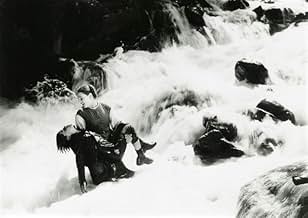
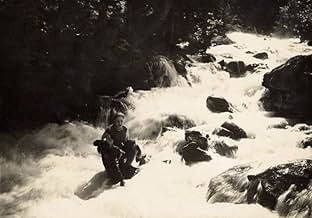
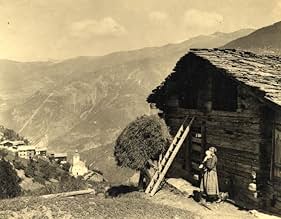
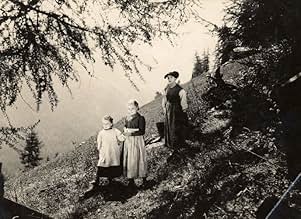
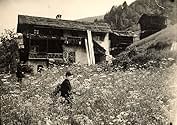
Breathtaking scenery and brilliant cinematography help to capture the raw wild beauty of a troubled child's view of the world.
It would take many years and the brilliance of a Bergman or Lean to recapture such insight and clarity of vision on film.
One interesting note...I think I discovered a rather major gaffe not mentioned on IMDb.
The csreen fades out on a visciously chilling depiction of a brutally cold night (which includes a character being rescued from an avalanche of snow...a title reads "The Next Morning"....and we are suddenly in spring (if not summer) and the horse drawn sleigh of the previous scenes is now a cart...
Still...an otherwise brilliant and fascinating film.
Very powerful, feels like a new film
I just wonder how long time did they have for shooting the film.
What can I say, whosoever has the chance to see it, highly recommended!
A breath-taking MASTERPIECE
A fantastic silent classic, holding up splendidly well many years later
There are many other instances among silent films where acting was characterized by exaggerated body language and facial expressions, a holdover from the stage and compensation for lack of sound and verbal dialogue. In increasing bits and pieces as the medium developed, however, heading into and past the advent of talkies, performances were gradually defined by more natural, nuanced comportment. It's to the credit of everyone involved here, both the cast and director Feyder, that these portrayals mostly fall into the latter category. This is true for all on hand, though of everyone, I'm actually of the opinion that it's the children who stand out most. Jean Forest and Arlette Peyran especially demonstrate controlled range and subtlety in their acting that feels advanced for their youth, and I can't help but be impressed. After all, it's the kids who are the emotional heart of the picture; this could have succeeded without them, as other titles have, but it definitely wouldn't have been the same.
Feyder, meanwhile, illustrates fine skill in orchestrating shots and scenes - not just in terms of taking advantage of the natural surroundings, but in generally ensuring scenes carried all the greatest impact that they could without becoming melodramatic or maudlin. With that said, 'Visages d'enfants' is also a major credit to cinematographers Léonce-Henri Burel and Paul Parguel, who play with techniques that certainly seem novel even for 1925, well after cinema had already been around for awhile. Their methods of filming at night or in the dark, providing a unique first-person point of view, or letting the camera move, and close-ups and more, show an ingenuity that enterprising filmmakers were still mostly just irregularly toying with. Taken together with the filming locations and the production design, the end result is often a mind for perspective that surpasses the more rudimentary photographic foundations that were more common even just a few years before.
If I have any critique to make, it might be that as much as the first half of the picture struggles slightly with tone. At some points it seems to be slanted toward being more of a comedy, or a comedy-drama, which doesn't mesh with the story beats that initially present. It rather comes across at first that Pierre and Jeanne are both just bad parents who don't communicate with their children, or about their children, and who don't necessarily respect Jean and Pierrette's grieving process. Such concerns melt away as the plot progresses, and the back half is as compelling and heartfelt as what one might hope of any feature, but all the same, the disparity is noticeable. Even with that in mind, though, the subjective imperfections or weaknesses are mild and minimal, and by and large the movie is outstanding. From writing and direction, to acting and all those contributions from behind the scenes, it's smartly made with unquestionable care and skill. Any comparisons that may come to call in no way diminish the value of what Feyder's work has to offer: 'Visages d'enfants' is an excellent silent classic that deserves recognition, and is well worth two hours of anyone's time to check out.


Did you know
- TriviaThe film was an artistic success but a terrible commercial failure, causing the bankruptcy of Mundus Film. As for de Zoubaloff, he moved into the radio set selling while Porchet became the technical manager of the Swiss Film Office.
- ConnectionsFeatured in Cinema Europe: The Other Hollywood: The Music of Light (1995)
Details
- Release date
- Countries of origin
- Official sites
- Languages
- Also known as
- Faces of Children
- Filming locations
- Production companies
- See more company credits at IMDbPro
- Runtime
- 1h 54m(114 min)
- Color
- Sound mix
- Aspect ratio
- 1.33 : 1