IMDb RATING
7.2/10
1.8K
YOUR RATING


A group of starving artists try to survive in 1830s Paris, including a seamstress and the would-be playwright she loves.A group of starving artists try to survive in 1830s Paris, including a seamstress and the would-be playwright she loves.A group of starving artists try to survive in 1830s Paris, including a seamstress and the would-be playwright she loves.
- Awards
- 2 wins total





Mathilde Comont
- Madame Benoit
- (as Matilde Comont)

Eugene Pouyet
- Bernard
- (as Gene Pouyet)


Agostino Borgato
- Editor
- (uncredited)
Harry Crocker
- Bit Part
- (uncredited)

Blanche Payson
- Factory Supervisor
- (uncredited)
7.21.7K
1
2
3
4
5
6
7
8
9
10
Featured reviews
An emotional powerhouse
It's difficult to imagine what going to the movies was like during the Silent Era. With no soundtracks, and a person in the theater simply accompanying the on-screen action on piano, dramas of the day must have suffered somewhat. But not 'La Boheme'.
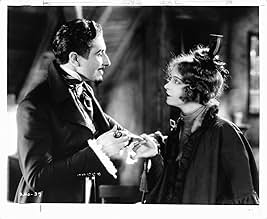
As this wonderfully engaging tale of struggling actors and writers in France unfolds, it has a quality to its story telling that would have diminished had it been a talkie. Once you see the frail and beautiful (and quite haunting) Lillian Gish in her key scenes, you will never forget her.
Grab a few hankies and enjoy this singular silent screen treat!
As this wonderfully engaging tale of struggling actors and writers in France unfolds, it has a quality to its story telling that would have diminished had it been a talkie. Once you see the frail and beautiful (and quite haunting) Lillian Gish in her key scenes, you will never forget her.
Grab a few hankies and enjoy this singular silent screen treat!
Gesticulations Deluxe!
I have seen hundreds of silent films by now, but I have never, ever yet seen a film in which pantomime was so wildly and dramatically used consistently throughout the entire story by the actors, particularly by John Gilbert. I hate to say it, but here as Rudolphe, although he was his usual fantastically handsome self, he reminds me most of Gene Kelly's antics in the silent film spoof musical "Singin' in the Rain." The film required more subtlety from Mr. Gilbert here, and then I think it would have been a genuine classic.
That said, there are moments where his pantomime is perfectly poignant, more genteel, and realistic. The romp through the woods on a spring day, where Mimi (Gish) confesses to Rudolphe (Gilbert) that she loves him, is sublime and unforgettable. He places his hand gently on his heart in surprise, and then kisses Mimi's golden ringlets first, before he kisses her face. A gesture so nineteenth century! John Gilbert certainly knew his history and researched his roles very well.
Lillian Gish is always a joy to watch, and her performance as Mimi is exceptional. Her death scene was very moving. If you are a fan of John Gilbert or Lillian Gish, don't miss La Boheme. TCM has a wonderful video clip from the film on its website. Just use their search engine to find it.
That said, there are moments where his pantomime is perfectly poignant, more genteel, and realistic. The romp through the woods on a spring day, where Mimi (Gish) confesses to Rudolphe (Gilbert) that she loves him, is sublime and unforgettable. He places his hand gently on his heart in surprise, and then kisses Mimi's golden ringlets first, before he kisses her face. A gesture so nineteenth century! John Gilbert certainly knew his history and researched his roles very well.
Lillian Gish is always a joy to watch, and her performance as Mimi is exceptional. Her death scene was very moving. If you are a fan of John Gilbert or Lillian Gish, don't miss La Boheme. TCM has a wonderful video clip from the film on its website. Just use their search engine to find it.
"To work for love"
Stories like this have a certain kind of timelessness and familiarity to them, because they are based around characters and situations which recur again and again in art and literature. And in the case of La Boheme, it is a central concept which has particular resonance for the passionately creative amongst us. For here we meet the romantic archetype of the artists who will die for their art – writers, painters and musicians, lovers and libertines all, starving in the garrets of 19th century Paris. The story comes from the 1896 Puccini opera, but elements of it crop up as recently as the 2001 movie Moulin Rouge! During this era, there wasn't really anyone better suited to playing the female lead than Lillian Gish, and perhaps there never has been. Tender, mysterious, as light and ethereal as a strip of gauze, she was in every way the tragic heroine. At her best when she played it subtle, her performance in La Boheme is wonderfully subdued. So much lies in the tiniest flicker of her face, such as that little curl of her lip when she gets her first glimpse of John Gilbert. Gilbert is not nearly as fine an actor as his leading lady, but he is again very much the right type for his part – an idealist with intelligent eyes and a warm smile. Other faces to look out for here are the very entertaining French actress Renée Adorée, and a rare glimpse of a silent-era Edward Everett Horton, although sadly before his comic talent was fully realised.
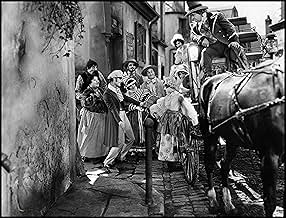
The director is King Vidor, himself a man with a burningly artistic approach to his medium, albeit one grounded enough in reality and focused enough in thought to make him a good professional. His shot composition shows a neat use of space, and confident handling of rhythm. But what really makes Vidor stand out is the smooth way he makes shots that little bit special. Take for example the scene in which Vicomte Paul first lays eyes on Gish. We get a travelling point-of-view shot as he watches one young woman walking alongside his carriage. The carriage then stops, the woman carries on walking to reveal Gish heading straight towards the camera. We then cut in to a close-up of her face. The moment jolts itself into our consciousness, and because the movement of the camera and the two women is logical, it draws us further into the film's world, rather than exposing the artifice of the medium. King Vidor was one of the best directors who ever lived, because he successfully bridged the gap between the stylish and the realistic.
The resultant picture is a good work of classic romantic tragedy, and ultimately one that relates more to fantasy and mythology than to any real world situation. Poverty and injustice play their parts in La Boheme, but they are presented in almost noble terms, like some depiction of suffering in a religious painting. Compare this to poverty-themed pictures made just a few years later during the depression, which were earthy, honest and very close to home. La Boheme on the other hand is more the agonising, bittersweet fairytale. And there is no shame in this – it is simply a part of the idealism of the 1920s and of silent cinema, a naïve but beautiful way of thinking that was very soon to vanish with the changing times.
The director is King Vidor, himself a man with a burningly artistic approach to his medium, albeit one grounded enough in reality and focused enough in thought to make him a good professional. His shot composition shows a neat use of space, and confident handling of rhythm. But what really makes Vidor stand out is the smooth way he makes shots that little bit special. Take for example the scene in which Vicomte Paul first lays eyes on Gish. We get a travelling point-of-view shot as he watches one young woman walking alongside his carriage. The carriage then stops, the woman carries on walking to reveal Gish heading straight towards the camera. We then cut in to a close-up of her face. The moment jolts itself into our consciousness, and because the movement of the camera and the two women is logical, it draws us further into the film's world, rather than exposing the artifice of the medium. King Vidor was one of the best directors who ever lived, because he successfully bridged the gap between the stylish and the realistic.
The resultant picture is a good work of classic romantic tragedy, and ultimately one that relates more to fantasy and mythology than to any real world situation. Poverty and injustice play their parts in La Boheme, but they are presented in almost noble terms, like some depiction of suffering in a religious painting. Compare this to poverty-themed pictures made just a few years later during the depression, which were earthy, honest and very close to home. La Boheme on the other hand is more the agonising, bittersweet fairytale. And there is no shame in this – it is simply a part of the idealism of the 1920s and of silent cinema, a naïve but beautiful way of thinking that was very soon to vanish with the changing times.
La Boheme
NO, this silent Gish/Gilbert version of "La Boheme" is NOT BASED on the Puccini opera. Gish and the studio could not obtain the rights to the Puccini material. It IS based on Henry Murgi's 1851 novel "Life in the Latin Quarter." And once again IMDb insists I must pad out my comment to meet their silly minimum guidelines.
I do agree with other posters than you cannot view silent and sound films in the same way. No matter how great the performers involved, the 'mime' aspects seem very unnatural to modern eyes. You have to set aside prejudices on technique, especially if you are unused to viewing silent films, which can often seem melodrama and corny. I do enjoy watching Gish though.
I do agree with other posters than you cannot view silent and sound films in the same way. No matter how great the performers involved, the 'mime' aspects seem very unnatural to modern eyes. You have to set aside prejudices on technique, especially if you are unused to viewing silent films, which can often seem melodrama and corny. I do enjoy watching Gish though.
Watch it for Gish
Lillian Gish is the main reason to watch this film, as the subtlety and range of her expressiveness is on full display here. She is simply magnificent. The film shows signs of creakiness and yet still carries an emotional impact, though I have to say, director King Vidor elongates things as he tries to wring every last ounce of pathos out of it. The film is also hampered by being silent, when you consider how powerful the music from Puccini's opera is.
Gish and John Gilbert were huge stars when this film was made, Gish especially, and there are moments when they light up the screen. My favorite is when they're out on a picnic and she dances about while he chases her. Look for the moment when he catches her, then holds her hands from behind and whispers something in her ear; her look of surprise changing to a backward glance as her body sways forward is wonderful. It's in these types of scenes and when the Vidor puts Gish's face in a tight shot that the film is at its best, and for them, it's worth watching.
Gish and John Gilbert were huge stars when this film was made, Gish especially, and there are moments when they light up the screen. My favorite is when they're out on a picnic and she dances about while he chases her. Look for the moment when he catches her, then holds her hands from behind and whispers something in her ear; her look of surprise changing to a backward glance as her body sways forward is wonderful. It's in these types of scenes and when the Vidor puts Gish's face in a tight shot that the film is at its best, and for them, it's worth watching.


Did you know
- TriviaJohn Gilbert was infatuated with Lillian Gish and would mess up his "love scenes" with her on purpose, so he could keep kissing her.
- GoofsThe opening shot of Paris shows Notre Dame Cathedral with its famous spire. At the time the film is set, the 1830s, the spire did not exist. The original was demolished in the early 1790s and not rebuilt until 1860.
- Quotes
Title Card: Paris - Mother of the Arts...
- ConnectionsFeatured in American Masters: Lillian Gish: The Actor's Life for Me (1988)
Details
- Release date
- Country of origin
- Language
- Also known as
- La Boheme
- Filming locations
- Arcadia, California, USA(elaborate picnic in the woods of Ville-d'Avray)
- Production company
- See more company credits at IMDbPro
Box office
- Budget
- $693,000 (estimated)
- Runtime
- 1h 35m(95 min)
- Sound mix
- Aspect ratio
- 1.33 : 1
Contribute to this page
Suggest an edit or add missing content