IMDb RATING
6.9/10
873
YOUR RATING

A scientist is tormented by an irrational fear of knives and the irresistible compulsion to murder his wife.A scientist is tormented by an irrational fear of knives and the irresistible compulsion to murder his wife.A scientist is tormented by an irrational fear of knives and the irresistible compulsion to murder his wife.


6.9873
1
2
3
4
5
6
7
8
9
10
Featured reviews
The knife
I come to this as someone who thinks the presentation of dreams - much more than dreams themselves - imitates the ways we use to structure the self that presents the world to us. Charting the cinematic effort of that is exciting to me.
And well, this is an interesting film to say the least, and from an interesting time. The backstory is that Freud himself approved of it and moreover sent two from his trusted Viennese circle to aid and supervise the UFA production on what would be a rational explication of psychoanalysis. You should know that his were radical , modern ideas in their time and for twenty years had been a sensation. And the Weimar public at large was struggling with deep-seated nightmares of their own, evidenced in Caligari and elsewhere, so it was very receptive to the new science for sleep, and probably every bit as confused about it as the somnambulist in Caligari.
But oh boy, haven't our narrative devices come far since Freud.
In the film, we have suddenly strange , unsettling urges followed by a puzzling nightmare, and then a psychoanalyst sits us down to kindly explain and assuage irrational fear.
Nevermind the obtuse focus on sex and symbolic interpretation of dreams, that was Freud. The emphasis on phallic imagery, the incidental aversion to knives linked to imaginary castration in the patient. Jung would make the transition to a character-based dreamworld, and we are growing out of that too. We are insanely more complicated beings these days than a logic like Freud's can explain, our dreams much more layered, and you can see that in contemporary filmmakers who are dabbling with dream.
We are unsure these days where day begins, that much (night) was certain then. Our dreams also come from movies and TV, from tweets and instagram, and we're beginning to understand what the Buddhist had been saying all along; the mind's function is to project snippets of narrative around a fictional self, and the most loaded dream is no different in mechanism to the most trivial thought. You are always at the center of an illusionary world you have set in motion, but you won't know that without a center in emptiness.
The trigger for it is something to consider though. A murder (by knife) has taken place the day before in the same street, a wife killed by the husband. The same urge somehow surfaces in our guy.
The actual nightmare has dated, along with the logic behind it and German expressionism. It is this eerie confluence of semiconscious machinery that still carries power. It is this aspect of dreaming Pabst would cultivate in later works.
And well, this is an interesting film to say the least, and from an interesting time. The backstory is that Freud himself approved of it and moreover sent two from his trusted Viennese circle to aid and supervise the UFA production on what would be a rational explication of psychoanalysis. You should know that his were radical , modern ideas in their time and for twenty years had been a sensation. And the Weimar public at large was struggling with deep-seated nightmares of their own, evidenced in Caligari and elsewhere, so it was very receptive to the new science for sleep, and probably every bit as confused about it as the somnambulist in Caligari.
But oh boy, haven't our narrative devices come far since Freud.
In the film, we have suddenly strange , unsettling urges followed by a puzzling nightmare, and then a psychoanalyst sits us down to kindly explain and assuage irrational fear.
Nevermind the obtuse focus on sex and symbolic interpretation of dreams, that was Freud. The emphasis on phallic imagery, the incidental aversion to knives linked to imaginary castration in the patient. Jung would make the transition to a character-based dreamworld, and we are growing out of that too. We are insanely more complicated beings these days than a logic like Freud's can explain, our dreams much more layered, and you can see that in contemporary filmmakers who are dabbling with dream.
We are unsure these days where day begins, that much (night) was certain then. Our dreams also come from movies and TV, from tweets and instagram, and we're beginning to understand what the Buddhist had been saying all along; the mind's function is to project snippets of narrative around a fictional self, and the most loaded dream is no different in mechanism to the most trivial thought. You are always at the center of an illusionary world you have set in motion, but you won't know that without a center in emptiness.
The trigger for it is something to consider though. A murder (by knife) has taken place the day before in the same street, a wife killed by the husband. The same urge somehow surfaces in our guy.
The actual nightmare has dated, along with the logic behind it and German expressionism. It is this eerie confluence of semiconscious machinery that still carries power. It is this aspect of dreaming Pabst would cultivate in later works.
Freud and Horror
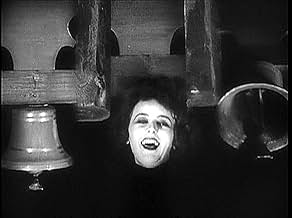
This film appears to be a relative to the common horror film and beautifully carves out its closeness to the psychoanalysis: Everyone who's busy with that genre can benefit from the Pabst film. It becomes pretty obvious during the insane and worth seeing dream sequences which foreshadows an Andalusian dog shot three years later. In a period of several minutes they form a phantasmagoric island within the film, which is continually reverted to during the analytic situations. An aesthetic experience of an unique quality, tremendously powerful in its imagery. But on the whole, the film has the effect of being too reduced, even perhaps reducing, too trimmed and too coarse in respect of content.
Beware the Murnau Restoration
There are a lot of important elements the restorers chose to omit from the movie. There are letters that are opened & are supposed to appear on screen for the audience to read. Gone. A man pulls up on a bike delivering a telegram. Gone. All references to the name of the man Martin Fellman are omitted. When he comes home after leaving his key,he sits down in front of the idol. It disappears leaving only a baby image. Gone. His wife see a dog & litter of puppies, She says: "I wish I had a child." Gone. The Murnau people made the movie incoherent by this censorship. Its a disgrace. They had no right to do these changes to the movie as they are not part of the creative process.
Moderately Gripping, But No Great Classic!
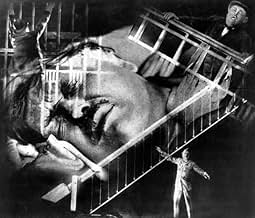
Although it has an enormous reputation as a classic example of German Expressionist Cinema, "Secrets of a Soul" turns out to have very few of these pictorial elements. That reputation was obviously built on the opinions of critics who had not actually seen the movie but had referenced the illustration reproduced on the poster. It is not a still from the movie at all, but a composite made up by the publicity department.
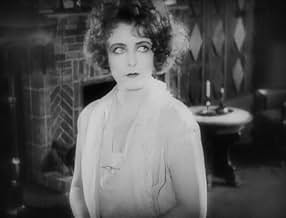
Admittedly, we do see the various dreams individuallyand they are even briefly reprizedbut even so, they constitute but an extremely small part of the movie which mostly centers on the well-off but distinctly middle-aged hero's sudden aversion to his young and extremely attractive wife.
I realize that this was obviously not the scriptwriter's intention, as it appears from the flashback that the three participants are roughly the same age. The casting, however, particularly of the 25-year-old Weyher, as well as youngish Jack Trevor, makes nonsense of this supposition. We are forced to accept the movie in the way it appears on the screen, not in the way it was postulated in the minds of the screenwriters.
I suppose you could argue that the dreams are presented in an expressionistic fashion (though I would disagree), but you can't get away from the fact that they display little visual imagination. And in any event, they occupy very little screen time.
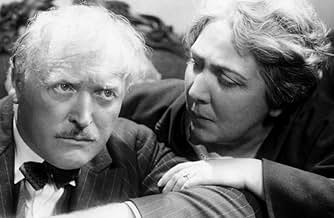
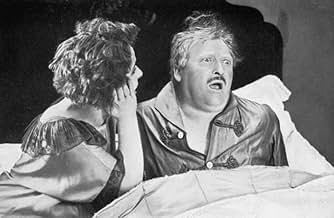
As the middle-aged lead, Werner Krauss does extremely well in conveying the domestic disparity he suffers with his young wife. He has obviously been married for at least five or six years and his attitude is not so much loving, as reserved, suspicious, ill-tempered and even resentful. As said, this was probably not the way Neumann and Ross intended, but it's the way Krauss plays the role and, more importantly, the way Pabst has directed it. So what have here is not so much expressionism, as a moderately gripping domestic drama.
Admittedly, we do see the various dreams individuallyand they are even briefly reprizedbut even so, they constitute but an extremely small part of the movie which mostly centers on the well-off but distinctly middle-aged hero's sudden aversion to his young and extremely attractive wife.
I realize that this was obviously not the scriptwriter's intention, as it appears from the flashback that the three participants are roughly the same age. The casting, however, particularly of the 25-year-old Weyher, as well as youngish Jack Trevor, makes nonsense of this supposition. We are forced to accept the movie in the way it appears on the screen, not in the way it was postulated in the minds of the screenwriters.
I suppose you could argue that the dreams are presented in an expressionistic fashion (though I would disagree), but you can't get away from the fact that they display little visual imagination. And in any event, they occupy very little screen time.
As the middle-aged lead, Werner Krauss does extremely well in conveying the domestic disparity he suffers with his young wife. He has obviously been married for at least five or six years and his attitude is not so much loving, as reserved, suspicious, ill-tempered and even resentful. As said, this was probably not the way Neumann and Ross intended, but it's the way Krauss plays the role and, more importantly, the way Pabst has directed it. So what have here is not so much expressionism, as a moderately gripping domestic drama.


Did you know
- TriviaSigmund Freud, whose book "The Interpretation of Dreams" largely influenced this film, was approached to serve as a consultant on psychoanalysis. Freud declined, believing that film could not capture the complexities of the science of psychoanalysis.
- Alternate versionsThere is an Italian edition of this film on DVD, distributed by DNA Srl: "I MISTERI DI UN'ANIMA (1926) + OMBRE AMMONITRICI (1923)" (2 Films on a single DVD), re-edited with the contribution of film historian Riccardo Cusin. This version is also available for streaming on some platforms.
- ConnectionsEdited into Die Geschichte des erotischen Films (2004)
Details
- Release date
- Country of origin
- Languages
- Also known as
- Tajna jedne duše
- Production company
- See more company credits at IMDbPro
- Runtime
- 1h 37m(97 min)
- Sound mix
- Aspect ratio
- 1.33 : 1
Contribute to this page
Suggest an edit or add missing content