IMDb RATING
7.2/10
3.9K
YOUR RATING

A salesgirl pursues a handsome playboy.A salesgirl pursues a handsome playboy.A salesgirl pursues a handsome playboy.
- Awards
- 1 win total




Elinor Glyn
- Madame Elinor Glyn
- (as Madame Elinor Glyn)

Elmo Billings
- Office Boy
- (uncredited)

Gary Cooper
- Newspaper Reporter
- (uncredited)

Lloyd Corrigan
- Yacht Cabin Boy
- (uncredited)
Cheryl Holt
- Baby
- (uncredited)
Eleanor Lawson
- First Welfare Worker
- (uncredited)

Rose Tapley
- Second Welfare Worker
- (uncredited)

Dorothy Tree
- Waltham Employee
- (uncredited)
7.23.9K
1
2
3
4
5
6
7
8
9
10
Featured reviews
Gave Clara Bow the moniker she'd have for the rest of her life
Cyrus (Antonio Moreno) is the heir to a large, successful department store. He falls for counter girl Betty (Clara Bow), a young woman who definitely has "IT", that indefinable quality that makes certain people the center of attention. Cyrus' goofball friend Monty (William Austin) tries to facilitate the "opposite sides of the track" romance between his buddy and Betty, with more than a few hiccups along the way. Also featuring Priscilla Bonner, Jacqueline Gadsdon, Julia Swayne Gordon, and Gary Cooper.
This was based on a story by Elinor Glyn, and if you don't know the name, you sure will by the end of the movie. Her name is featured prominently in the opening credits, then in a title card explaining what "IT" is, then in a copy of the story being read by a character in the movie, and then when Glyn shows up for a cameo, playing herself! Anyway, most people have heard of this movie and the "It Girl" moniker that it gave Clara Bow for the rest of her life..
It's a decent romantic comedy of the period, with many little period details that make modern viewing interesting. The changes in fashions, manner and speech are amusing. I don't think I'd ever seen the exclamation "Hot Socks!" before. Bow is cute, and pushes the boundary for what a woman could do, say and look like on screen (near the end of the film as she climbs soaking wet out of the water with her clothing clinging to her, leaving little to the imagination, comes to mind). In that way It prefigures the coming Pre-Code early sound era.
This was based on a story by Elinor Glyn, and if you don't know the name, you sure will by the end of the movie. Her name is featured prominently in the opening credits, then in a title card explaining what "IT" is, then in a copy of the story being read by a character in the movie, and then when Glyn shows up for a cameo, playing herself! Anyway, most people have heard of this movie and the "It Girl" moniker that it gave Clara Bow for the rest of her life..
It's a decent romantic comedy of the period, with many little period details that make modern viewing interesting. The changes in fashions, manner and speech are amusing. I don't think I'd ever seen the exclamation "Hot Socks!" before. Bow is cute, and pushes the boundary for what a woman could do, say and look like on screen (near the end of the film as she climbs soaking wet out of the water with her clothing clinging to her, leaving little to the imagination, comes to mind). In that way It prefigures the coming Pre-Code early sound era.
Whatever "It" is, she's sure got it...
I first saw "It" last year at a mini-festival at the Kemper Museum in Kansas City. The audience was about equally middle-aged (50's, 60's; I'm 63) and young (many 20's and early 30's). Everybody roared with laughter and delight throughout the film.
This is not only a sweet, wacky comedy (with a strong ending--how I wish current filmmakers could learn that lesson!), but also a demonstration, as others have pointed out, of one of the most magnetic personalities ever to face a camera lens. Clara Bow's presence is simply heart-stopping and her basic goodness, at least in this role, is such that it makes me feel maybe there's a little hope for humankind after all.
I watched it again, with a friend, at home this evening and marveled anew at the extraordinary vitality of this wonderful young woman. The extremely silly story doesn't matter in the least. The lesson of the film, as much as there is one, is "where there's a will, there's a way," and to follow the exploits of our heroine's will is pure balm for any weary soul.
This is not only a sweet, wacky comedy (with a strong ending--how I wish current filmmakers could learn that lesson!), but also a demonstration, as others have pointed out, of one of the most magnetic personalities ever to face a camera lens. Clara Bow's presence is simply heart-stopping and her basic goodness, at least in this role, is such that it makes me feel maybe there's a little hope for humankind after all.
I watched it again, with a friend, at home this evening and marveled anew at the extraordinary vitality of this wonderful young woman. The extremely silly story doesn't matter in the least. The lesson of the film, as much as there is one, is "where there's a will, there's a way," and to follow the exploits of our heroine's will is pure balm for any weary soul.
A decent romantic comedy made wonderful by the presence of Clara Bow
I'm completely smitten with Clara Bow. After having seen Wings, and having just watched It and the TCM documentary Clara Bow: Discovering the It Girl, I have to say that she's just about the most amazing actress of the silent era. Even besides her limitless beauty, it seems like she can accomplish anything with her face. It's far too bad that she was never given a role that fully suited her immense talent. Wings is the closest she ever came to making a great film, it would seem, but, even though she steals the movie away from the other actors, the dogfights and action sequences steal the movie from her. So then It has to stand as her testament, the film that best demonstrates her legacy. And because of this, it's not surprising that Bow is all but forgotten. I mean, It certainly isn't a bad movie. It's a moderately well done romantic comedy where the shopgirl goes after her rich boss. It's fun and entertaining, but not necessarily something you'll remember for that long afterwords. Much like any romantic comedy that would be released today, among which the best is only an average movie. But then those looking to observe Clara Bow's talent don't exactly need another movie. Bow effortlessly raises the level of the project. It would have been rather average without her, but she makes it good. Quite good, in fact. I couldn't take my eyes off her, and I know that I'll visit the film again because of her. The other actors are mostly forgettable, except for William Austin. He plays the boss's best friend, and he's pretty obviously a homosexual. It's one of the more open depictions I've seen. He's quite funny, as well, and it's no mean feat that he wins any attention whatsoever away from Ms. Bow. 8/10.
Modern Fluff
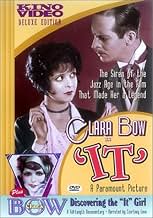
Two years after "It" came out the silent picture would be a thing of the past. Still, the most striking thing about this movie, after the always beautiful Clara Bow, is how modern it looks. On the Kino DVD the picture is sharp and clear, with excellent contrast. It looks as good as black and white can.
The story itself is fluff. The It of the title, which translates roughly as sex appeal, is irrelevant to the plot. Salesgirl Betty Lou Spence (Bow) falls in love with owner of big department store Cyrus Waltham, Jr. (Antonio Moreno). She chases him, he chases her, misunderstanding separates them. Even though the plot is light, it fulfills its modest goals well, largely due to Bow's energy. William Austin, as Moreno's friend Monty, is also a high point. In one key scene he also shows himself to be a far more caring and sensitive person than Cyrus, and probably a better choice for Betty's affections. Sadly, that's not how this kind of movie works.
The camera work is pretty sophisticated for the time. The scenes of Betty and Cyrus's date at the beach, with quick cuts as the two laugh, play and fall in love, are now a cliche, although one that's still used. The use of panning, different angles during scenes and plenty of close-ups keep the movie moving, without the long shots before a stationary camera that characterized many indoor scenes during the silent era. Were it not for the lack of sound and the title cards, one could easily think this movie was made as late as the start of WWII.
"It" is not an important movie in the development of cinema, either in terms of technique or theme. Instead, it's an entertaining romantic comedy, largely due to Bow's electrifying screen presence and Austin's satisfying performance. Clara Bow was a huge star, who defined the female sex symbol during the 20s. Even today it's hard to imagine anyone watching her and being able to deny that she does indeed have It.
The story itself is fluff. The It of the title, which translates roughly as sex appeal, is irrelevant to the plot. Salesgirl Betty Lou Spence (Bow) falls in love with owner of big department store Cyrus Waltham, Jr. (Antonio Moreno). She chases him, he chases her, misunderstanding separates them. Even though the plot is light, it fulfills its modest goals well, largely due to Bow's energy. William Austin, as Moreno's friend Monty, is also a high point. In one key scene he also shows himself to be a far more caring and sensitive person than Cyrus, and probably a better choice for Betty's affections. Sadly, that's not how this kind of movie works.
The camera work is pretty sophisticated for the time. The scenes of Betty and Cyrus's date at the beach, with quick cuts as the two laugh, play and fall in love, are now a cliche, although one that's still used. The use of panning, different angles during scenes and plenty of close-ups keep the movie moving, without the long shots before a stationary camera that characterized many indoor scenes during the silent era. Were it not for the lack of sound and the title cards, one could easily think this movie was made as late as the start of WWII.
"It" is not an important movie in the development of cinema, either in terms of technique or theme. Instead, it's an entertaining romantic comedy, largely due to Bow's electrifying screen presence and Austin's satisfying performance. Clara Bow was a huge star, who defined the female sex symbol during the 20s. Even today it's hard to imagine anyone watching her and being able to deny that she does indeed have It.
Lightweight Story Given Life By Clara Bow
Clara Bow's energy and glamour give this otherwise lightweight feature some life, making it quite a bit better than it had any right to be. The rest of the production does have a couple of strengths, but not enough to carry the load. The story is pleasant and generally entertaining, but rather negligible. The "It" theme is overworked, and downplaying it in favor of a little more substance might have improved the movie. Yet it is still certainly worth seeing.
Bow gets a character that allows her to use her strengths while also giving her a chance to do some other things as well, as her character goes through a series of romantic episodes and other experiences. Perhaps one reason why this is one of her best-remembered features is that the role gives her some opportunities to show different sides of her character, as she uses her facial expressions and other resources pretty well.
The rest of the cast is just there for Bow to play off of, and the characters are mostly one-dimensional. Antonio Moreno is solid but sometimes lifeless, and his friend Monty is an annoying character whose only constructive purpose is to advance the plot at a couple of key stages.
One minor asset of the movie is the inter-titles, several of which add a bit of bite to some otherwise trite situations. But the constant references to the "It" concept, which apparently come from the Elinor Glyn source material, get old quickly. It's hardly a very imaginative or significant concept, and a couple of passing references would have been more than enough, so as to allow the story to stand more on its own.
The story itself is told rather well, and there are some enjoyable sequences, especially towards the end. While the whole thing is too superficial to belong on any best-of or must-see lists - especially in a year that produced so many outstanding and significant films - it's a generally entertaining little feature, and it is one of the best showcases for Clara Bow, who was one of the most popular performers of the 1920s.
Bow gets a character that allows her to use her strengths while also giving her a chance to do some other things as well, as her character goes through a series of romantic episodes and other experiences. Perhaps one reason why this is one of her best-remembered features is that the role gives her some opportunities to show different sides of her character, as she uses her facial expressions and other resources pretty well.
The rest of the cast is just there for Bow to play off of, and the characters are mostly one-dimensional. Antonio Moreno is solid but sometimes lifeless, and his friend Monty is an annoying character whose only constructive purpose is to advance the plot at a couple of key stages.
One minor asset of the movie is the inter-titles, several of which add a bit of bite to some otherwise trite situations. But the constant references to the "It" concept, which apparently come from the Elinor Glyn source material, get old quickly. It's hardly a very imaginative or significant concept, and a couple of passing references would have been more than enough, so as to allow the story to stand more on its own.
The story itself is told rather well, and there are some enjoyable sequences, especially towards the end. While the whole thing is too superficial to belong on any best-of or must-see lists - especially in a year that produced so many outstanding and significant films - it's a generally entertaining little feature, and it is one of the best showcases for Clara Bow, who was one of the most popular performers of the 1920s.


Did you know
- TriviaElinor Glyn gave many confusing and sometimes contradictory explanations for what "It" meant, but she always said that "It" did not mean "sex appeal" necessarily and that anyone who said it did was vulgarizing her concept. Nonetheless, "It" became a euphemism for "sex appeal," which caused that pronoun to be entered into the American lexicon as a noun in the late 1920s.
- GoofsAs Waltham climbs onto the anchor, his shirt sleeve is intact. The scene cuts away to Monty and Adela in the rowboat for a brief moment; however, in the next scene, Waltham's sleeve is completely torn.
- Quotes
Monty Montgomery: I feel so low, old chap, that I could get on stilts and walk under a dachshund.
- ConnectionsFeatured in The House That Shadows Built (1931)
- How long is It?Powered by Alexa
Details
Box office
- Gross US & Canada
- $411,891
- Runtime
- 1h 12m(72 min)
- Color
- Sound mix
- Aspect ratio
- 1.33 : 1
Contribute to this page
Suggest an edit or add missing content