IMDb RATING
8.2/10
9.6K
YOUR RATING


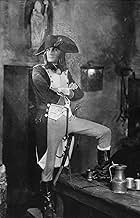
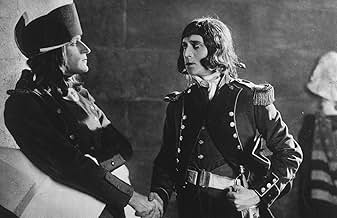
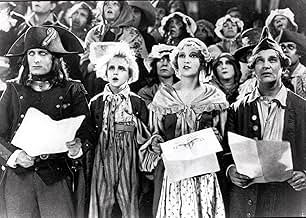
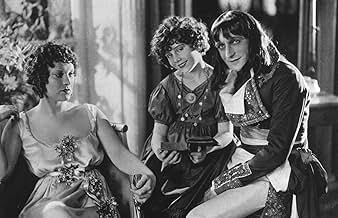
A film about the French general's youth and early military career.A film about the French general's youth and early military career.A film about the French general's youth and early military career.
- Awards
- 4 wins total


Nicolas Roudenko
- Napoléon Bonaparte enfant
- (as Vladimir Roudenko)


Max Maxudian
- Barras
- (as Maxudian)


- Director
- Writer
- All cast & crew
- Production, box office & more at IMDbPro
8.29.6K
1
2
3
4
5
6
7
8
9
10
Featured reviews
Excellent -- but where's the DVD?
I saw this back in '81 or '82, on the Big Screen at the Shrine Auditorium in Los Angeles, with Carmine Coppola conducting a live orchestra -- there has never been anything like that in all my movie-going experience! The closest that's come since was _Intolerance_, restored, with another live orchestra performing under the baton of the composer, Gillian Anderson (no, not the one from the X-Files). That, too, was an occasion to remember ... but where is Napoleon on DVD?
As many other reviewers have said, Napoleon was a relevatory experience. Certainly, other films to that point had used most of the devices Gance employed so brilliantly (except, of course, his three-screen-wide "Polyvision"), but then sound came in and the requirements of the microphone killed the recently mobilized camera. The camera became very static for at least the next ten years of films -- dynamic camera movements only returned when sound mixing came in to being, and scenes could be shot MOS (mit out sound), with foley and overdubbing replacing the missed sounds.
For this reason, Napoleon is important to see -- as a technical achievement. But Gance's artistry wasn't limited to gimmicks. His pacing, editing, and direction of the actors (including Dieudonne as Nappy -- looking amazingly Rod-Stewart-like) is excellent as well.
Highly recommended -- and when the DVD comes out -- hopefully, with the fuller, five-hour restoration, and Coppola's music on one track, with a reconstruction of the original music on another (and perhaps Gillian Anderson has a score of her own to share?) -- you'll owe it to yourself, as a student of Film, to see it, over and over again.
As many other reviewers have said, Napoleon was a relevatory experience. Certainly, other films to that point had used most of the devices Gance employed so brilliantly (except, of course, his three-screen-wide "Polyvision"), but then sound came in and the requirements of the microphone killed the recently mobilized camera. The camera became very static for at least the next ten years of films -- dynamic camera movements only returned when sound mixing came in to being, and scenes could be shot MOS (mit out sound), with foley and overdubbing replacing the missed sounds.
For this reason, Napoleon is important to see -- as a technical achievement. But Gance's artistry wasn't limited to gimmicks. His pacing, editing, and direction of the actors (including Dieudonne as Nappy -- looking amazingly Rod-Stewart-like) is excellent as well.
Highly recommended -- and when the DVD comes out -- hopefully, with the fuller, five-hour restoration, and Coppola's music on one track, with a reconstruction of the original music on another (and perhaps Gillian Anderson has a score of her own to share?) -- you'll owe it to yourself, as a student of Film, to see it, over and over again.
Gance needed a figure as powerful as "Napoleon" to fulfill his dream of super cinema
Abel Gance's 'Napoleon' was premiered on April 7, 1927, at the Paris Opera House, the first movie to be accorded such an honor
It was been shown on a triple screen and to full orchestral accompaniment, running slightly under four hours
Impressive as it seems, it was conceived as the first of a six-part biography running many hours and tracing the life of Napoleon from childhood to the bitter end in St Helena Fortunately-for Abel Gance who directed and for us-the project was only completed to that moment where Napoleon enters Italy at the head of the French army, and the later and less pleasant aspects of his spectacular career were left unfilmed... The Little Corporal, after all, is a less controversial figure than the Emperor
Gance needed a figure as emblematic and powerful as 'Napoleon' to fulfill his dream of super cinema
'Napoleon' is a masterpiece of excess:
'Napoleon' is like one grand musical composition. It throbs with life
That was Gance the great filmmaker who thought that film could do everything and who said to Kevin Brownlow: 'For me, the cinema is not just pictures. It is something great, mysterious and sublime.' Brownlow is known now not only as an English filmmaker and film historian but also as a great restorer of silent films, notably Abel Gance's 'Napoleon.'
Impressive as it seems, it was conceived as the first of a six-part biography running many hours and tracing the life of Napoleon from childhood to the bitter end in St Helena Fortunately-for Abel Gance who directed and for us-the project was only completed to that moment where Napoleon enters Italy at the head of the French army, and the later and less pleasant aspects of his spectacular career were left unfilmed... The Little Corporal, after all, is a less controversial figure than the Emperor
Gance needed a figure as emblematic and powerful as 'Napoleon' to fulfill his dream of super cinema
'Napoleon' is a masterpiece of excess:
- The child Bonaparte keeps a pet eagle and wins a snow fight while at school in Brienne... In this sequence, the frame splits into nine subliminal images; as Napoleon watches his men entering Italy, the screen expands on each side to form a breathtaking panorama, then changes into three coordinated views of the scene
- The National Convention seems to sway and rock as Napoleon makes his escape from Corsica in a storm-tossed sailboat
- The Gallic of cabaret singers, Damia, leads French troops into battle personifying 'La Marseillaise'
'Napoleon' is like one grand musical composition. It throbs with life
That was Gance the great filmmaker who thought that film could do everything and who said to Kevin Brownlow: 'For me, the cinema is not just pictures. It is something great, mysterious and sublime.' Brownlow is known now not only as an English filmmaker and film historian but also as a great restorer of silent films, notably Abel Gance's 'Napoleon.'
Abel Gance was a Visionist
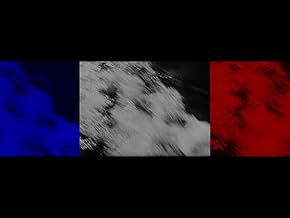
"Napoleon" is an absolute masterpiece in the world's history of filmmaking. In 1927, it was completely overshadowed by the technology of "The Jazz Singer". And that was a real tragedy for decades. Abel Gance is a director I will always admire for his innovation in filmmaking that still is impressive in the 21st Century. He mounted cameras on skis and swings to give the audience the effects that he wanted to convey, and it works perfectly. I was impressed by two great scenes - the 'ocean storm' scene and the final battlefield scene, which was done in the tints of the three colors of the French flag. Any aspiring director should study the techniques of Abel Gance, because the brilliance of this great director would be inspiring! Gance was also instrumental in perfect casting. Though Albert Dieudonne was older, as actors go, he was perfectly cast as Napoleon. If this was an American film and not a French film, I'm sure it would be considered as one of the greatest films ever made by AFI and other organizations.
I was glad that Abel Gance was able to see the affection that audiences had for this film in the late 1980's and early 1990's when the film went on a world tour with a world class orchestra. It would have been sad if Gance had passed on without knowing that his film was considered a masterpiece. If their was ever a silent film that 'pulls out all of the stops', this film is it. Viva Le Gance - the Visionist!
I was glad that Abel Gance was able to see the affection that audiences had for this film in the late 1980's and early 1990's when the film went on a world tour with a world class orchestra. It would have been sad if Gance had passed on without knowing that his film was considered a masterpiece. If their was ever a silent film that 'pulls out all of the stops', this film is it. Viva Le Gance - the Visionist!
Stunning masterpiece from French director Abel Gance,
... and remarkable even in it's current, truncated form. The film details the early life of Napoleon Bonaparte (Albert Dieudonne), from his unpleasant childhood in boarding school to his early military life during the French Revolution and the subsequent Reign of Terror, through to his first military victories and marriage to Josephine (Gina Manes). Also featuring Annabella and Abel Gance as Saint-Just.
Gance seems to have taken note of every cinematic technique of the previous 30 years of the medium, combining them all into a breathtaking, exhaustive epic that transcends the time of it's making while being wholly of it, as well. This could not exist with such strength as anything but a silent film, I feel, as the reliance on visual stimulus forced Gance into finding new and exciting ways to express emotion and mood. His early use of montage editing and super-imposition of imagery is stellar. The use of handheld cameras adds to the immediacy of the revolutionary scenes, conveying a newsreel touch that seems far advanced from other films of its day. The sets and costumes are very impressive, as is the cast of thousands. Dieudonne resembles Olivier's Richard III more than any other screen Napoleon that I've seen, but it works, and I wonder if this is the image I'll conjure in the future when thinking of the French military genius.
This movie has a storied existence, with multiple running times and edits throughout the decades. Gance's original version is said to have run over 9 hours, but subsequent edits ran as short as 115 minutes (the 1929 US release). Noted British film historian and preservationist Kevin Brownlow has made it his life's work to try and restore the movie as closely as possible to Gance's original vision. The version that I watched was the recently released BFI version, supervised by Brownlow, and it ran 333 minutes, or about 5 and a half hours. It's definitely a must see.
Gance seems to have taken note of every cinematic technique of the previous 30 years of the medium, combining them all into a breathtaking, exhaustive epic that transcends the time of it's making while being wholly of it, as well. This could not exist with such strength as anything but a silent film, I feel, as the reliance on visual stimulus forced Gance into finding new and exciting ways to express emotion and mood. His early use of montage editing and super-imposition of imagery is stellar. The use of handheld cameras adds to the immediacy of the revolutionary scenes, conveying a newsreel touch that seems far advanced from other films of its day. The sets and costumes are very impressive, as is the cast of thousands. Dieudonne resembles Olivier's Richard III more than any other screen Napoleon that I've seen, but it works, and I wonder if this is the image I'll conjure in the future when thinking of the French military genius.
This movie has a storied existence, with multiple running times and edits throughout the decades. Gance's original version is said to have run over 9 hours, but subsequent edits ran as short as 115 minutes (the 1929 US release). Noted British film historian and preservationist Kevin Brownlow has made it his life's work to try and restore the movie as closely as possible to Gance's original vision. The version that I watched was the recently released BFI version, supervised by Brownlow, and it ran 333 minutes, or about 5 and a half hours. It's definitely a must see.
Fantastic performance in London with Carl Davies
At the weekend i went to see Napoleon at the Royal Festival Hall in London. I am a relative newcomer to silent moves but too see a 5 and a half hour performance with the London Philarmonic Orchestra was incredible. Loved it, there seems to be some dispute with Coppola about the rights to this production, but if it is ever done again, it is something that any serious movie goer should make an attempt to see. And to prevent others from seeing this with an orchestra would be a travesty. The music by Carl Davies added another dimension to what was a fantastic film. It would appear that the work is a lifes work for Kevin Brownlow, he should be very proud of this acheivements.


Did you know
- TriviaAbel Gance remembered one scene that was removed by the censors--that of the execution of civilians by soldiers. The camera is used like a bullet, zooming towards one human target, then another, then another. The sequence is lost, although a still photograph does survive.
- GoofsOne of the Corsicans in the inn states "Our fatherland is Italy with the Duke of Savoy". The Duchy of Savoy had ceased to exist in 1713 (eighty years earlier), when the Duchy acquired the Kingdom of Sardinia and the Duke then bore the title of the King of Sardinia. Italy was a geographic place not a political entity at this time.
- Alternate versionsThere are apparently at least 19 different versions of this film, starting with the original 6-hours cut (in a "triptych" format, requiring three projectors on three screens, called Polyvision). It has been shown in various formats and different running times, including a 1934 version re-edited by director Abel Gance and featuring an added soundtrack.
- ConnectionsEdited into Napoléon Bonaparte (1935)
- SoundtracksThe Thrill of Being In Love (Love Theme of Napoleon and Josephine)
Music by Carmine Coppola
Lyrics by Italia Coppola (USA version)
UK version: score by Carl Davis (based largely on works by Beethoven)
- How long is Napoleon?Powered by Alexa
Details
- Release date
- Countries of origin
- Language
- Also known as
- Abel Gance's Napoleon
- Filming locations
- Domaine des Milelli, Ajaccio, Corse-du-Sud, France(Paolists' attack on Bonapartes' country house)
- Production companies
- See more company credits at IMDbPro
Box office
- Budget
- FRF 20,000,000 (estimated)
- Gross worldwide
- $39,448
- Runtime
- 5h 30m(330 min)
- Color
- Sound mix
- Aspect ratio
- 1.33 : 1
Contribute to this page
Suggest an edit or add missing content