IMDb RATING
7.5/10
5.4K
YOUR RATING
A blue-collar worker on New York's depressed waterfront finds his life changed after he saves a woman attempting suicide.A blue-collar worker on New York's depressed waterfront finds his life changed after he saves a woman attempting suicide.A blue-collar worker on New York's depressed waterfront finds his life changed after he saves a woman attempting suicide.
- Director
- Writers
- Stars
- Awards
- 7 wins total
Olga Baclanova
- Lou -- Wife of Andy
- (as Baclanova)
Richard Alexander
- Lou's Sweetheart
- (uncredited)
May Foster
- Mrs. Crimp
- (uncredited)
George Irving
- Night Court Judge
- (uncredited)
John Kelly
- Sailor Barfly
- (uncredited)
Charles McMurphy
- Policeman
- (uncredited)
Guy Oliver
- The Crimp
- (uncredited)
Bob Reeves
- Court Bailiff
- (uncredited)
Lillian Worth
- Andy's Girl
- (uncredited)
- Director
- Writers
- All cast & crew
- Production, box office & more at IMDbPro
7.55.4K
1
2
3
4
5
6
7
8
9
10
Featured reviews
The power of silent cinema
Docks of New York (1928) is a prime example of the power of silent film at its height. After 1928, the medium would be crushed underneath the rise of sound technology, which was a shame considering how technically dazzling and sophisticated they had become by the latter half of the 1920s.
The film is a character study of a rough stoker and a suicidal woman. The two fall in love after he rescues her from an attempt to take her own life, though there is a chance they may be separated by the stoker's aversion to commitment and responsibility. The characters are all flawed, compelling people, each one brought to life with subtle performances from the leading actors. The atmosphere is appropriately seedy and dark, with chiaroscuro lighting and crowded spaces. It's a slow film, one that will not please those who prefer more plot or action, but it is worth your time, showcasing silent cinema at its loftiest heights. It is films like Docks of New York which make one wish the silent era had lingered on a little while longer.
Well-Crafted, Well-Acted, Good Atmosphere
There are quite a few strengths that make this silent melodrama work so well. It has a well-crafted story that moves at a good pace and efficiently uses each minute of screen time. It is very well-acted, especially by George Bancroft and Betty Compson. Compson's performance, in particular, deserves much more praise and recognition than it has received, either at the time or now. Finally, the dockside atmosphere is interesting and convincing, besides being an integral part of the story.
Bancroft has a role that is particularly well-suited to him, and he does a fine job in the part. Compson has a challenging role, since she must make her character attractive yet lonely and miserable, and somewhat disreputable yet completely sympathetic, for the story to work. She gives an excellent performance in every respect, and Bancroft plays off of her character quite well. There are some fine moments in which their characters' rough edges contend with their own gentler and nobler instincts. Thus the unlikely attachment between the two not only works well, but draws you in and makes you care about them quite a bit.
The supporting cast gives good performances as well, with Olga Baclanova especially good in a role that is essential to the story. Mitchell Lewis is suitably brutish as the heavy, and Clyde Cook is quite believable as Bancroft's nervous pal.
Josef von Sternberg also tied together all of these strengths in an efficient and effective package, making every scene count and making you feel as if you were there on the docks with the characters. It's a fine melodrama by any standard, and is well worth seeing for anyone who enjoys silent movies.
Bancroft has a role that is particularly well-suited to him, and he does a fine job in the part. Compson has a challenging role, since she must make her character attractive yet lonely and miserable, and somewhat disreputable yet completely sympathetic, for the story to work. She gives an excellent performance in every respect, and Bancroft plays off of her character quite well. There are some fine moments in which their characters' rough edges contend with their own gentler and nobler instincts. Thus the unlikely attachment between the two not only works well, but draws you in and makes you care about them quite a bit.
The supporting cast gives good performances as well, with Olga Baclanova especially good in a role that is essential to the story. Mitchell Lewis is suitably brutish as the heavy, and Clyde Cook is quite believable as Bancroft's nervous pal.
Josef von Sternberg also tied together all of these strengths in an efficient and effective package, making every scene count and making you feel as if you were there on the docks with the characters. It's a fine melodrama by any standard, and is well worth seeing for anyone who enjoys silent movies.
The Fabulous Betty Compson
What a treat this tough, realistic movie is. George Bancroft, Betty Compson, and Olga Baclanova are all great is this cynical yet tender story of the waterfront.
Director Josef von Sternberg fills a simple tale with pathos and great atmosphere. Tough stoker Bancroft rescues a girl (Compson) from a suicide attempt and "marries" her for a night of fun. But he gets involved in a web of murder, thievery, and drunkenness.
When Norma Desmond said "we had faces then" in Sunset Boulevard (and yes I know it was Gloria Swanson), Betty Compson was at the top of the list. With her big eyes and crooked mouth, Compson was expert at expressing emotion with a twist of the mouth, a flick of the eyelashes. She is wonderful here as Mae, the waterfront gal. Bancroft is also terrific as the big lug who falls hard for Mae. And Baclanova, best remembered for "Freaks" is a dynamo as the wronged wife.
Great scenes of water and fog and birds serve as a backdrop to the drama that enfolds.
Bancroft and Compson won Oscar nominations in the early days of the award and are pretty much forgotten now, but they serve up sparks here in this terrific film. A must see!
Director Josef von Sternberg fills a simple tale with pathos and great atmosphere. Tough stoker Bancroft rescues a girl (Compson) from a suicide attempt and "marries" her for a night of fun. But he gets involved in a web of murder, thievery, and drunkenness.
When Norma Desmond said "we had faces then" in Sunset Boulevard (and yes I know it was Gloria Swanson), Betty Compson was at the top of the list. With her big eyes and crooked mouth, Compson was expert at expressing emotion with a twist of the mouth, a flick of the eyelashes. She is wonderful here as Mae, the waterfront gal. Bancroft is also terrific as the big lug who falls hard for Mae. And Baclanova, best remembered for "Freaks" is a dynamo as the wronged wife.
Great scenes of water and fog and birds serve as a backdrop to the drama that enfolds.
Bancroft and Compson won Oscar nominations in the early days of the award and are pretty much forgotten now, but they serve up sparks here in this terrific film. A must see!
Another Classic from Josef von Sternberg.
Josef von Sternberg is a director not very well known among the normal audience. He is a legend to be learned thoroughly.
The movie is about a ship worker called Bill. He has just one night to spend ashore. He finds a young lady, Mae, trying to commit suicide in the sea. He helps her and takes to the near by bar. Later Bill asks her to marry him on an instant. The bar then gets ready for the wedding at that night. The rest you should watch and enjoy!.
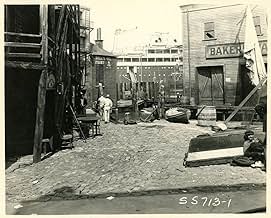
It is hard to believe that the entire movie was shot on a Hollywood sound stage. The set was so perfect to be made up. Josef von Sternberg is always an expert at it.
If you are a movie freak, this movie should be added to the watch list. A worth watch.
#KiduMovie
The movie is about a ship worker called Bill. He has just one night to spend ashore. He finds a young lady, Mae, trying to commit suicide in the sea. He helps her and takes to the near by bar. Later Bill asks her to marry him on an instant. The bar then gets ready for the wedding at that night. The rest you should watch and enjoy!.
It is hard to believe that the entire movie was shot on a Hollywood sound stage. The set was so perfect to be made up. Josef von Sternberg is always an expert at it.
If you are a movie freak, this movie should be added to the watch list. A worth watch.
#KiduMovie
Impressive acting
For me, this comes a close second to "Underworld" in Sternberg's films: the twists and turns of the melodramatic plot become ultimately a little too much for me to swallow (a twist too far?), and I found some of the camera devices simply distracting, but even so the film is more or less won by virtue of the impressive acting from all concerned. Betty Compson (who was soon to receive a well-deserved Oscar nomination for her role in the part-talkie "The Barker") stands out as the fragile, cynical girl who has "had too many good times" already but allows herself to believe in the possibility of redemption; Baclanova is memorable as the petty officer's deserted wife, while George Bancroft is a cheerful, callous but not unkindly Colossus of a stoker. The weary, sensitive features of Gustav von Seyffertitz, in a small role as the threadbare Bible-basher who ministers to this godless 'flock', also make a strong impression. The film is almost all atmosphere, but it is atmosphere well-done.
Did you know
- Trivia'Sugar' Steve tries to light Mae's cigarette from the same match he used to light Bill's and his own cigarettes while she is mending Bill's shirt. Mae blows out the match and says, "What are you trying to do, bring me more bad luck?" He must light a new match for her cigarette. At the time, "three on a match" was considered bad luck. Soldiers during the Crimea War believed that if three soldiers lit their cigarettes from the same match, one of the three would be killed, or alternately the third soldier to use the match would be shot. The superstition persisted with soldiers through World War II.
- Alternate versionsVideo version includes new score by Gaylord Carter.
- ConnectionsEdited into Catalogue of Ships (2008)
- How long is The Docks of New York?Powered by Alexa
Details
- Release date
- Country of origin
- Language
- Also known as
- Im Hafen von New York
- Filming locations
- Production company
- See more company credits at IMDbPro
- Runtime
- 1h 16m(76 min)
- Color
- Sound mix
- Aspect ratio
- 1.33 : 1
Contribute to this page
Suggest an edit or add missing content