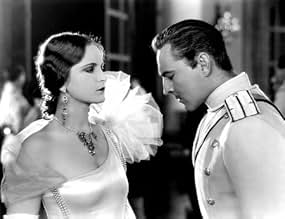
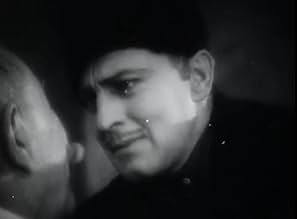
In Czarist Russia, a peasant officer, resented by the aristocrats, falls in love with a princess.In Czarist Russia, a peasant officer, resented by the aristocrats, falls in love with a princess.In Czarist Russia, a peasant officer, resented by the aristocrats, falls in love with a princess.
- Won 1 Oscar
- 4 wins total
John Bleifer
- Soldier
- (uncredited)
Albert Conti
- Commission Board Member
- (uncredited)
Gregory Gaye
- Officer
- (uncredited)
Lena Malena
- Tamara's Friend
- (uncredited)
Michael Mark
- Soldier
- (uncredited)
Dick Sutherland
- Revolutionary Board Member
- (uncredited)
Wilhelm von Brincken
- Commission Board Member
- (uncredited)
6.7586
1
2
3
4
5
6
7
8
9
10
Featured reviews
Ignored Gem
I can't wrap my mind around the fact that Barrymore was in his forties when he made this film. He looks fit and fantastic, the true matinée idol. This is due in no small part to Rosher's astounding photography. This is a crazy, obsessional soap that may turn some people off, but John B. has some beautiful, moving moments that give me goosebumps. He was clearly still able to give his all at this point, and he does so here. His tearful scenes are believable and so well done. Camilla Horn was stunning and looked great with him, but she's so wooden that it dulls the effect a bit. Still, she had a long career in Germany, so I guess she couldn't have been so bad. Ivan is one big grey area when it comes to morality, and Barrymore conveys that very well.
I wish he could have pulled it together long enough to save his career and life from the self-parodying buffoonery that he sank into as he dissipated. He breaks my heart on many different levels.
Tempest review
Enjoyable historical drama in which The Great Profile plays a Russian peasant who rises to the rank of Lieutenant immediately before the revolution only to find himself shunned by his fellow officers and the haughty princess he falls for. Fine chemistry between Barrymore and the beautiful German actress Camilla Horn helps paper over most of the film's meagre flaws.
No, Not Shakespeare's
1928 was a year for Russian Revolution stories in Hollywood movies. Probably the best was von Sternberg's THE LAST COMMAND with Emil Jannings, Evelyn Brent and William Powell giving great performances. This piece has great performances from John Barrymore and Louis Wollheim, but the female lead, Camillia Horn, producer Joseph Schenck's mistress, gives a performance that is largely composed of staring haughtily. Well, it's the way her part is written, I suppose in this melodramatic tripe. She despises Barrymore, she loves Barrymore, she despises Barrymore, then comes the revolution....
Even uncredited directing by Lewis Milestone couldn't help. Horn can't have been a bad actress with a sixty-year career in Germany, but she made this movie and the stinker ETERNAL LOVE in Hollywood, again with Barrymore under Lubitsch's direction and returned to Germany. Maybe she stared haughtily at Schenck too often.
What is worthwhile in this film is the late silent camerawork, courtesy of Charles Rosher. The late 1920s produced camerawork that moved about like a soap bubble on the breath of imagination. The advent of sound tied it down to a neurotic adoration of the still shot that it did not begin to recover from for a quarter of a century.
But this picture features camerawork that is astonishing. The party sequence, is balletic; the prison sequences trap you in bars of darkness and Rosher backlights everyone with a star halo that still takes your breath away, even in the scratchy prints that survive. This is one every fan fan needs to watch: not for the story, which is awful, not for the performances, some of which are excellent, but for the pictures. Look at every single frame. You won't regret it.
Even uncredited directing by Lewis Milestone couldn't help. Horn can't have been a bad actress with a sixty-year career in Germany, but she made this movie and the stinker ETERNAL LOVE in Hollywood, again with Barrymore under Lubitsch's direction and returned to Germany. Maybe she stared haughtily at Schenck too often.
What is worthwhile in this film is the late silent camerawork, courtesy of Charles Rosher. The late 1920s produced camerawork that moved about like a soap bubble on the breath of imagination. The advent of sound tied it down to a neurotic adoration of the still shot that it did not begin to recover from for a quarter of a century.
But this picture features camerawork that is astonishing. The party sequence, is balletic; the prison sequences trap you in bars of darkness and Rosher backlights everyone with a star halo that still takes your breath away, even in the scratchy prints that survive. This is one every fan fan needs to watch: not for the story, which is awful, not for the performances, some of which are excellent, but for the pictures. Look at every single frame. You won't regret it.
Penultimate Barrymore Silent Is Good But Not Great.
TEMPEST was the penultimate silent movie made by John Barrymore (ETERNAL LOVE directed by Ernst Lubitsch would be the last). The setting is not Shakespeare but takes place around the time of the Russian Revolution. The direction is credited to Sam Taylor who was best known for his comedies but a lot of it was shot by Lewis Milestone and visually it shows in many of the scene compositions and camera angles.
The film is primarily remembered today for Charles Rosher's cinematography, the sets by William Cameron Menzies, and as the Hollywood debut of German actress Camilla Horn (Murnau's FAUST). While not a great movie, it does have a lot to offer especially for silent movie and/or John Barrymore fans.
This version from Kino is part of a 4 DVD set of silent films by John Barrymore although it can be purchased separately (BELOVED ROGUE, DR JEKYLL & MR HYDE, SHERLOCK HOLMES make up the rest of the set). The picture quality is good and although it says it's from 35mm, a lot of it looks like 16mm to me. This print is courtesy of the Killiam Collection and contains some pro-Soviet bits that were later removed.
The piano score is by William Perry. Back in 2003, Film Preservation Associates released their DVD version through Image Entertainment. It is clearly from 35mm although a little scratchier and offers two separate soundtracks (the original Vitaphone discs and a piano score by Philip Carli) as well as a one reel home movie of Barrymore on his yacht. That's the one to own although this release comes in a close second...For more reviews visit The Capsule Critic.
The film is primarily remembered today for Charles Rosher's cinematography, the sets by William Cameron Menzies, and as the Hollywood debut of German actress Camilla Horn (Murnau's FAUST). While not a great movie, it does have a lot to offer especially for silent movie and/or John Barrymore fans.
This version from Kino is part of a 4 DVD set of silent films by John Barrymore although it can be purchased separately (BELOVED ROGUE, DR JEKYLL & MR HYDE, SHERLOCK HOLMES make up the rest of the set). The picture quality is good and although it says it's from 35mm, a lot of it looks like 16mm to me. This print is courtesy of the Killiam Collection and contains some pro-Soviet bits that were later removed.
The piano score is by William Perry. Back in 2003, Film Preservation Associates released their DVD version through Image Entertainment. It is clearly from 35mm although a little scratchier and offers two separate soundtracks (the original Vitaphone discs and a piano score by Philip Carli) as well as a one reel home movie of Barrymore on his yacht. That's the one to own although this release comes in a close second...For more reviews visit The Capsule Critic.
Facial Expressions Are Key!
Drama
Format: Standard 4:3, B&W, silent
Director: Sam Taylor
Starring: John Barrymore and Camilla Horn
Drew Barrymore's grandfather John is the main highlight of this film. His portrayal of Ivan Markov during 1914 Czarist Russia is ripe with excellent acting and great emotion, which flows forth from his face. Some supporting actors in this film were not too great, except for George Fawcett, who plays the commanding General of Ivan's garrison. The main problem with the characters and acting is too much fluff and too much over acting, but Barrymore is amazing.
In one scene, he is being demoted and sent to jail and the anguish coming off of his face, as they tear his medals off of his vest, is something to be seen. In another scene we see Ivan enter into madness and just the look on his face is something I won't forget for a while. While he is in prison, he begins to see images on the prison wall, which is done quite well with very good matte work for 1928.
Fawcett's character is very likeable and you enjoy seeing him every time he comes into a scene. His kindness he shows towards Ivan, from behind a rough exterior, is very believable and heart-warming. I also enjoyed Louis Wolheim as Bulba, but 3/4 of the way through the film his character changes and I didn't like that.
The story is quite good, and I worry that some of it may have been lost due to missing splices that looked like chunks of lost continuity. Right in the very beginning and especially at the very end. An excellent shot of the town opens up to a really nice story that falls apart slightly by the end, but definitely a film worth seeing. It is not great, but is very good.
8.2 (B MyGrade) = 8 IMDB.
Drew Barrymore's grandfather John is the main highlight of this film. His portrayal of Ivan Markov during 1914 Czarist Russia is ripe with excellent acting and great emotion, which flows forth from his face. Some supporting actors in this film were not too great, except for George Fawcett, who plays the commanding General of Ivan's garrison. The main problem with the characters and acting is too much fluff and too much over acting, but Barrymore is amazing.
In one scene, he is being demoted and sent to jail and the anguish coming off of his face, as they tear his medals off of his vest, is something to be seen. In another scene we see Ivan enter into madness and just the look on his face is something I won't forget for a while. While he is in prison, he begins to see images on the prison wall, which is done quite well with very good matte work for 1928.
Fawcett's character is very likeable and you enjoy seeing him every time he comes into a scene. His kindness he shows towards Ivan, from behind a rough exterior, is very believable and heart-warming. I also enjoyed Louis Wolheim as Bulba, but 3/4 of the way through the film his character changes and I didn't like that.
The story is quite good, and I worry that some of it may have been lost due to missing splices that looked like chunks of lost continuity. Right in the very beginning and especially at the very end. An excellent shot of the town opens up to a really nice story that falls apart slightly by the end, but definitely a film worth seeing. It is not great, but is very good.
8.2 (B MyGrade) = 8 IMDB.
Did you know
- TriviaCarole Lombard was considered for the role of Princess Tamara.
Details
Contribute to this page
Suggest an edit or add missing content