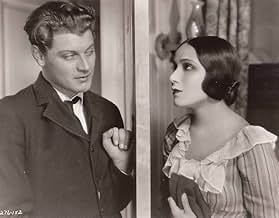
Fortune hunters from all over the country rush to the Klondike in 1897 to seek their fortunes in the gold are tested by hardships of the journey.Fortune hunters from all over the country rush to the Klondike in 1897 to seek their fortunes in the gold are tested by hardships of the journey.Fortune hunters from all over the country rush to the Klondike in 1897 to seek their fortunes in the gold are tested by hardships of the journey.
- Director
- Writers
- Stars
- Awards
- 1 win total
Dolores Del Río
- Berna
- (as Dolores Del Rio)
Johnny Downs
- Mother's Boy
- (as John Down)
Josephine Adair
- Young Girl
- (uncredited)
Rita Claire
- Saloon Girl
- (uncredited)
Francis Ford
- Gold Commissioner's Assistant
- (uncredited)
- Director
- Writers
- All cast & crew
- Production, box office & more at IMDbPro
7.0523
1
2
3
4
5
6
7
8
9
10
Featured reviews
An epic silent
Recently I had the chance to view this film on TCM and it is truly an epic. The storylines are realistic and the characters believable.
Most impressive however is the exterior shots showing the Alaskan winter. I got cold just watching them! There are avalanches, blizzards and everything. It makes one appreciates the suffering those brave, if not foolish, souls endured in 1898.
The Gold Slush
After gold is discovered in Alaska, some lower 48 United States residents decide to go there, and become millionaires. The journey proves arduous, and several die. Attractive Dolores Del Rio (as Berna) and Ralph Forbes (as Larry) are two who hope for riches - they meet aboard ship (the first leg of the journey), and fall in love. Out to stake a claim, Mr. Forbes teams up with "dumb Swede" Karl Dane (as Lars Petersen), grizzled Tully Marshall (as Salvation Jim), and sneaky George Cooper (as Samuel "The Worm" Foote). But, while Forbes is out of the picture, wicked Harry Carey (as Jack Locasto) tries to steals Ms. Del Rio's virtue...
"The Trail of '98" is a top MGM silent, nicely directed by Clarence Brown. The synchronized sound effects are great, especially during the grand fire sequence occurring near the end of the picture. Most of the first hour consists of grueling location scenes (four stuntmen were reportedly killed during the making of the picture). They are definitely worth seeing. The characters are introduced, but left too long with only sketchy story lines - and, what's plotted is woefully ordinary, considering the production values.
****** The Trail of '98 (3/20/28) Clarence Brown ~ Dolores del Rio, Ralph Forbes, Karl Dane, Harry Carey
"The Trail of '98" is a top MGM silent, nicely directed by Clarence Brown. The synchronized sound effects are great, especially during the grand fire sequence occurring near the end of the picture. Most of the first hour consists of grueling location scenes (four stuntmen were reportedly killed during the making of the picture). They are definitely worth seeing. The characters are introduced, but left too long with only sketchy story lines - and, what's plotted is woefully ordinary, considering the production values.
****** The Trail of '98 (3/20/28) Clarence Brown ~ Dolores del Rio, Ralph Forbes, Karl Dane, Harry Carey
A mad trip due to gold fever
Gold is surely what made people most dream of during all civilizations. This is proved again very completely in this film where we discover very different characters who only have one aim : Klondike.
We particularly follow the story of a young girl, played by the beautiful Dolores Del Rio. Clarence Brown alternates dramatic scenes and very funny ones which appeal to you the memory of Gold rush by Charlie Chaplin. It's very to rare to watch such a film nowadays, so don't hesitate if you have the occasion.
I found gold when I found you!
This is one of my favourite films of the late silent era.It has a mixture of drama, suspense,action and comedy to satisfy most tastes. The comedy is provided by Karl Dane, as a Scandinavian saphead who falls for about every con that comes his way. The hero and heroine suit each other well. The villain is about as bad as you could want and the fight scene with the hero is one of the most realistic I have ever seen.There are some pretty good special effects and some strong supporting characters. The way in which people come to accept the fate of their companions tells us how harsh conditions must have been and how hard those prospectors had to become to survive. Add to this a theme song, background music and sound effects....what more could you ask for?
What Would You Do for a Klondike Bar?
Would you quit your job working on trains and commit, by what today might be considered, kidnapping and endangerment of a minor? Abandon your wife in Michigan? Abandon your entire family in Kansas? Stow away by train or ship? Abandon the dry gold fields of the Nevada desert--well, sure, who wouldn't do that.... To sail from San Francisco, to slog through the snowdrifts and mountain trails of the North, risk the rapids of the Yukon River, avalanches, freezing and starving to death, only to, then, fear fever, being assaulted, robbed and swindled, raped and forced into prostitution, eaten by dogs, or lit like a human torch... plus mosquitoes? I mean, yeah, gold is cool, but....
Set during the Klondike Gold Rush, "The Trail of '98" is more of an ensemble, rather than star-driven, late silent adventure epic that features a synchronized soundtrack of so-so sound effects and musical scoring (the sentimental lyrics for one smooching scene in particular was too much, and, at other moments, the constant blasts of wind can be grating). Indeed, it's a bit difficult and partly a wasted effort to try to keep track of all the characters--only some of whom ultimately drive the plot forward. The most important is the romance between Berna (early Mexican star Dolores Del Rio) and Larry, as threatened by the baddie Jack Locasto (Harry Carey, a star of Westerns with the moniker "Cheyenne Harry" early on, but who was transitioning to character roles by now). Larry teams up with some other prospectors in his pursuit for gold, but they're hardly worth mentioning and are only occasionally amusing.
It's no challenge to Charlie Chaplin's "The Gold Rush" (1925) as the best film made regarding Klondike yellow metal, but this one does feature some spectacular set pieces, visual effects and stuntwork, which, reportedly, included real-life casualties. The avalanche and fire scenes are especially grizzly, as is the wintry location shooting, and even the rear-projection photography for the rapids is relatively not too bad. On the other hand, there's far too much set-up, including excessive title cards, to get to the good stuff and even much of that is rudimentary, Victorian-style melodrama, while also resembling a wild-Northern Western. Most of the side characters and subplots aren't compelling enough to justify their inclusion.
The director here, Clarence Brown, could be a visually masterful filmmaker. He learned from one of the pioneers of cinematic visual innovation in Maurice Tourneur during the 1910s and into the early 1920s. He's, perhaps, best remembered for directing a few Greta Garbo vehicles, as well as pictures for other famous actresses, but some of them are remarkably lovely pictorially, and the romances are more effective than here, too. "Flesh and the Devil" (1926), in particular, is a masterpiece in these regards. I wonder what a filmmaker better adept at exploiting nature as a character could've done with this film, though--namely, Swedish émigrés Victor Sjöström or Mauritz Stiller, for instance. Or, perhaps, the blind character here could've been exploited to comment on the loss of visual virtuosity in the transition from silents to talkies, as was the flower girl in Chaplin's "City Lights" (1931), or even how blindness was associated with art by Yevgeni Bauer in "Za schastem" (1917). Instead, there is spectacle in "The Trail of '98" to see, but one need overlook the narrative dullness.
Set during the Klondike Gold Rush, "The Trail of '98" is more of an ensemble, rather than star-driven, late silent adventure epic that features a synchronized soundtrack of so-so sound effects and musical scoring (the sentimental lyrics for one smooching scene in particular was too much, and, at other moments, the constant blasts of wind can be grating). Indeed, it's a bit difficult and partly a wasted effort to try to keep track of all the characters--only some of whom ultimately drive the plot forward. The most important is the romance between Berna (early Mexican star Dolores Del Rio) and Larry, as threatened by the baddie Jack Locasto (Harry Carey, a star of Westerns with the moniker "Cheyenne Harry" early on, but who was transitioning to character roles by now). Larry teams up with some other prospectors in his pursuit for gold, but they're hardly worth mentioning and are only occasionally amusing.
It's no challenge to Charlie Chaplin's "The Gold Rush" (1925) as the best film made regarding Klondike yellow metal, but this one does feature some spectacular set pieces, visual effects and stuntwork, which, reportedly, included real-life casualties. The avalanche and fire scenes are especially grizzly, as is the wintry location shooting, and even the rear-projection photography for the rapids is relatively not too bad. On the other hand, there's far too much set-up, including excessive title cards, to get to the good stuff and even much of that is rudimentary, Victorian-style melodrama, while also resembling a wild-Northern Western. Most of the side characters and subplots aren't compelling enough to justify their inclusion.
The director here, Clarence Brown, could be a visually masterful filmmaker. He learned from one of the pioneers of cinematic visual innovation in Maurice Tourneur during the 1910s and into the early 1920s. He's, perhaps, best remembered for directing a few Greta Garbo vehicles, as well as pictures for other famous actresses, but some of them are remarkably lovely pictorially, and the romances are more effective than here, too. "Flesh and the Devil" (1926), in particular, is a masterpiece in these regards. I wonder what a filmmaker better adept at exploiting nature as a character could've done with this film, though--namely, Swedish émigrés Victor Sjöström or Mauritz Stiller, for instance. Or, perhaps, the blind character here could've been exploited to comment on the loss of visual virtuosity in the transition from silents to talkies, as was the flower girl in Chaplin's "City Lights" (1931), or even how blindness was associated with art by Yevgeni Bauer in "Za schastem" (1917). Instead, there is spectacle in "The Trail of '98" to see, but one need overlook the narrative dullness.
Did you know
- TriviaDirector Clarence Brown called the film " . . . the hardest film I ever made." He was in charge of 2000 people in weather that was -60 F in 50-mph winds at 11,600-foot altitudes.
- ConnectionsEdited into Hollywood: The Dream Factory (1972)
- SoundtracksRed River Valley
(pub. 1896) (uncredited)
Traditional
Music by James Kerrigen
Played as background music
Details
Box office
- Budget
- $1,500,000 (estimated)
- Runtime
- 1h 27m(87 min)
- Sound mix
Contribute to this page
Suggest an edit or add missing content